A kitchen drawer goes from tidy to chaotic faster than any other storage in the house, since everything gets dropped in mid-task and sorted later. Later never comes, and within a month you’re digging past three spatulas to find a peeler.
Fixing it takes less than an afternoon, and most of the work is deciding what goes where before buying a single organizer. These kitchen drawer organization ideas cover the dividers that hold everything in place, the inserts built for specific items, and the layout decisions that keep it all working past week one.
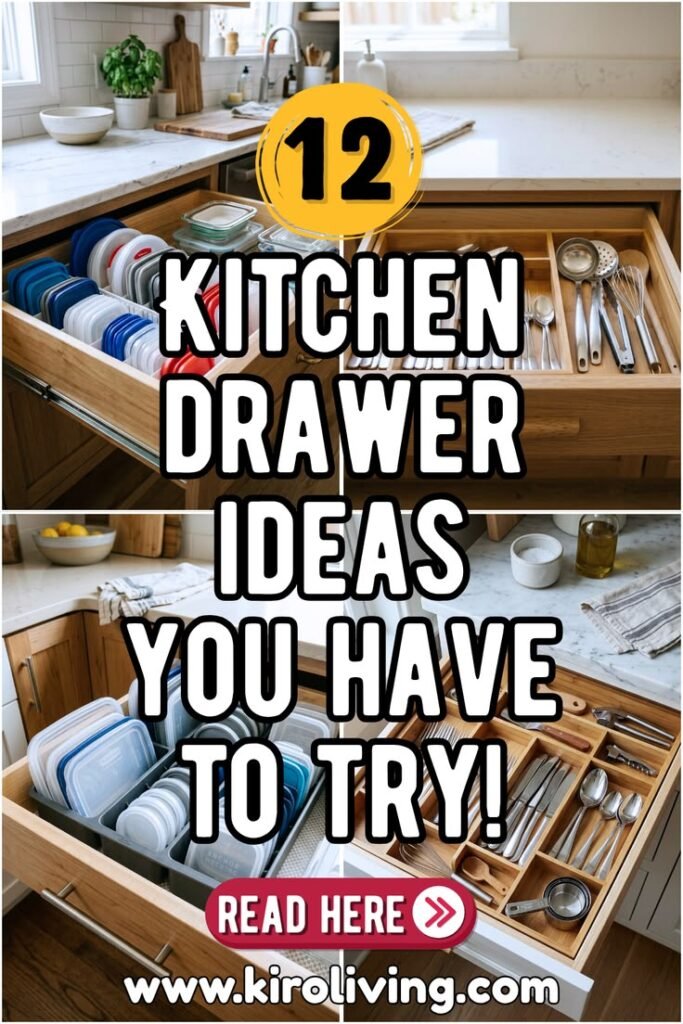
Plan on revisiting? Pin this for later!
This post may contain affiliate links, I may earn an extra commission, at no extra cost to you.
Dividing and Sectioning Drawers
1. Expandable Bamboo Drawer Organizer
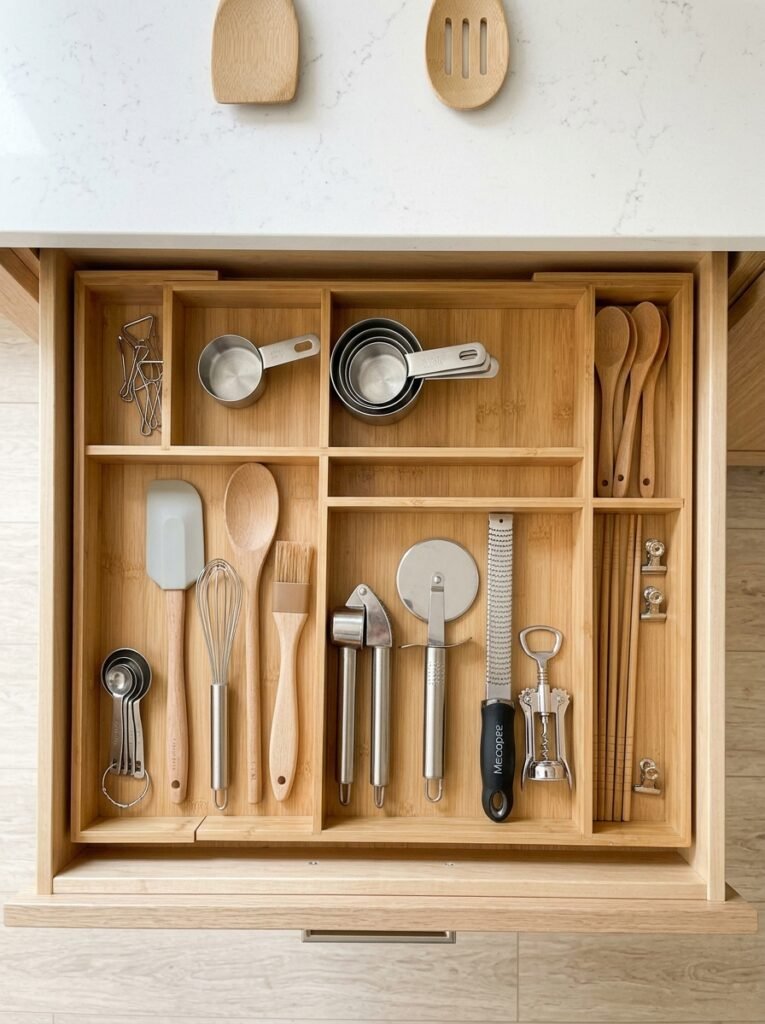
An expandable bamboo drawer organizer is the fastest fix for a drawer with no system at all, since it stretches to fit the width and creates fixed lanes in one move.
Bamboo also handles humidity better than plastic, so it holds its shape near a dishwasher or sink.
2. Adjustable Drawer Dividers
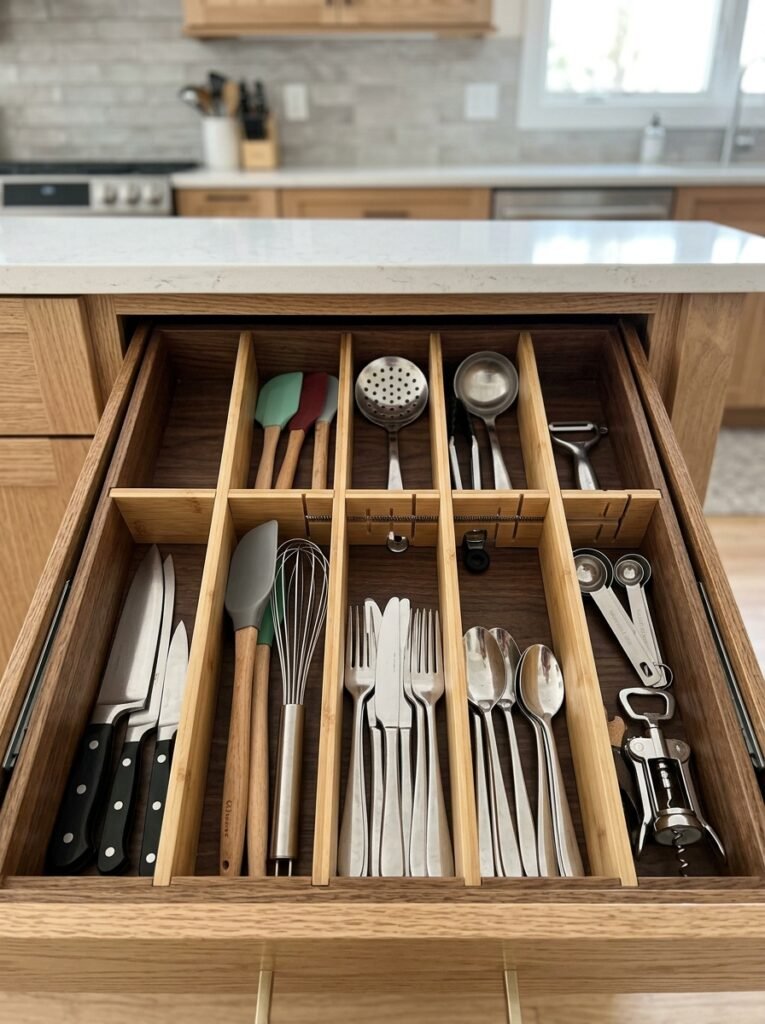
Where a fixed organizer decides your layout for you, adjustable drawer dividers let you set the section widths yourself.
The spring tension holds them against the drawer walls, so nothing needs screwing in and the whole arrangement moves when your storage needs change.
3. Modular Box Sets
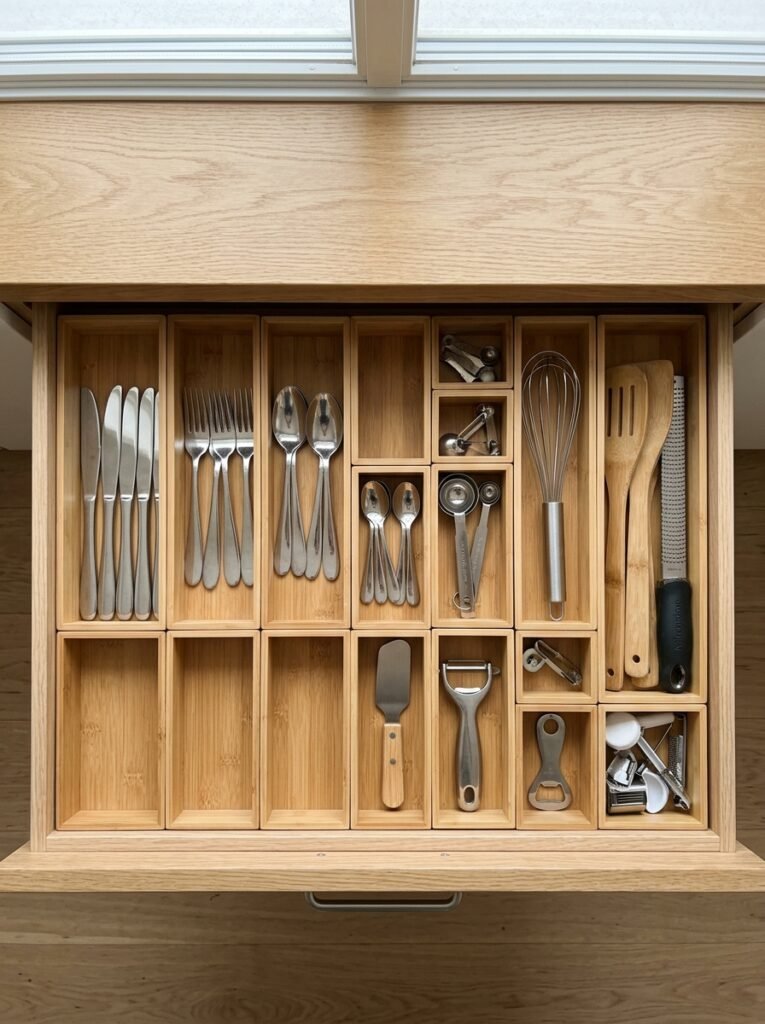
Odd drawer sizes defeat most one-piece organizers, which is where a set of separate bamboo storage boxes earns its place.
Arranging five boxes lets you work around awkward depths and leftover corners, and you can shift the layout later without buying anything new.
4. Non-Slip Drawer Liners
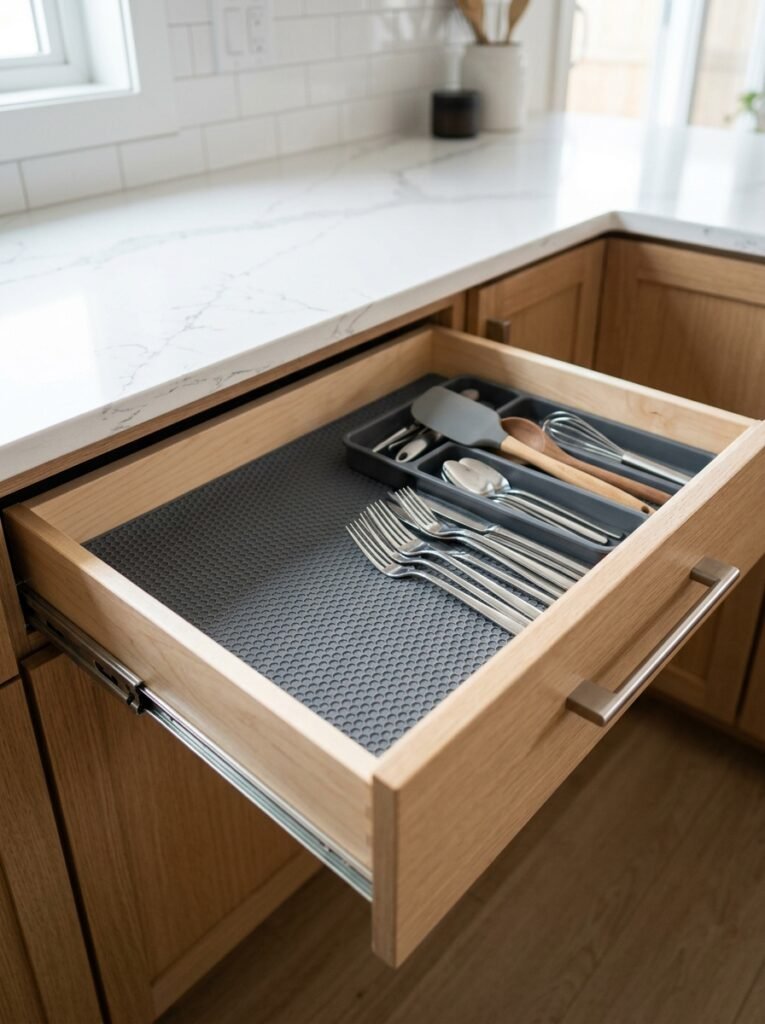
Organizers slide every time a drawer opens, which is how a tidy layout drifts back into chaos over a couple of weeks.
Non-slip drawer liners grip the base and hold everything in position, and they also protect the drawer bottom from scratches and spills.
Organizers Built for Specific Items
5. In-Drawer Knife Block
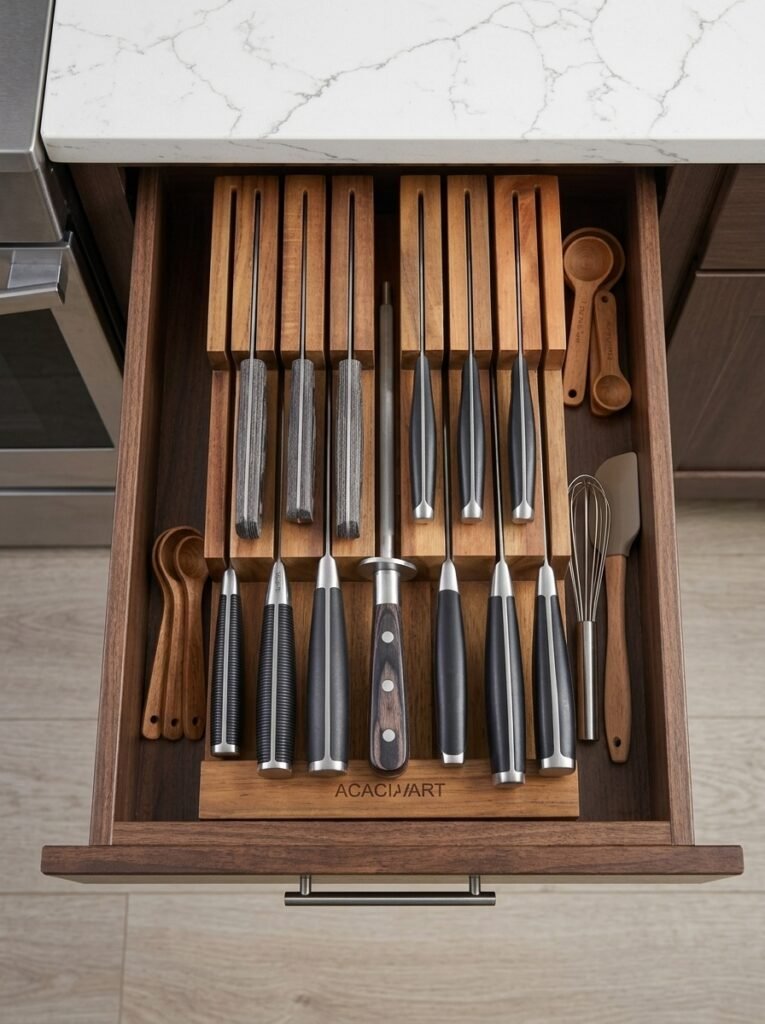
Loose knives in a drawer dull against each other and turn every reach into a gamble.
An in-drawer knife block holds each blade in its own slot, so the edges stay protected and your fingers stay clear. It also frees the counter space a traditional block eats.
6. Expandable Silverware Tray
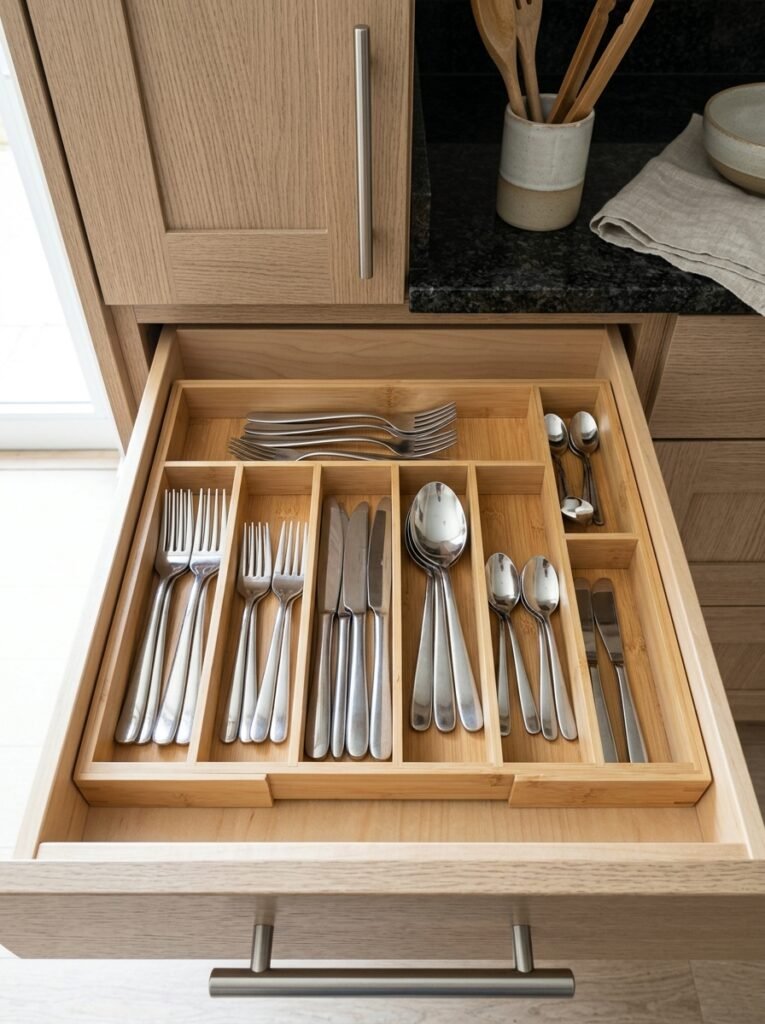
Cutlery needs narrow parallel lanes, which is exactly what a general organizer does badly.
This expandable silverware organizer gives you seven compartments sized for forks, spoons, and knives, and it widens to fill whatever drawer you put it in so no space goes unused at the edges.
7. Deep Compartment Utensil Organizer
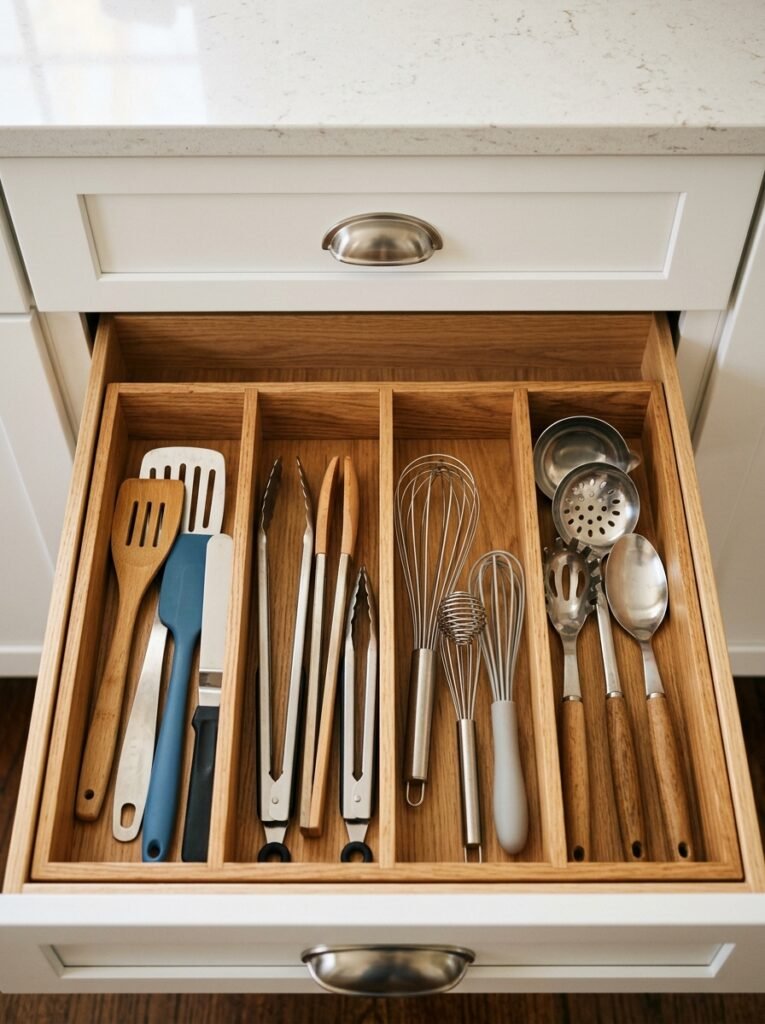
Cooking utensils are bulkier than cutlery, so they need depth where a silverware tray needs width.
A deep utensil organizer handles ladles, tongs, and spatulas without them stacking on top of each other, and its smaller footprint leaves room for a second organizer alongside it!
8. Container Lid Organizer
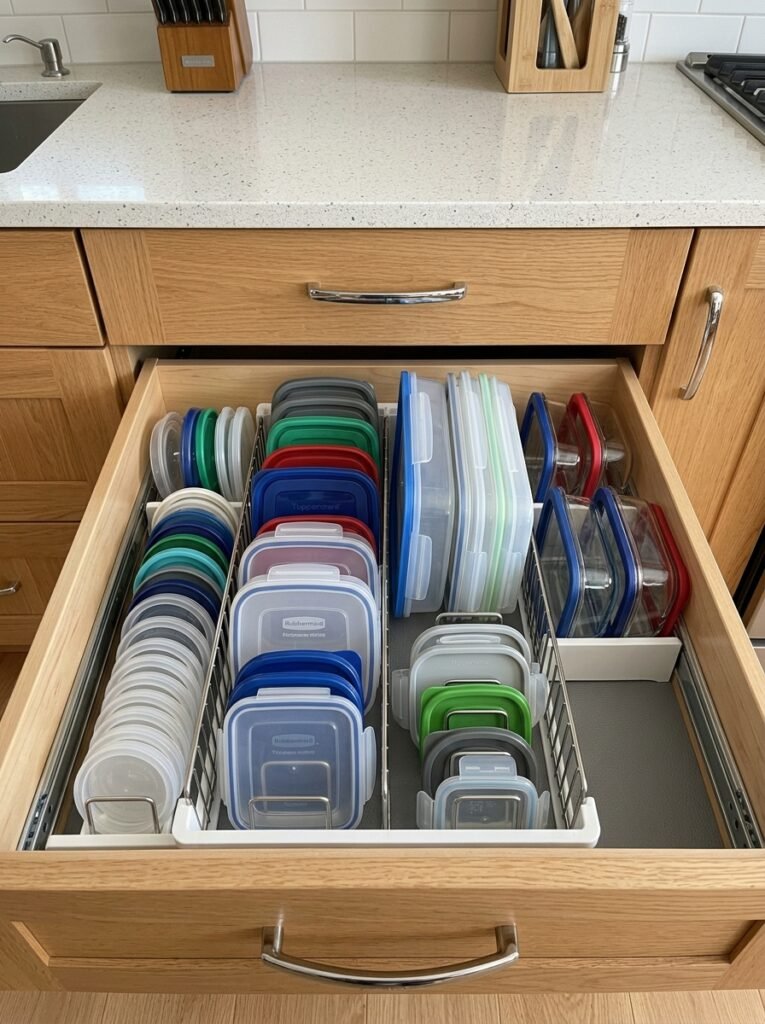
Food container lids are the single worst offender in most kitchens, since they slide flat and spread everywhere.
A container lid organizer stores them upright in adjustable slots, so you can see every size at a glance and pull the one you need without unstacking the rest.
9. Wrap and Bag Dispenser
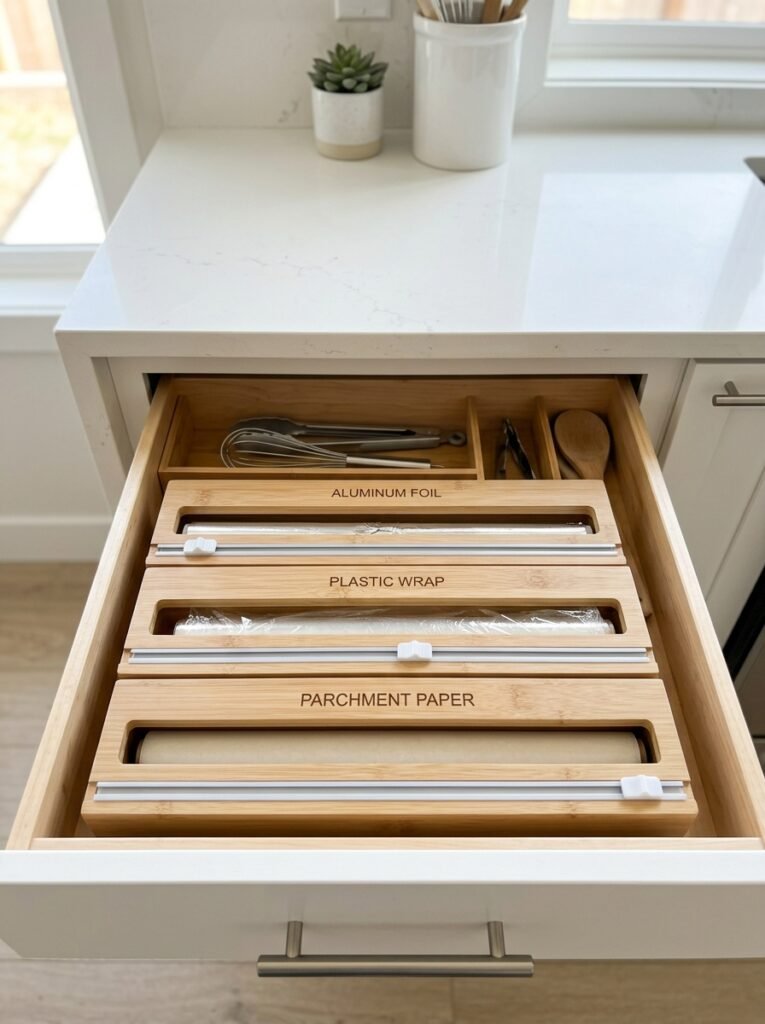
Boxes of foil, cling film, and sandwich bags never stack neatly and their cardboard cutters give out fast.
An all-in-one wrap dispenser holds all of them in one unit with a built-in cutter, so you pull and slice with one hand while the other is holding food.
10. Tiered Spice Drawer Insert
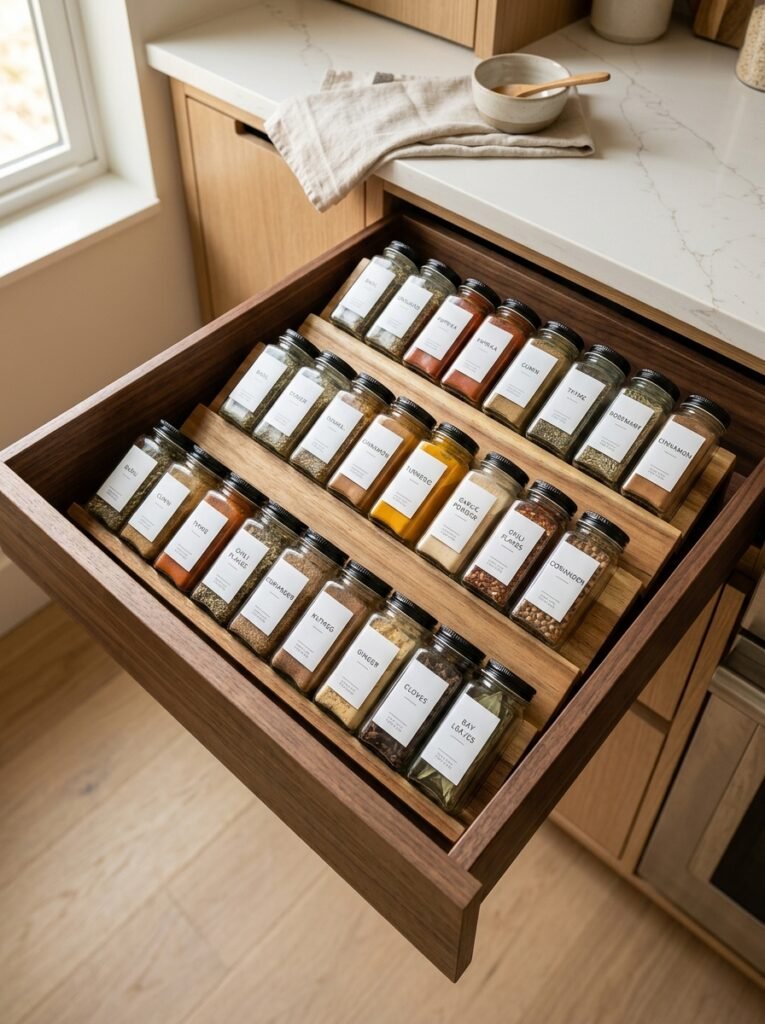
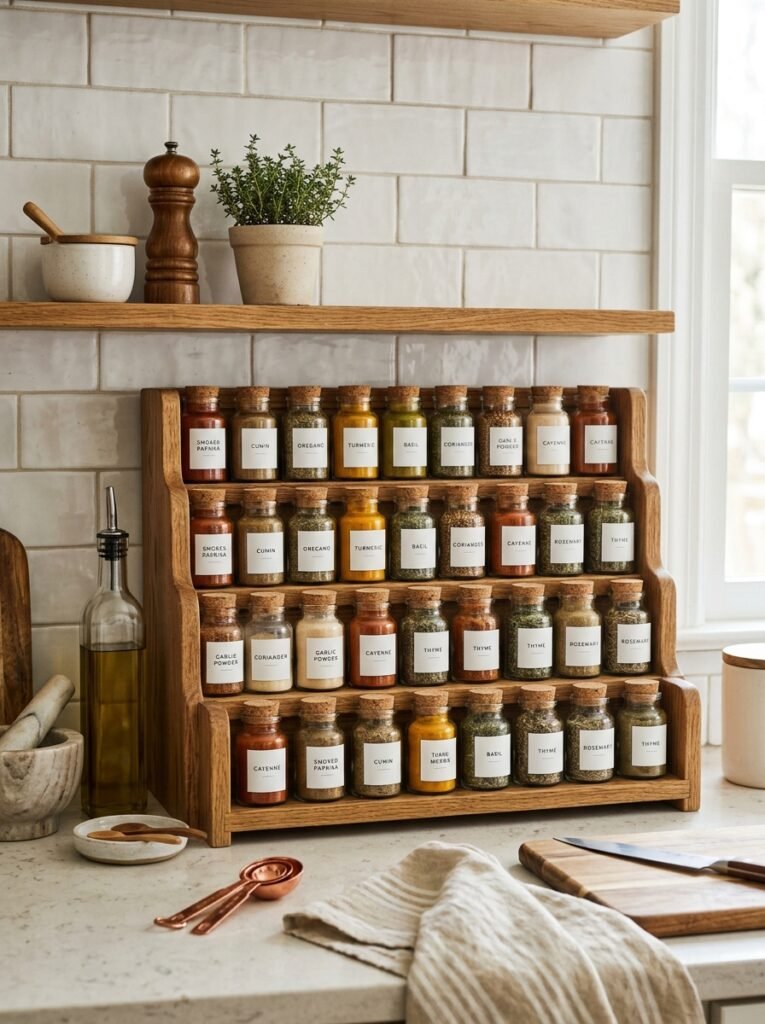
Spice jars laid flat in a drawer mean reading every label upside down. A tiered spice rack organizer angles them so the lids face you, and adding spice labels helps alot identifying which is which, since most ground spices look identical.
Also read: 12 Easy Spice Rack Ideas for an Organized Kitchen
11. Tea And Coffee Pod Organizer
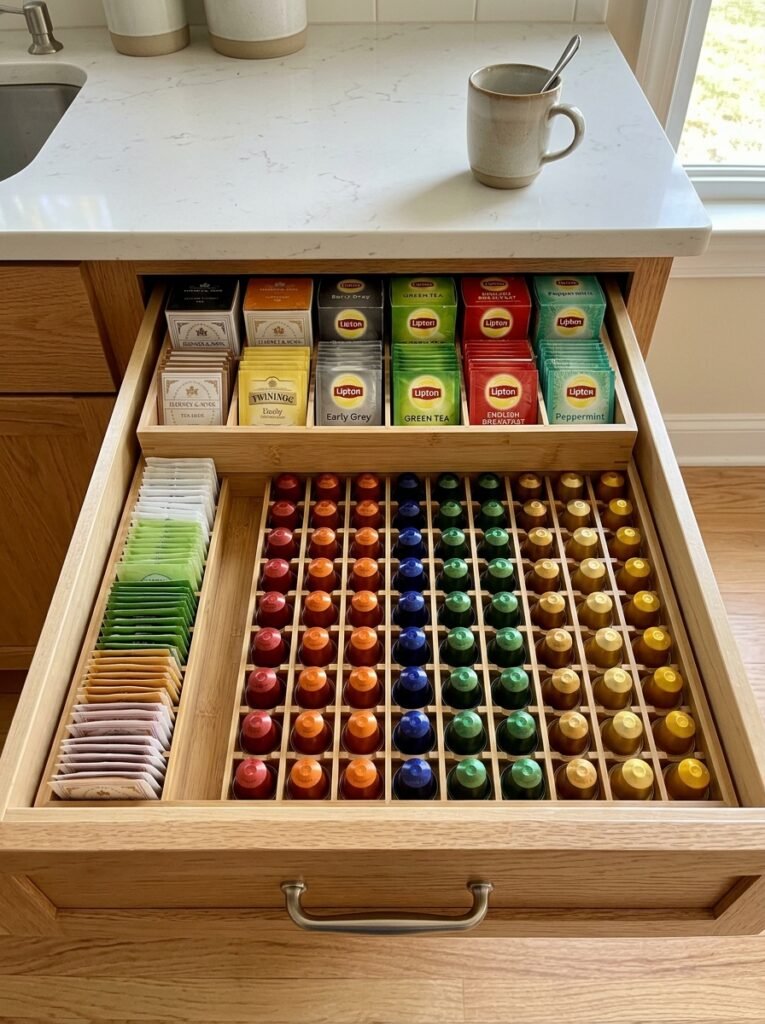
Loose tea bags and coffee pods migrate to every corner of a drawer within days.
An expandable tea and coffee pod organizer gives each type its own row, so the morning routine stops involving a search! It also shows you what’s running low without emptying anything out.
Planning the Layout
12. Assign Drawers by Where You Use Things
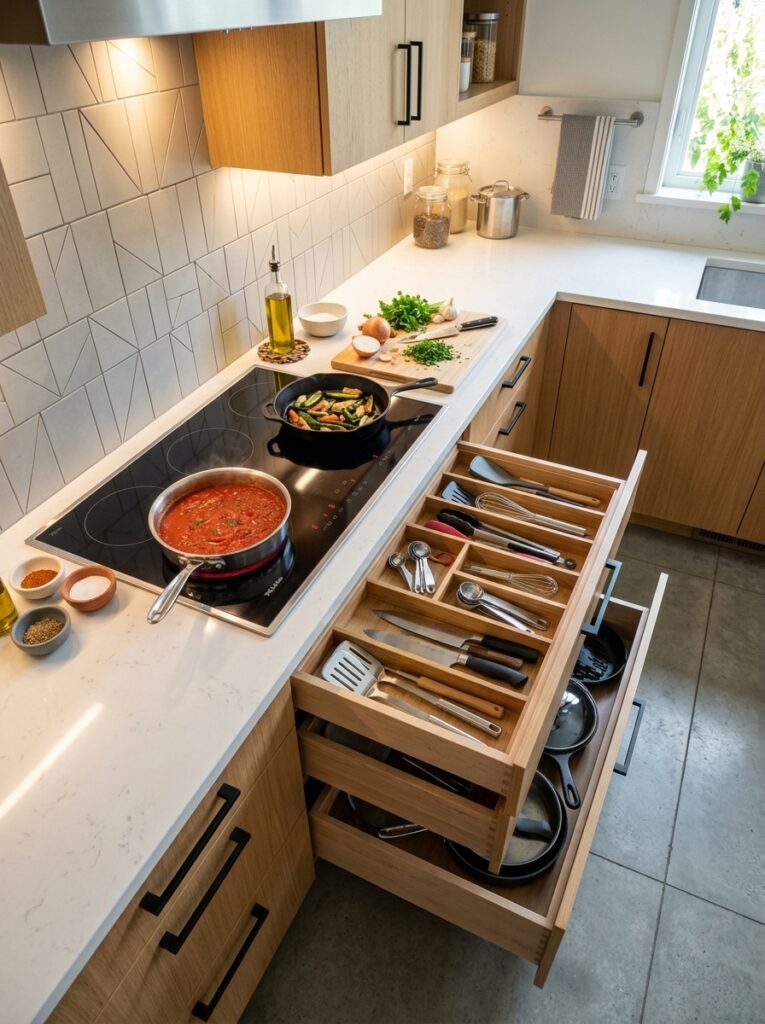
The best organizer in the wrong drawer still costs you steps.
Cooking utensils belong beside the hob, knives and peelers near the prep counter, and cutlery close to where plates get set down.
Sorting by proximity before buying anything is what makes the system hold!
Final Thoughts on Kitchen Drawer Organization Ideas
Two decisions carry most of the result, and neither costs anything. Work out which drawer each category belongs in based on where you actually use it, then empty everything out and get rid of the duplicates before a single organizer arrives. Most kitchens are quietly storing three vegetable peelers.
After that, measure the drawer depth, since that’s what sends most organizers back, and buy for the items instead of the drawer! Cutlery wants narrow lanes, cooking utensils want depth and lids want vertical slots.
A liner underneath keeps the whole arrangement from drifting, we want to prevent our utensils from scratching with the surface, which actually hurts both!
Kitchen Drawer Organization Ideas FAQ
Empty every drawer first, then group what’s left by category and remove the duplicates. Assign each category to the drawer nearest where you use it, measure the interior dimensions, and choose inserts built for those specific items.
Adding a non-slip liner underneath keeps everything from shifting once the drawer is in use.
Put cooking utensils beside the hob, knives and prep tools near the main counter, and cutlery close to where plates and the dishwasher sit.
Deep drawers suit pots, lids, and bulky items, while shallow drawers work best for cutlery, gadgets, and wraps. Proximity to the task matters more than any other rule.
Bamboo is the usual pick, since it resists moisture, holds its shape, and looks considerably better than plastic in an open drawer. Plastic costs less and wipes clean easily, which suits drawers holding anything that leaks.
Metal mesh works well for deep drawers, though it can scratch the drawer base without a liner.
A non-slip liner cut to the drawer base solves it for most setups, since the grip holds organizers in place through normal opening and closing.
Expandable and spring-tension designs brace against the drawer walls instead. For anything still moving, small adhesive furniture pads or museum putty under each corner will hold it.
Deep drawers waste their vertical space unless something stands things upright, so store lids, chopping boards, and baking trays on their edges using vertical dividers. For pots and pans, adjustable dividers create sections sized to each piece.
Stacking flat is what makes deep drawers unusable, since the bottom layer becomes unreachable.