Spanish style kitchens have a special kind of warmth that most modern kitchens spend a fortune chasing. Terracotta underfoot, hand-painted tile, dark wood, and iron details that look like they have stories to tell.
The full hacienda look and the lighter modern version both start from the same handful of elements.
These Spanish style kitchen ideas cover them all, from weekend-sized swaps to the dream renovation moves!
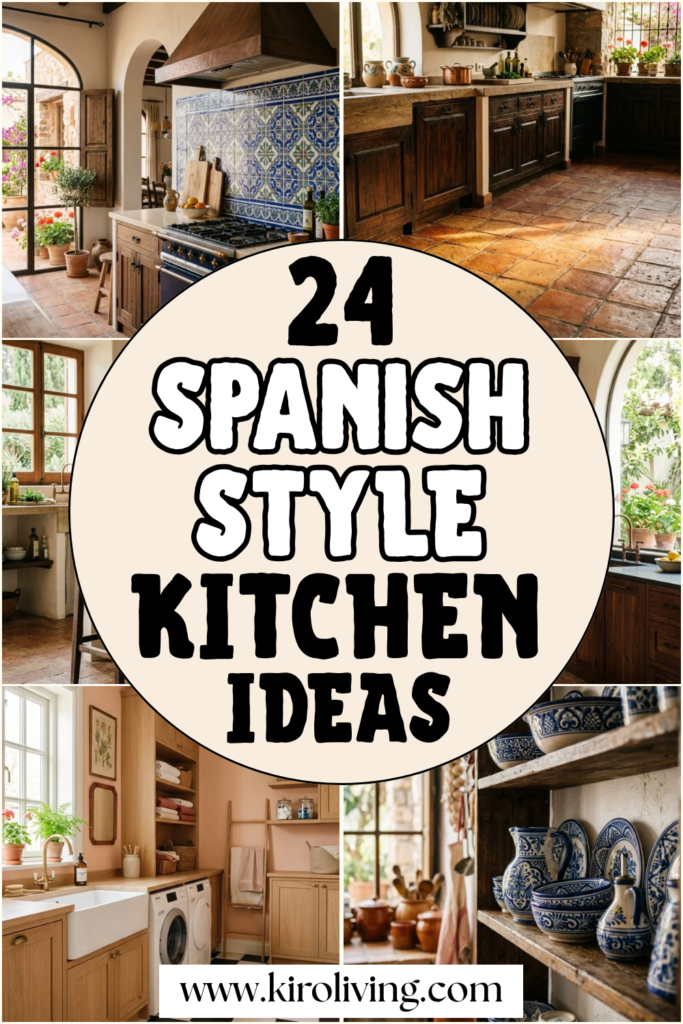
Plan on revisiting? Pin this for later!
This post may contain affiliate links, I may earn an extra commission, at no extra cost to you.
The Four Elements Every Spanish Kitchen Shares
Spanish kitchens can look wildly different, from a dark, beamed hacienda to a bright cream kitchen with one tiled wall. What ties them together is the same four ingredients showing up again and again.
Those four are:
- Tile, whether it’s terracotta underfoot or a hand-painted backsplash
- Wood in deep, warm tones on cabinets, beams, and shelves
- Iron in the hardware, lighting, and small details
- Warmth in every color choice, from plaster walls to clay pots
You don’t need all four at full volume.
A kitchen with even three of them working together already reads Spanish, whatever the budget or square footage.
Spanish Tile and Color Ideas
1. Start With a Patterned Tile Backsplash
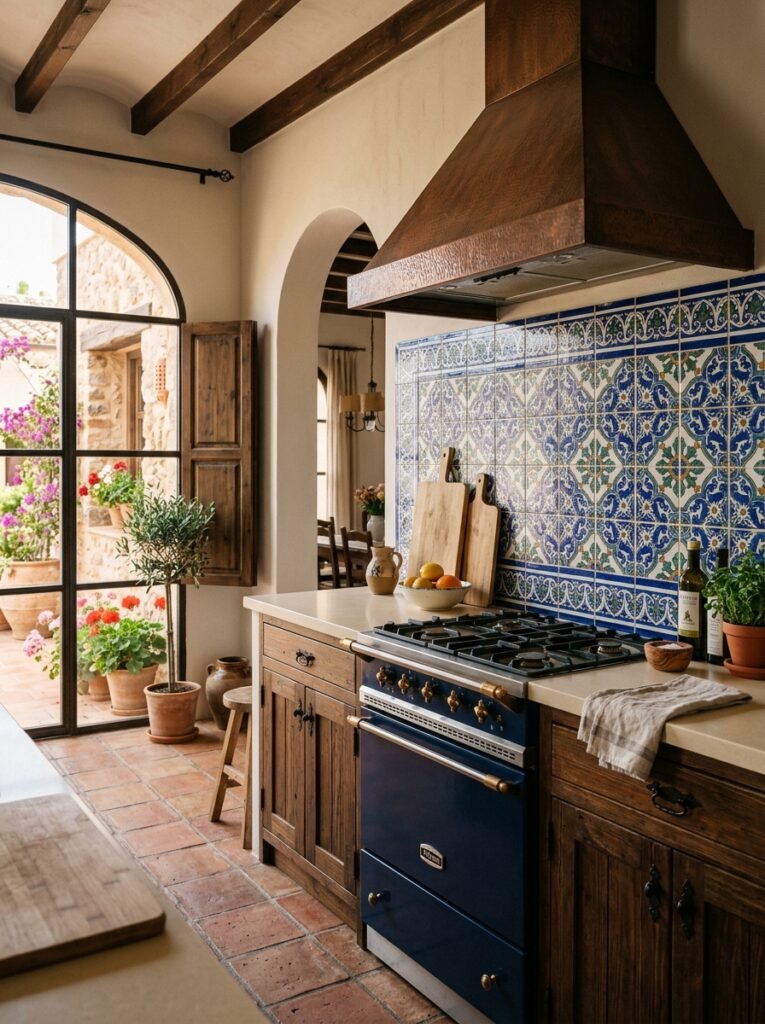
Hand-painted style tiles in blue and white, or warm geometric patterns, are the fastest way to bring Spanish character into an existing kitchen.
Even one row above the counter changes the look of the whole room.
Peel-and-stick versions of classic Spanish patterns turn this into a renter-friendly weekend project!
2. Ground the Room With Terracotta
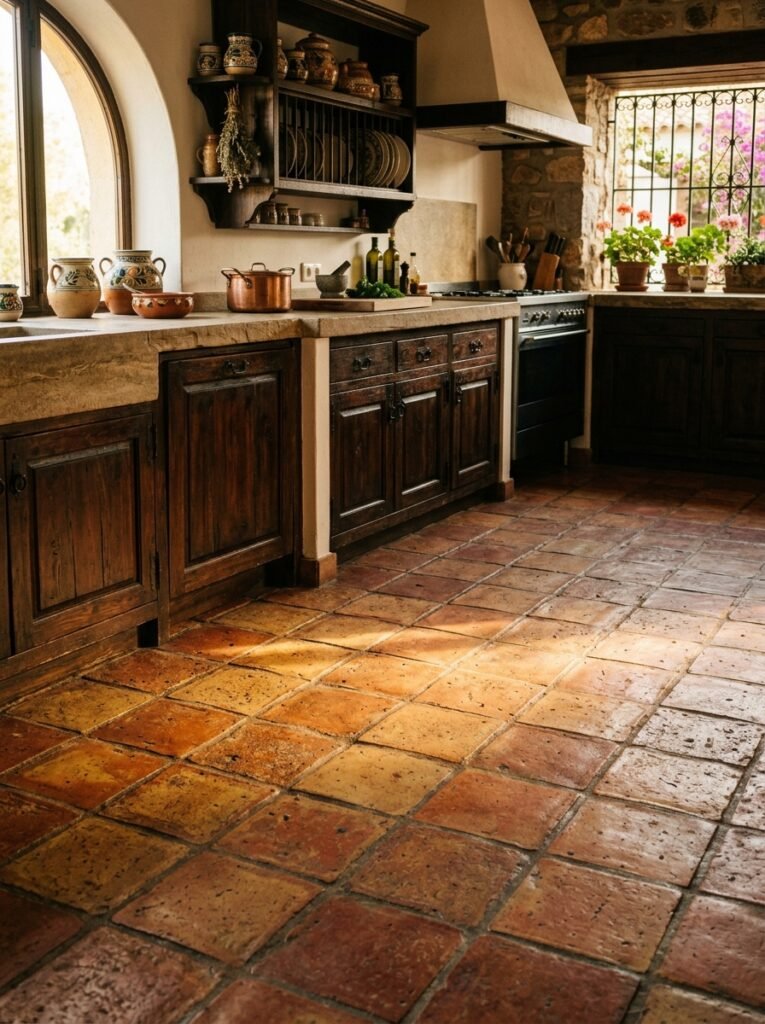
Terracotta floor tile is the foundation of the traditional Spanish kitchen. It’s warm, earthy, and looks better with every year of wear.
If new flooring isn’t happening, bring terracotta in through pots, a tiled tray, or large planters instead. The color alone carries much of the style’s warmth.
3. Build a Warm Earth-Tone Palette
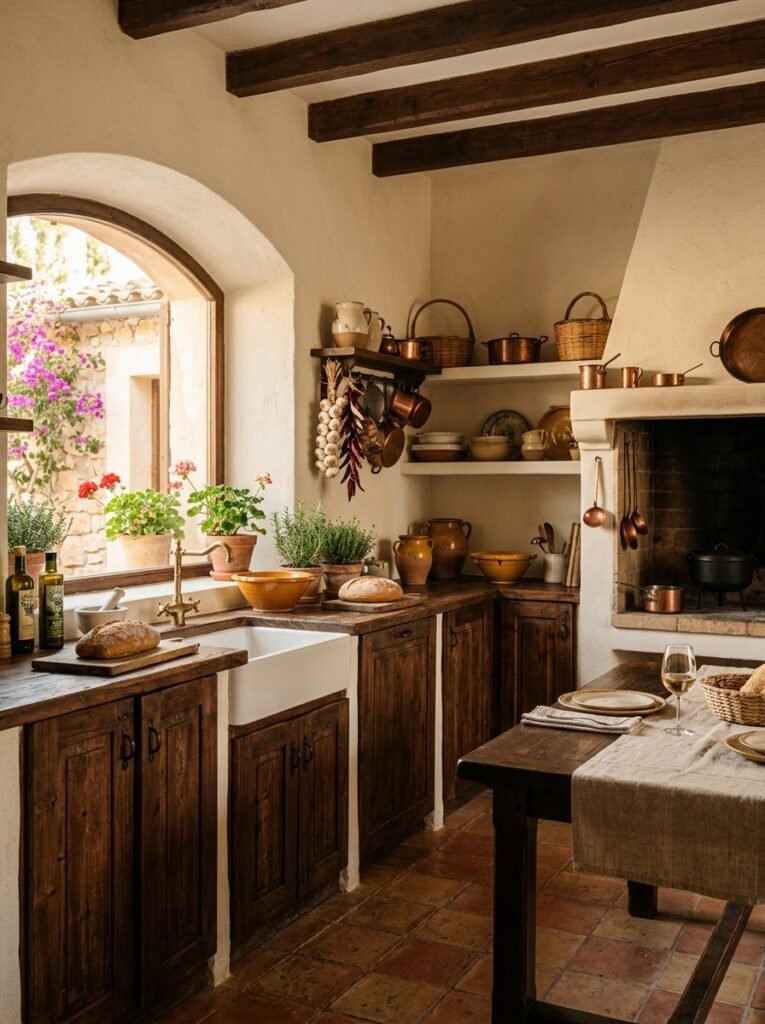
Cream, ochre, clay, mustard, and deep brown form the Spanish kitchen’s natural range.
Walls stay light and warm, usually cream or soft white plaster tones, while the depth comes from wood and tile.
A kitchen painted in cool colors will fight this style at every turn, so let warmth win every choice.
4. Add Blue and White Ceramics
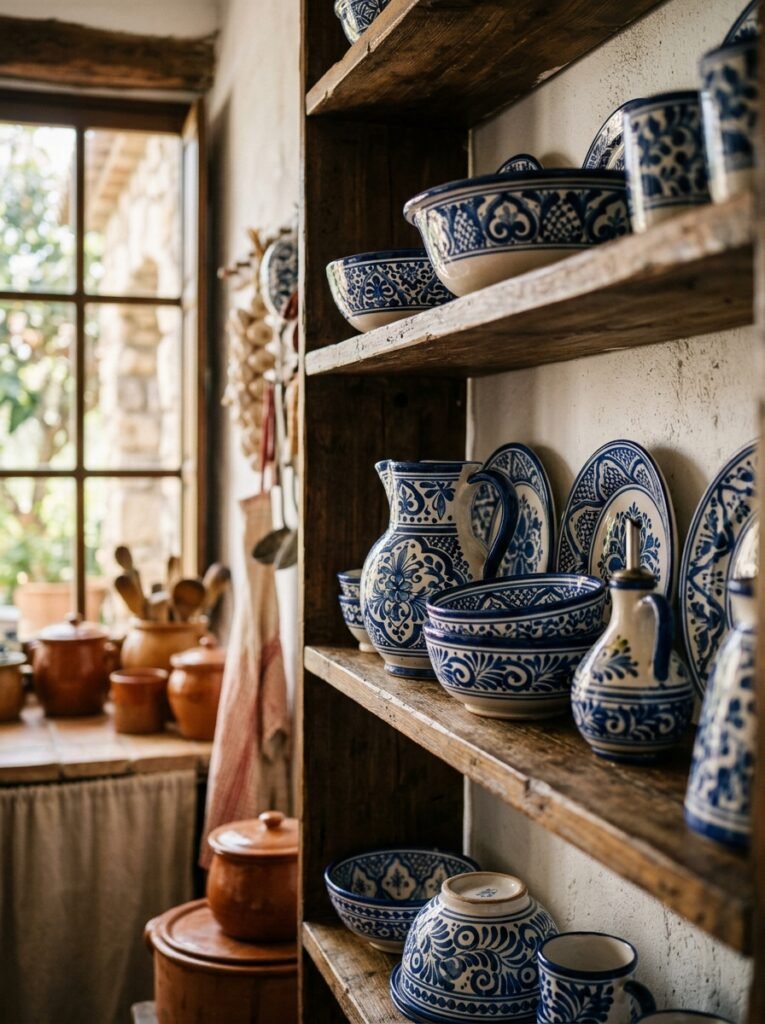
Talavera-style pottery like blue-patterned bowls and painted jugs on open shelves adds the classic Spanish color contrast to all that warmth.
A few real hand-painted pieces beat a shelf of matching sets.
Group them where the eye lands first, near the range or on the top shelf.
5. Tile the Front of the Island
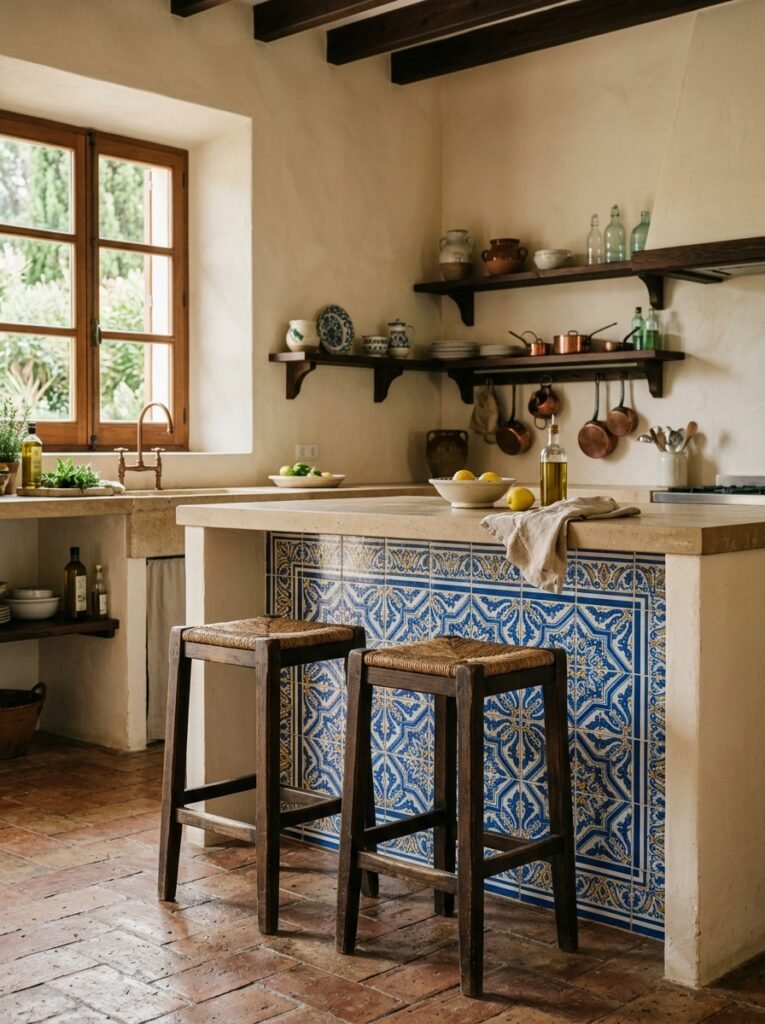
The backsplash isn’t the only place for patterned tile.
Wrapping the front or sides of the island in painted tile gives the room a second focal point and ties the whole kitchen together.
Use the same tile as the backsplash for a cohesive look, or a coordinating pattern in the same colors for more personality. A plain wood or stone counter on top keeps it from feeling busy.
Wood, Iron, and Cabinetry
6. Choose Dark, Rich Wood Cabinets
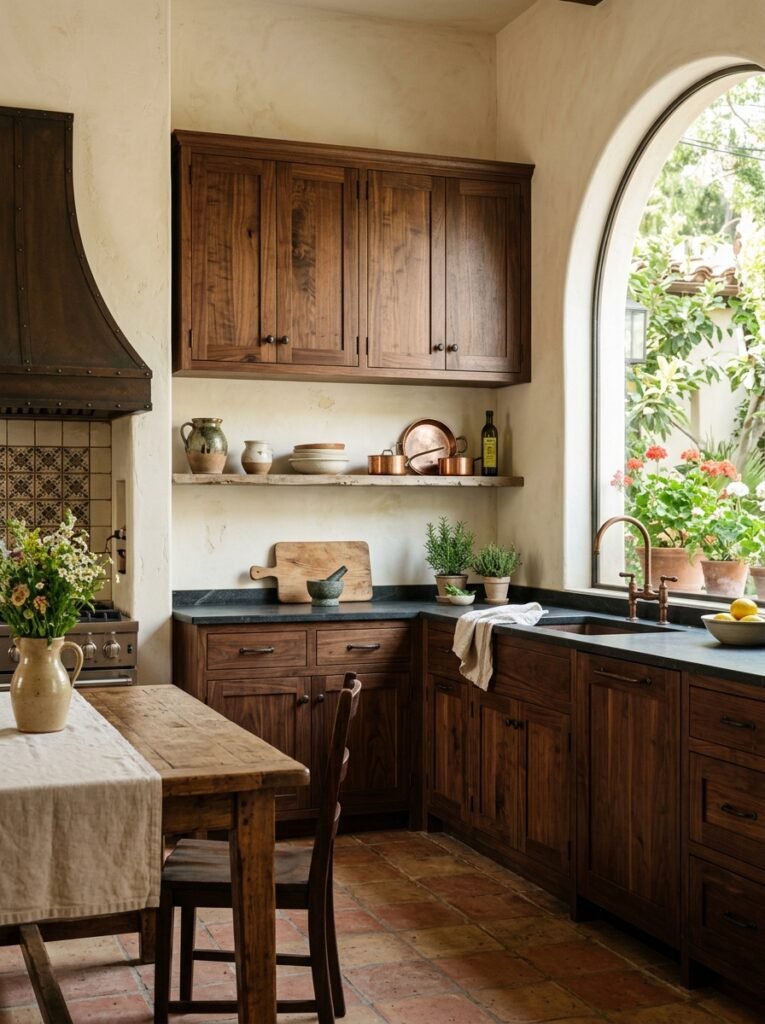
Deep walnut-toned cabinetry gives the Spanish kitchen its grounded, luxurious base. Paired with cream walls and warm counters, dark wood reads rich instead of heavy.
Existing cabinets can move this direction with gel stain or a deep espresso repaint, no replacement required!
7. Swap In Black Iron Hardware
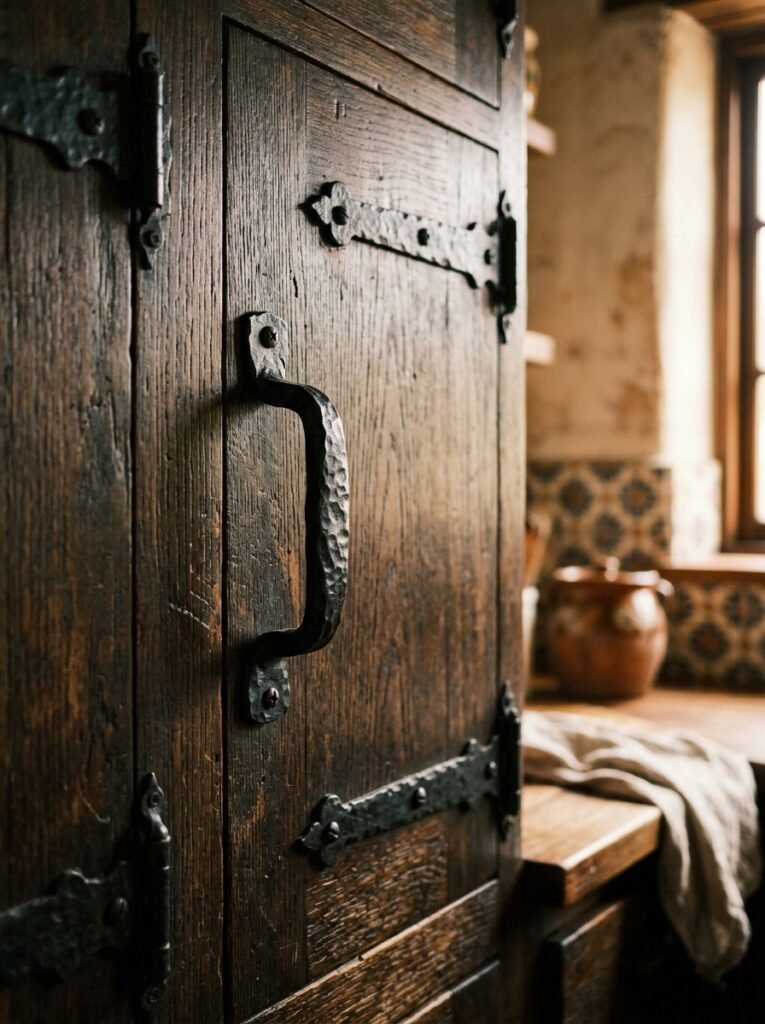
Wrought iron handles, hinges, and pulls are small parts that carry big authenticity. Swapping standard chrome for black iron takes an afternoon and pulls even plain cabinets toward hacienda territory.
It’s the highest character-per-dollar move in this whole post.
8. Hang a Wrought Iron Light Fixture
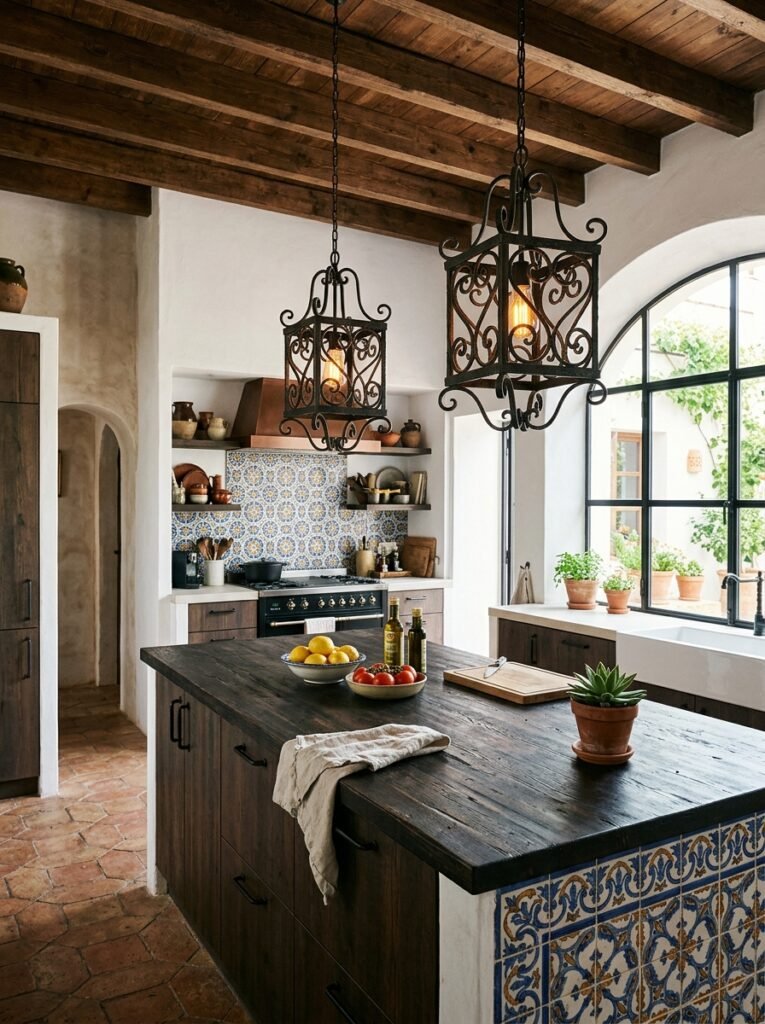
A lantern-style pendant over the island or table anchors the room the way Spanish kitchens have been anchored for centuries. The fixture should feel a little heavy and a little old-world.
Thin modern pendants disappear in this style, since presence is the whole point.
9. Open Up With Wood Shelving
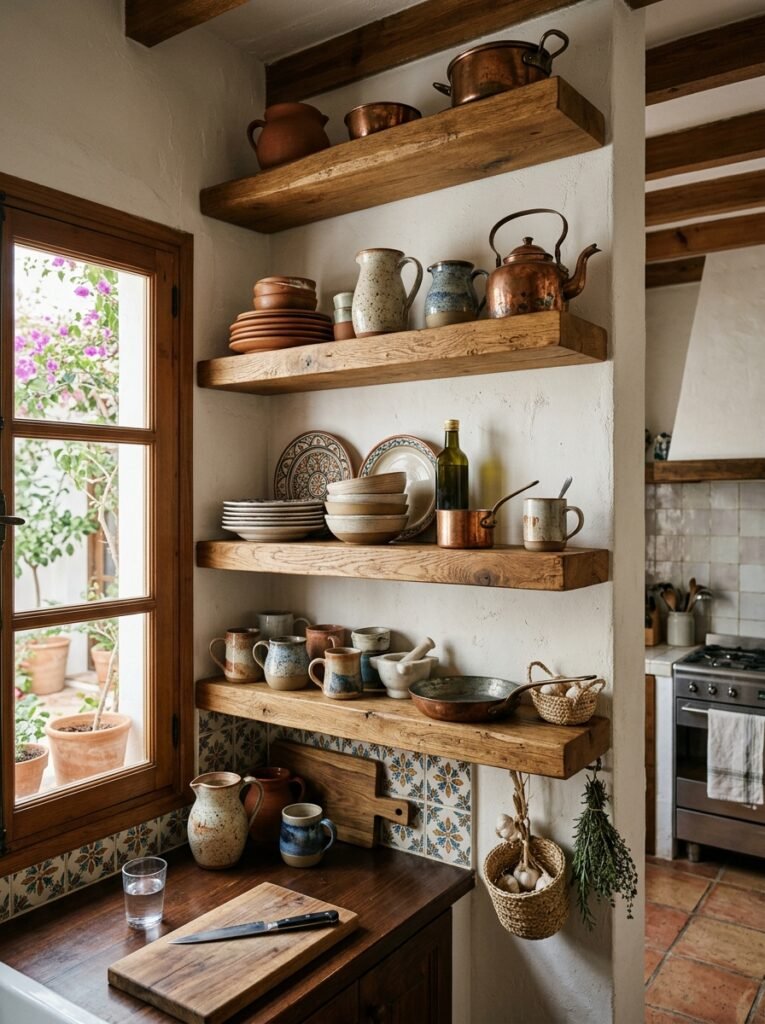
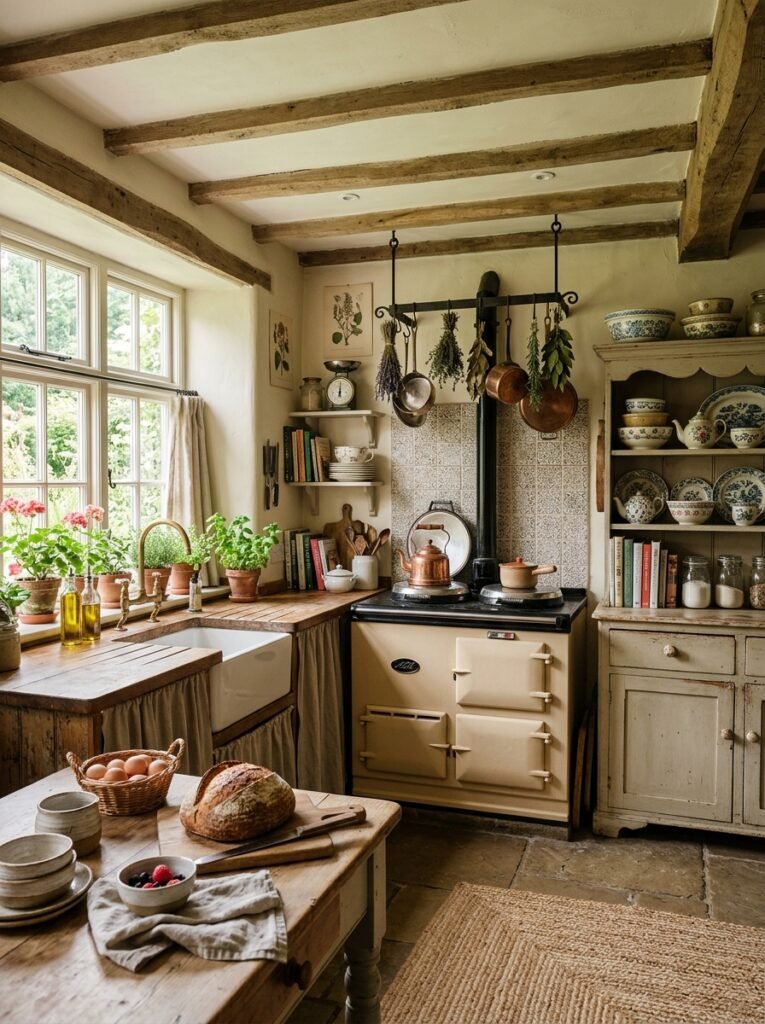
Chunky, warm-stained floating shelves holding everyday ceramics and copper are a Spanish kitchen signature. One or two open sections mixed with closed cabinets keeps it practical.
Style them with pieces you actually use daily, since the lived-in look is the authentic one.
10. Expose or Add Wood Beams
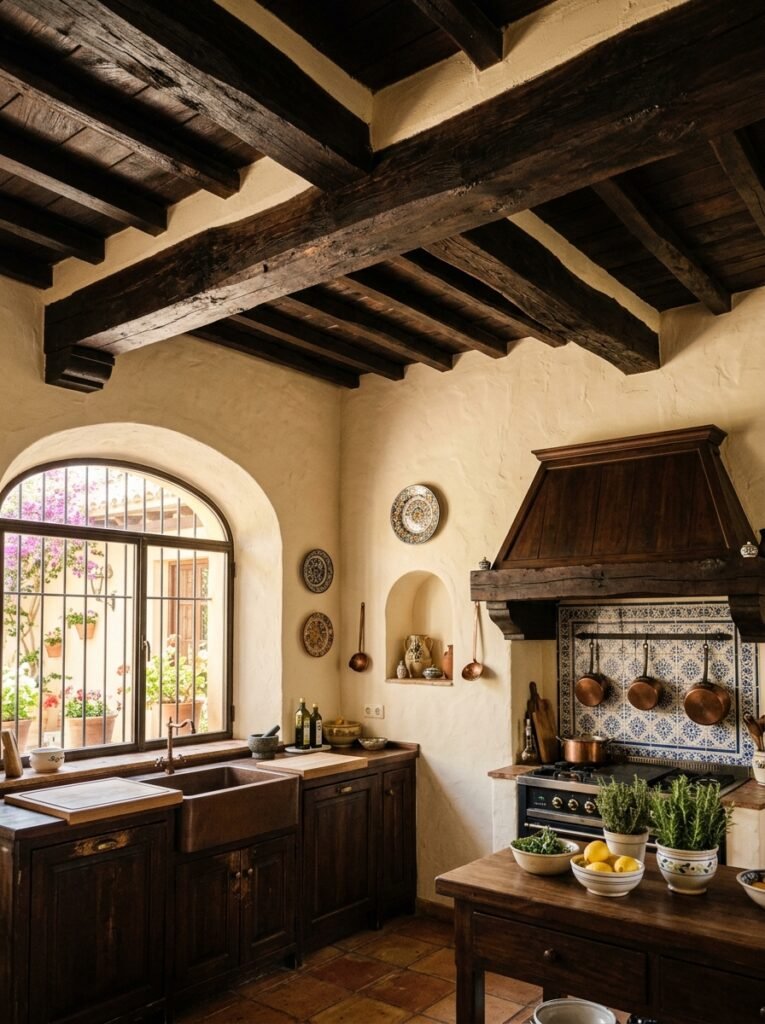
Ceiling beams in warm dark wood complete the hacienda feeling overhead. Real exposed beams are a renovation gift, but lightweight faux versions look convincing from below too!
Even one beam across a kitchen doorway makes the architecture feel planned.
11. Pair Dark Wood With Warm Stone Counters
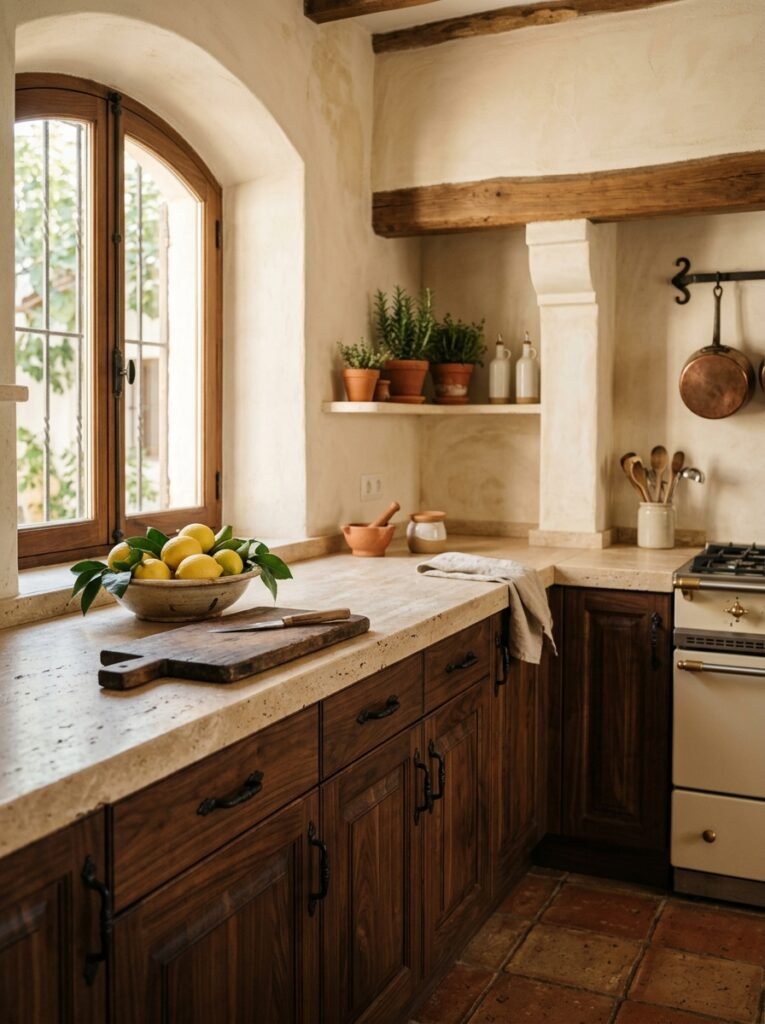
Counters are where a lot of Spanish kitchens go slightly wrong, usually with a cool gray or bright white stone.
Warm options like travertine, honed limestone, or a creamy quartz with beige veining keep the palette consistent.
A honed or matte finish looks older and softer than polished stone, which suits the style better. Butcher block on the island is another warm, budget-friendly option.
Architectural Spanish Details
12. Frame an Arch Wherever Possible
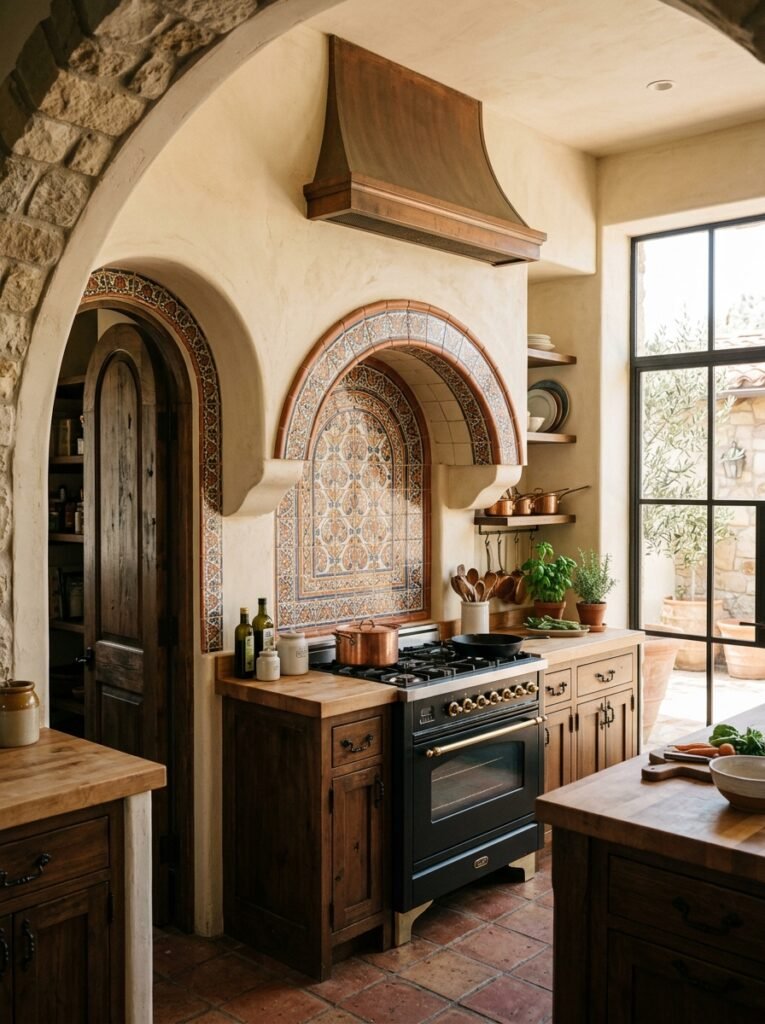
The arch is Spanish architecture’s signature curve, over doorways, above the range in the tile layout, or as a nook for shelving.
It’s a detail where curved openings soften every threshold.
Kitchens without structural arches can echo the shape through an arched mirror, cabinet detail, or tile pattern. Repeating the curve even twice ties the room to its roots.
13. Texture the Walls Like Plaster
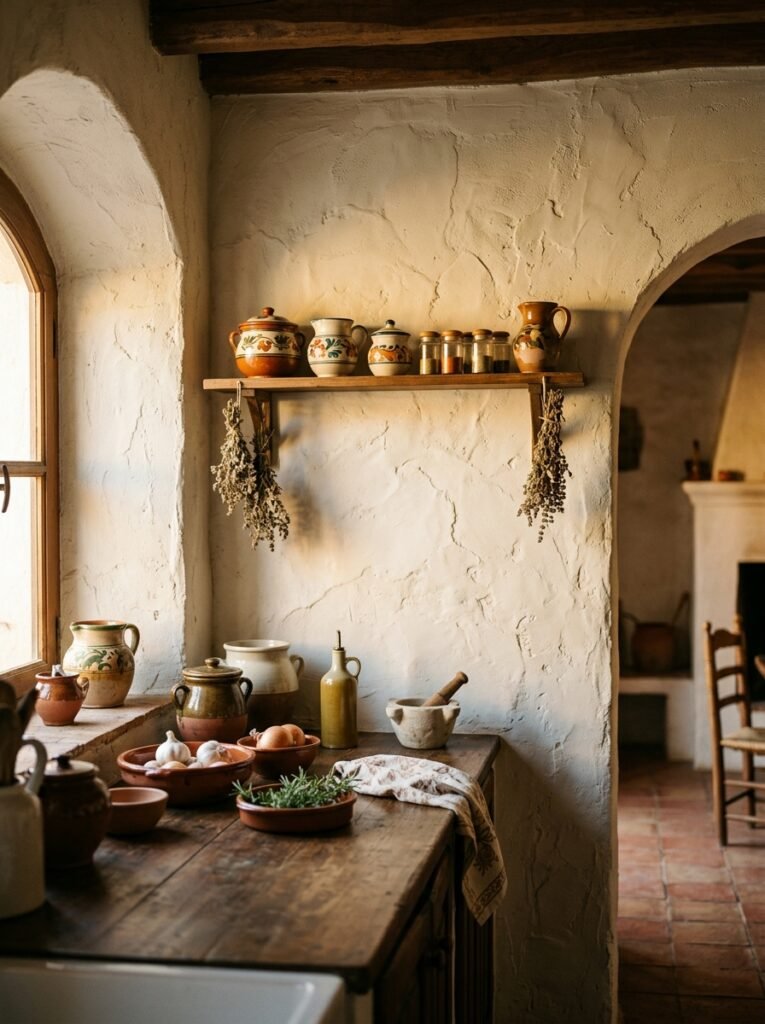
Smooth builder-grade drywall is the quiet enemy of this style. Limewash or Roman clay finishes give walls the soft, hand-troweled plaster depth Spanish homes are known for.
The subtle texture catches warm light beautifully and makes even a small kitchen feel storied.
14. Warm the Window With Wood and Iron
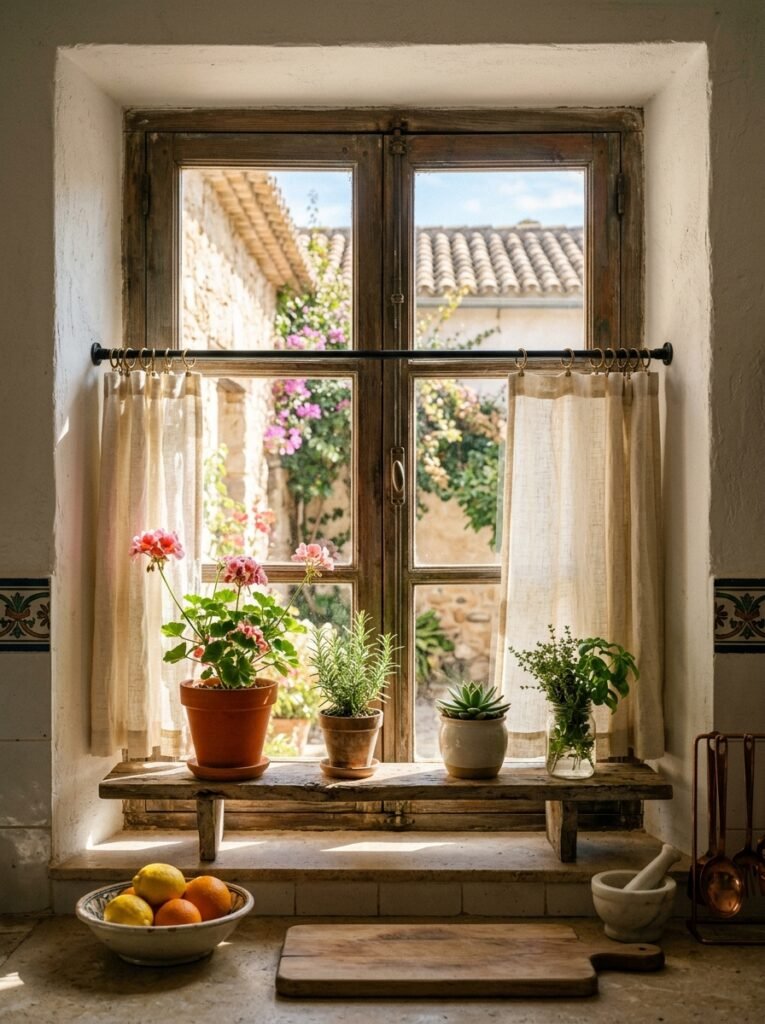
Spanish kitchens dress windows sparingly, so skip the heavy curtains. A simple wood shelf across the window for plants, or a small iron rod with cafe-length linen, keeps the light pouring in.
Sunlight on terracotta and plaster is half the aesthetic!
15. Build a Plaster Range Hood
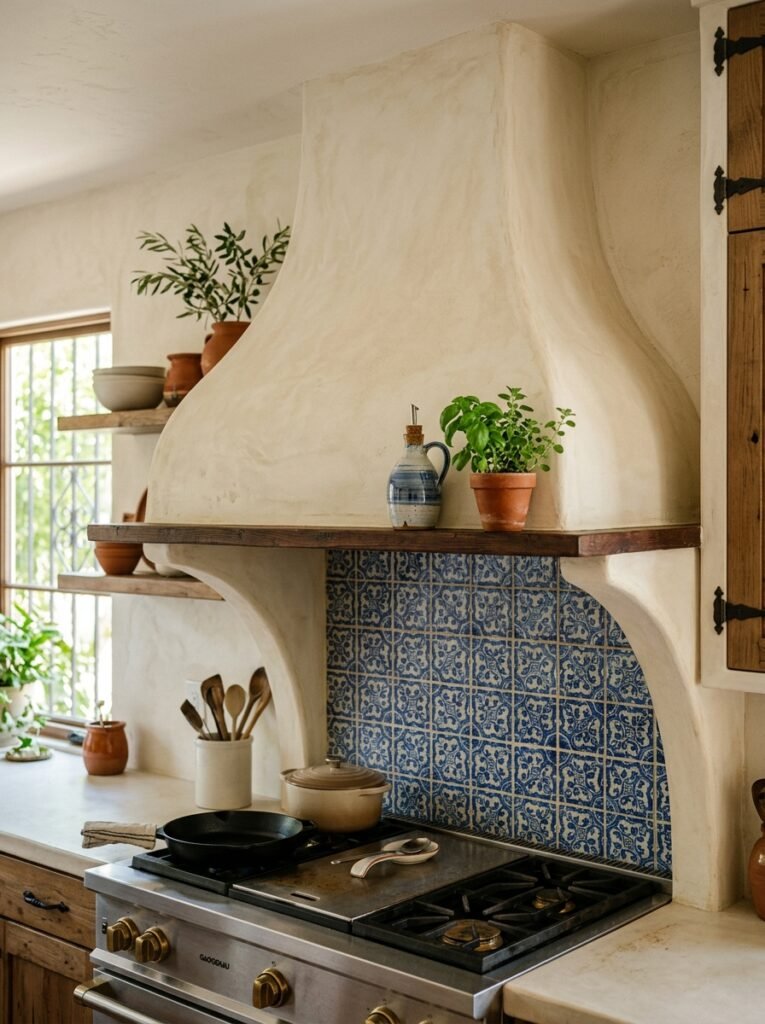
A sculpted plaster hood over the range is one of the most recognizable features of a Spanish kitchen.
Its soft, slightly curved shape looks hand-built and turns the cooking area into the room’s centerpiece.
Finish it in the same limewash as the walls so it looks like part of the architecture. A thin wood mantel ledge along the bottom gives you a spot for oils and a small plant.
16. Carve Out an Arched Wall Niche
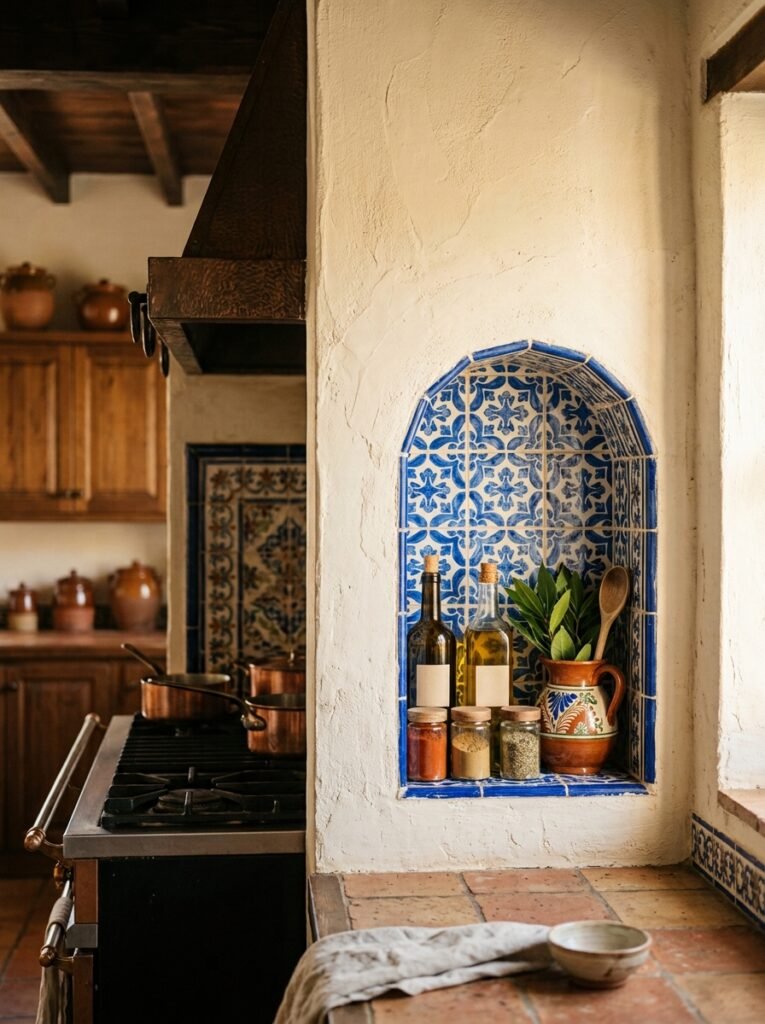
A small arched niche set into the wall gives spices, oils, and a favorite ceramic their own little stage.
It adds architecture without taking up any floor or counter space.
Line the back with patterned tile for an extra pop of Spanish color. Beside the range is the most useful spot, since everything stays within reach while you cook.
The Finishing Warmth
17. Display Copper Cookware
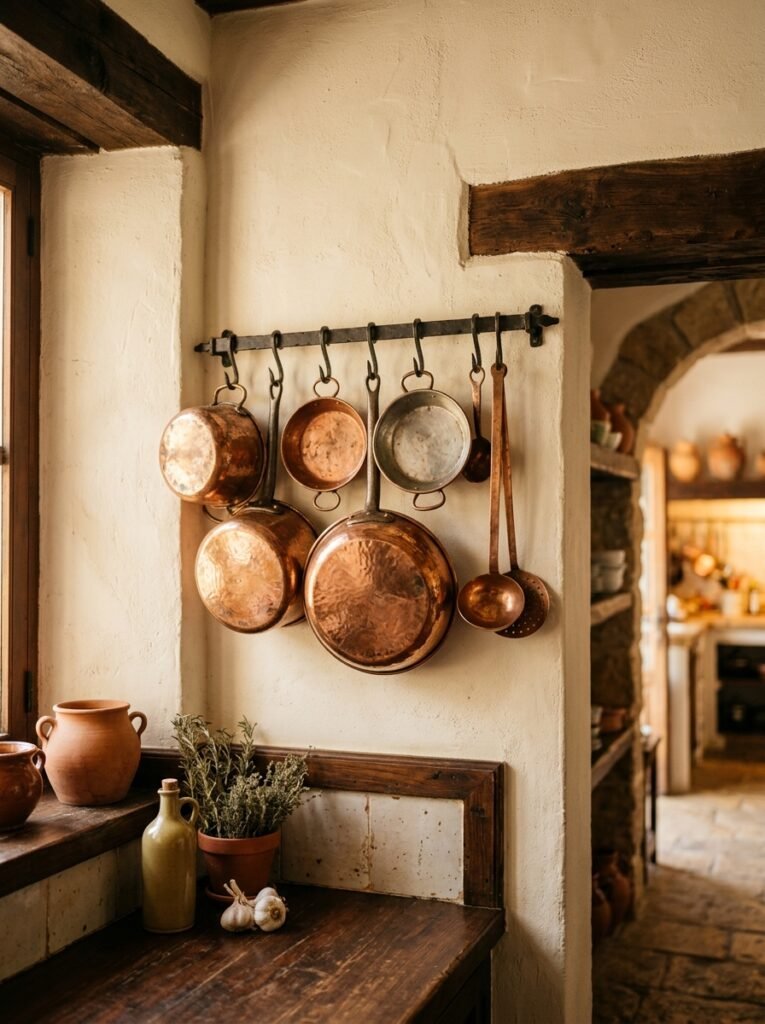
Hanging copper pans or a few pots on open shelving adds the metallic warmth this style loves.
Copper against cream plaster and dark wood is a combination that has worked for a few hundred years.
Thrifted, slightly worn pieces look more at home than showroom-shiny ones.
18. Bring In Woven and Clay Textures
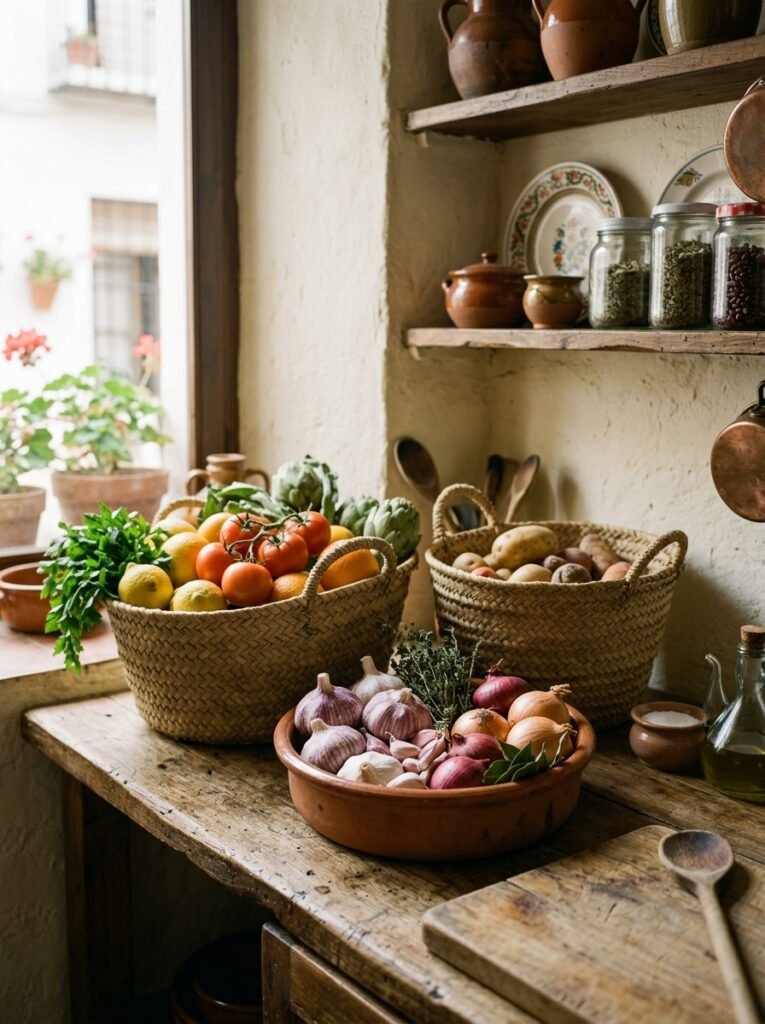
Humble textures keep the kitchen feeling like a working home instead of a showpiece. A few easy ones to add:
- Woven baskets for produce
- A clay bowl for garlic and onions
- A jute runner underfoot
The Spanish kitchen was always a room for cooking first, and the styling should say so.
19. Add Greenery in Terracotta Pots
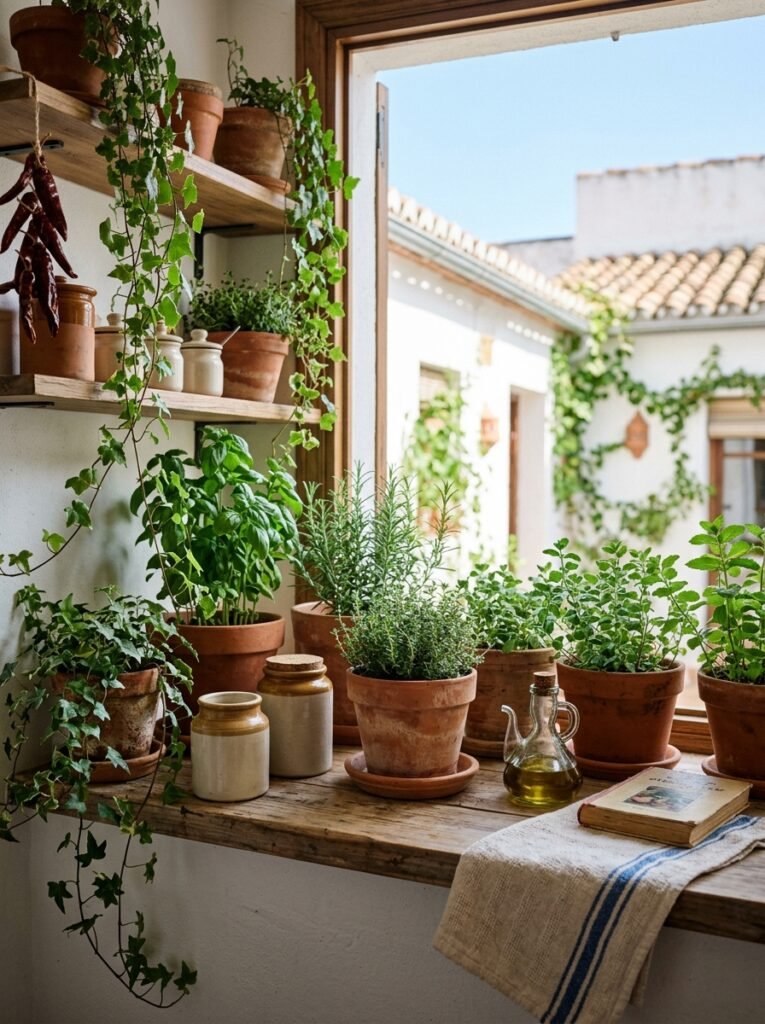
Trailing pothos on a shelf, potted herbs by the window, maybe an olive tree in the corner if the light allows. Greenery in terracotta pots is the style’s freshest contrast!
Herbs especially earn their place, since they’re decorative and dinner-bound at once.
20. Set a Rustic Wood Dining Nook
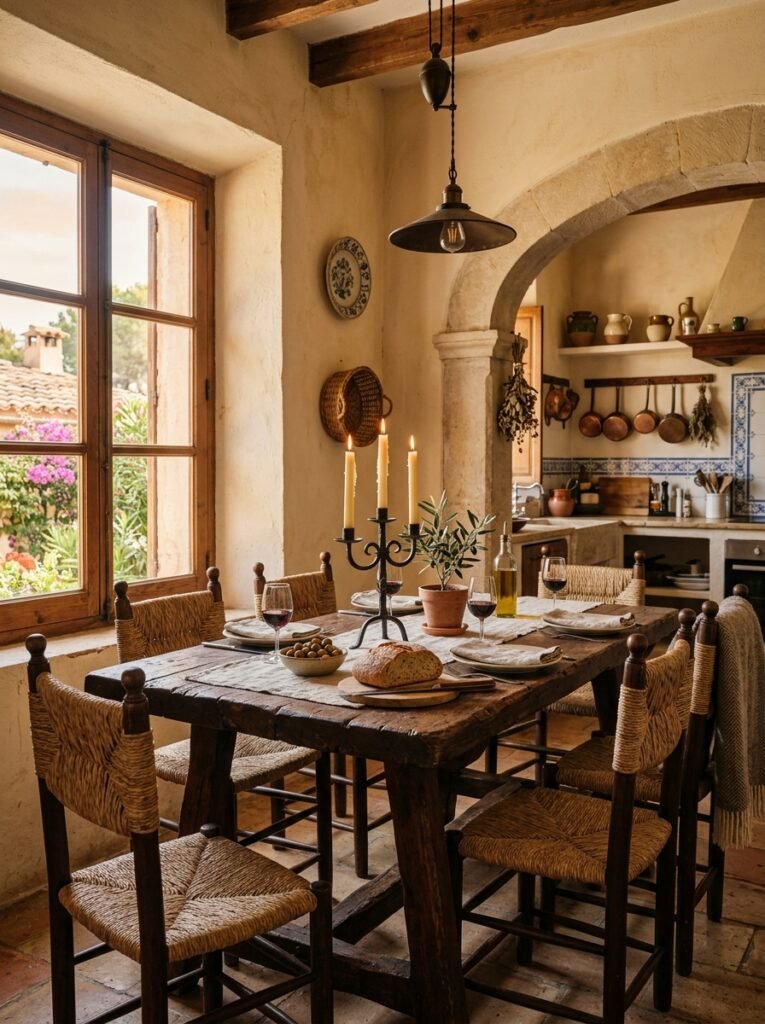
A chunky wooden table with woven or leather-seat chairs at the kitchen’s edge turns the room into the gathering place Spanish kitchens were always meant to be.
Nothing matching, nothing delicate, just solid wood that welcomes elbows and long dinners.
A wrought iron candlestick or a clay pitcher of flowers in the center finishes it.
21. Pull Up Leather or Rush Seat Stools
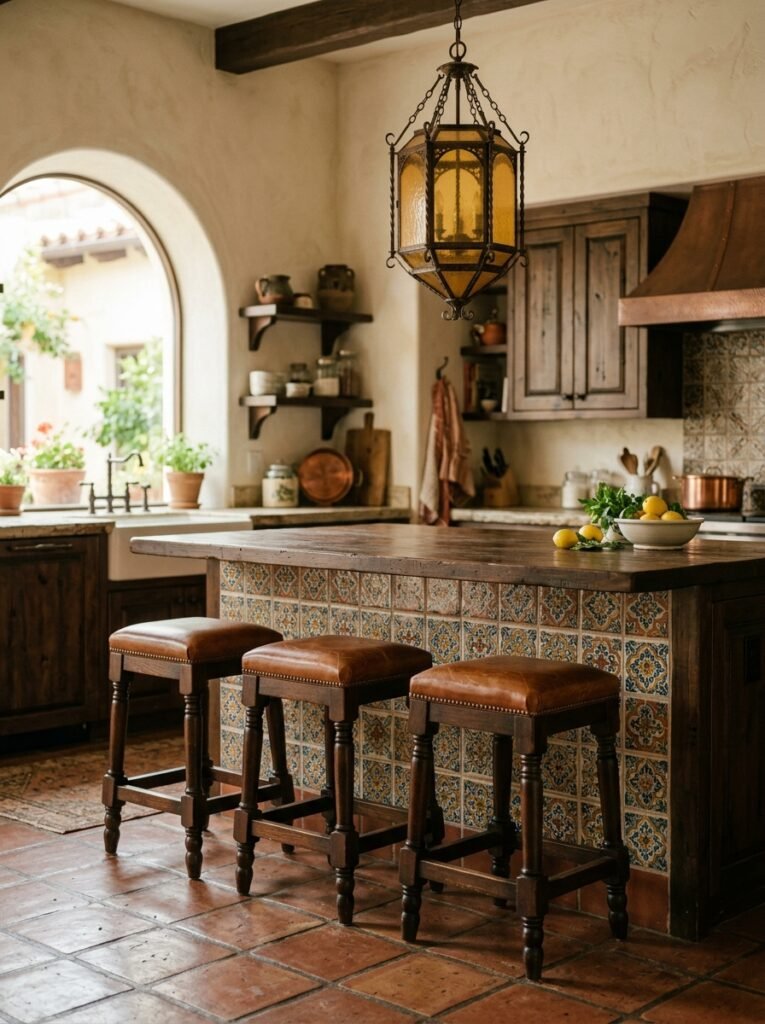
Counter stools are an easy place to add Spanish character, especially at an island.
Dark wood frames with cognac leather or woven rush seats feel warm, sturdy, and a little rustic.
Skip anything glossy or molded plastic, since it breaks the handmade feel instantly. Leather also softens beautifully with use, so the stools look better every year.
22. Keep Olive Oil and Bread Boards on Display
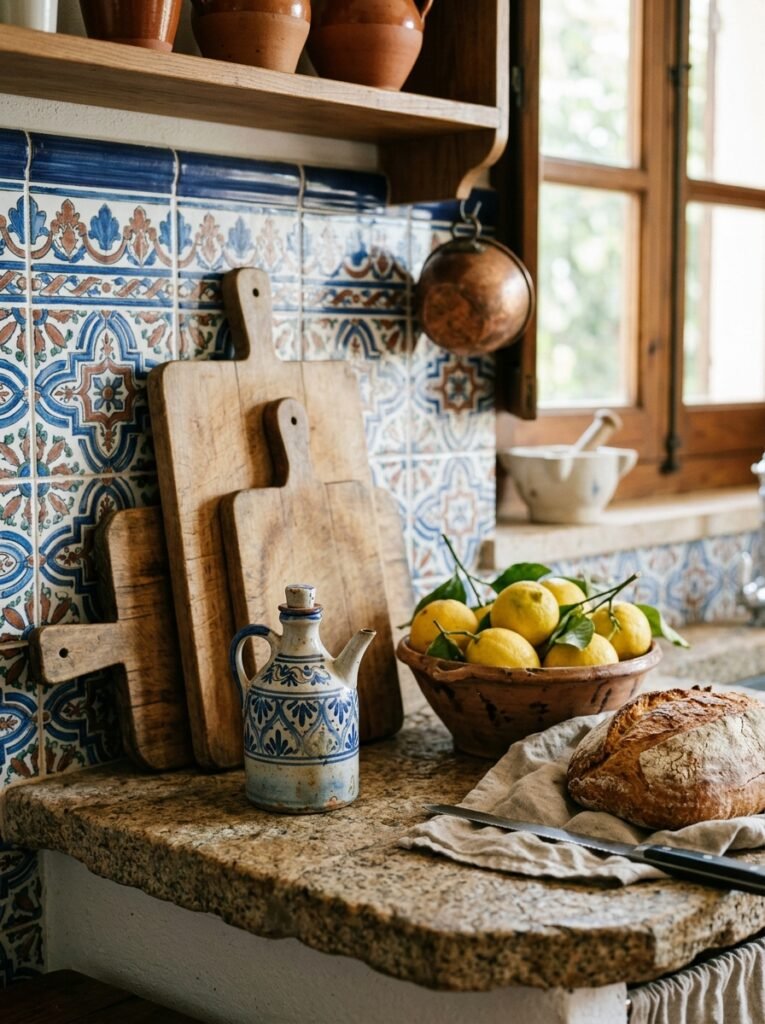
Everyday cooking essentials make some of the best decor in a Spanish kitchen. Olive oil in a ceramic cruet, a stack of worn wooden cutting boards, and a bowl of lemons all look beautiful left out on the counter.
Group them in one corner near the range so the counter looks styled, not cluttered. It’s decor you’ll use every single day!
23. Hang a Wall of Decorative Plates
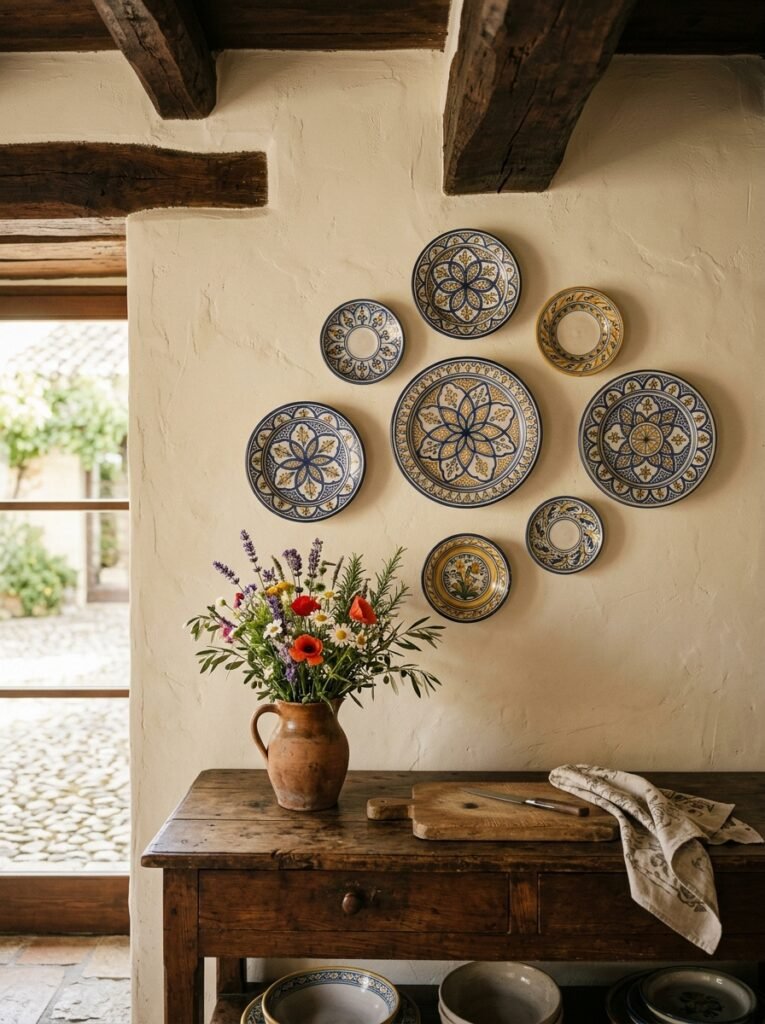
Hand-painted plates grouped on a wall are a traditional way to show off Spanish ceramics without using any shelf space.
A cluster of five to seven in mixed sizes fills an awkward wall beautifully.
Keep the colors in the same family, like blues and yellows, so the mix of patterns still feels cohesive. Simple wire plate hangers hold them securely and stay almost invisible.
24. Try the Lighter Modern Spanish Mix
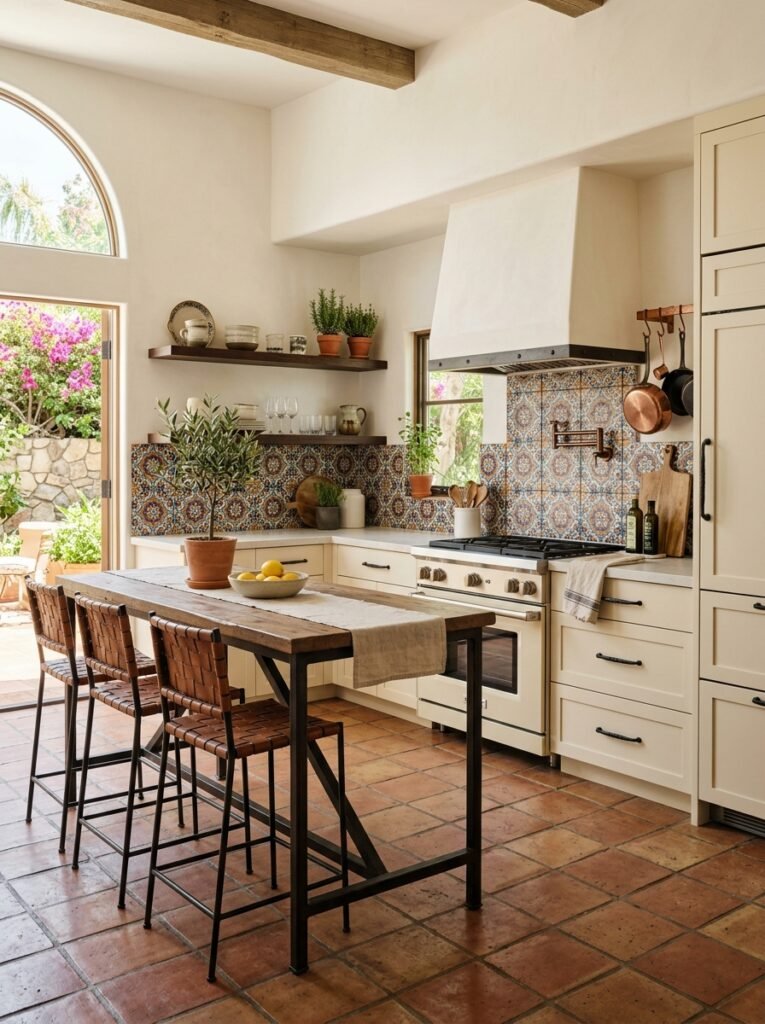
The modern version keeps the tile, arches, and iron but lightens everything else, with white or cream cabinets, cleaner lines, and less ornament. It suits homes where full dark-wood tradition feels too heavy.
The test is simple: if the tile, arch, and warm materials are there, the Spanish soul survives the modern styling.
Final Thoughts on Spanish Style Kitchen Ideas
Tile, wood, iron, and warmth. Every idea above is one of those four wearing different clothes, and a kitchen that has all four reads Spanish regardless of budget or square footage.
Start with the hardware swap and a few Talavera pieces if renovation isn’t on the table, or start with the backsplash if it is.
Either way, this is a style built to age gracefully. The kitchens that inspired it have been beautiful for centuries, and yours borrows that permanence the day the first tile goes up!