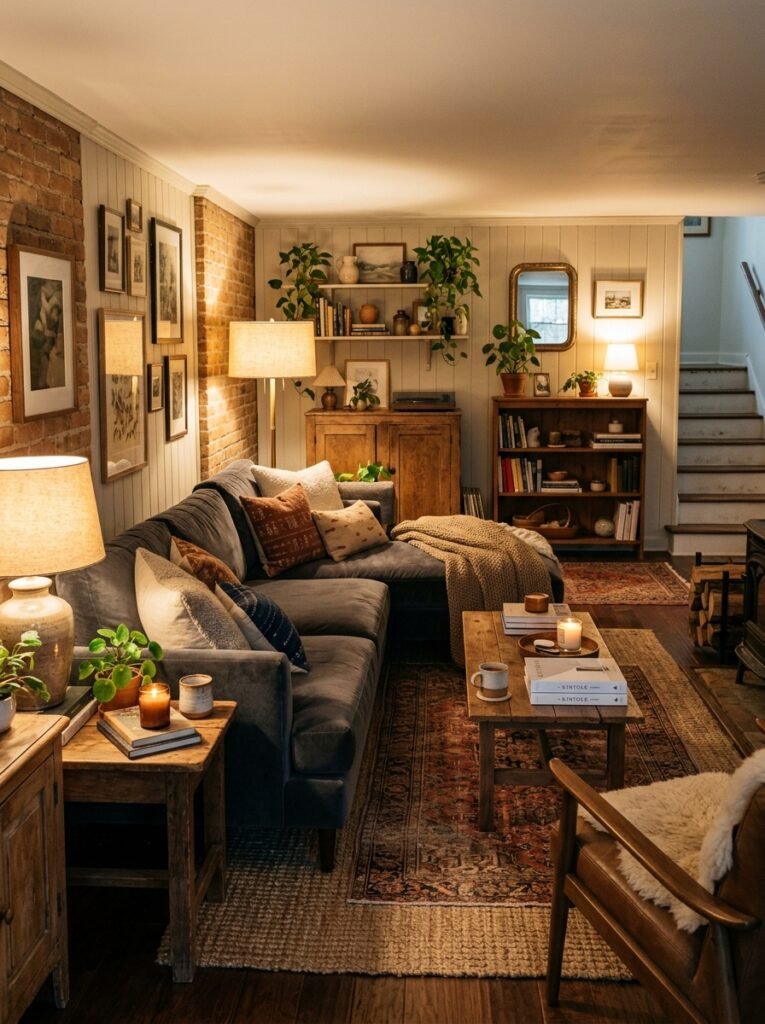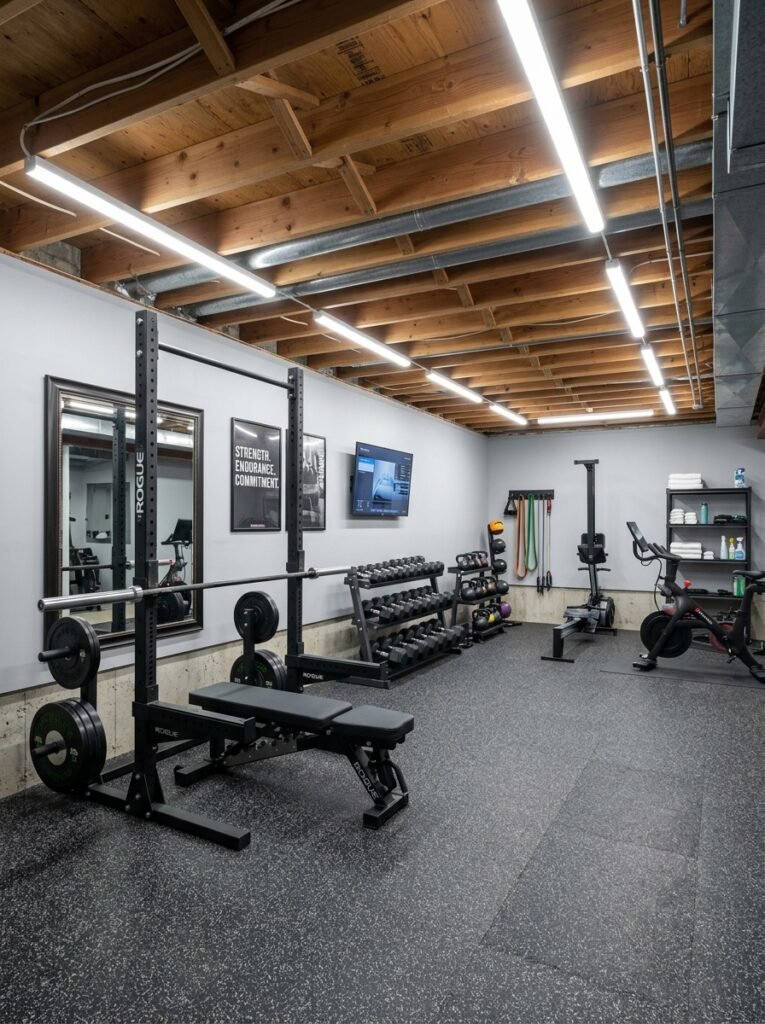
The ceiling is the part of a basement that gives it away. Joists, ducts, wiring, and pipes sit in plain view, and no amount of good flooring or furniture below quite compensates for it.
There are more ways to handle it than most people realize, and they range from a weekend with a paint sprayer to a full drywall install.
These basement ceiling ideas cover both ends of that range, along with the height and moisture questions that should decide which one you pick.
Plan on revisiting? Pin this for later!

Exposed Ceiling Options
1. Spray Everything Matte Black
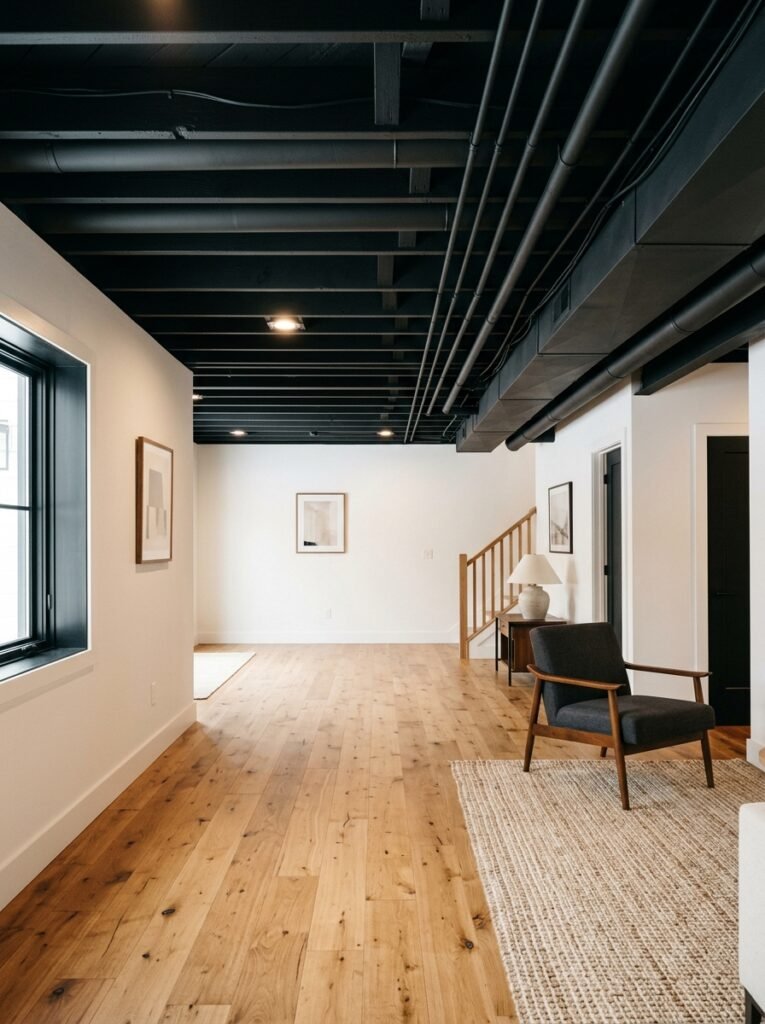
Spraying the joists, pipes, and ducts all in flat black makes the ceiling recede, making everything much more cleaner and cohesive.
It costs a sprayer and a few gallons of paint, which beats framing and drywalling on both time and money.
2. Paint the Whole Ceiling White
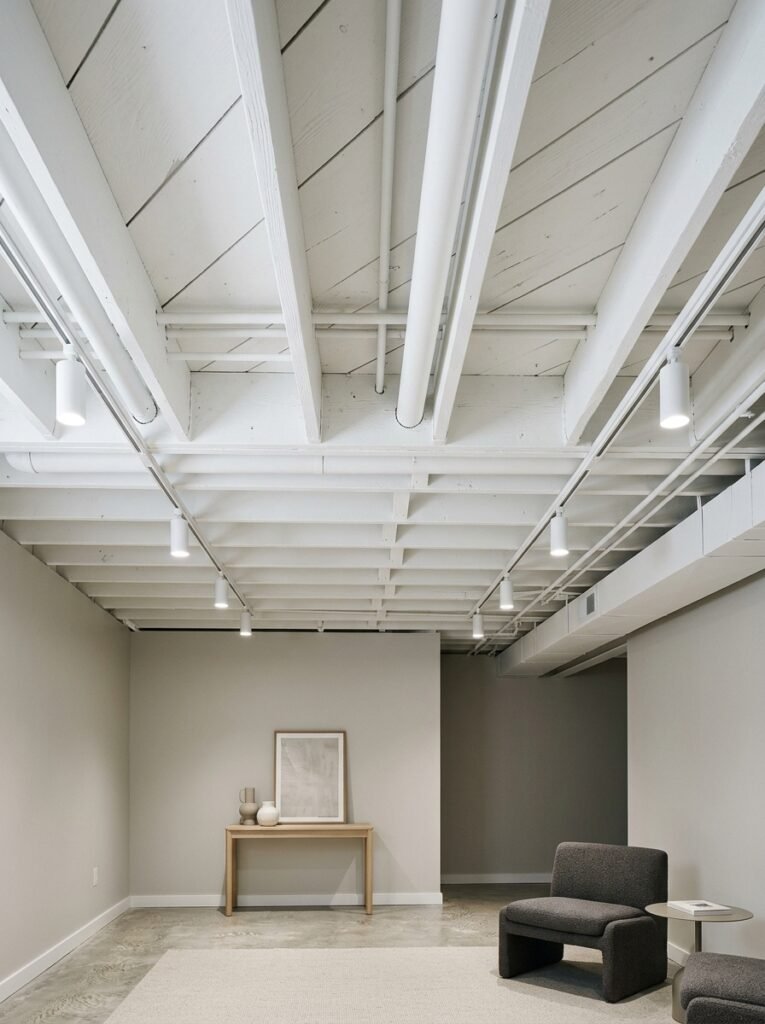
White does the opposite of black, bouncing what little light a basement gets back down into the room.
Painting the joists and the space between them in the same white creates a flat plane overhead, which reads as a taller ceiling than it actually measures.
This is the safer choice when headroom is genuinely tight!
3. Whitewash the Joists
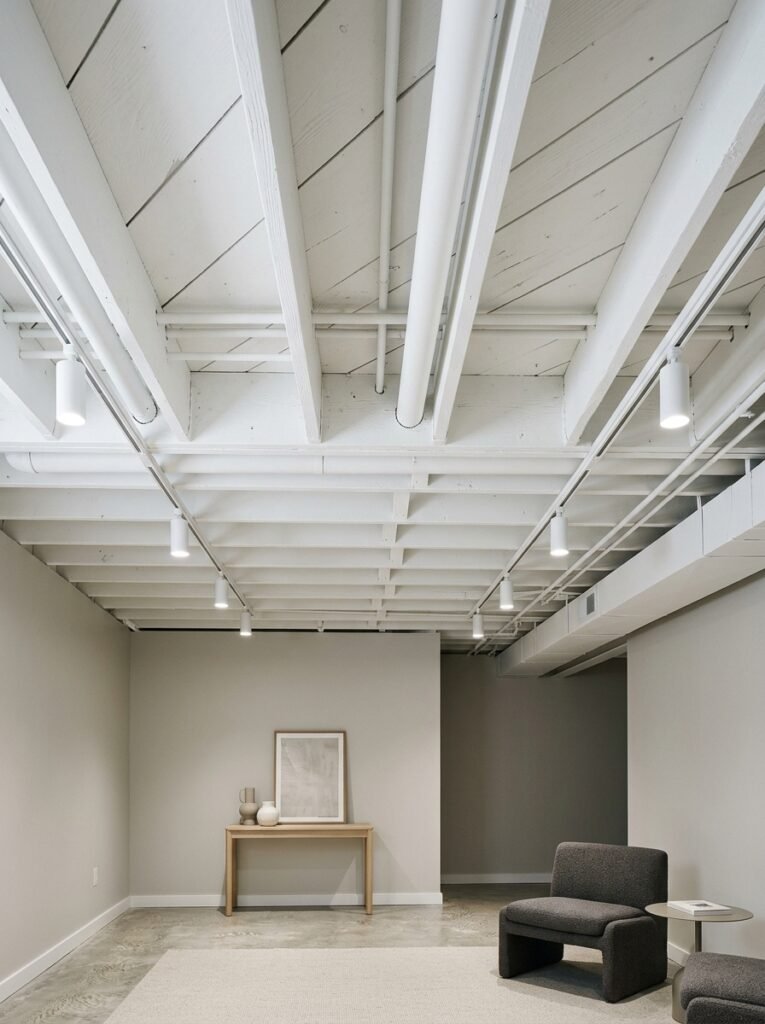
Whitewashing keeps the wood grain visible while lightening the ceiling considerably, so you get texture and brightness at once.
It suits basements where a solid painted ceiling would feel too flat and black would feel too heavy.
Leaving the light boxes and conduit exposed alongside it holds the relaxed, unfinished look together.
4. Clean It Up and Leave It Natural
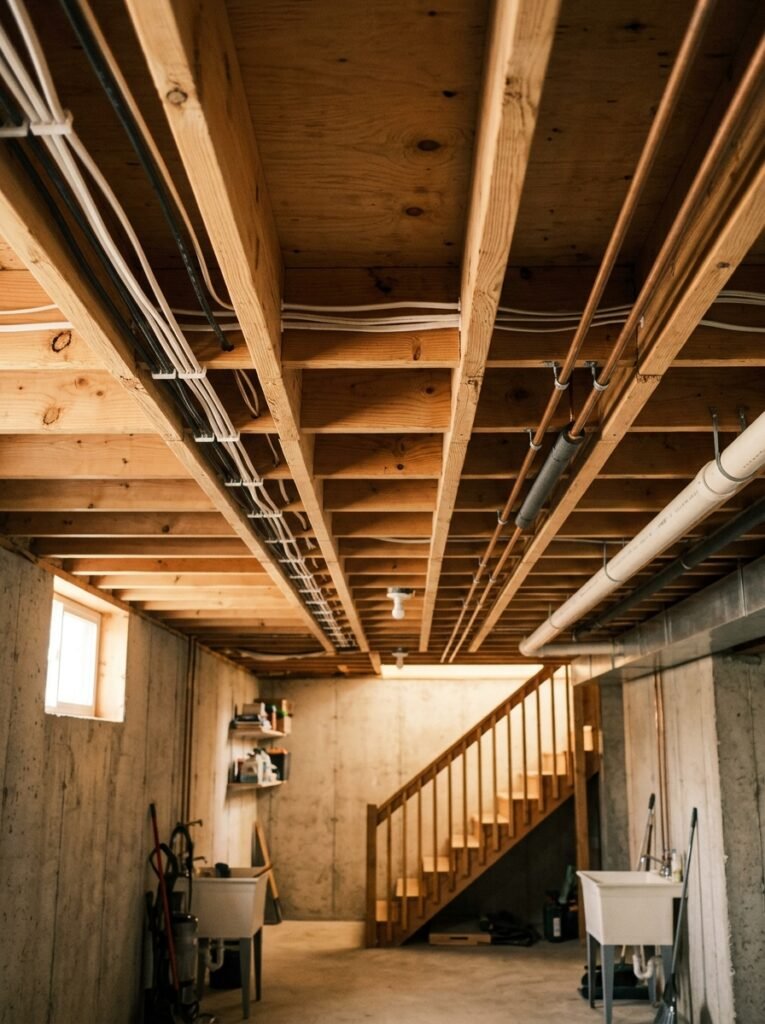
Some exposed ceilings look best with no paint at all, provided the wood is in decent condition.
The work is mostly cleaning, since removing cobwebs and dust changes the appearance more than people expect.
Pin loose wiring neatly along the joists and add proper switched lighting, and an unfinished ceiling starts reading as deliberate
Covered Ceiling Options
5. Hang Drywall for a Finished Look
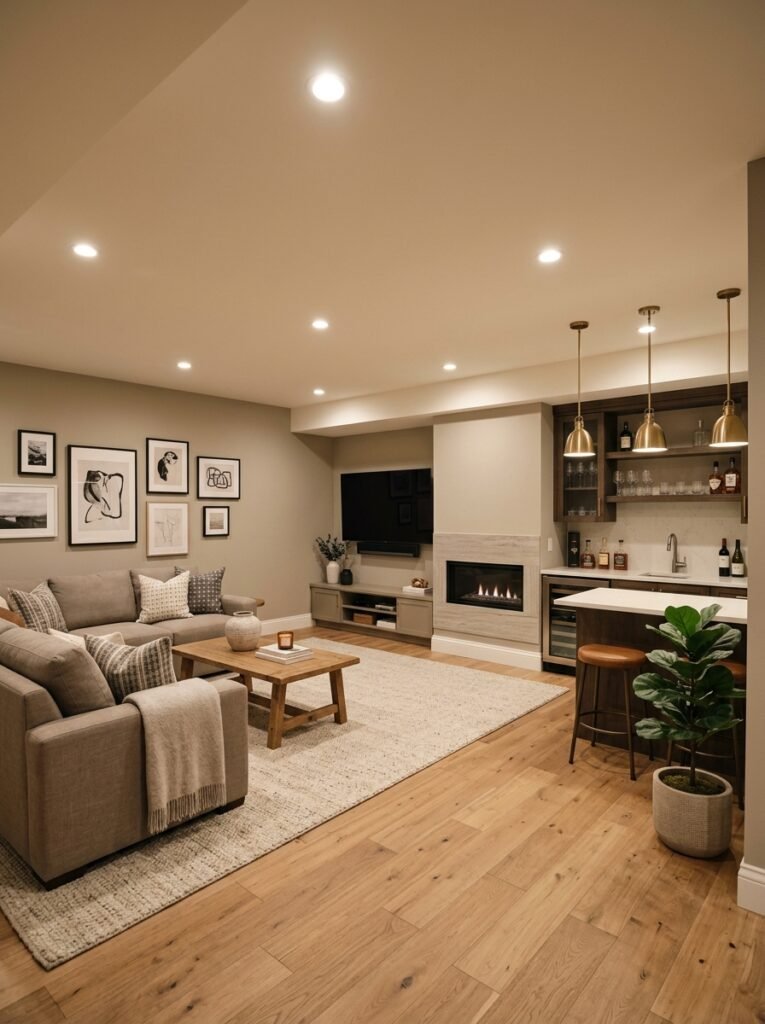
Drywall is what makes a basement stop feeling like a basement, since the ceiling then matches the rest of the house.
At half an inch thick it costs almost no headroom, and packing the joists with acoustic insulation blocks a serious amount of noise from travelling upstairs.
6. Install a Modern Drop Ceiling
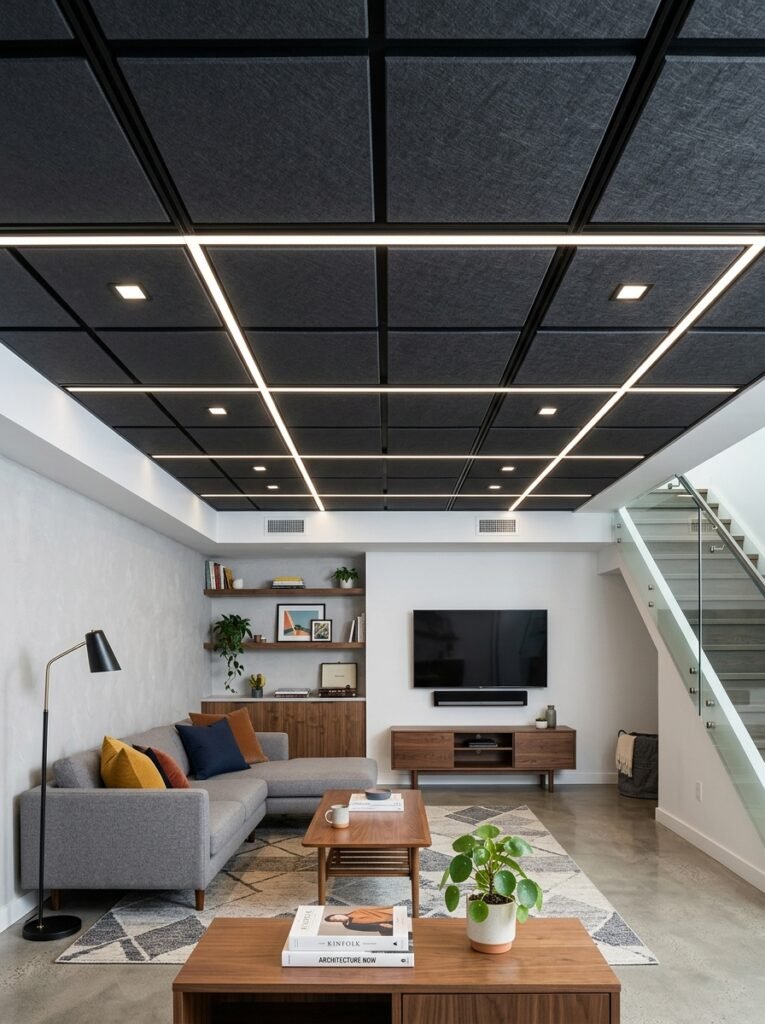
Drop ceilings earned a dated reputation, though current tile designs have moved well past the office grid look. The real advantage is access, since any tile lifts out when you need to reach a pipe or a junction box.
Check your headroom first, because the grid hangs several inches below the joists.
7. Fill Between the Joists With Beadboard
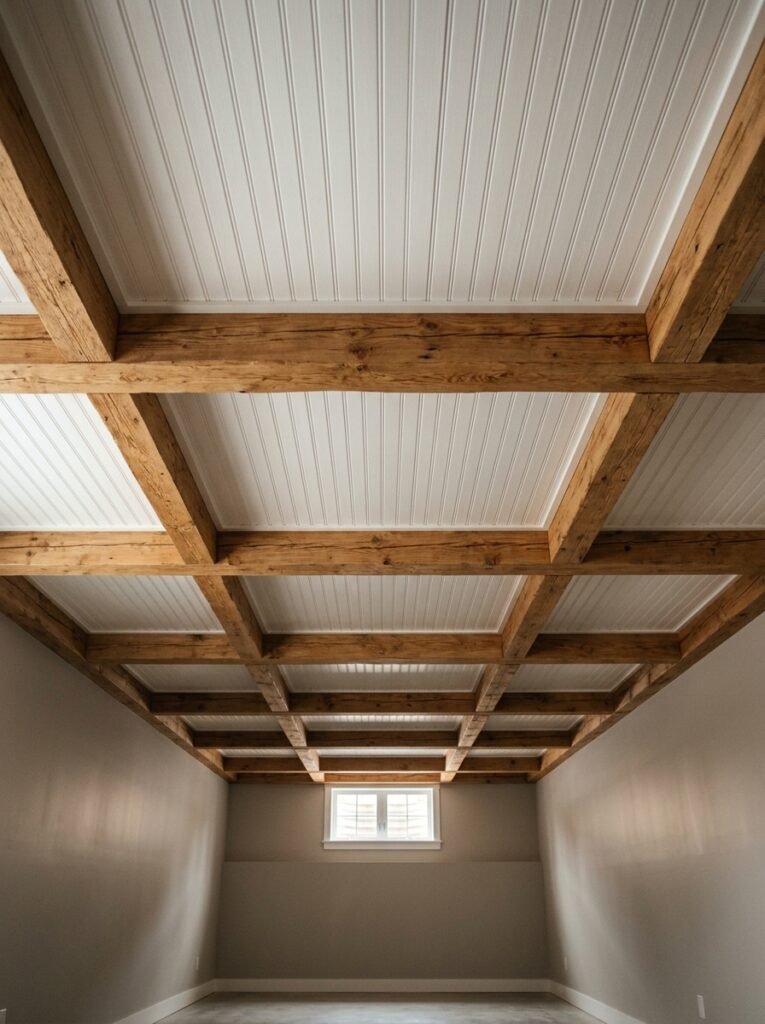
Running narrow tongue and groove beadboard between the joists finishes the ceiling without covering the beams, so you lose no height at all. The contrast between white panels and natural wood reads as a design decision rather than a compromise.
Quarter inch boards are thin enough to fit neatly and cheap enough to make it worth doing.
8. Add a Wood Plank Ceiling
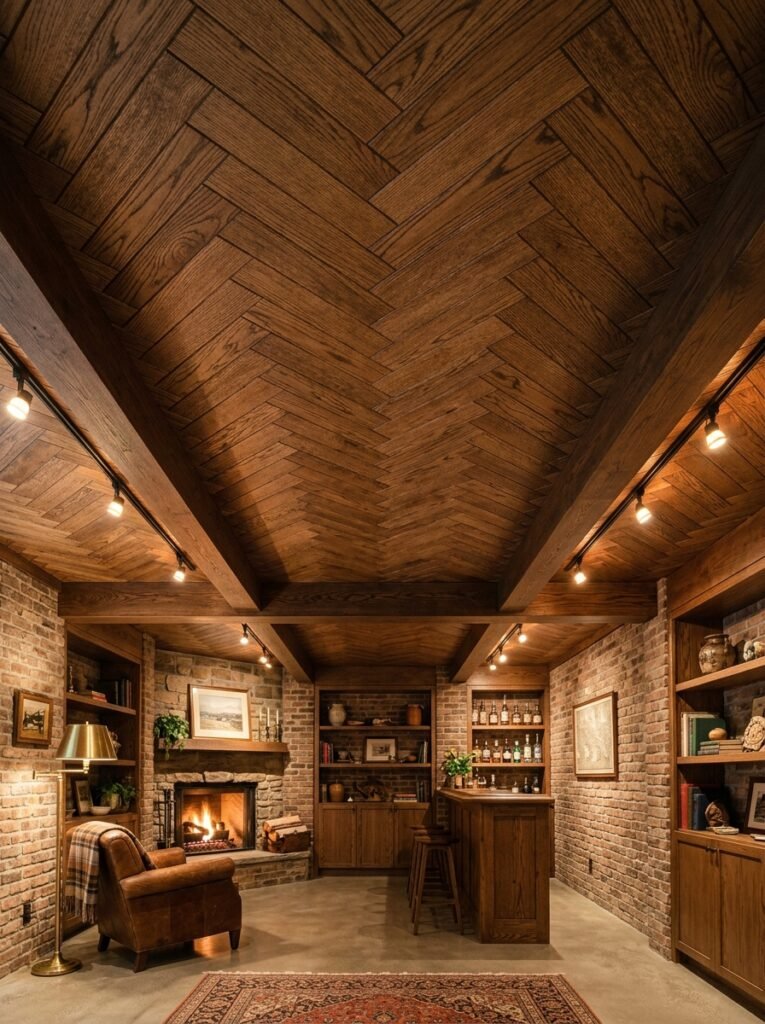
Planked ceilings bring warmth that paint cannot, and laying them in a pattern like herringbone turns the ceiling into the most interesting surface in the room.
Wood and basement moisture are a poor combination, though, so confirm the space is properly waterproofed and seal the boards before installing.
Decorative Ceiling Treatments
9. Build a Coffered Grid
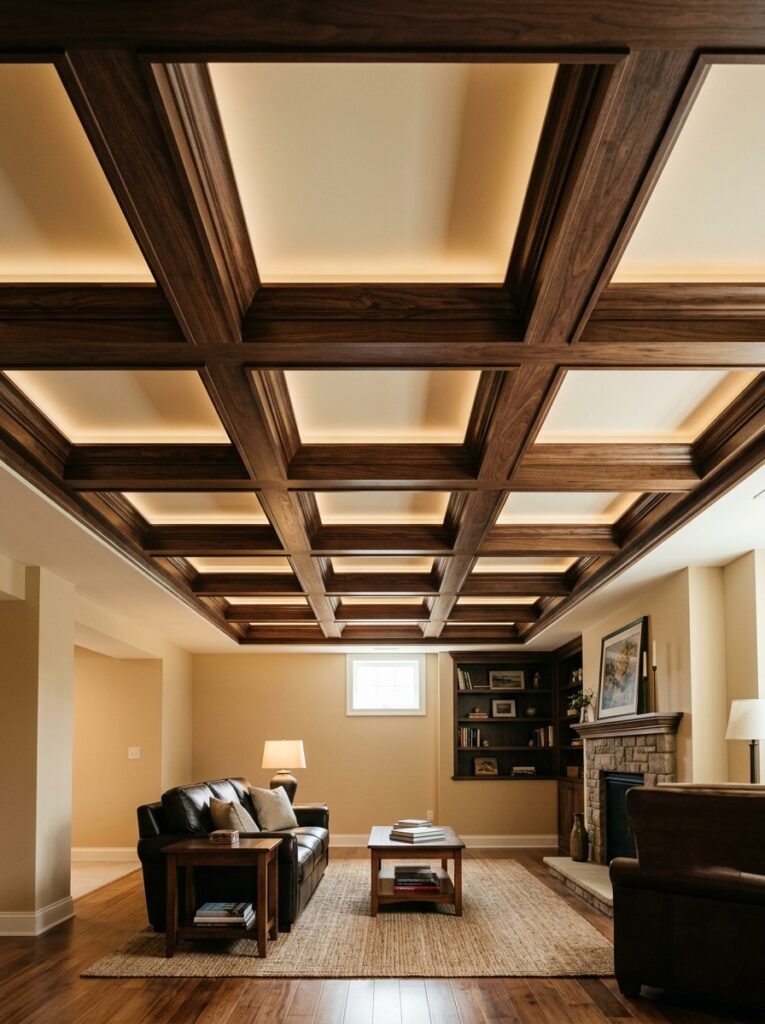
Adding grid beams across the ceiling creates coffers, which give a flat basement ceiling depth and a sense of structure. Painting the recessed panels a lighter shade than the beams exaggerates the effect.
It works best where headroom allows, since the beams drop below the ceiling line by a few inches.
10. Use Corrugated Metal Panels
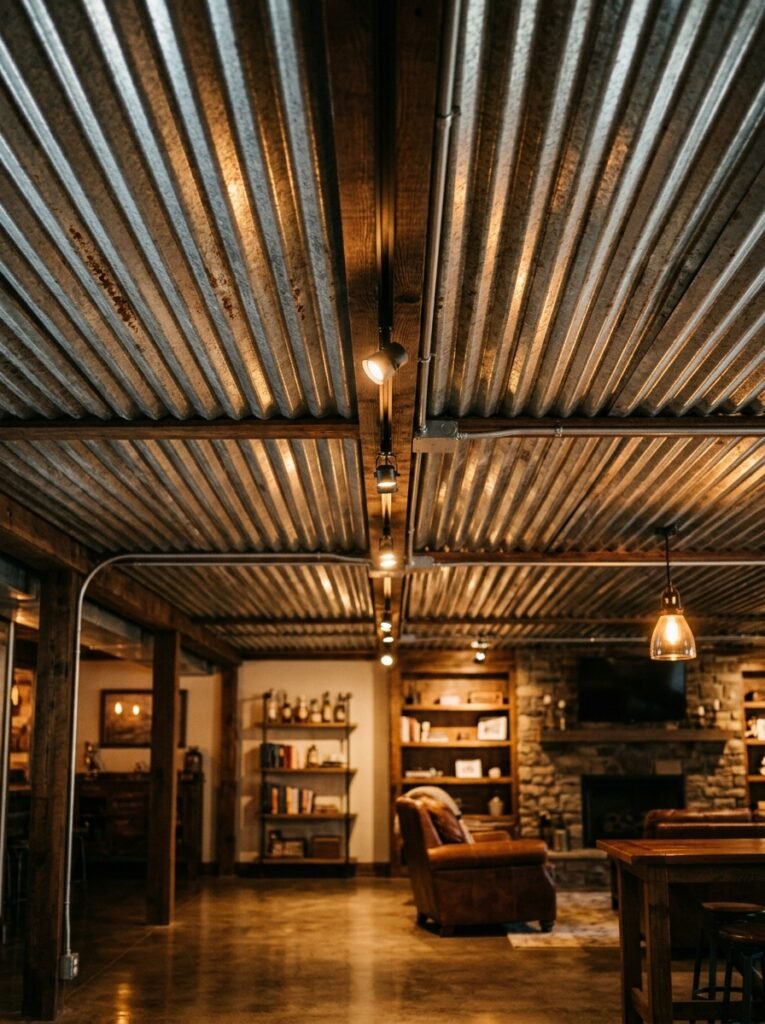
Corrugated metal reads industrial rather than rustic, so it suits basements finished as workshops, bars, or games rooms.
The ridged surface catches light in a way flat panels do not, which adds interest to an otherwise plain plane overhead.
Galvanized finishes stay cool in tone, so warm lighting balances them well.
11. Match the Ceiling to the Wall Color
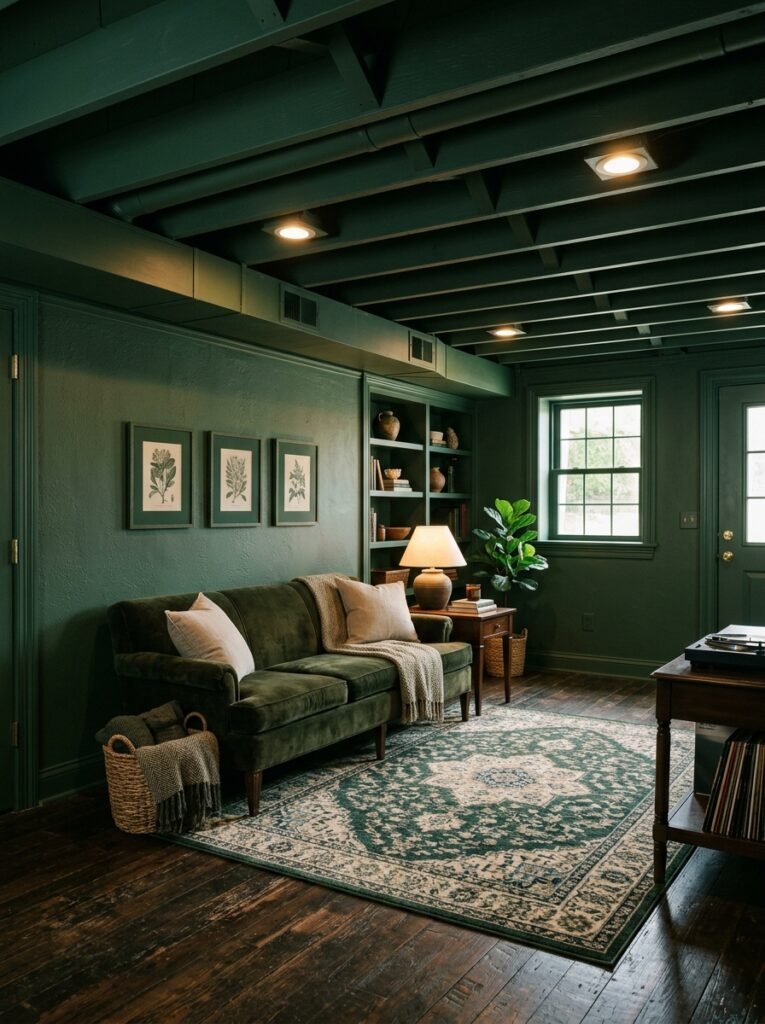
Painting the ceiling, walls, and trim in one shade removes the visual line where they meet, and makes the whole interior look much more consistent.
That blurring reads as extra height. It works with pale colors for an airy result and with deep ones for a cocooning effect, provided the room has some light.
12. Wallpaper the Ceiling
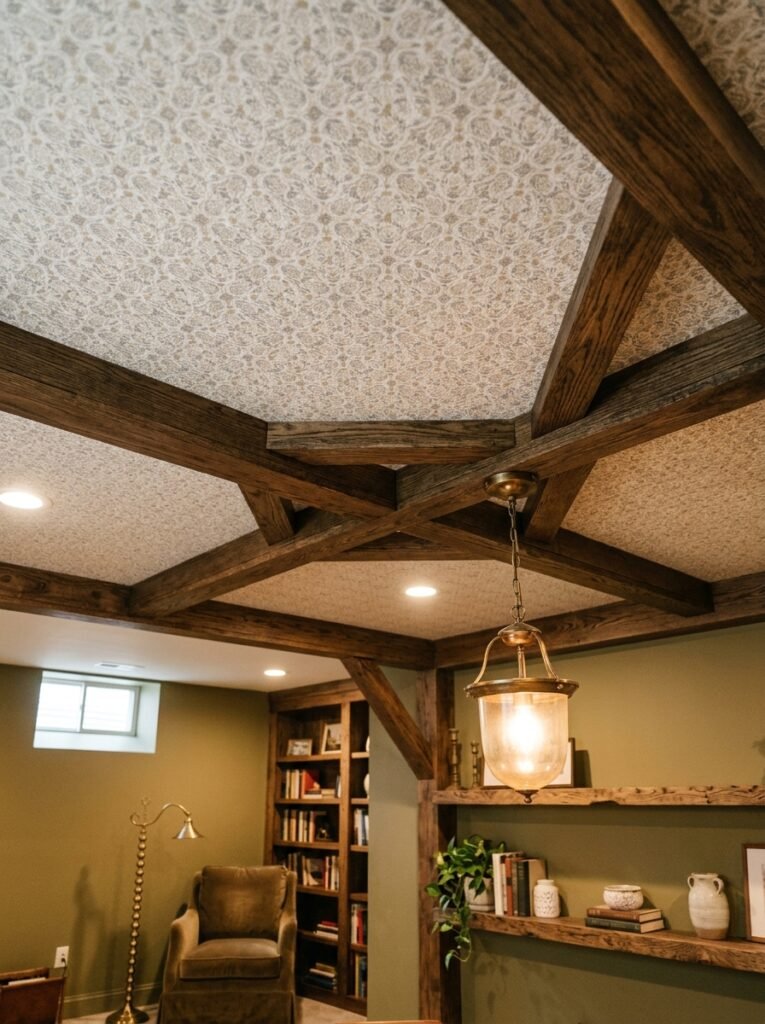
Wallpaper overhead sounds ambitious, though a basement is a low-risk room to try it since the area is usually small.
A subtle pattern adds character without shouting, and it distracts from an uneven or patched surface.
Choose a paper rated for humidity, because basements are harder on adhesive than rooms upstairs.
Lighting and Practical Considerations
13. Choose Recessed or Flush Fixtures
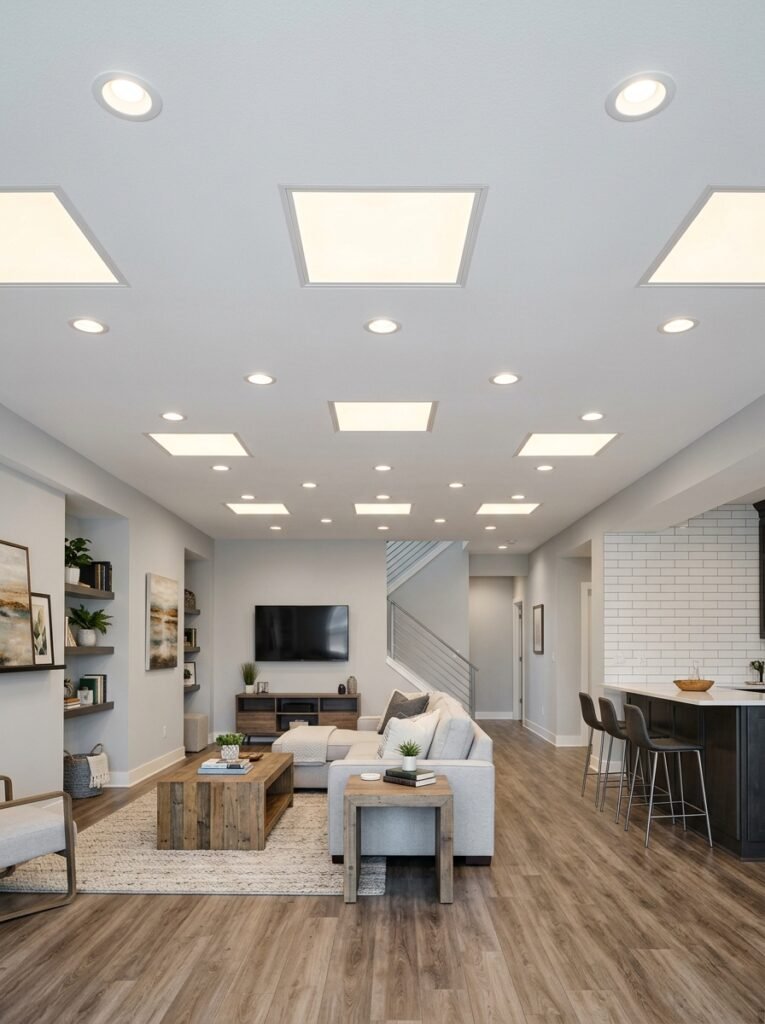
Basements rarely have height to spare, so anything that hangs down is competing directly with headroom.
Recessed cans and LED panels sit flush and light the room evenly, which matters more here than anywhere else in the house.
Putting them on dimmers lets the same ceiling suit a games room and a film night.
14. Run String Lights Between Exposed Beams
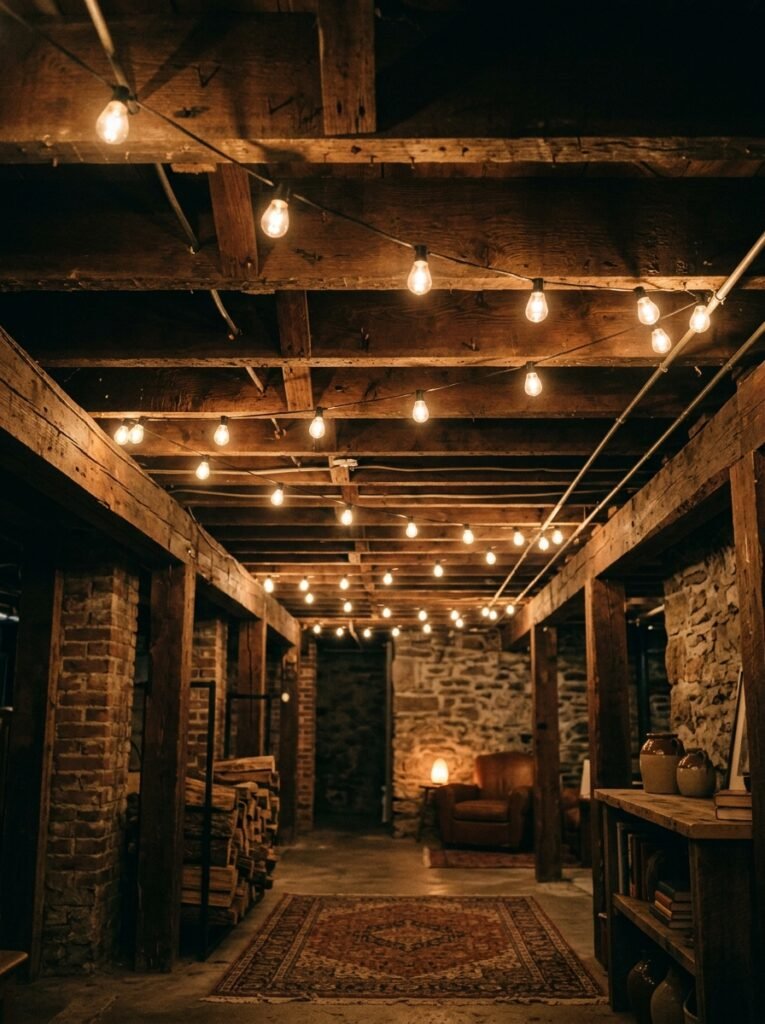
Where there’s no overhead wiring and adding it isn’t realistic, string lights run along the joists solve the lighting problem for very little money.
The warm points of light also draw attention away from the exposed mechanicals above.
15. Check Height and Moisture Before Deciding
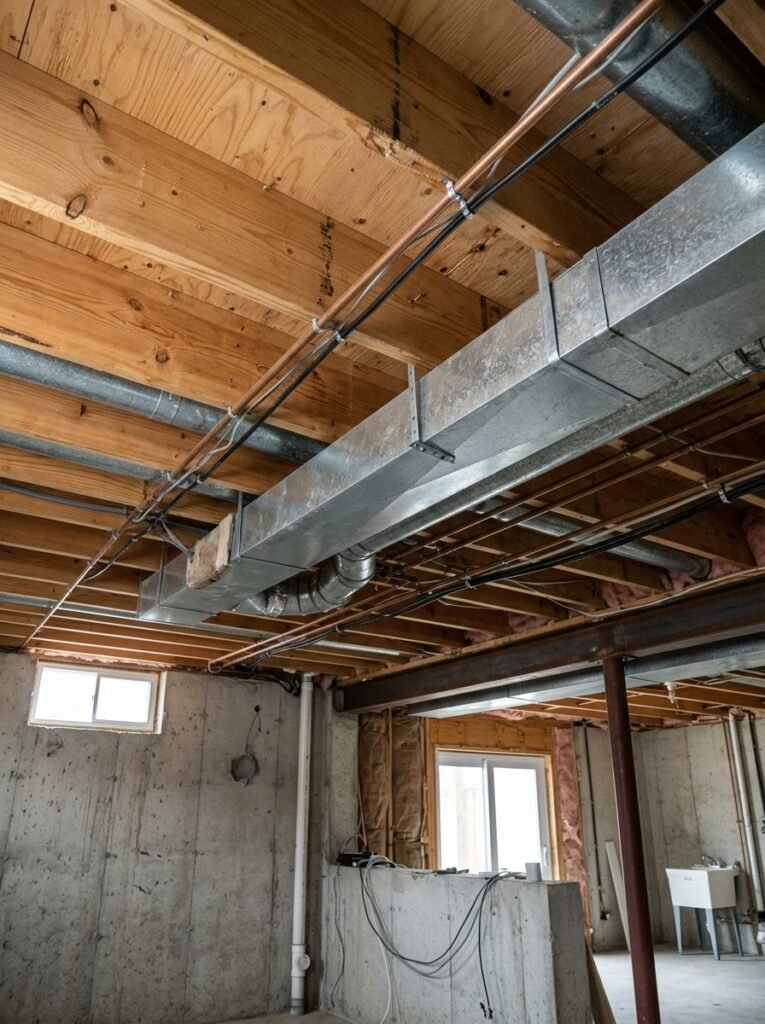
Two measurements decide most of this. Anything below seven feet usually rules out a drop ceiling on code grounds, which pushes you toward exposed or drywall.
And because moisture is a constant in basements, wood and paper finishes need a properly dry space first, since controlling moisture is the only reliable way to prevent mold.
Final Thoughts on Basement Ceiling Ideas
Headroom decides this more than taste does. Under seven feet, exposed is usually the only sensible answer, and the choice becomes what color to spray it. With eight feet or more, everything on this list is open to you!
If you’re undecided, start with the cheapest reversible option. Clean the ceiling properly, sort the wiring, spray it one color, and add lighting.
That alone transforms most basements for a few hundred dollars, and it tells you whether you actually want to spend thousands on drywall later.
Basement Ceiling Ideas FAQ
Painting the exposed joists is by far the cheapest, since it needs only an airless sprayer and a few gallons of latex paint.
There’s no framing, hanging, or sanding involved, and it can be done in a day. It also preserves every inch of headroom, which matters in most basements.
White reflects light and makes a low ceiling feel taller, so it’s the safer choice when headroom is tight. Black makes the ceiling recede visually and creates a moody, loft-like effect, which suits basements with reasonable height finished as bars or lounges.
Both work, provided the walls below stay light.
Typically three to six inches, depending on the grid system and whether ducts or pipes need clearance beneath them.
That’s significant in a basement, and it’s the main reason drop ceilings get ruled out. Measure your existing height first, since finished ceilings usually need to reach seven feet.
Seven feet is the common requirement for finished, habitable basement space, though rules vary by location and older homes are sometimes treated differently. Beams and ducts are usually allowed to hang slightly lower.
Check with your local building department before planning anything that reduces height.
It’s a legit finish rather than a compromise, and it’s the standard choice for low basements since it preserves every inch of height.
The key is doing it properly: clean thoroughly, tidy and secure loose wiring, spray everything one uniform color, and add decent switched lighting.