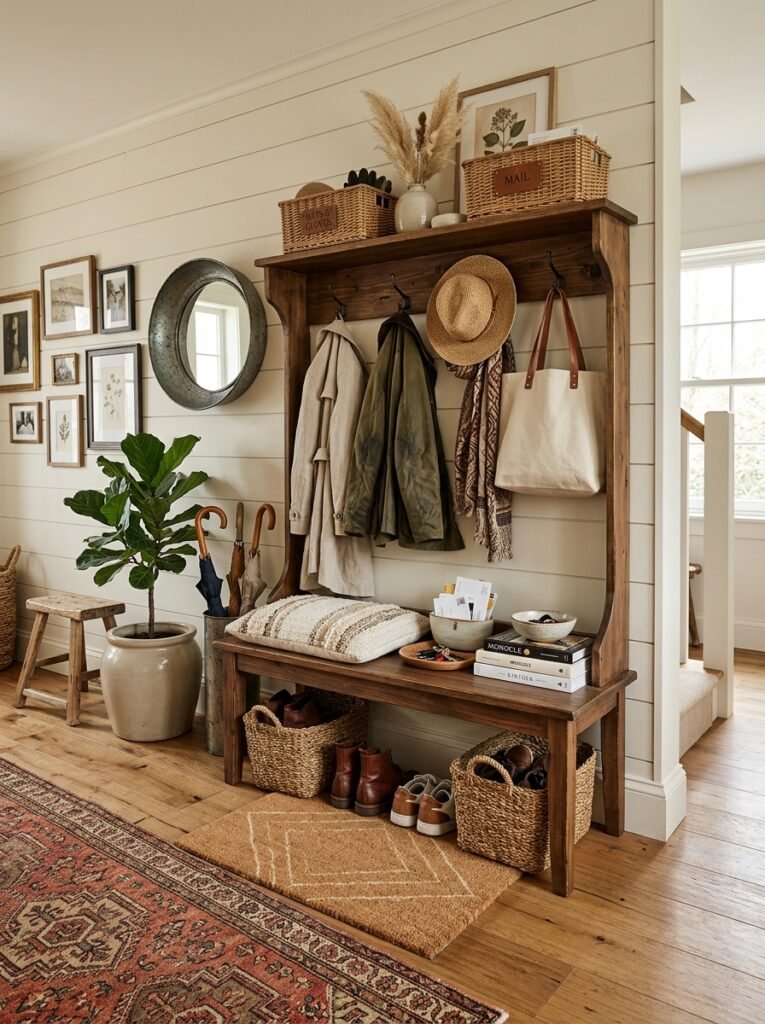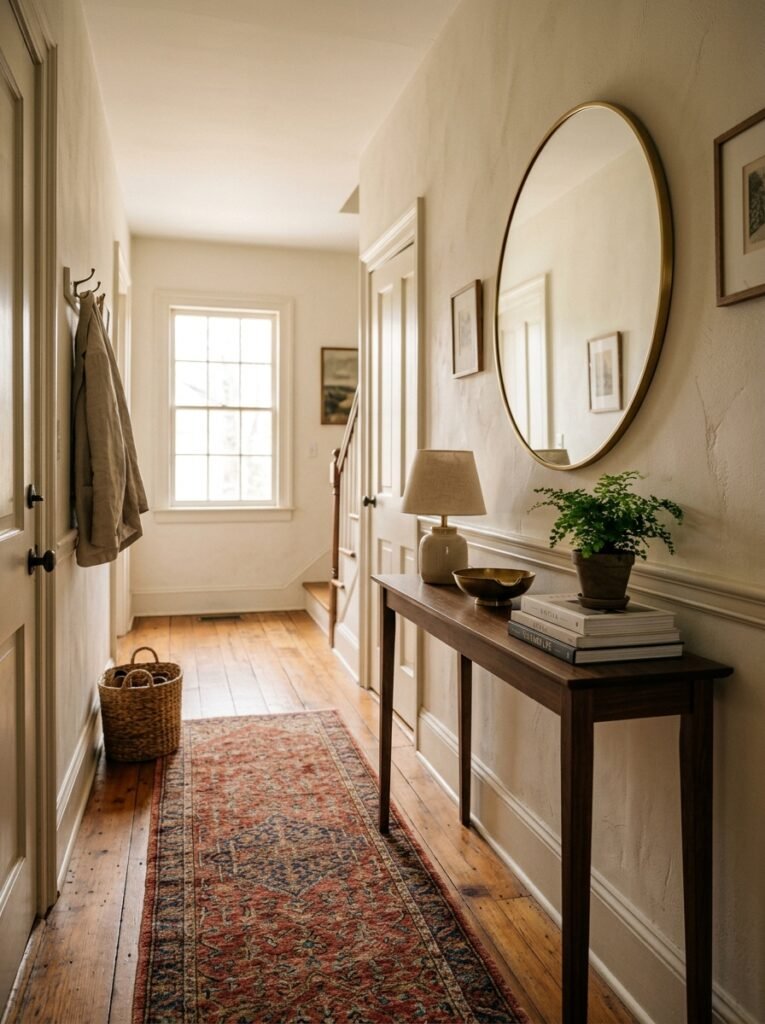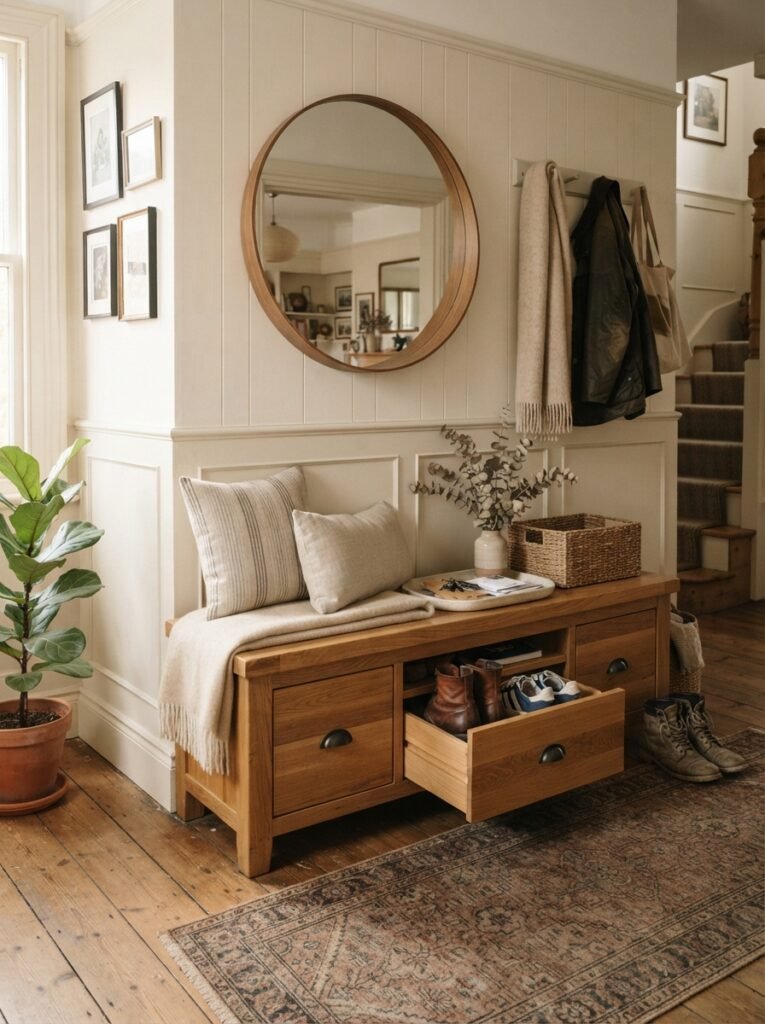
A mirror does more work in an entryway than in any other room of the house.
Most entries have no window of their own and borrow whatever light reaches them from nearby rooms. A mirror on the right wall roughly doubles what little light there is.
It also handles the last look before you leave, makes a tight space read wider, and gives a blank wall a focal point.
These entryway mirror ideas cover the shapes worth choosing, the measurements that keep it from looking off, and the styling that makes the whole wall feel designed!
Plan on revisiting? Pin this for later!
This post may contain affililiate links. I may earn an extra commission, at no extra cost to you.
Where Entryway Mirrors Usually Go Wrong
Most entry mirrors that look off aren’t the wrong style at all. The problem is almost always size, height, or what the glass is reflecting, and all three are easy to fix.
The usual mistakes are:
- Buying too small, so the mirror floats on the wall like an afterthought
- Hanging too high, which disconnects it from the furniture below
- Facing it toward clutter, which doubles the coats and shoes instead of the light
Get those three right and even a simple, inexpensive mirror looks like it was chosen by a designer.
Everything below builds on that foundation.
Choosing the Right Mirror
1. Go Arched for a Doorway Effect
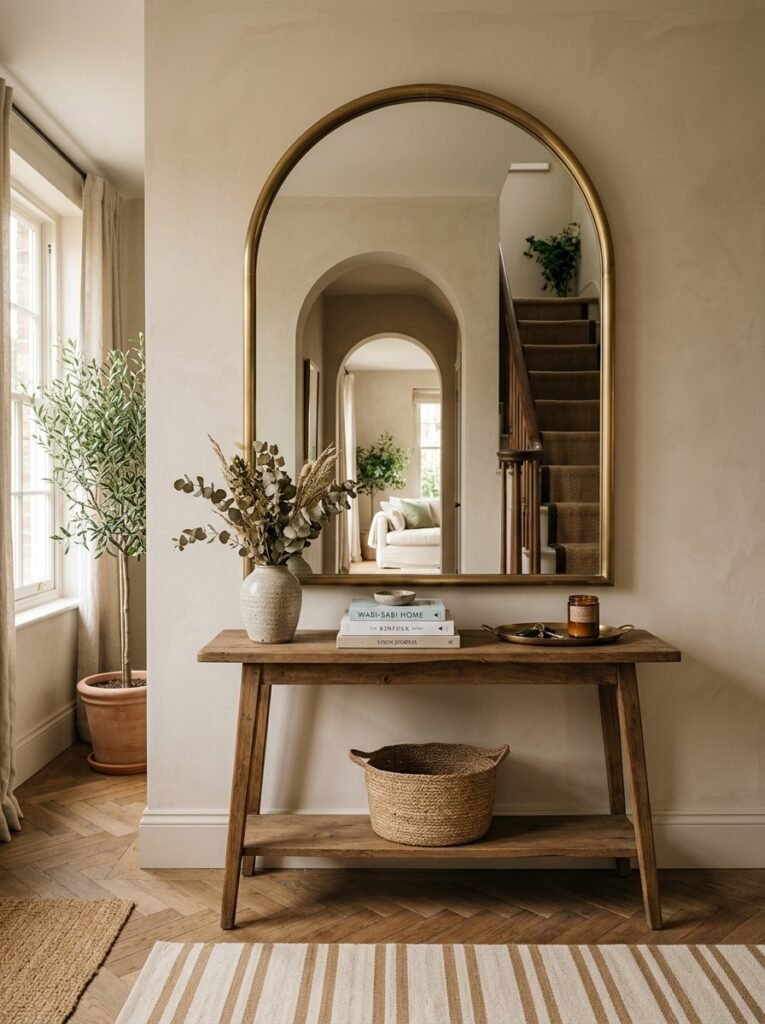
The arched mirror has taken over entryways for a reason. Its curved top echoes a doorway and suggests another room beyond the wall, so the eye reads depth where there is none.
That illusion works especially well in a narrow entry. Warm metal or wood frames suit the shape better than anything too sleek!
2. Round It Off to Soften Sharp Angles
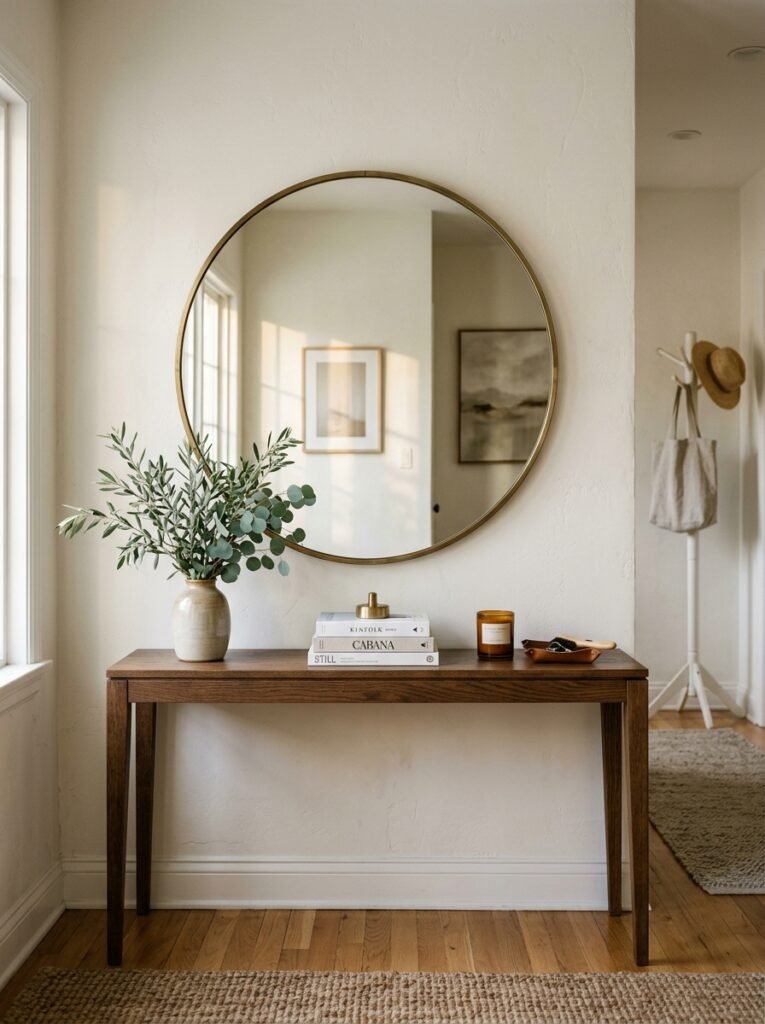
Entryways are usually nothing but straight lines, from the door frame to the console to the baseboards. A round mirror gives the eye somewhere soft to land, and it reads friendlier than a rectangle in the first space guests see.
Pair it with a rectangular console and the contrast does all the work.
3. Fake a Window With a Windowpane Mirror
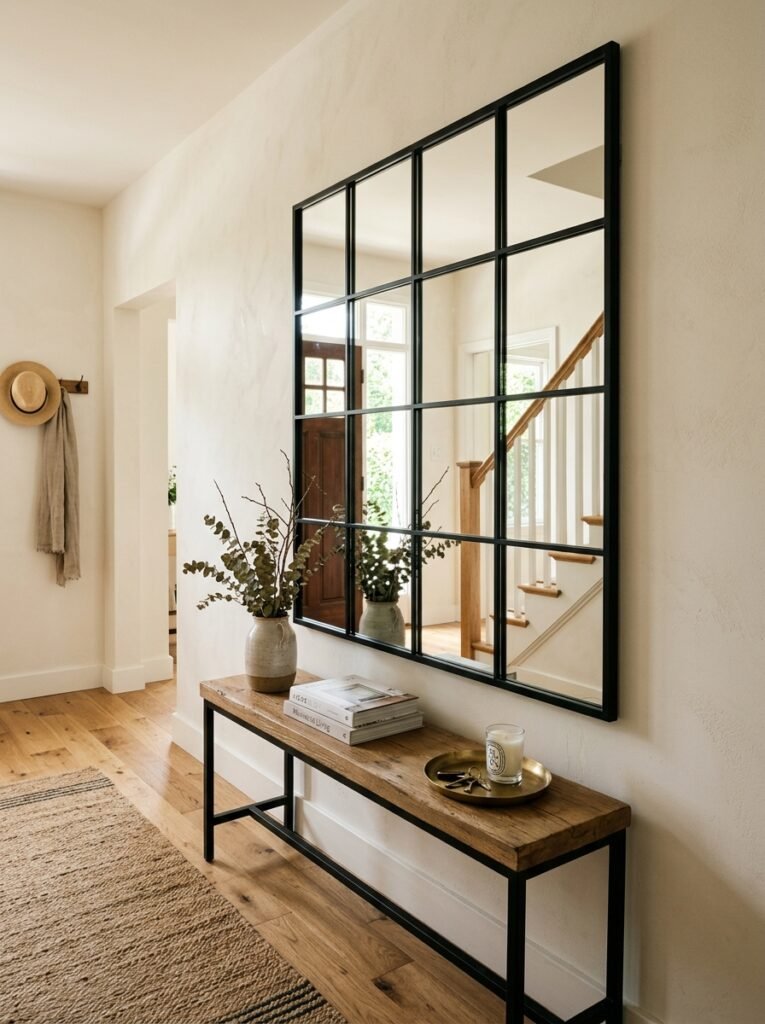
A mirror divided into panes by black or wood muntins reads as a window from across the room. That’s a real gift in an entry with no natural light of its own.
Because it reflects whatever light reaches it, the illusion holds up close as well!
4. Choose Antiqued Glass for a Vintage Look
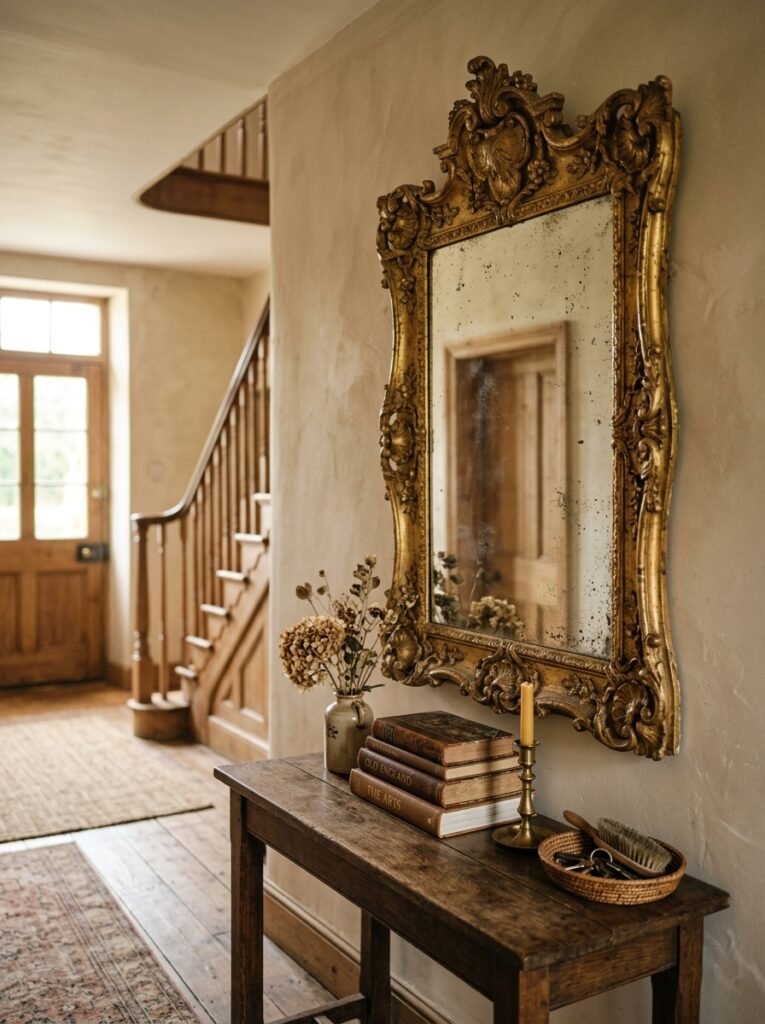
Foxed or antiqued mirror glass, with its cloudy speckling and soft silvering, gives a new entry the patina of an old house.
Decorative mirrors have anchored entrance halls since the Victorian era, when spare wall space was filled with hanging shelves and mirror glass.
The reflection stays soft, though, so it works better as decor than as a last look.
5. Try an Organic, Irregular Shape
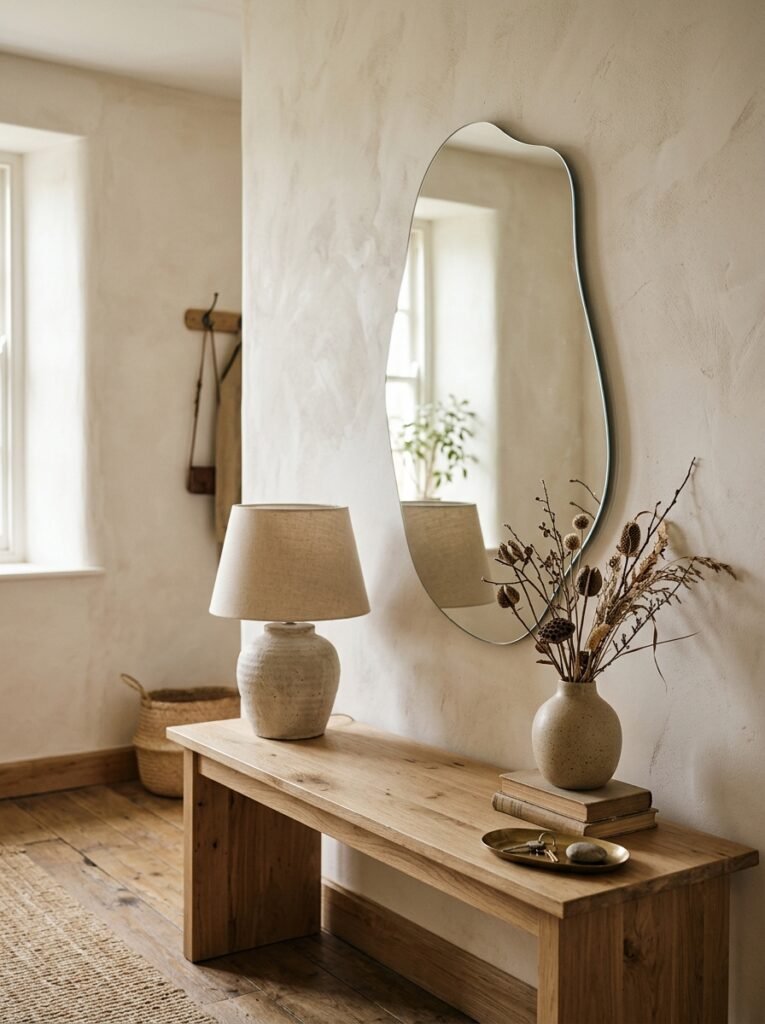
A mirror with a wavy, pebble-like outline feels relaxed and a little artistic, which suits modern and Japandi-leaning entries especially well.
It breaks up a hard-edged wall the same way a round mirror does, but with more personality.
Frameless versions keep the look light, so the shape itself becomes the decor. Hang it slightly off-center above a console for an easy, collected feel.
6. Pick a Woven Frame for Texture
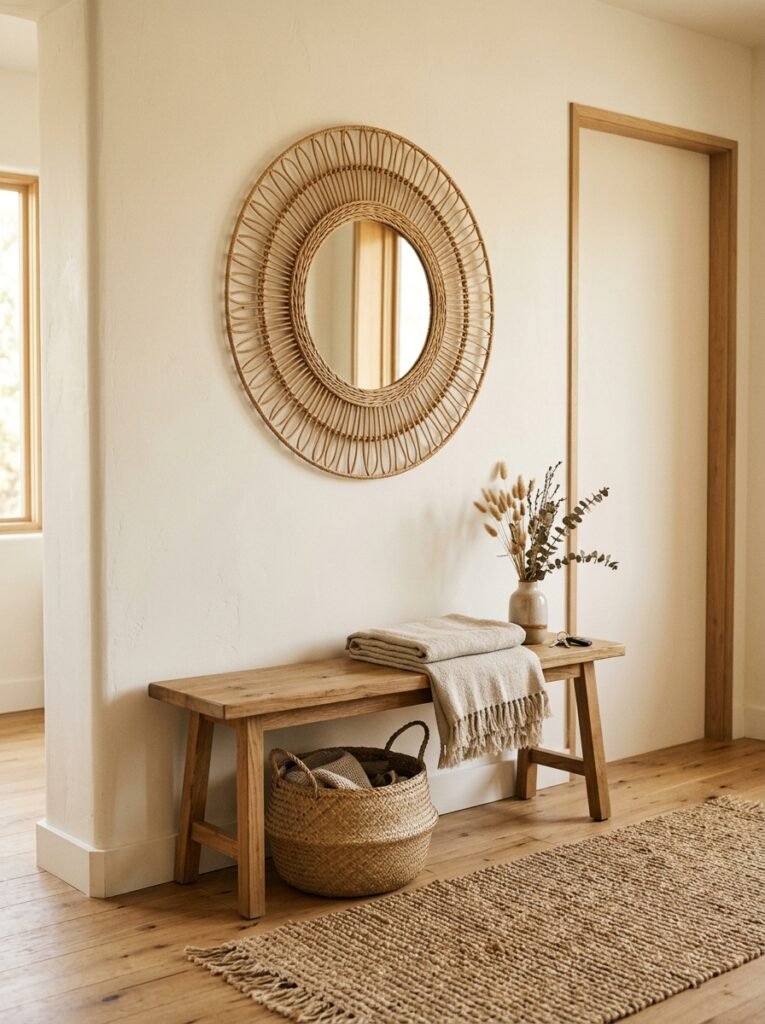
Entryways tend to be full of hard surfaces, from tile floors to painted doors to metal hardware.
A woven frame adds warmth and texture that the space usually lacks.
Jute, seagrass or rattan material works best, adding in that nice boho vibe to your entryway. They pair beautifully with a jute runner and a simple wood bench.
Size and Placement That Actually Works
7. Size It to Two Thirds of the Console
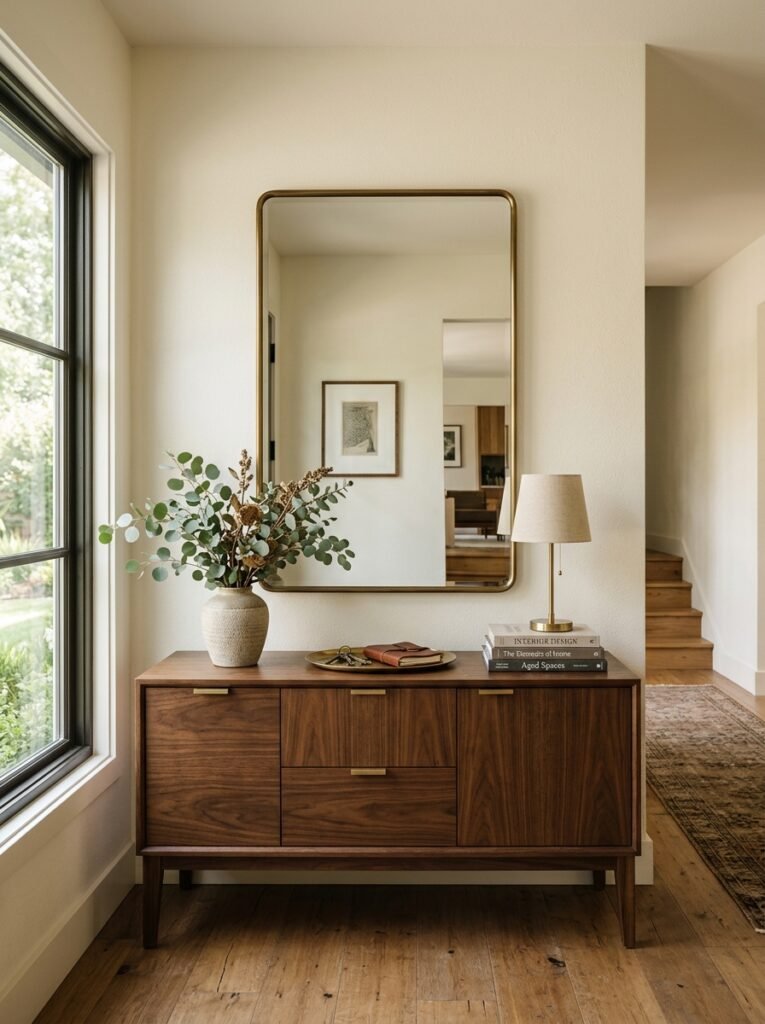
Mirror proportions go wrong more often than mirror styles, since most people buy too small.
A mirror roughly two thirds the width of the console below it looks anchored, while anything narrower floats and reads as an accident.
On a bare wall, aim for about two thirds of the usable wall width instead.
Also read: 22 Console Table Ideas That Make Any Space Feel Designer Made
8. Leave Six to Eight Inches Above the Table
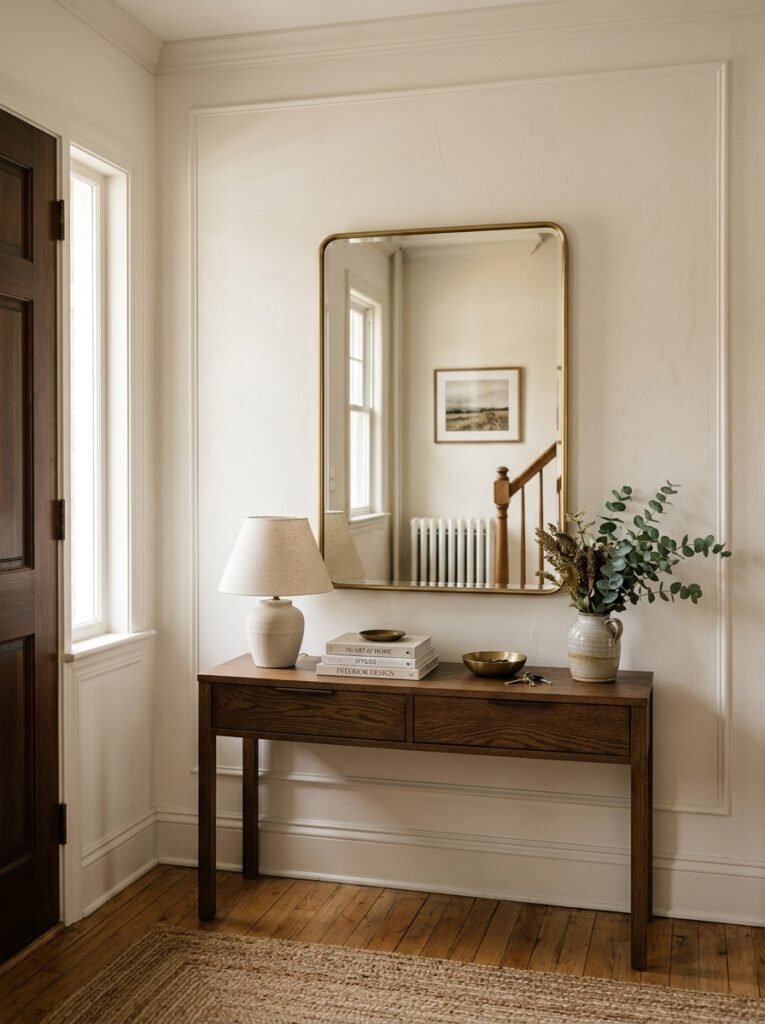
The gap between a console and the mirror above it decides whether the two read as one arrangement or two unrelated objects.
Six to eight inches is the range designers keep returning to, because it connects the pieces without crowding them.
Hanging too high is the most common mistake here, so when in doubt, shift it lower.
9. Hang It at Eye Level When It Stands Alone
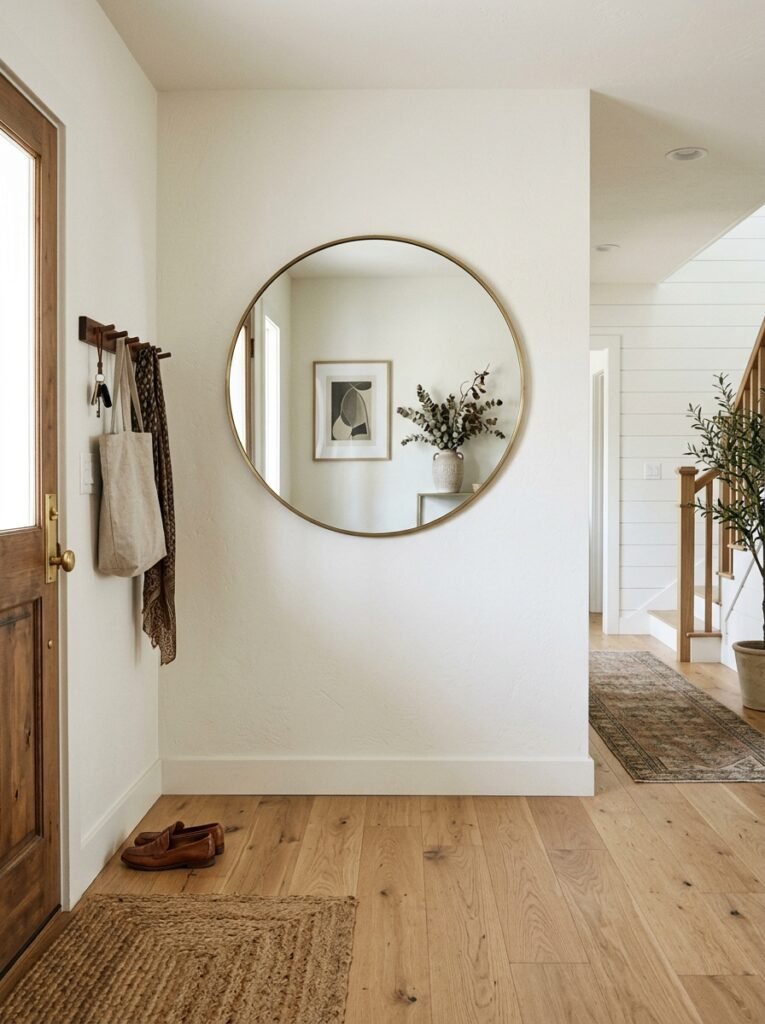
With no furniture underneath, the mirror needs its own anchor point, which is eye level.
Centering it about 57 to 65 inches from the floor suits most households, and 60 inches works as a safe default.
Tape the outline on the wall first and live with it for a day. Re-drilling is nobody’s idea of fun!
10. Hang It Above a Bench for a Mudroom Nook
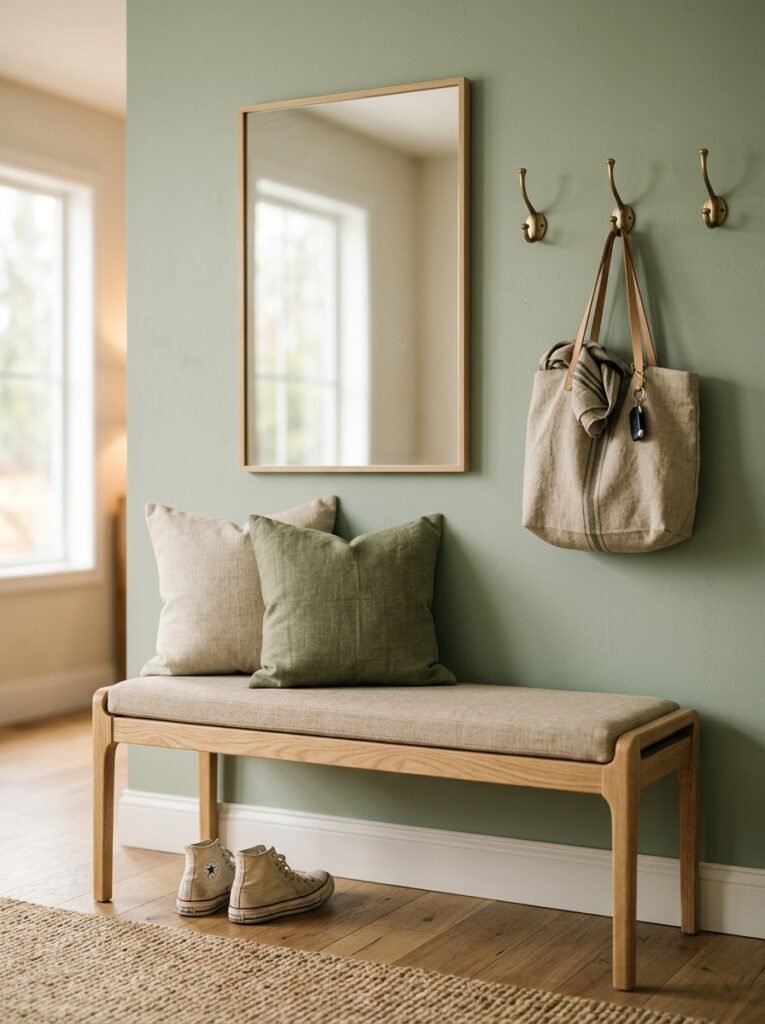
A mirror above a bench turns a plain wall into a small drop zone where you can sit, pull on shoes, and check yourself on the way out. The bench grounds the mirror the same way a console would.
Hang it a little higher than you would over a console, around 10 to 12 inches above the seat, so heads don’t bump the frame. A couple of cushions or a folded throw finishes the nook.
11. Point It at Light
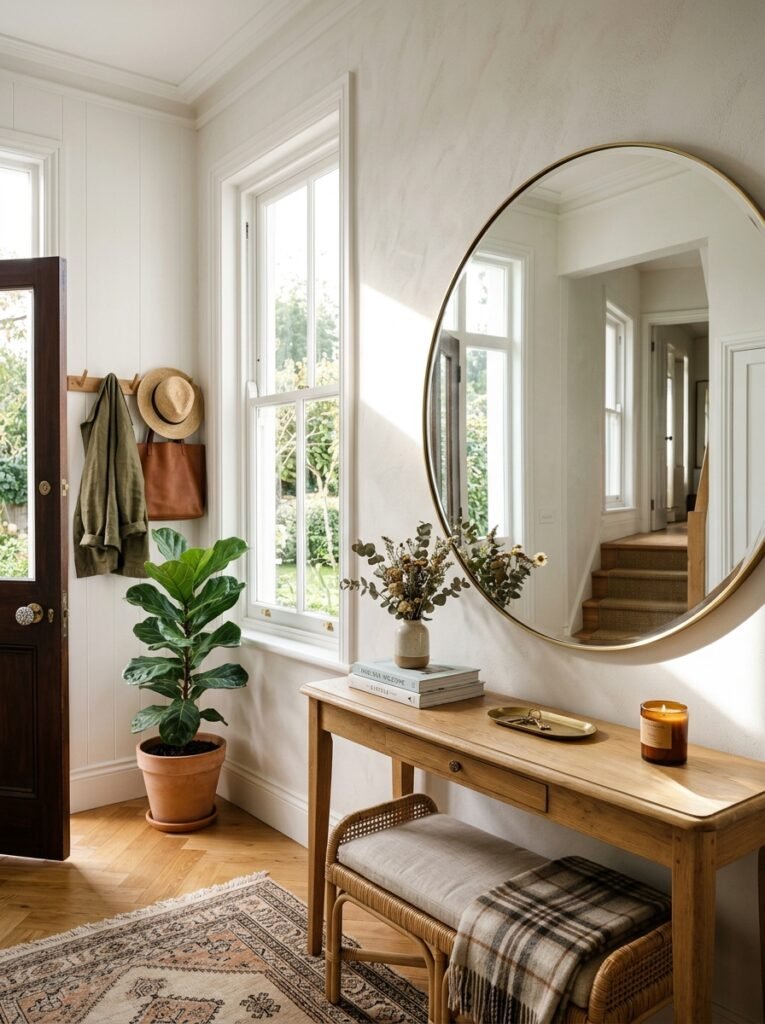
A mirror reflects whatever sits opposite it, so the wall you choose matters more than the mirror you buy. Facing a window or a lamp doubles the light in a space that usually has none of its own.
Facing a coat pile or a cluttered stairway doubles that instead, which nobody wants greeting them.
12. Keep It Off the Wall Directly Facing the Door
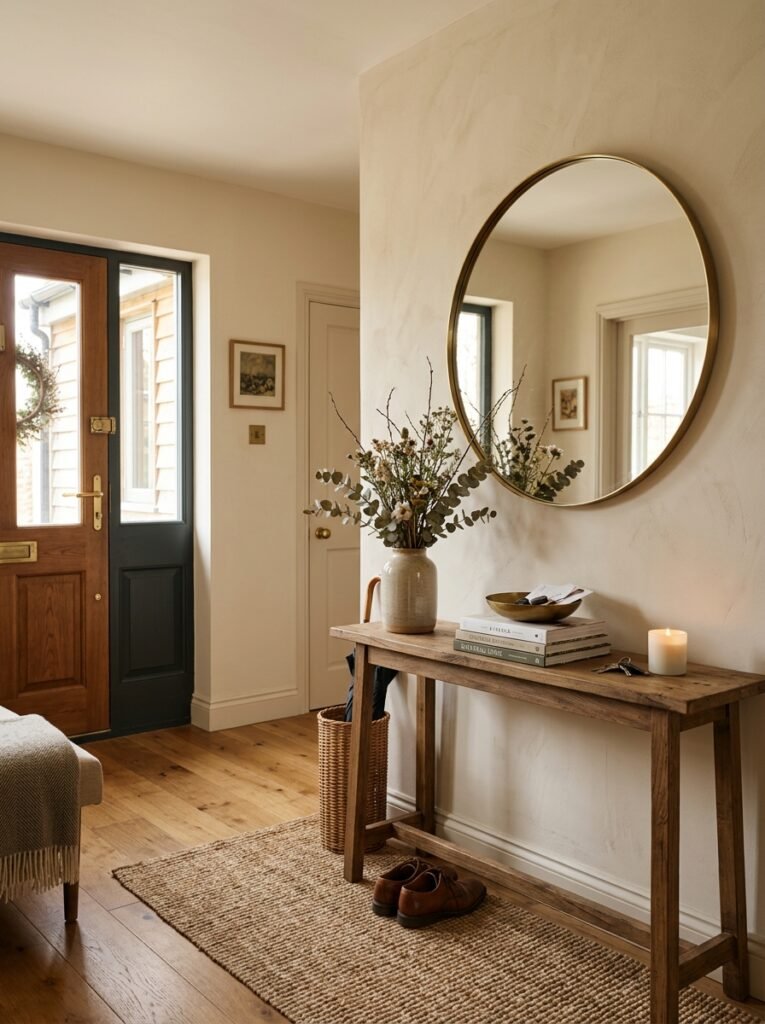
Feng shui says a mirror straight across from the front door bounces light and energy back out, and there’s a practical case too.
Catching your own reflection the second you walk in can feel startling instead of welcoming.
Place it on a side wall to keep all the function without the surprise.
13. Go Bigger Than Feels Right in a Small Entry
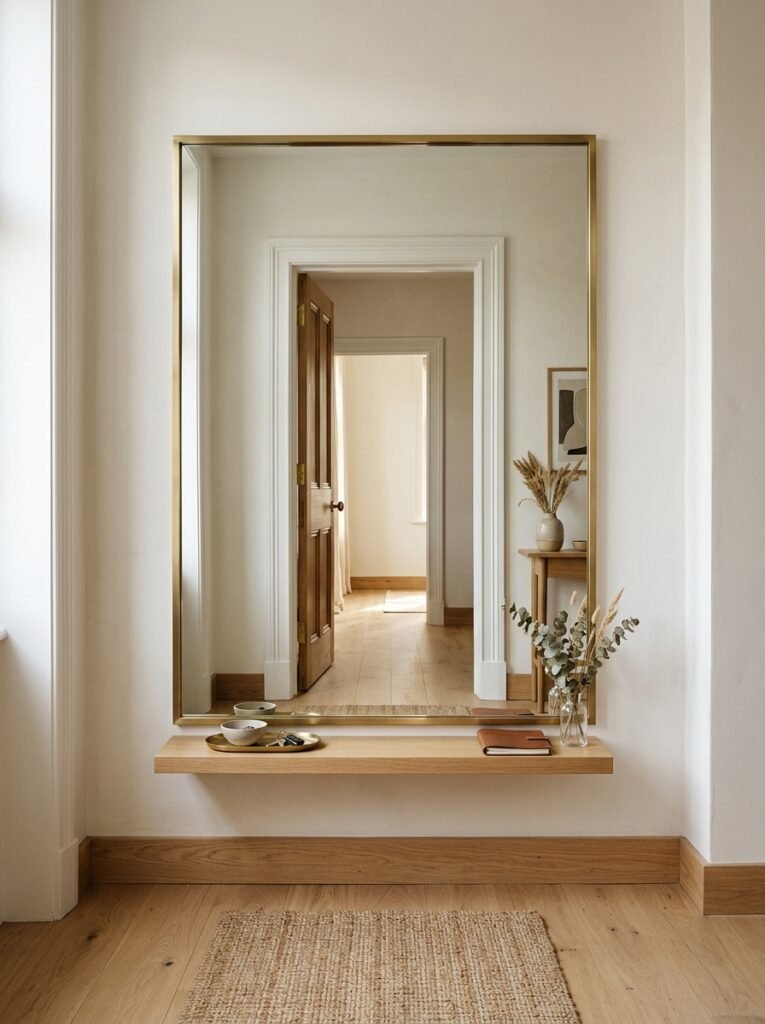
It sounds backward, but tiny entries benefit the most from oversized mirrors. More glass means more reflected light and more apparent depth, while a small mirror just adds another object to a cramped wall.
If you’re torn between two sizes, pick the larger one. Almost nobody regrets going bigger here!
Mirrors That Earn Their Wall Space
14. Choose One With Hooks Built In
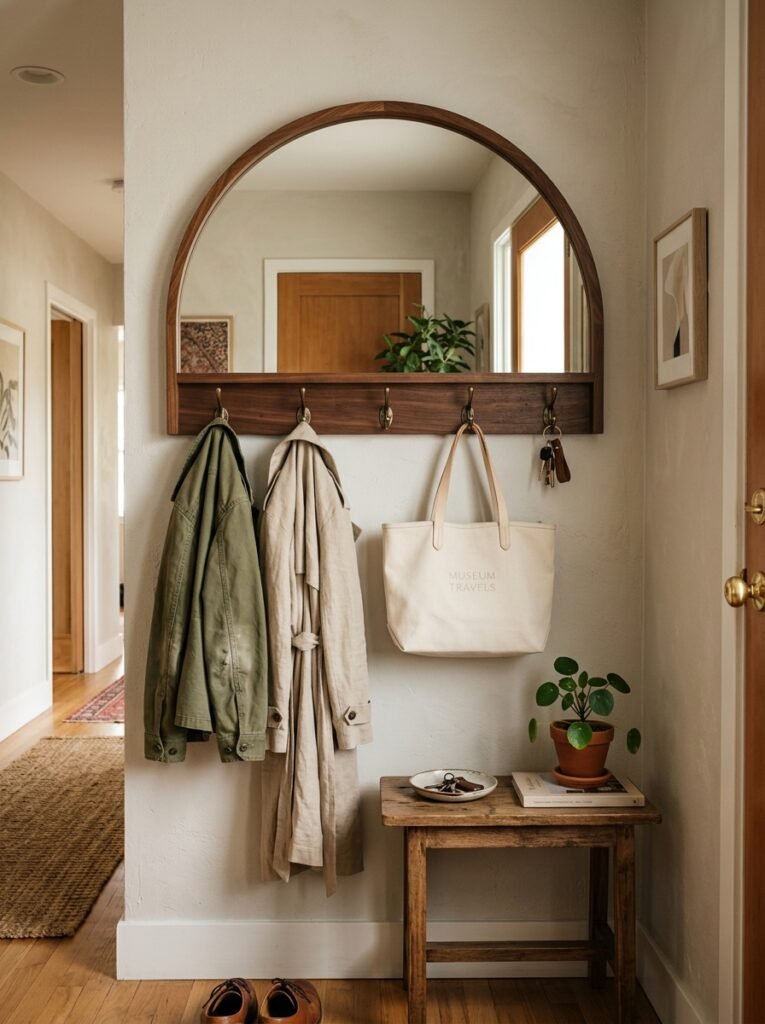
Entry walls have limited real estate, so a mirror with a hook rail beneath it does two jobs on one set of anchors.
Coats, bags, and leashes hang below while the mirror handles the last look before you leave.
Wall-mounted versions also keep everything off the floor, which small entries badly need.
15. Add a Mirror With a Built-In Shelf
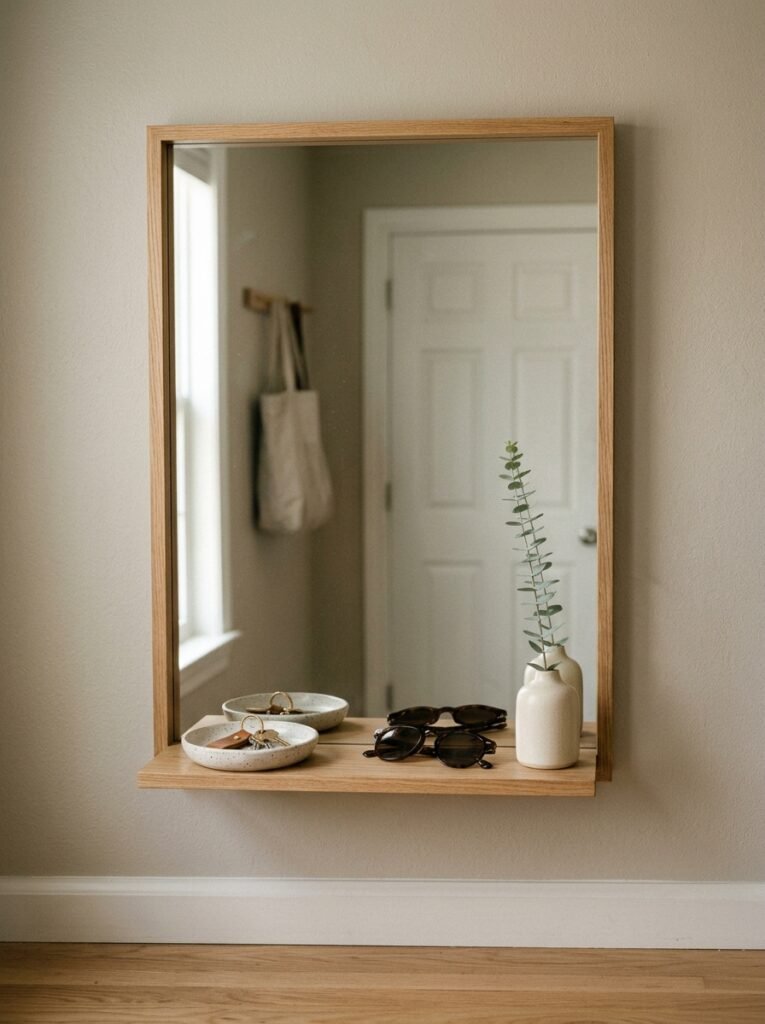
A mirror with a narrow ledge along the bottom works like a mini console for entries that can’t fit one. The shelf is shallow, but it’s just enough for the things you grab on the way out:
- Keys and a small catchall dish
- Sunglasses or earbuds
- A bud vase or small candle
The floor stays completely clear, so the entry keeps its walking space.
16. Pick a Mirrored Cabinet for Hidden Storage
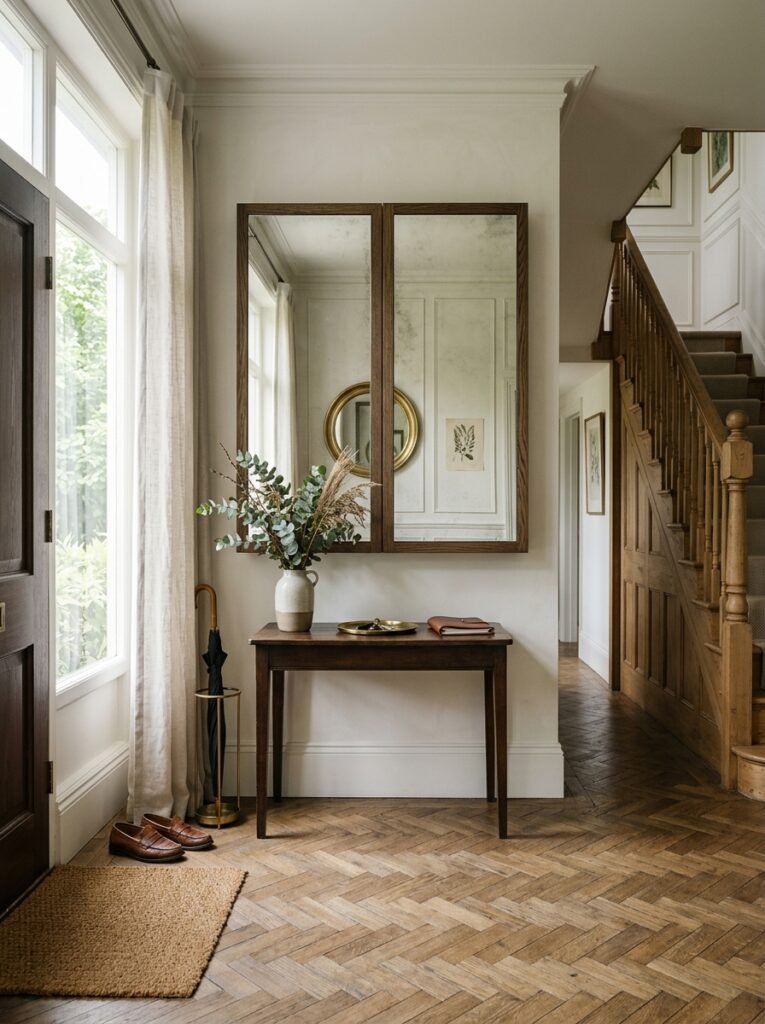
A shallow cabinet with a mirrored door hides keys, sunglasses, mail, and the general daily debris behind a surface that still reflects light.
It suits entries too narrow for a console, since most sit only a few inches deep!
Also read: 24 Narrow Entryway Styling Ideas For Tight Hallways
17. Lean a Full-Length Mirror Against the Wall
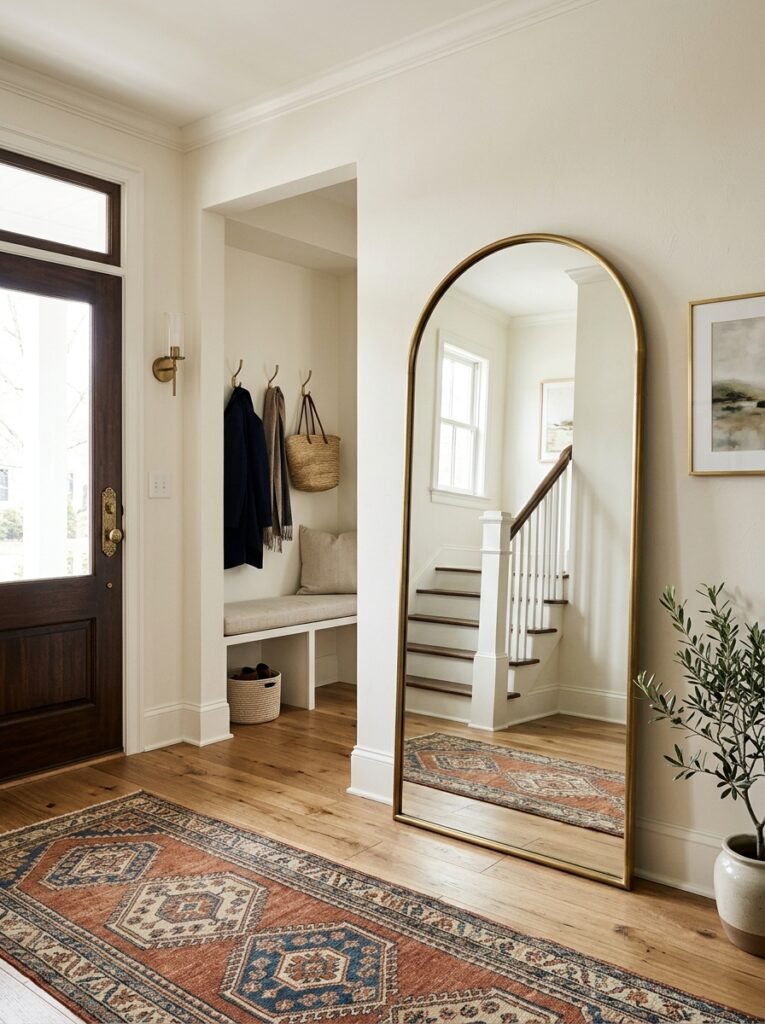
A tall mirror leaned against the wall looks relaxed and gives you a full outfit check on the way out, which no small mirror can do.
Nothing makes a cramped entry feel taller faster.
Anchor it to the wall if children or pets are around! Keep the bottom edge clear of the baseboard so it sits properly.
18. Put a Mirror on the Coat Closet Door
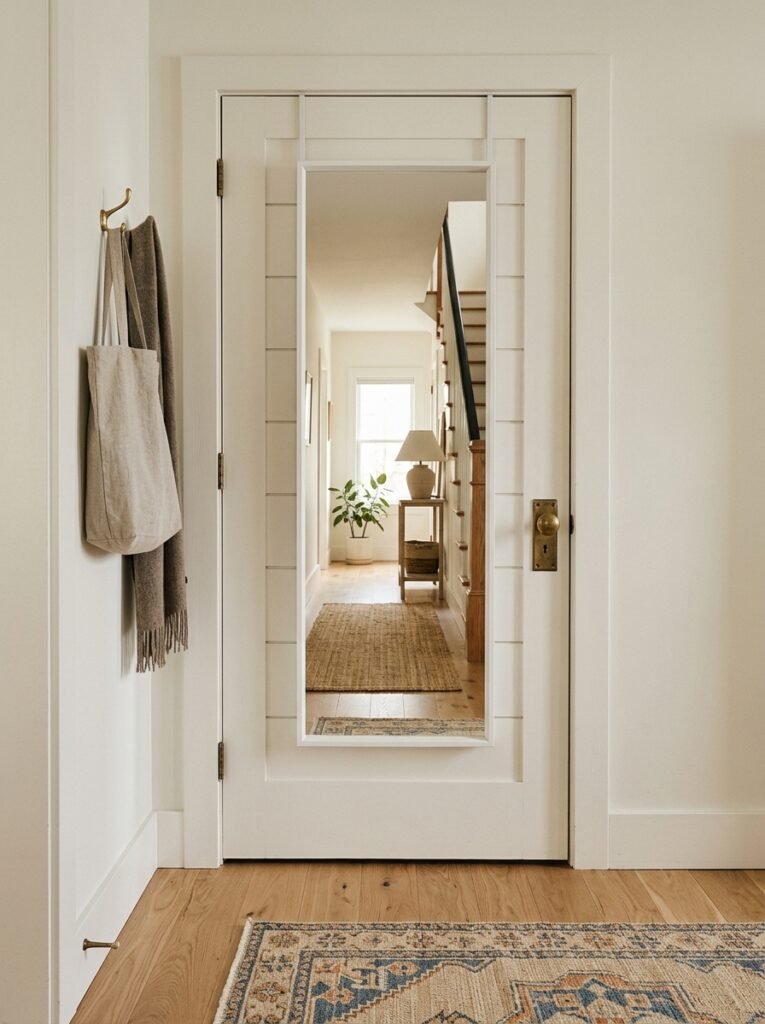
When there’s no free wall at all, the coat closet door is the best spot you have. A full-length mirror mounted on the outside gives you the outfit check and the extra light without taking up any space.
Choose a slim frame that matches the door color so it looks built in. Over-the-door versions work for renters, since they need no drilling.
Finishing the Look
19. Cluster Small Mirrors Into a Gallery
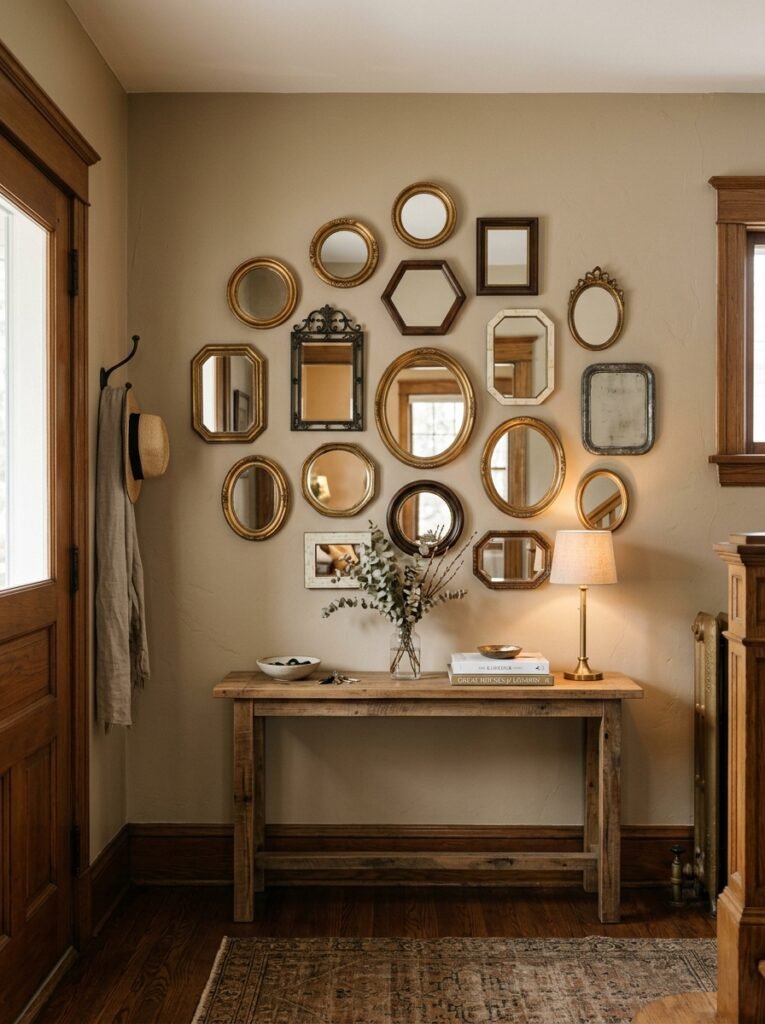
When one large mirror is out of budget, or the wall is broken up by a light switch, several small mirrors in mixed frames deliver the same reflected light.
Keep the frames varied but repeat each finish twice, so the group reads as planned.
Space them two to three inches apart so the whole cluster holds together!
Also read: 20 Eclectic Gallery Wall Ideas For a Collected Look
20. Flank It With Sconces
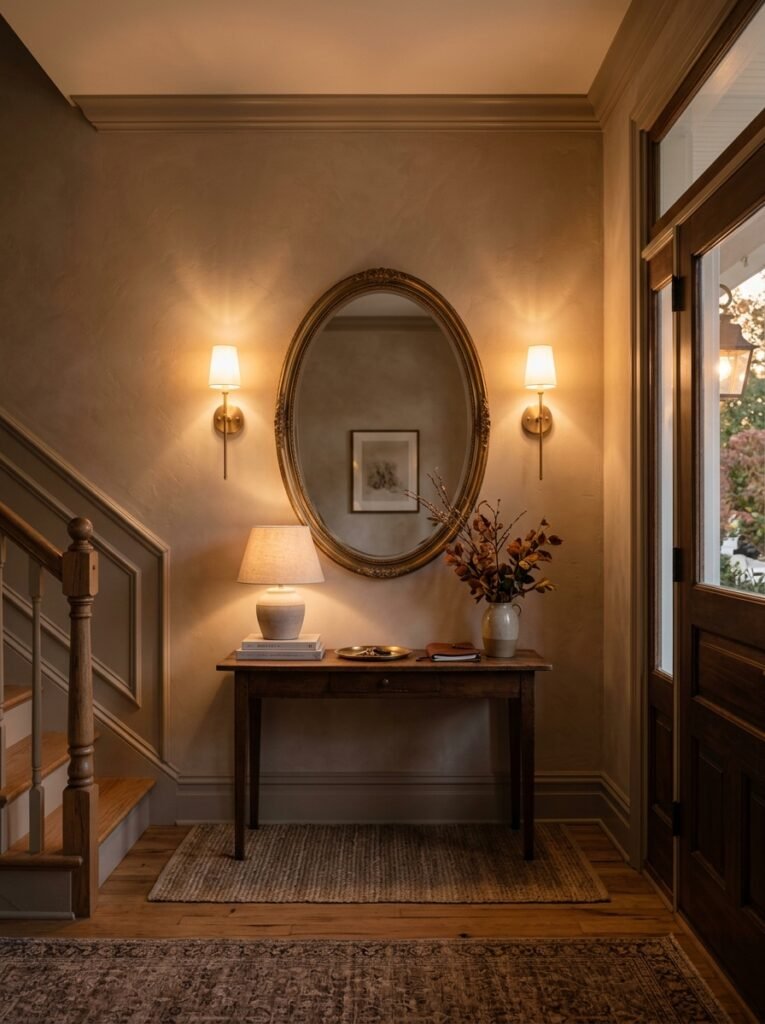
A pair of wall sconces on either side of a mirror turns a functional object into a proper focal point.
The light lands on your face instead of the back of your head, which makes that last look far more useful.
It also solves the entry lighting problem, since most have nothing but a single overhead fixture. Warm white bulbs make the whole space feel softer and more welcoming.
21. Match or Contrast the Frame With Your Trim
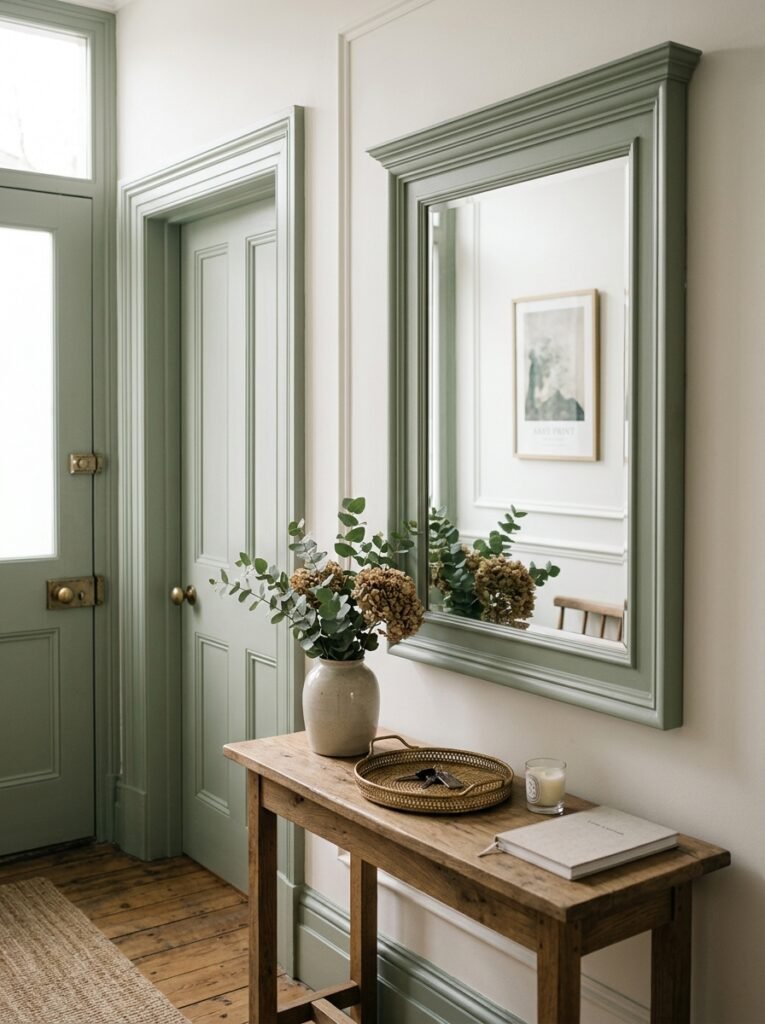
The frame is where an entry mirror either disappears or holds the whole wall together.
A frame that matches your door and trim makes the entry read as one designed piece, while a contrasting frame turns the mirror into the focal point.
Both work, so it comes down to preference. Personally, I lean toward matching in a small entry, since it keeps everything calm!
22. Hang It From a Leather Strap
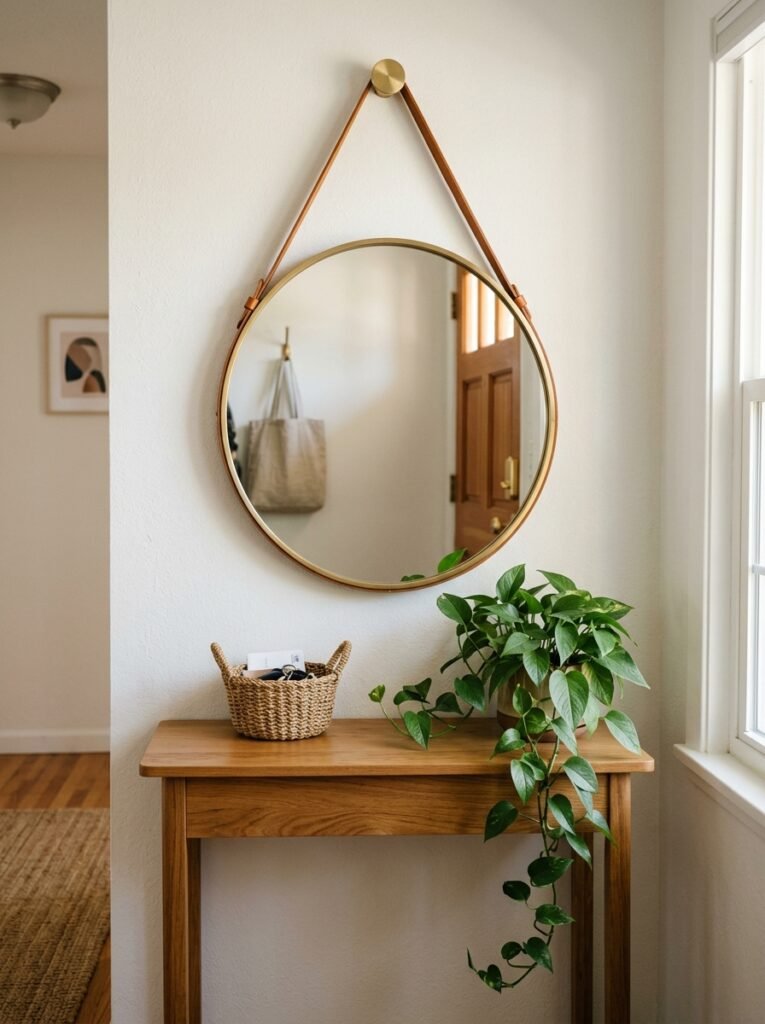
A round mirror hung from a leather strap and a single brass knob adds a relaxed, slightly vintage touch that a hidden hanger can’t.
The strap also brings in a warm, natural material that softens painted walls.
Tan or cognac leather pairs best with wood floors and brass hardware. Just make sure the knob is screwed into a stud or a proper wall anchor.
23. Style the Console Below in Threes
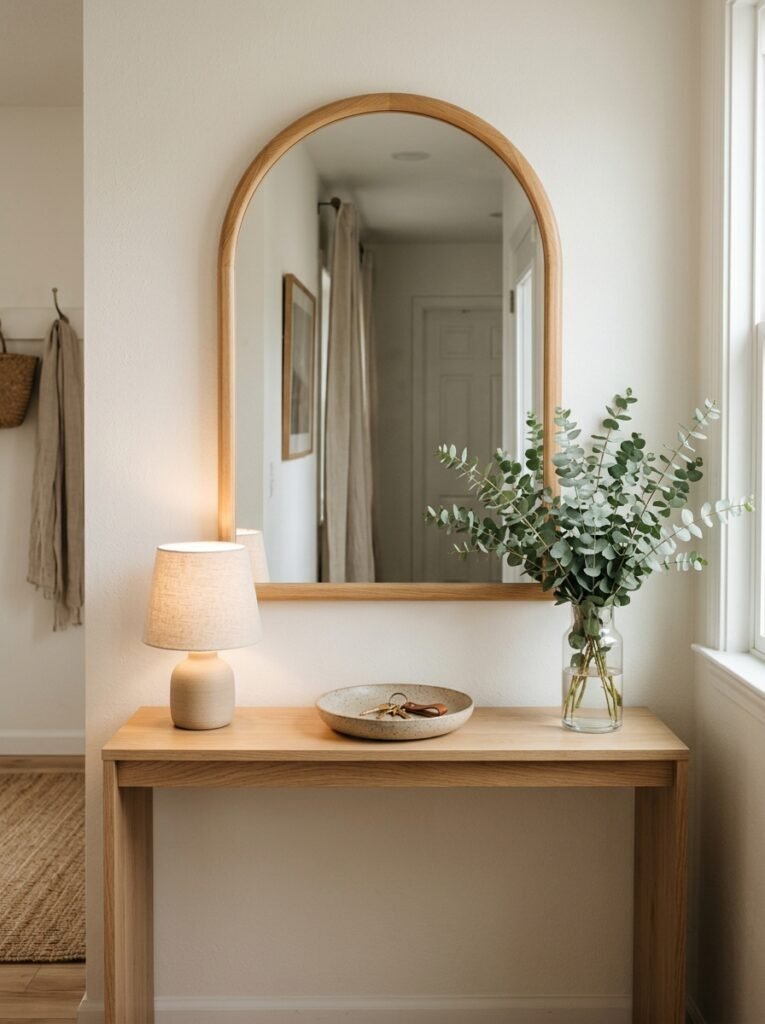
The mirror and the console read as one vignette, so what sits on the table matters just as much as the glass above it. A simple trio keeps it balanced without clutter:
- A small lamp for height and glow
- A shallow bowl or tray for keys
- A vase with fresh stems or greenery
Vary the heights so the eye moves across the mirror instead of stopping at one spot.
24. Lean Small Art in Front of the Mirror
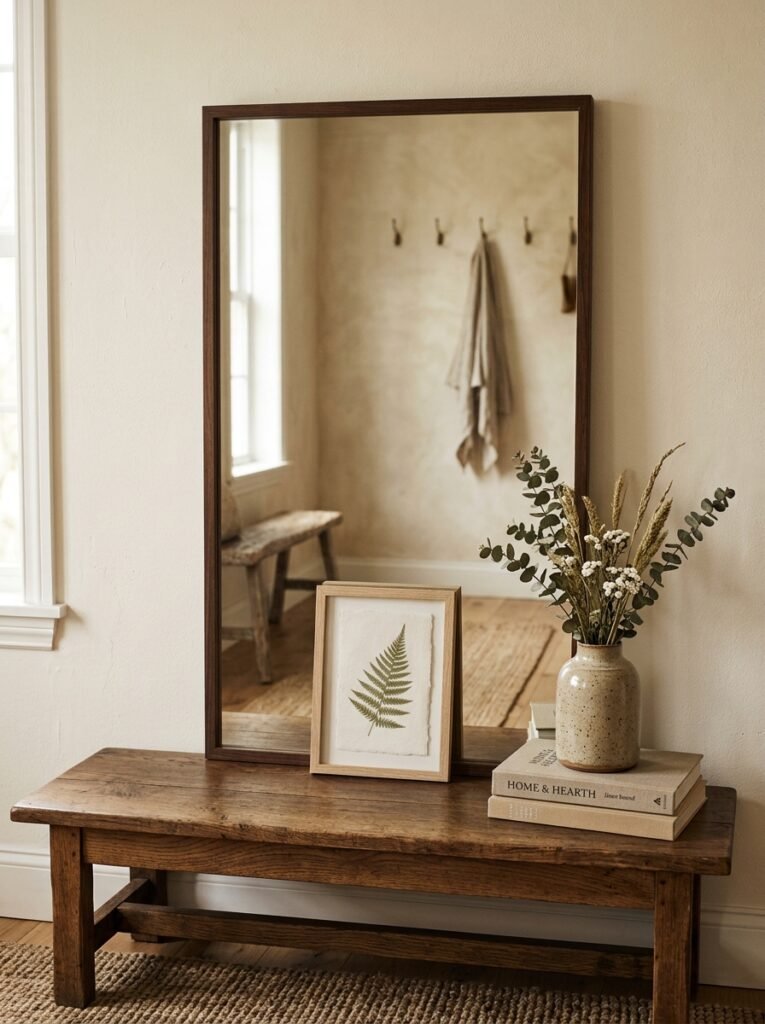
Layering a small framed print against the bottom of a mirror adds depth and makes the arrangement feel collected over time.
It’s a trick stylists use constantly, because it looks effortless and costs almost nothing.
Keep the art small enough that it covers only the lower edge of the glass. You still get all the reflected light, plus a little personality!
Final Thoughts on Entryway Mirror Ideas
Three decisions carry most of the result: which wall it faces, how big it is, and how high it hangs.
Style matters far less than any of those, which is why a modest mirror in the right spot beats an expensive one in the wrong spot.
Start by standing at your front door and looking at what each wall would reflect. That answers the placement question before you even shop.
Then size up, since almost nobody regrets going bigger in an entry!
The frame, the sconces, and the styling can follow once the mirror is doing its actual job.
Entryway Mirror Ideas FAQ
Center the mirror around 57 to 65 inches from the floor, with 60 inches working as a reliable default.
If it hangs above a console, leave six to eight inches between the furniture and the bottom of the mirror, so the two pieces read as one arrangement. Above a bench, go up to 10 to 12 inches so there’s head clearance.
Aim for roughly two thirds the width of the console or bench beneath it, since anything narrower looks undersized and disconnected.
On a bare wall, two thirds of the usable wall width works the same way. Small entries actually benefit from oversized mirrors, because more reflection means more apparent space.
Most designers avoid it, and feng shui advises against it too, since a mirror directly opposite the door reflects light and energy straight back out.
There’s a practical reason as well, because catching your own reflection on entry can feel jarring. A side wall keeps all the benefits without the surprise.
Yes, though the effect comes mostly from light.
Most entries have no window, so a mirror reflecting borrowed daylight or lamplight roughly doubles what’s there. The reflected depth also tricks the eye into reading the space as longer, which helps most in narrow hallways.
Arched and round shapes are the most reliable, since arches suggest a doorway beyond the wall and round frames soften all the straight lines an entry naturally has.
Rectangular and full-length mirrors suit wider walls where you want a full outfit check. Shape matters less than getting the size and placement right.