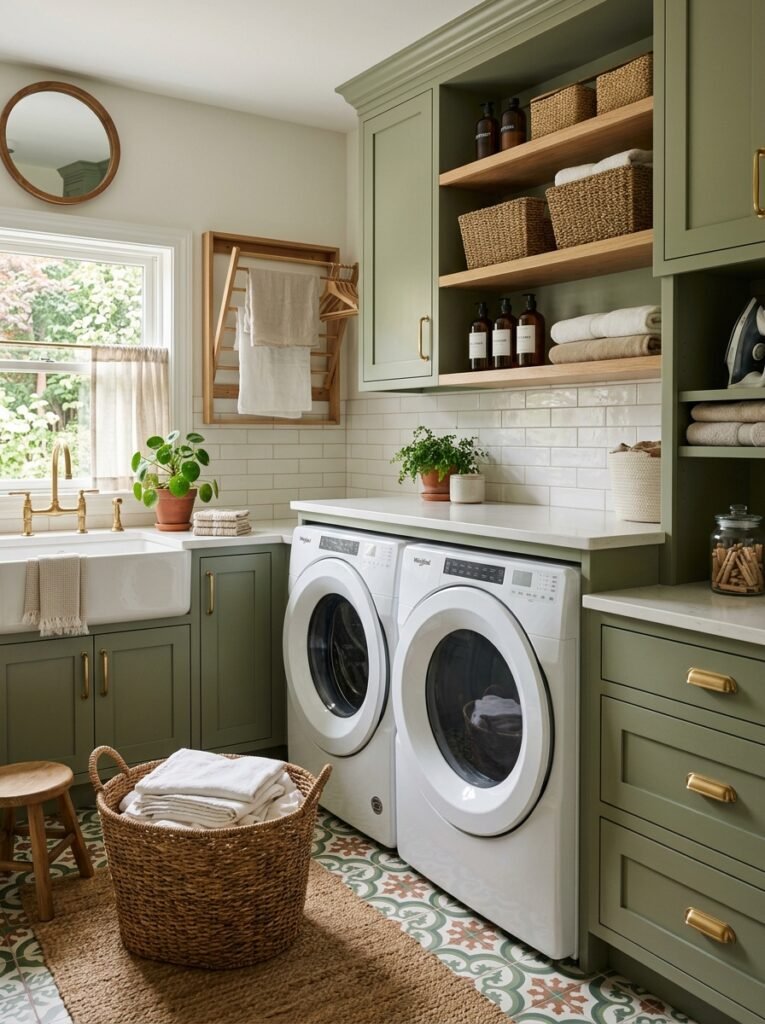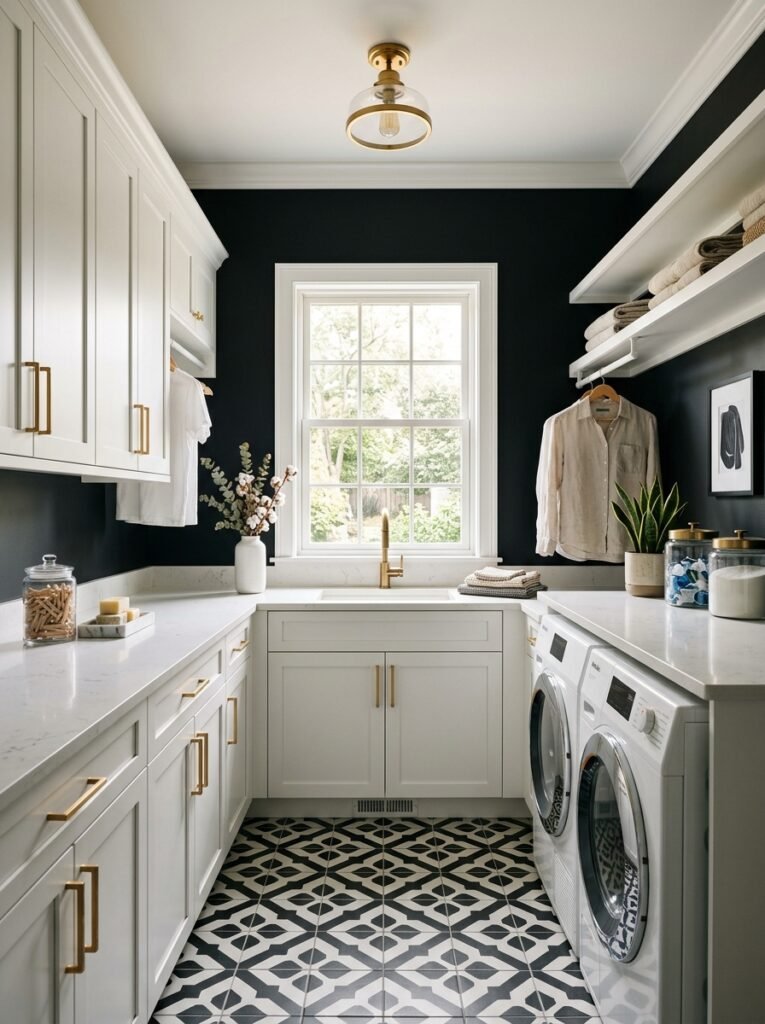
Washers and dryers are the least attractive appliances in any house, and they rarely get a room of their own. So they end up in a kitchen corner, a hallway nook, or under the stairs, sitting in plain view of everyone who walks past.
Concealing them is easier than it looks, and it usually costs far less than a renovation.
These hidden laundry room ideas will cover everything up nicely while keeping everything neat and tidy!
Plan on revisiting? Pin this for later!

Measure Before You Pick a Door
Most hidden laundry setups go wrong in the same way. Someone picks a beautiful door, installs it, and then discovers the washer can’t open or the dryer has nowhere to vent. Three quick measurements decide which ideas will actually work in your space.
- The space in front: how much room a door needs to swing or slide open
- The depth behind: a few extra inches for hoses, cords, and the dryer vent
- The machine doors: they still need to open fully once the enclosure is built
Tight in front? Look at sliding doors, curtains, or blinds. Short on depth? A curtain or skirt is more forgiving than a cabinet.
Once you know your limits, the ideas below sort themselves out quickly.
Doors That Do the Hiding
1. Fit Bifold Doors for Full Access
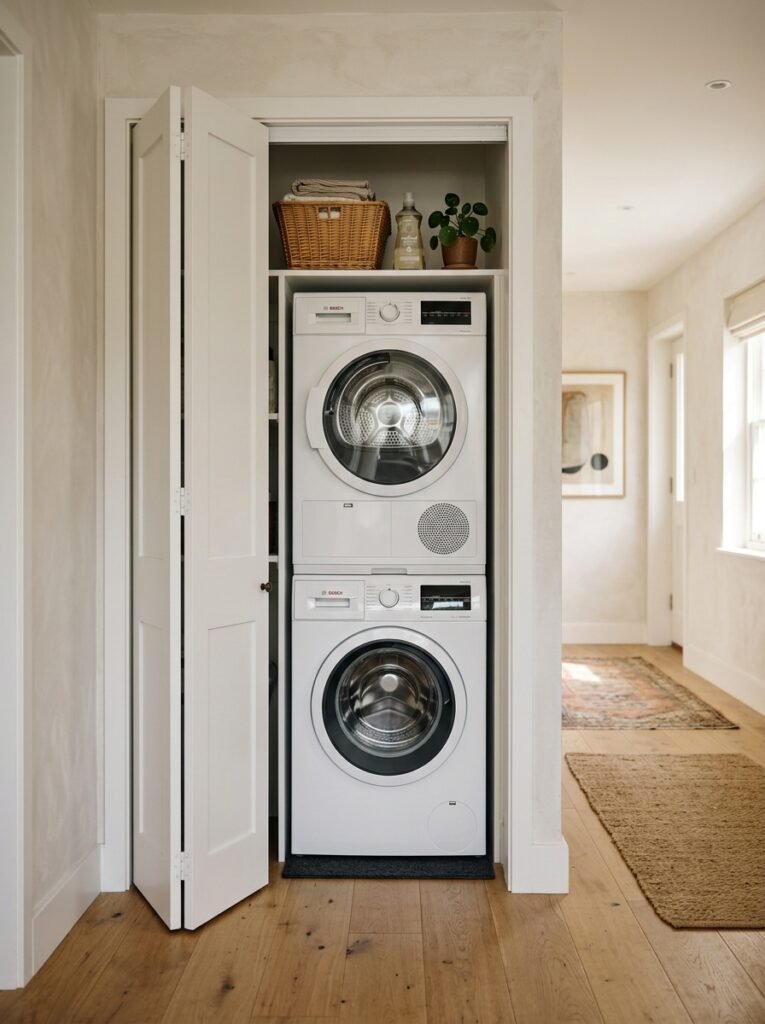
Bifold doors fold back on themselves, so the entire opening stays clear while the machines run, and the front sits flat when closed. A single hinged door, by contrast, blocks half the access and swings into whatever is behind it.
Slatted or paneled versions also let air move through, which enclosed machines need. They’re easy to install yourself, too.
2. Slide a Barn Door Across the Opening
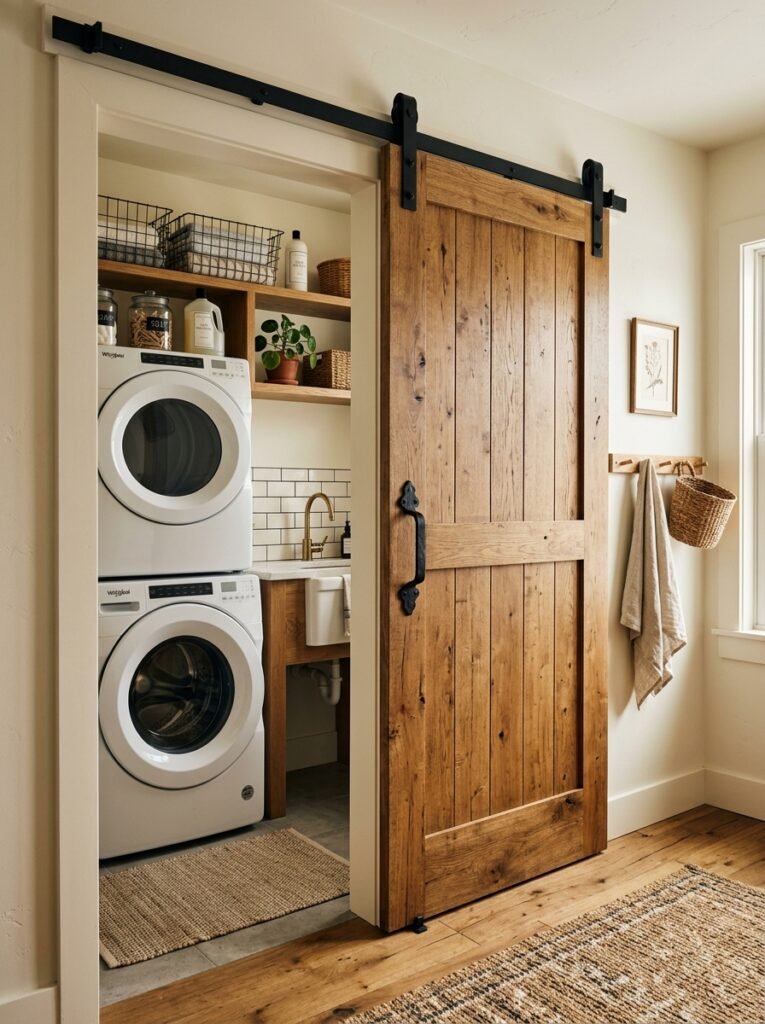
A sliding door needs no swing clearance at all, since it travels along the wall instead of into the room. That makes it the obvious choice where a hallway or counter sits directly opposite the machines.
Choose a solid panel if noise is your bigger concern, though solid doors do trap more heat. Leave a gap at the top for airflow.
3. Choose Pocket Doors That Disappear
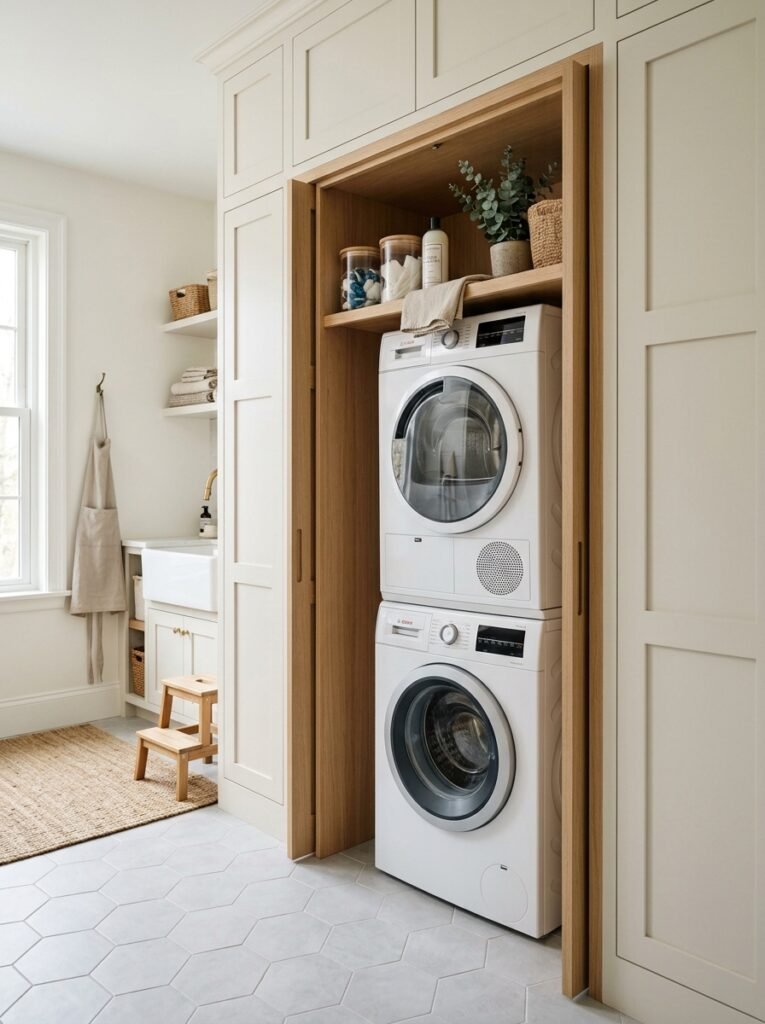
Pocket doors slide back into the cabinet itself, so they vanish completely while you work and close flush afterward. Because nothing sticks out into the room, this is the tidiest option for a nook in a kitchen or hallway.
The hardware costs more than hinges, but the finished result looks properly built in. It’s well worth it in a high-traffic spot.
4. Match the Cabinet Fronts to the Room
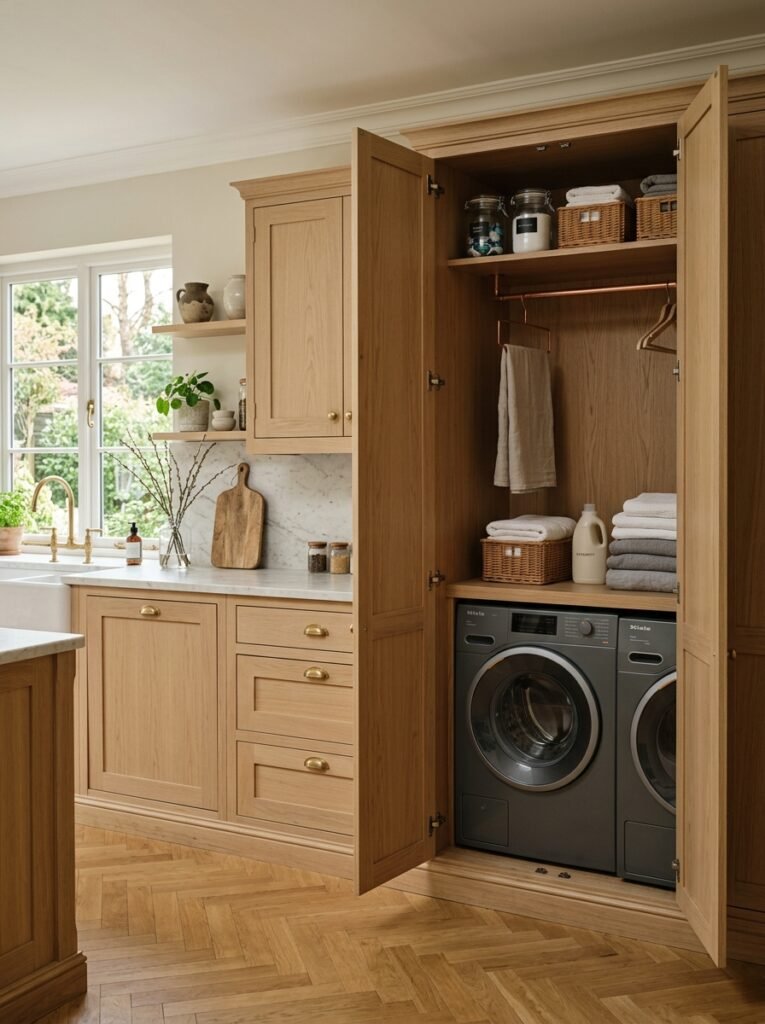
The most convincing hidden laundry is one nobody notices, which happens when the doors match the surrounding cabinetry exactly. Continuous fronts with a matching counter above make two appliances look like ordinary storage. Match three things:
- The wood or paint color
- The door style and profile
- The handles and hinges
If even one detail differs, the eye spots it straight away.
Also read: 16 Farmhouse Laundry Room Ideas Full of Rustic Charm
5. Hang Louvered Shutter Doors
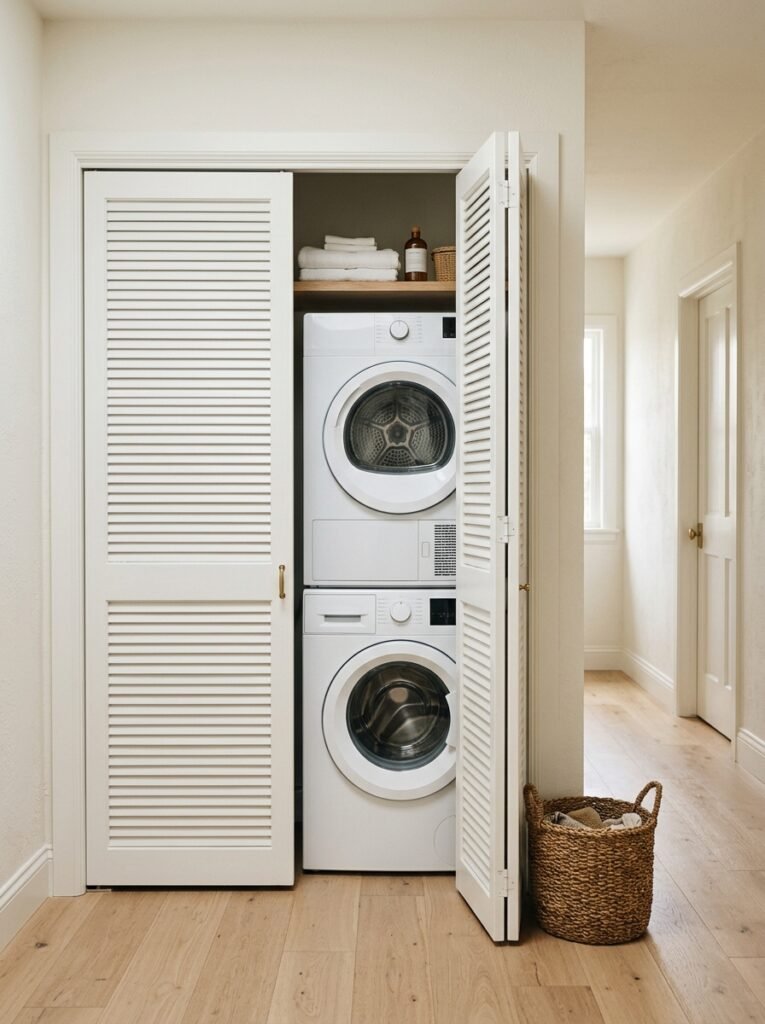
Louvered shutter doors hide the machines while letting air flow freely through the slats, which solves concealment and ventilation in one move. They also add a relaxed, cottage feel to a hallway or kitchen.
Paint them the same color as your trim so they look original to the house. Bifold shutter sets are easy to find and install.
6. Paint the Doors to Match the Wall
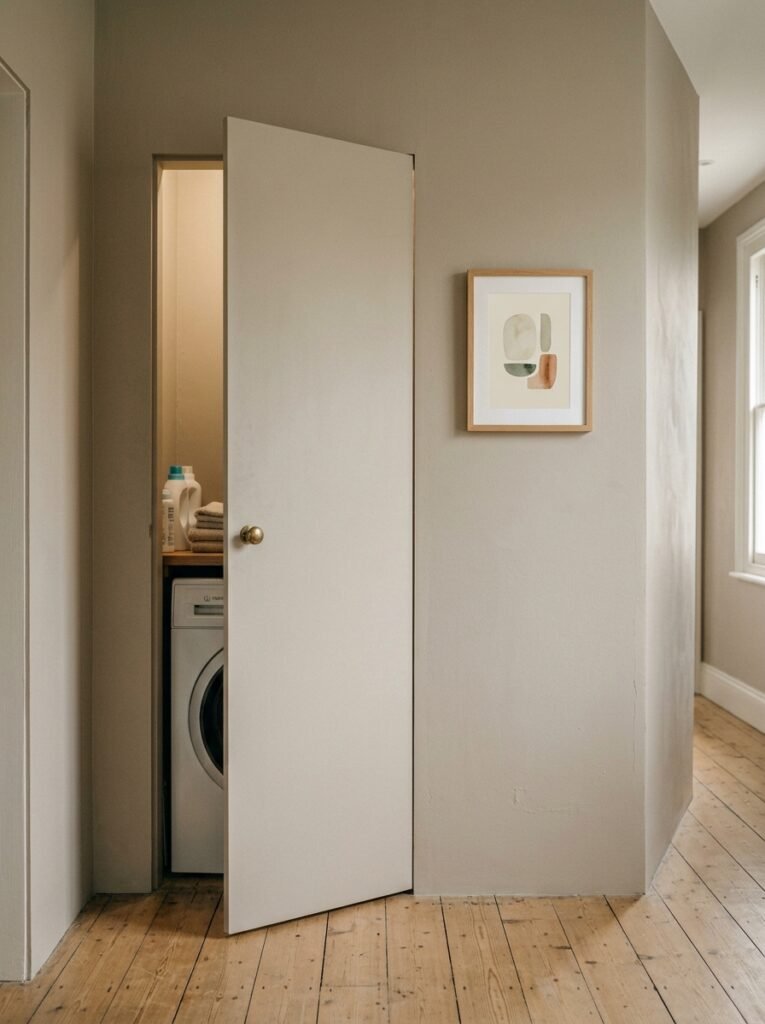
Painting the laundry doors the exact same color as the wall around them makes the whole opening blend in. Without contrast, the eye skims straight past, so the machines effectively vanish into the room.
Use the same sheen as the wall too, since a glossier finish catches the light and gives it away. Simple, flat-panel doors work best.
Concealment Without Carpentry
7. Hang a Curtain on a Tension Rod
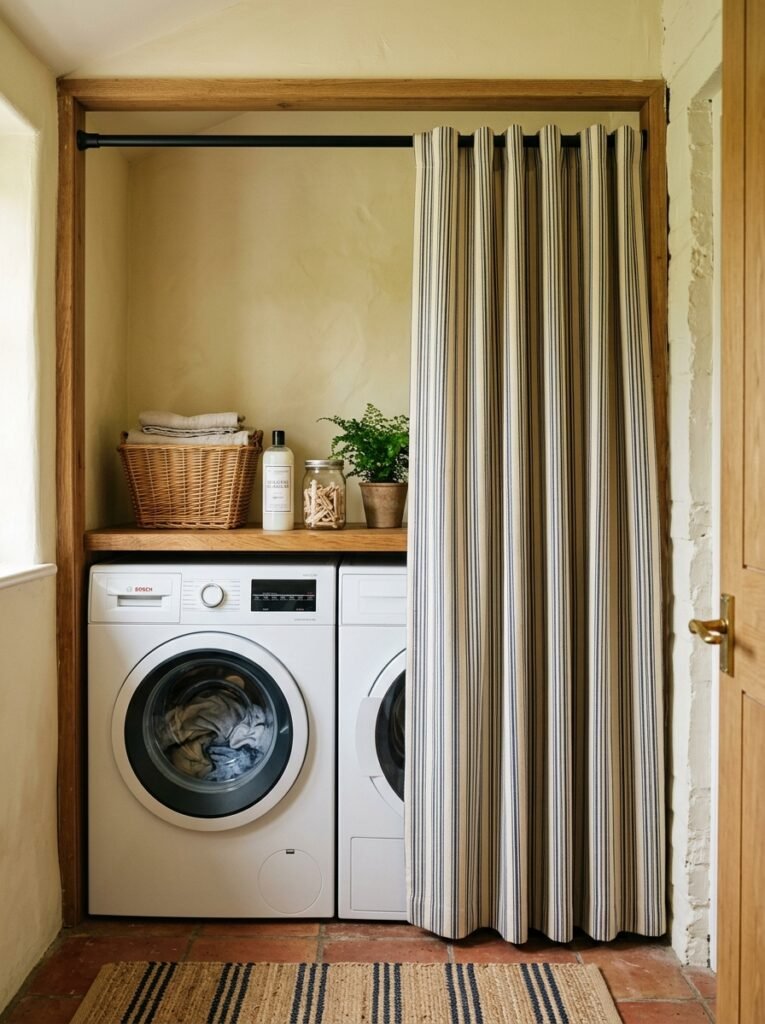
A curtain is the cheapest way to hide laundry machines, since it needs no drilling and no hardware beyond a rod.
It also pulls aside in a second, so access stays just as easy as an open front.
Choose fabric with some weight, because thin cotton clings and reveals the outline of the machines. Ticking stripe, linen, and canvas all hang beautifully.
8. Skirt the Counter in Fabric
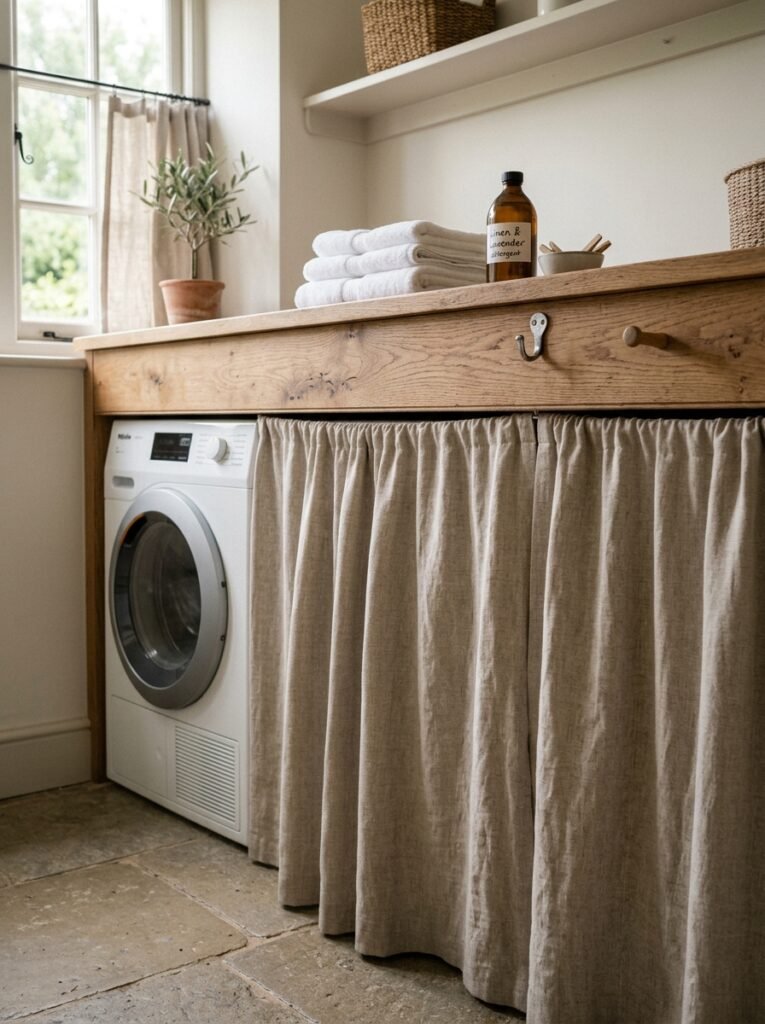
Where machines sit under a run of counter, a fabric skirt hung from a tension rod or hook-and-loop tape hides them, along with the buckets and detergent beside them. It adds softness to a hard utility space.
Because it pulls aside easily, access stays as quick as an open front. Choose a washable fabric for easy care.
9. Stand a Folding Screen in Front
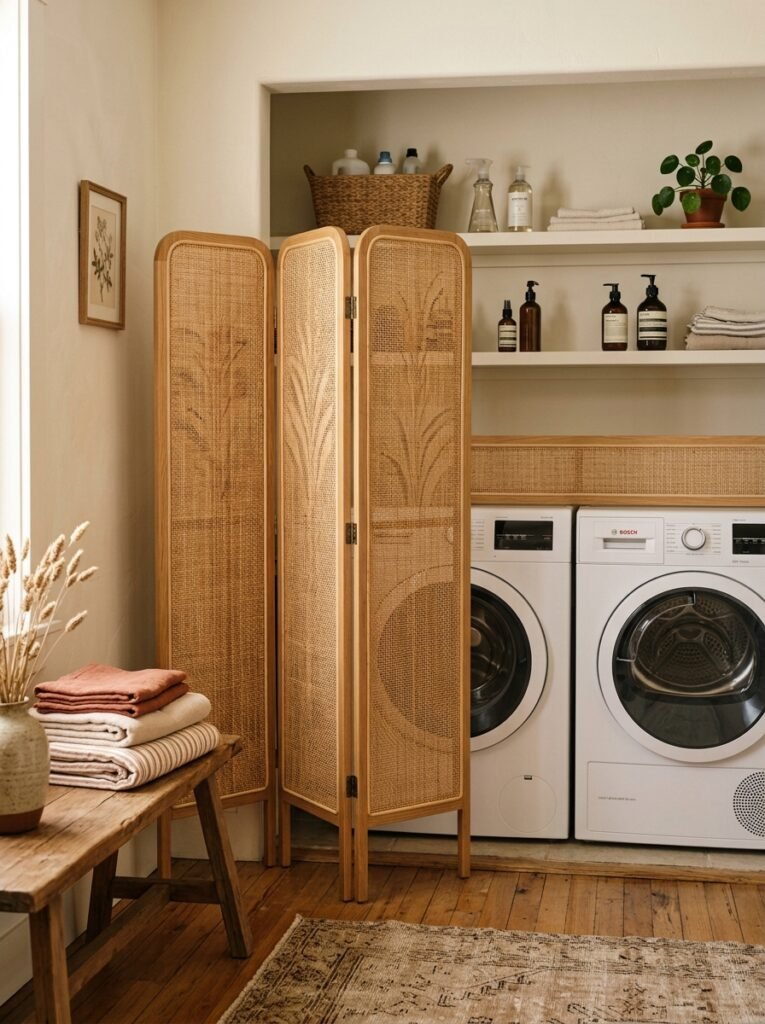
A folding screen blocks the view without touching the wall or the machines, so it solves awkward spots where a door or curtain can’t be fitted. Three or four panels usually cover a standard side-by-side pair.
It also moves completely out of the way on busy laundry days. Rattan or wood screens look the most natural.
10. Roll Down a Woven Blind
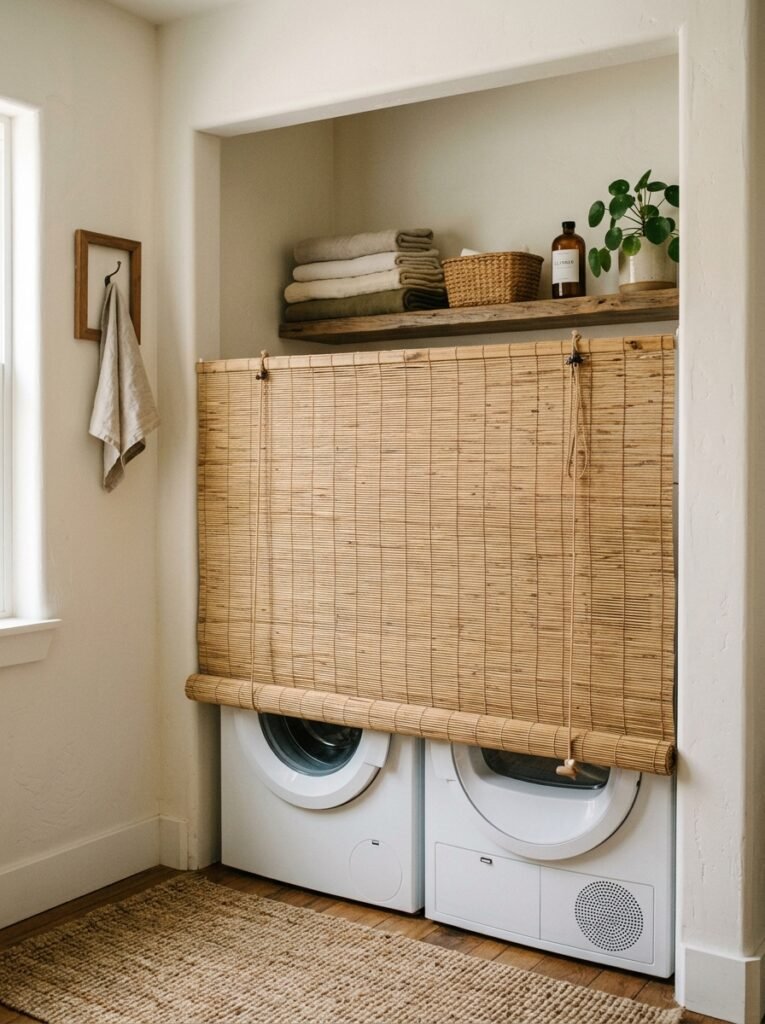
A woven bamboo or linen roller blind mounted above the opening drops down to hide the machines and rolls up out of sight when you need them.
It’s a clean, simple option for a nook without room for doors.
Choose a blind slightly wider than the opening so the edges don’t leave gaps. Most mount with just a couple of screws.
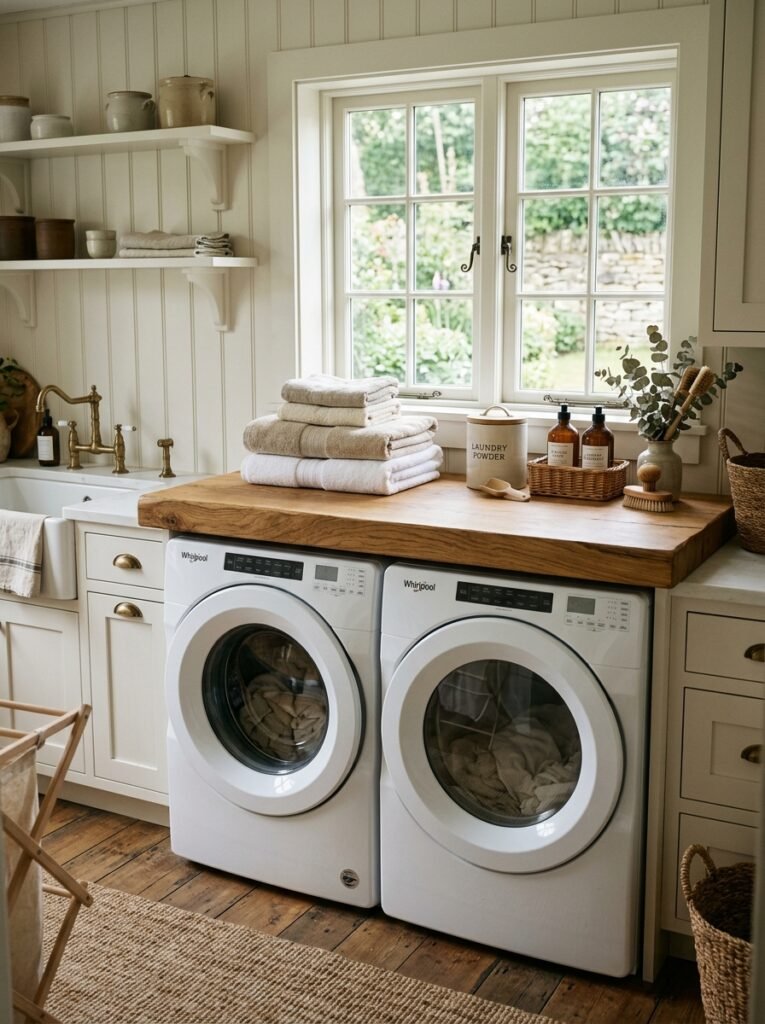
11. Lay a Wood Top Over the Machines
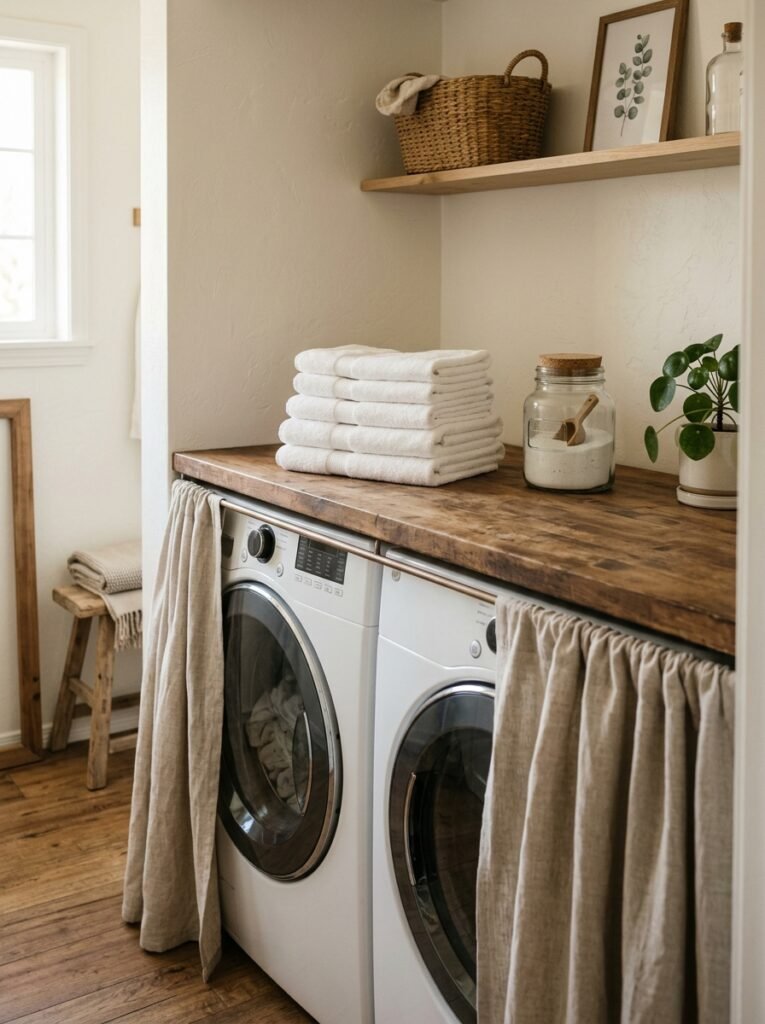
A solid wood or butcher-block top laid across side-by-side front-loaders hides the tops completely and gives you a proper folding surface. It turns two appliances into what looks like a built-in counter. A few tips:
- Leave a small gap above the machines for vibration
- Support it with brackets or side panels, not the machines
- Seal the wood against moisture
Add a curtain or skirt below and the setup is fully hidden.
12. Block the View With a Shelving Unit
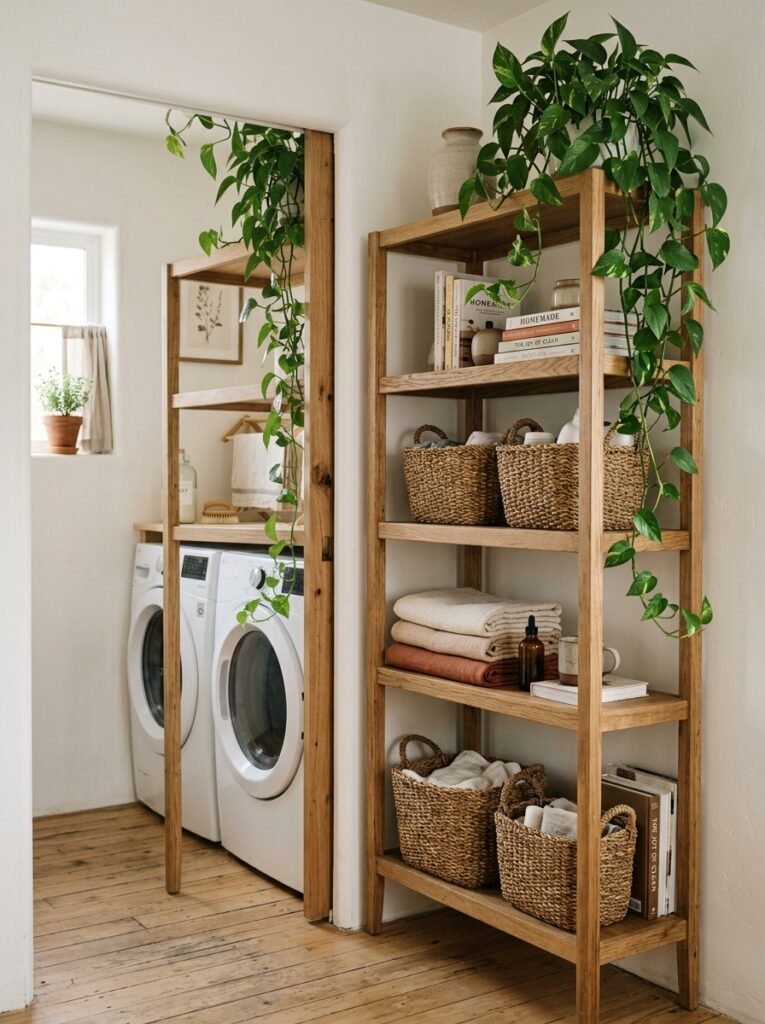
A tall open shelving unit placed beside the machines blocks the view from the main room while adding storage.
Style it with baskets, plants, and a few books, and it looks like furniture instead of a screen.
Choose one with a solid back on the side facing the room for more privacy. Anchor it to the wall for stability.
Locations for a Hidden Laundry Setup
13. Build Into the Space Under the Stairs
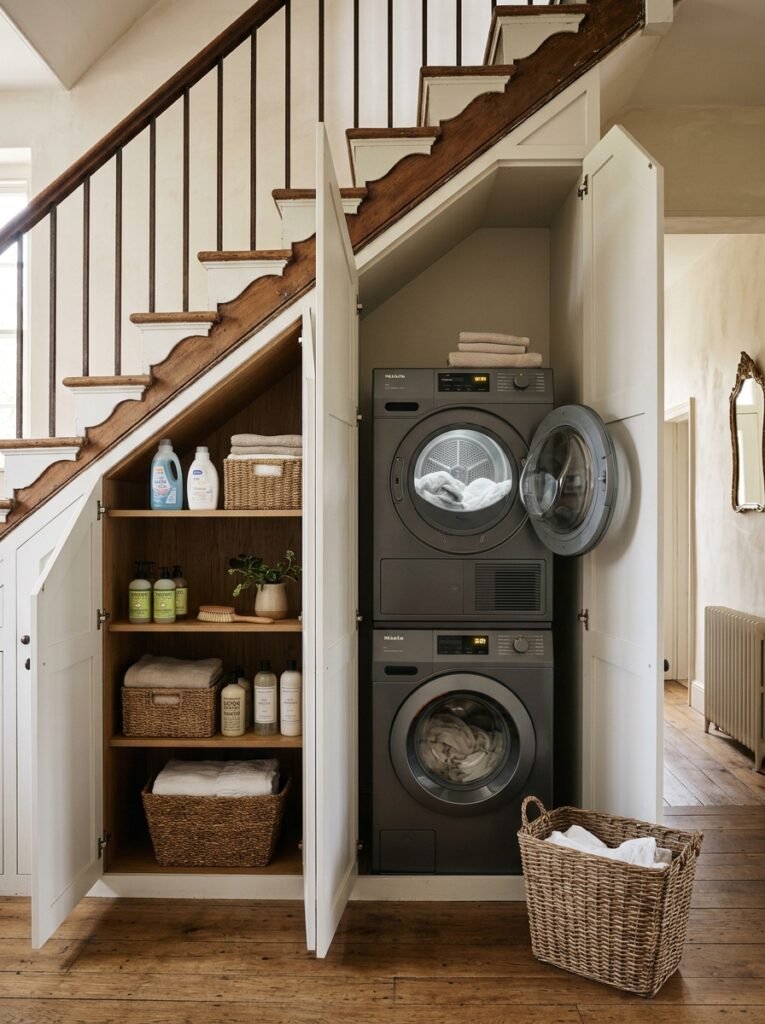
The empty space under a staircase suits stacked machines almost perfectly, since the tall end takes the height while the low end holds shelving or baskets. It turns wasted space into a working laundry.
Getting plumbing and power there is the real cost, though the space is usually doing nothing else anyway. Doors cut to the stair angle finish it neatly.
14. Convert an Unused Closet
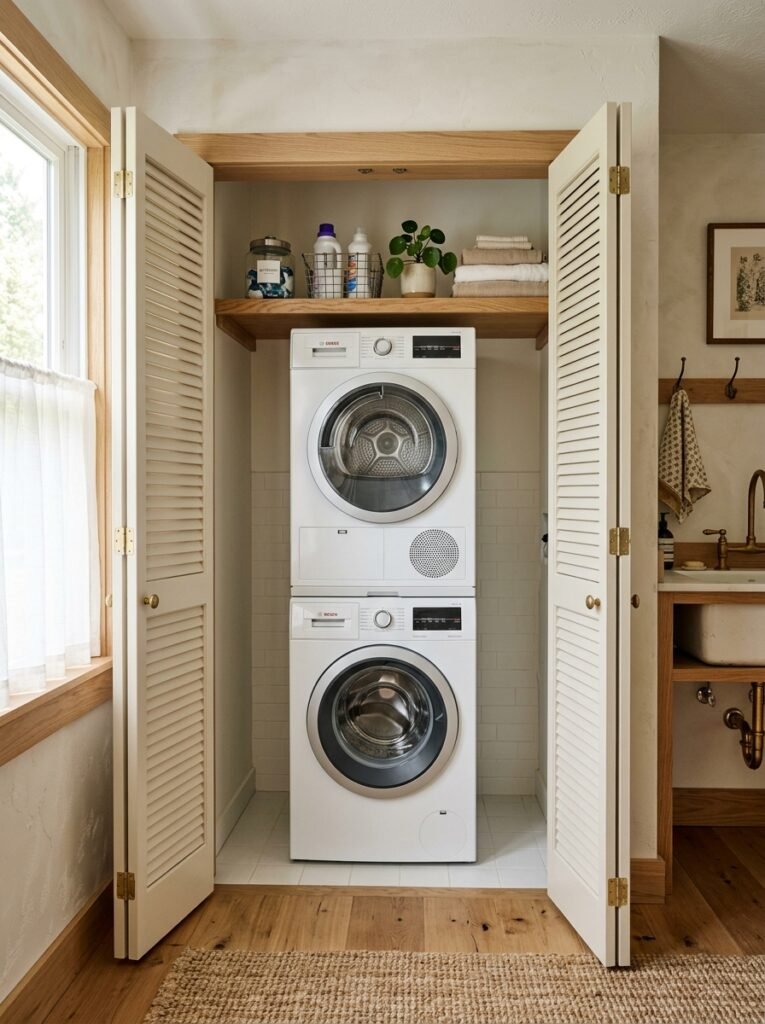
A standard closet holds a stacked washer and dryer with room left for a shelf above, which makes it the least disruptive conversion in most homes. Swapping the existing door for louvered or bifold panels solves airflow at the same time.
Check the depth first, since machines need clearance behind them for hoses and venting.
15. Slot Them Under a Counter
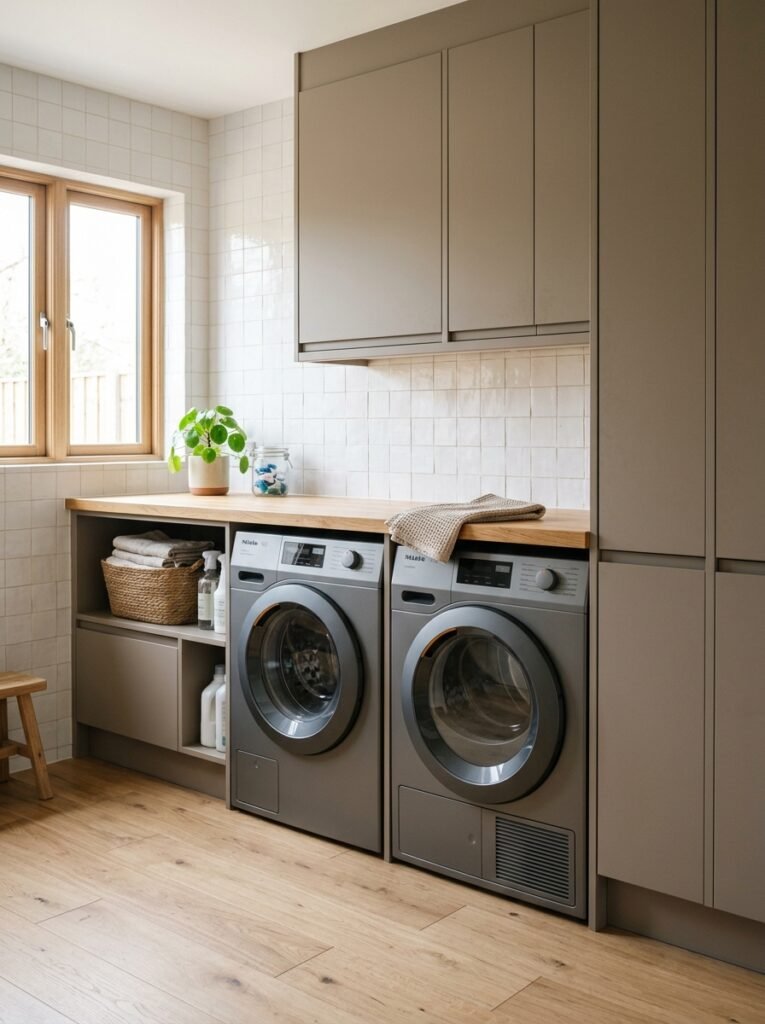
Front-loading machines fit beneath a standard counter, so a laundry pair can live in a kitchen, mudroom, or utility run without announcing itself. A continuous worktop above hides the tops entirely.
It also gives you a spot to fold, which most tucked-away laundry setups lack. Add cabinet doors in front for full concealment.
Also read: 14 Smart Laundry Room Organization Ideas That Actually Work
16. Tuck Them Into the Bathroom
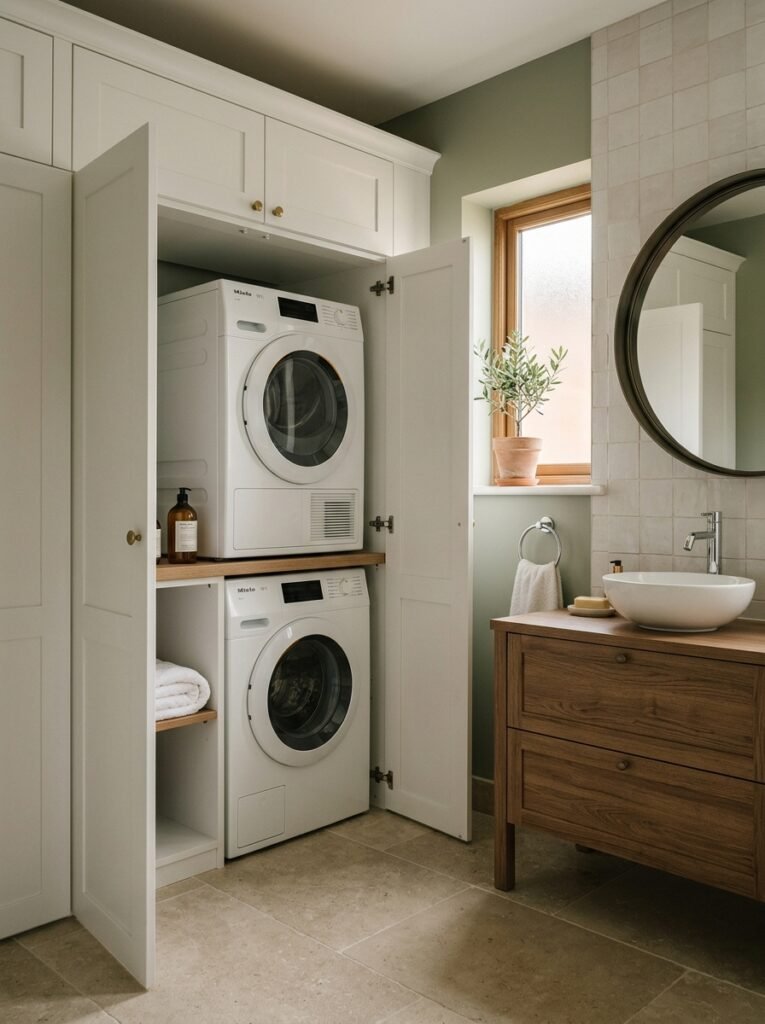
A bathroom already has the plumbing and drainage laundry needs, which makes it one of the easiest places to add a hidden setup.
A stacked pair behind cabinet doors or a curtain fits into surprisingly little space.
Make sure the room has a good exhaust fan, since bathrooms and dryers both produce moisture. Towels and laundry supplies can share one cabinet.
17. Hide Them in a Walk-In Pantry
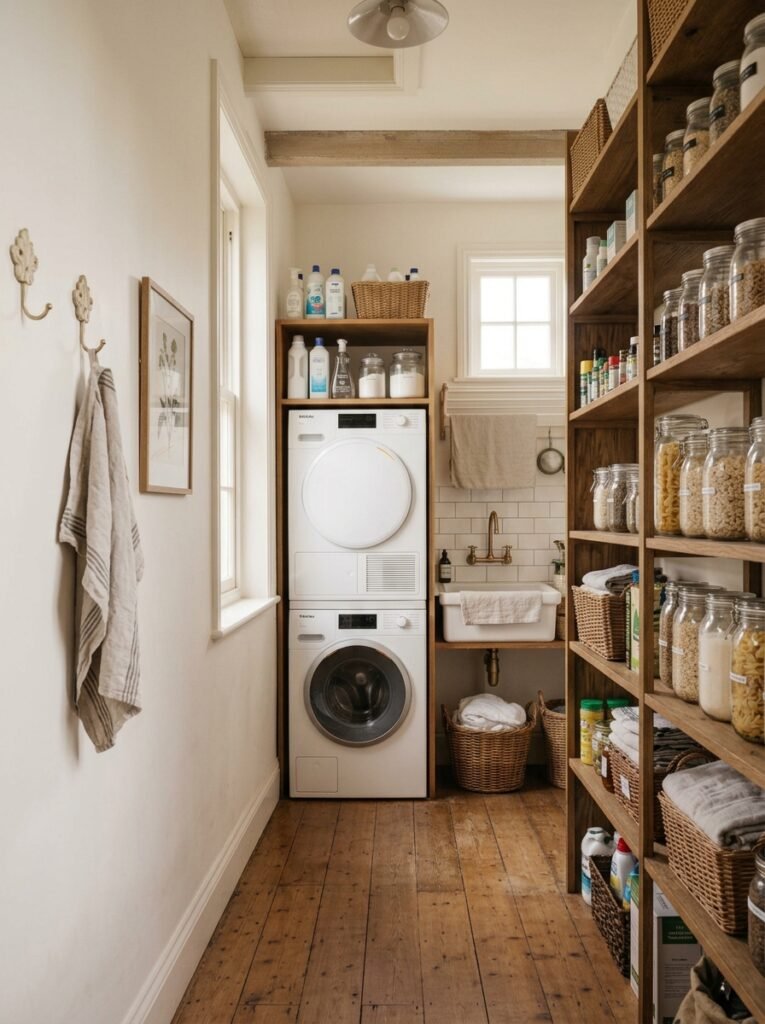
A walk-in pantry often sits right beside the kitchen plumbing, so a stacked washer and dryer can slot into one end without a major renovation.
The pantry door then hides everything when guests come over.
Keep food storage on the opposite wall, well away from the dryer’s heat. Closed bins keep lint off the shelves.
18. Use the End of a Hallway
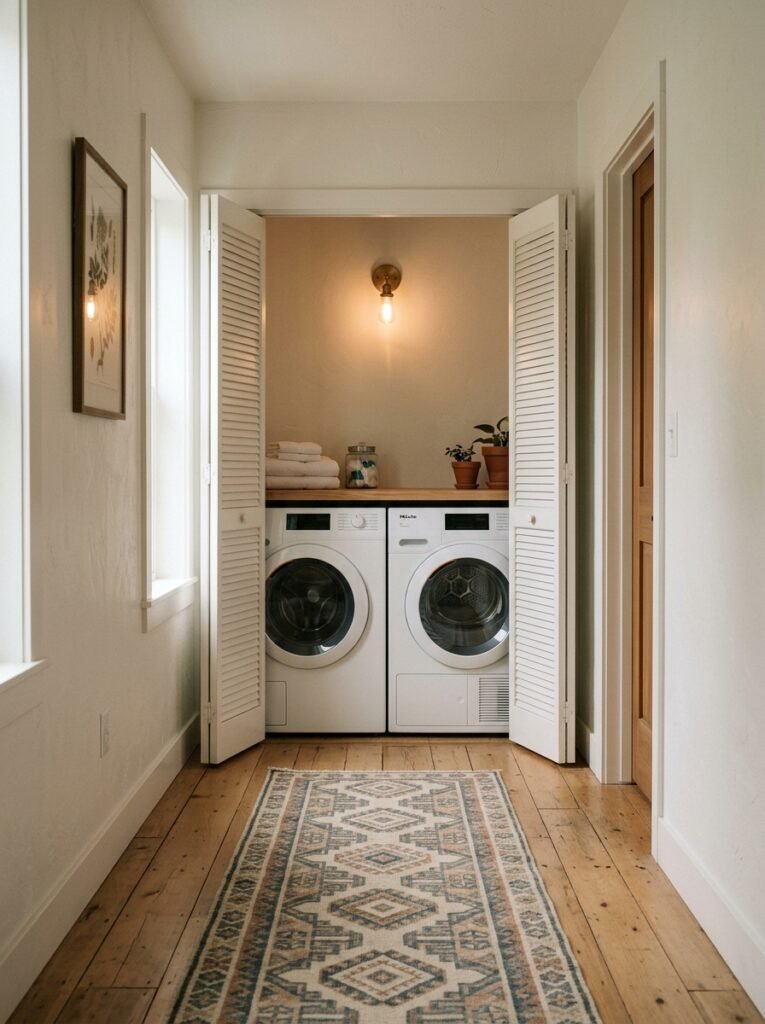
The dead-end wall at the end of a hallway is often wide enough for a side-by-side pair behind doors. Since it’s already out of the main living space, noise and clutter stay tucked away.
Choose bifold or louvered doors that match the hallway’s existing trim. A wall sconce above makes the whole alcove feel finished.
Making It Work Behind Closed Doors
19. Plan Ventilation Before You Enclose
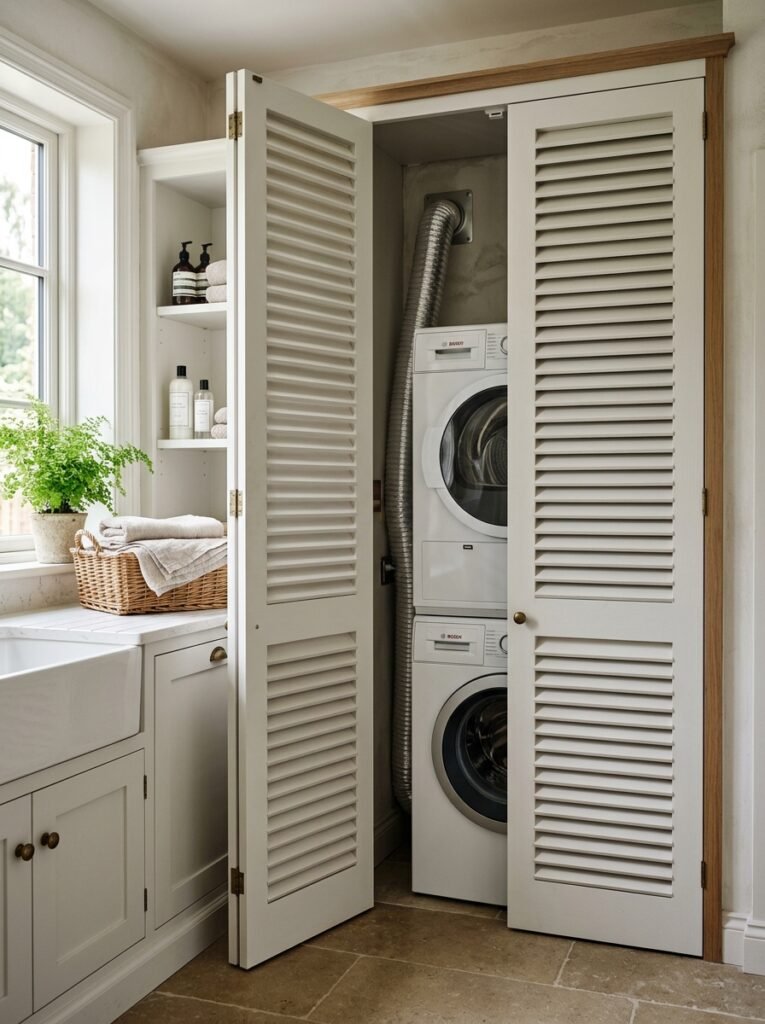
Enclosing machines traps heat and moisture, which is a real safety issue, not just a comfort one. Dryers need a clear vent path to the outside, since restricted venting is a known cause of dryer fires. Easy ways to keep air moving:
- Louvered or slatted doors
- A gap at the top of the cabinet
- A vent cut into the side panel
Sort the airflow first, then choose the doors.
20. Dampen the Noise Behind the Doors
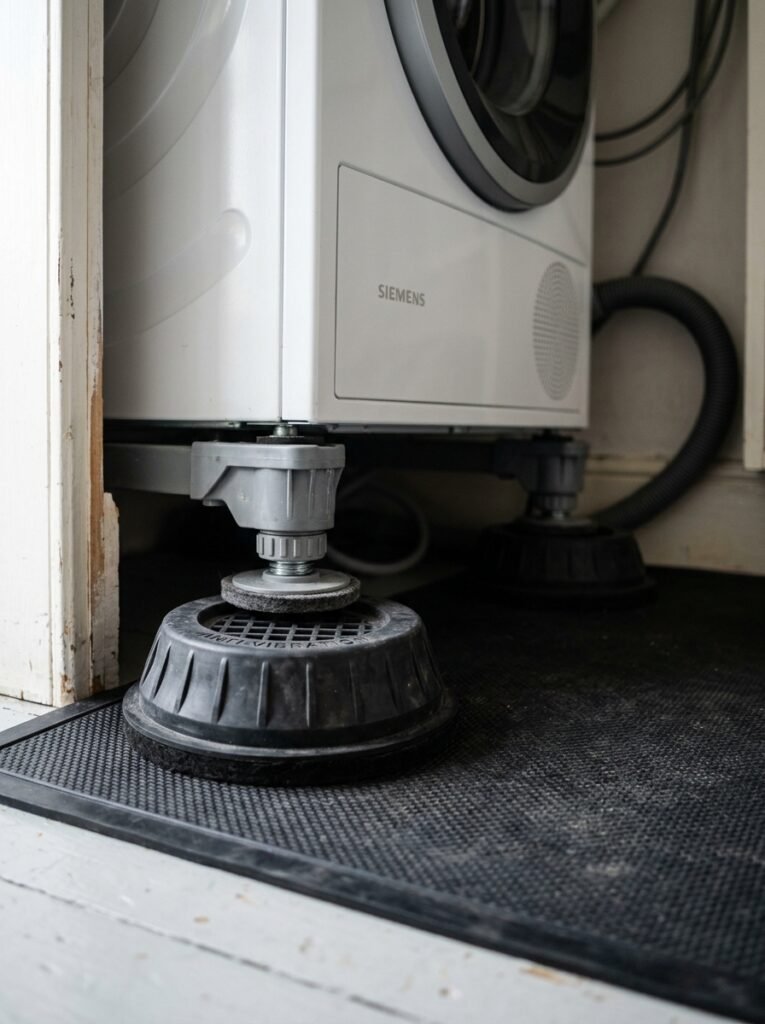
Closing machines into a cabinet reflects sound back into the room, so a hidden laundry can end up louder than an open one.
Anti-vibration pads under the feet stop most of the rumble, and a rubber mat absorbs the rest.
Lining the cabinet interior with acoustic panels handles whatever noise is left. Level the machines carefully too.
21. Light the Inside of the Enclosure
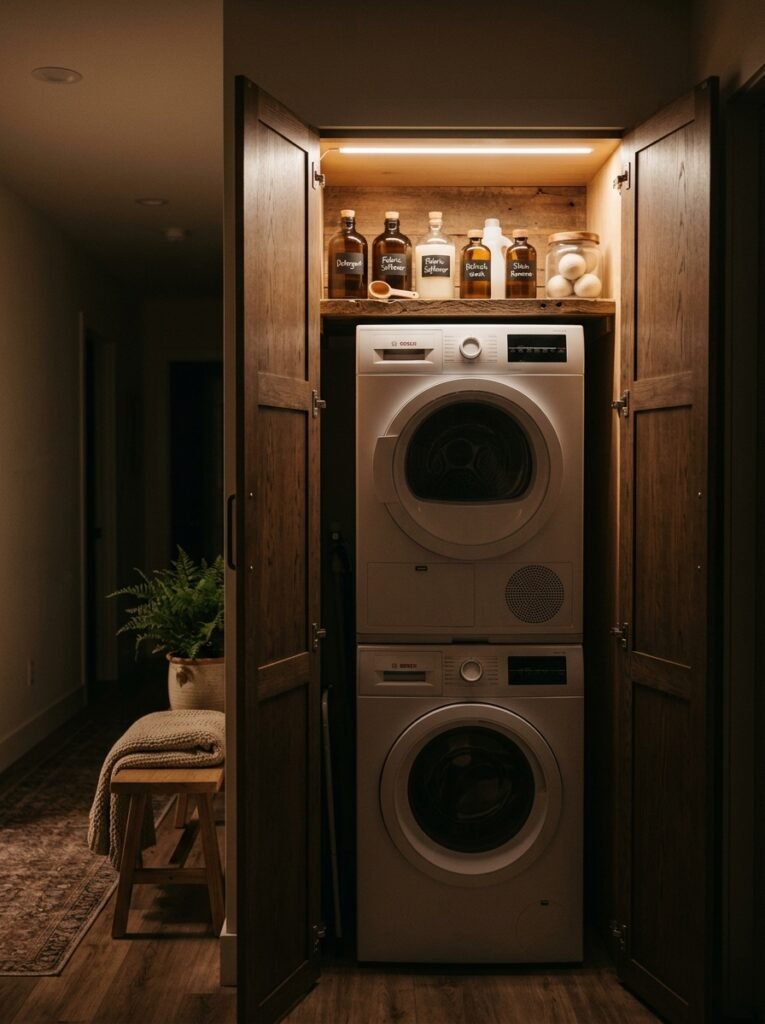
Once the doors are closed in, a hidden laundry can be dark and awkward to use. A motion-sensor LED strip or puck light inside switches on as soon as the doors open, so you can see every stain and stray sock.
Battery-powered versions need no wiring at all. Warm white light keeps it from feeling like a utility closet.
22. Add Pull-Out Storage for Supplies
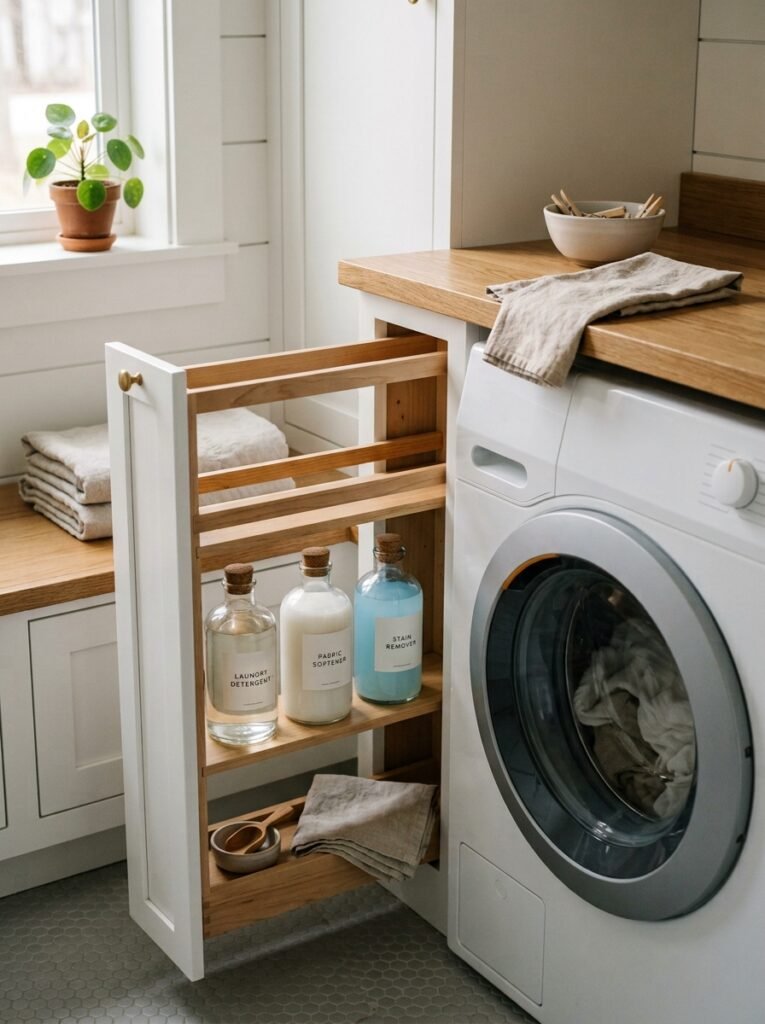
A slim pull-out cabinet beside the machines holds detergent, softener, and stain spray without taking up counter space.
Even a narrow gap of a few inches can fit a rolling organizer on casters.
Keeping supplies behind a door is what makes the whole setup look truly hidden. Decant liquids into matching bottles for a tidy look.
23. Leave Room for the Machine Doors
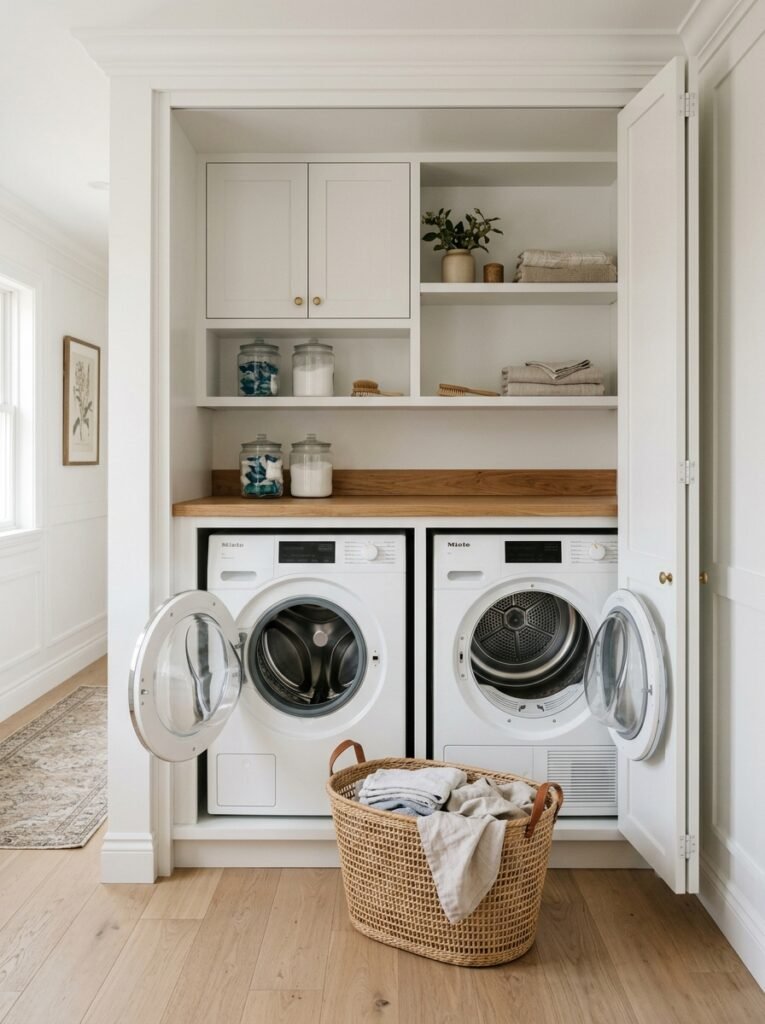
It’s easy to build a beautiful enclosure and then realize the washer door can’t open fully.
Front-loader doors swing out wide, so the cabinet doors need to fold or slide completely out of their way.
Open both machine doors fully and measure before choosing anything. Reversible machine doors can help in tight corners.
24. Hide Hoses and Cords Behind a Panel
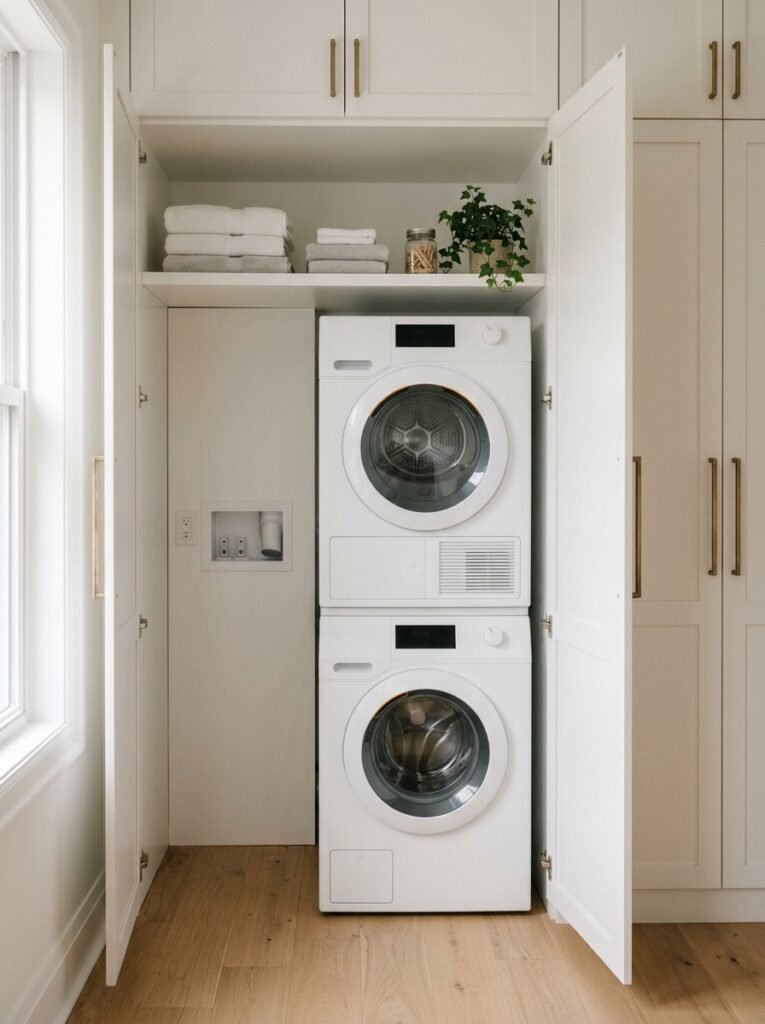
Even behind doors, a tangle of hoses, cords, and vent ducts can make a hidden laundry look messy whenever it’s open. A few simple fixes keep everything tidy:
- A removable panel over the back wall
- Cord clips to bundle power cables
- A recessed outlet box for the hoses
Keep the panel removable so repairs stay easy.
Final Thoughts on Hidden Laundry Room Ideas
The right solution comes down to how much clearance you have and how much work you want to do. Where there’s swing room, bifold doors are hard to beat.
Where there isn’t, a sliding panel, a blind, or a curtain solves it for a fraction of the effort.
Whatever you choose, sort the ventilation before you close anything in, since that’s the one part of this project where getting it wrong actually matters.
Everything else is reversible, so start with the cheapest option that fits your space and upgrade later if it bothers you.
Hidden Laundry Room Ideas FAQ
The simplest options need no building at all: a curtain on a tension rod, a fabric skirt under a counter, or a folding screen in front. For something more permanent, bifold or sliding doors across the opening work well. Where the machines sit under a counter, matching cabinet fronts hide them completely.
Yes, and a standard closet fits a stacked pair with room for a shelf above. Check the depth first, since machines need clearance behind for hoses and venting, and confirm you can run plumbing and power to the spot. Louvered or bifold doors are worth choosing, because they solve airflow at the same time.
They do, and it matters more than most people expect. Enclosing machines traps heat and moisture, and a restricted dryer vent is a recognized fire risk. Use louvered doors, leave a gap at the top of the cabinet, or cut a vent into the panel, and make sure the dryer exhausts directly outside.
Bifold doors give you the full opening while folding flat, which suits most spaces. Sliding or barn doors work where there’s no swing clearance, and pocket doors disappear entirely for the tidiest result. Whichever you pick, slatted or louvered versions help with airflow, while solid panels do more to muffle noise.
Front loading machines slot under a standard counter, so a continuous worktop hides the tops and matching cabinet fronts cover the rest. Done properly, the pair reads as ordinary base units. Use the same doors, handles, and finish as the surrounding cabinetry, and leave a ventilation gap behind the panels.