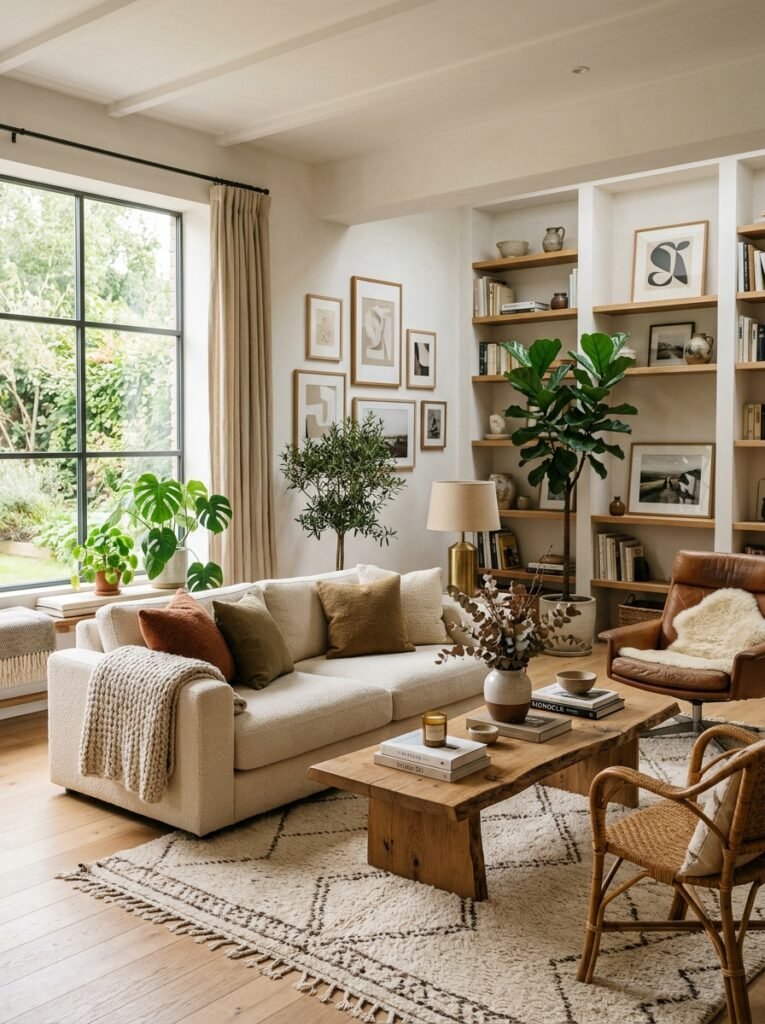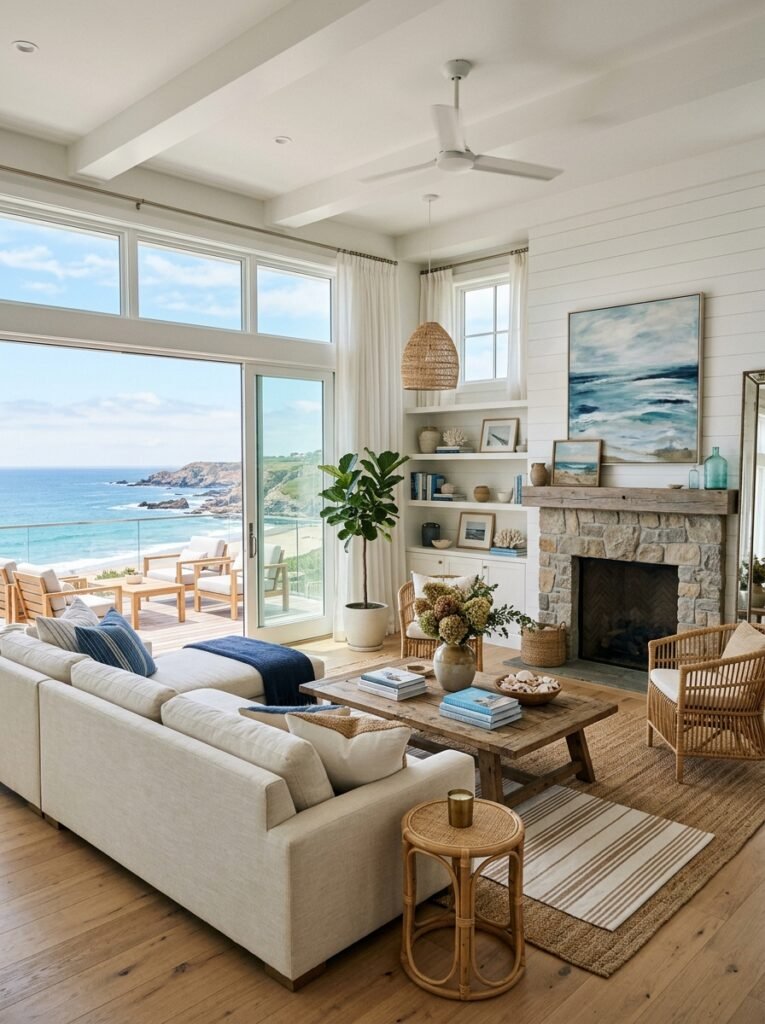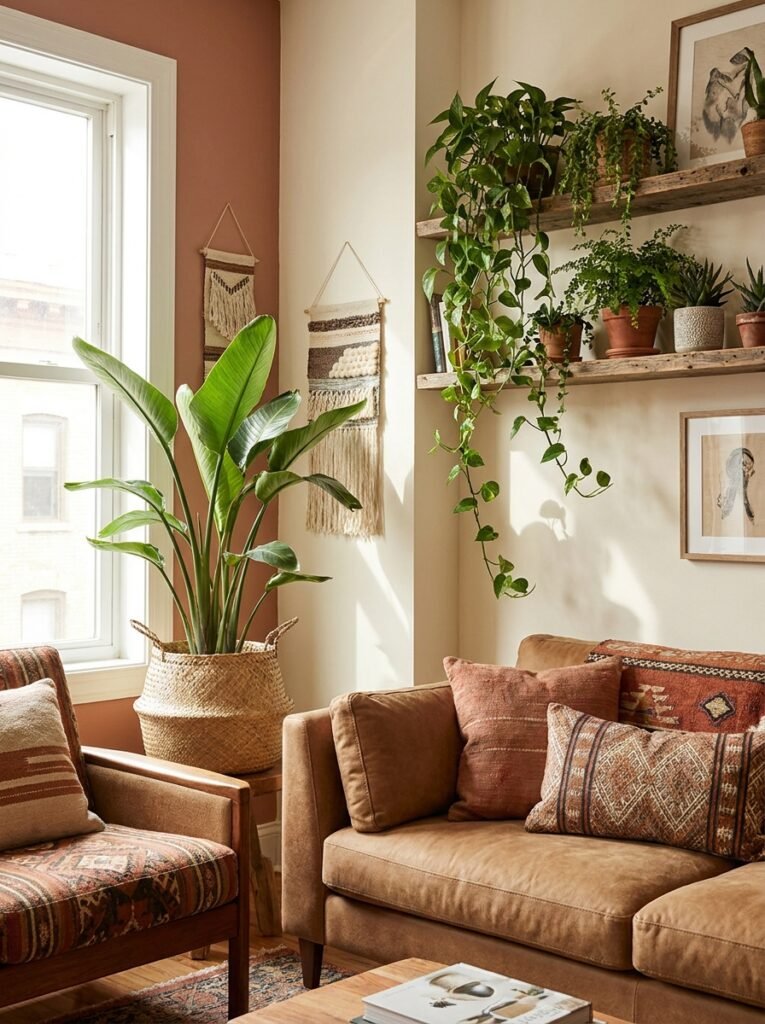
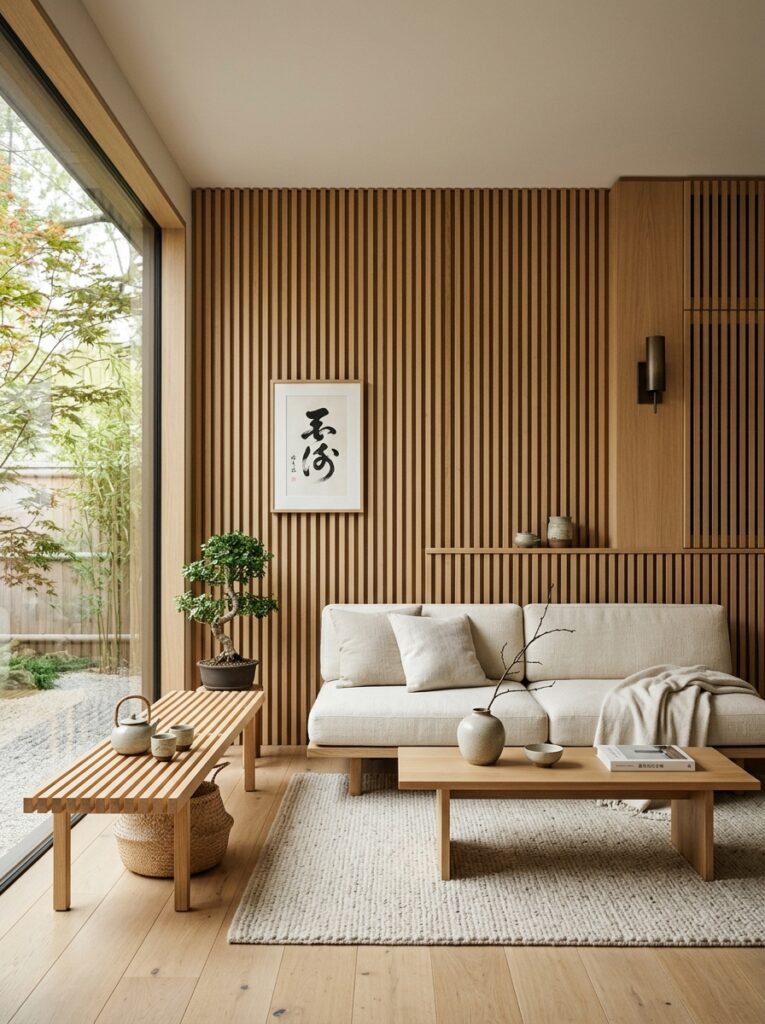
Japandi is what happens when Japanese and Scandinavian styles move in together, and surprisingly they make a beautiful combo for interiors!
You get the clean, peaceful look of minimalism, but with all the warmth and coziness that plain white minimalism didn’t have.
If your living room feels cluttered, or your “minimalist” attempt somehow turned out cold, boring and empty, this style might be exactly what you’re looking for. These 25 Japandi living room ideas will help you build a space that the moment you walk in, you’ll never want to leave!
Plan on revisiting? Pin this for later!

Japandi Furniture and Layout Ideas
1. Go Low With Your Furniture
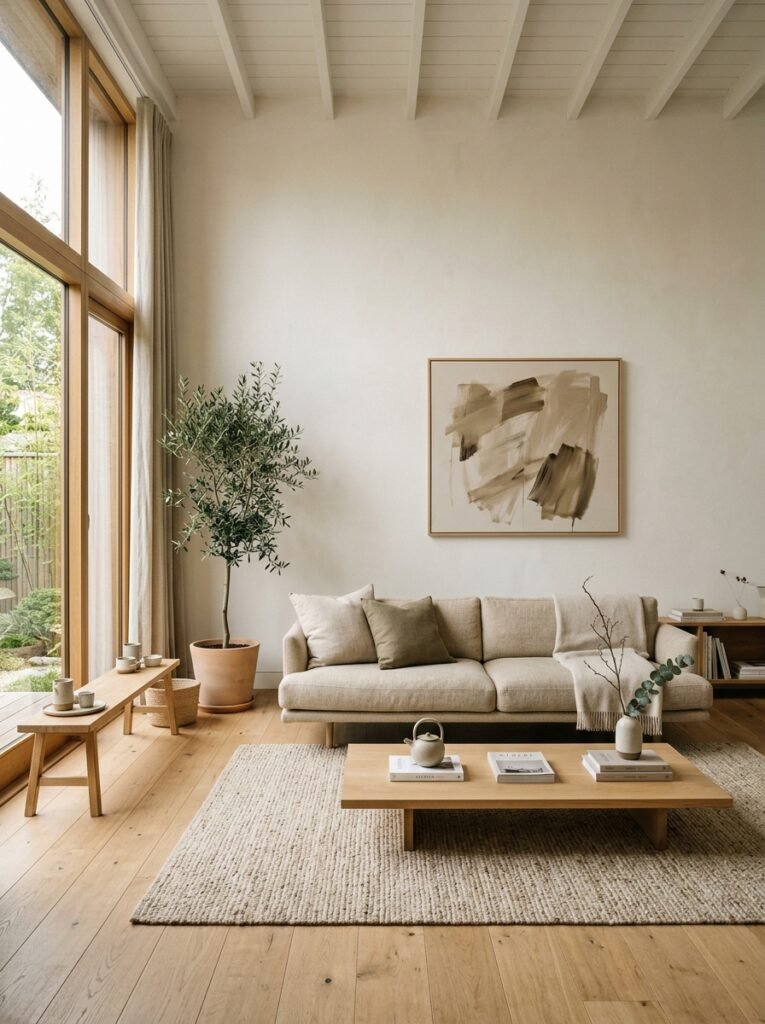
Japandi furniture sits close to the ground. Low sofas, low coffee tables, low media consoles. When furniture stays low, the walls look taller and the room feels more open.
If you’re not replacing your whole living room, I’d start with a low coffee table first. It builds a nice foundation for your living room!
2. Own Less, But Love Every Piece
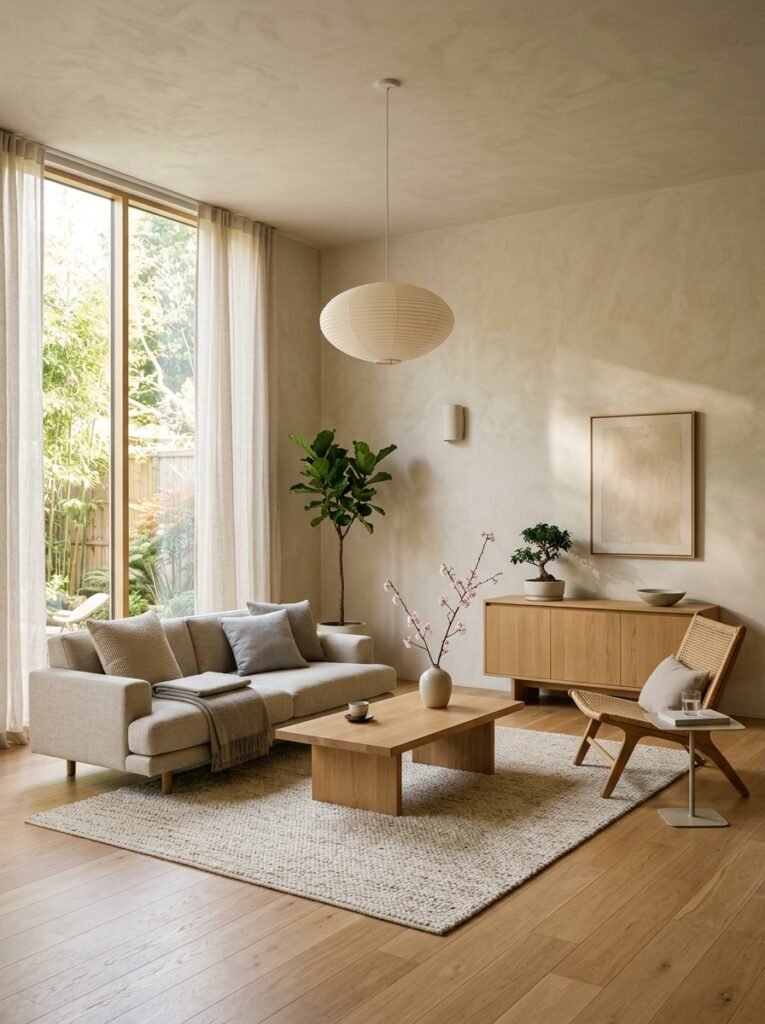
Here’s a secret Japandi rule: only prioritize furniture that you truly need and love. No random side table because the corner looked lonely, no extra chair nobody sits in.
A room with a few pieces that you truly need will always beat a room with multiple pieces that you just put in randomly because you felt like it.
3. Mix Light and Dark Wood
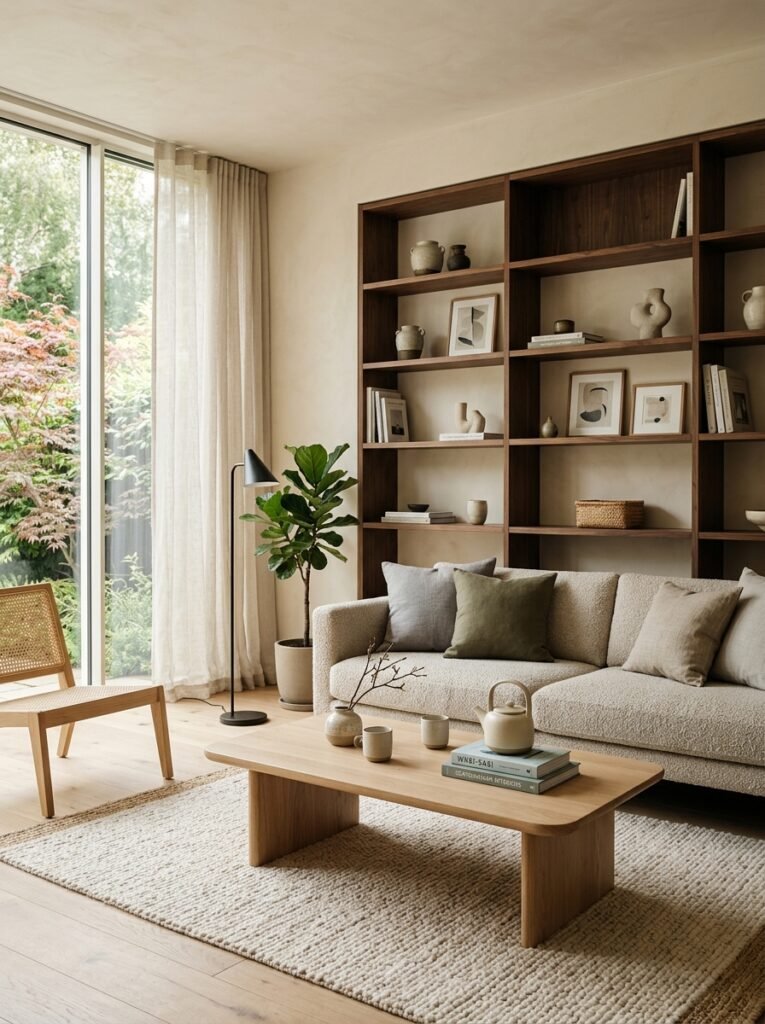
Scandinavian style loves light oak, Japanese style leans into dark walnut, so why not try combining both for Japandi?
For example, putting a light wood coffee table beside a dark wood shelf gives a really nice contrast to the room. Keep everything else quiet and let the wood tones do the talking.
4. Let Empty Space be Empty
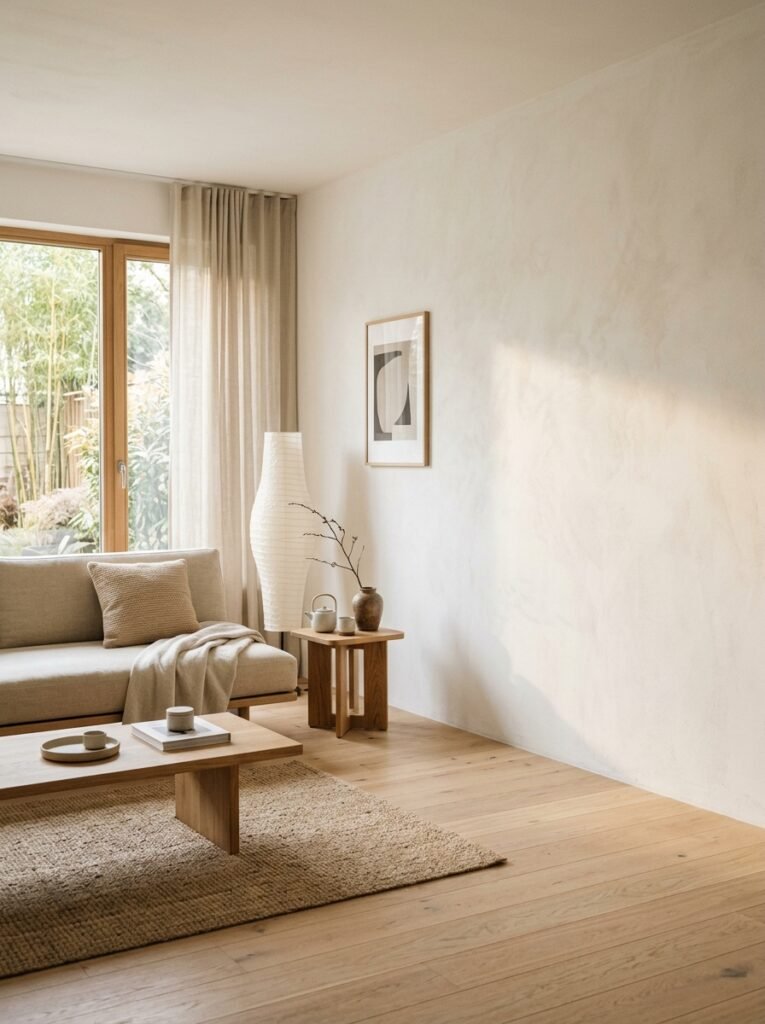
This is the easiest idea to do on the list and cost nothing to implement. Sometimes in Japandi, an empty corner isn’t something to be filled, it’s breathing room, and it’s exactly what makes the style feel so peaceful!
So before you buy anything new, try removing two or three things instead to free up space.
5. Add a Floor Cushion Corner
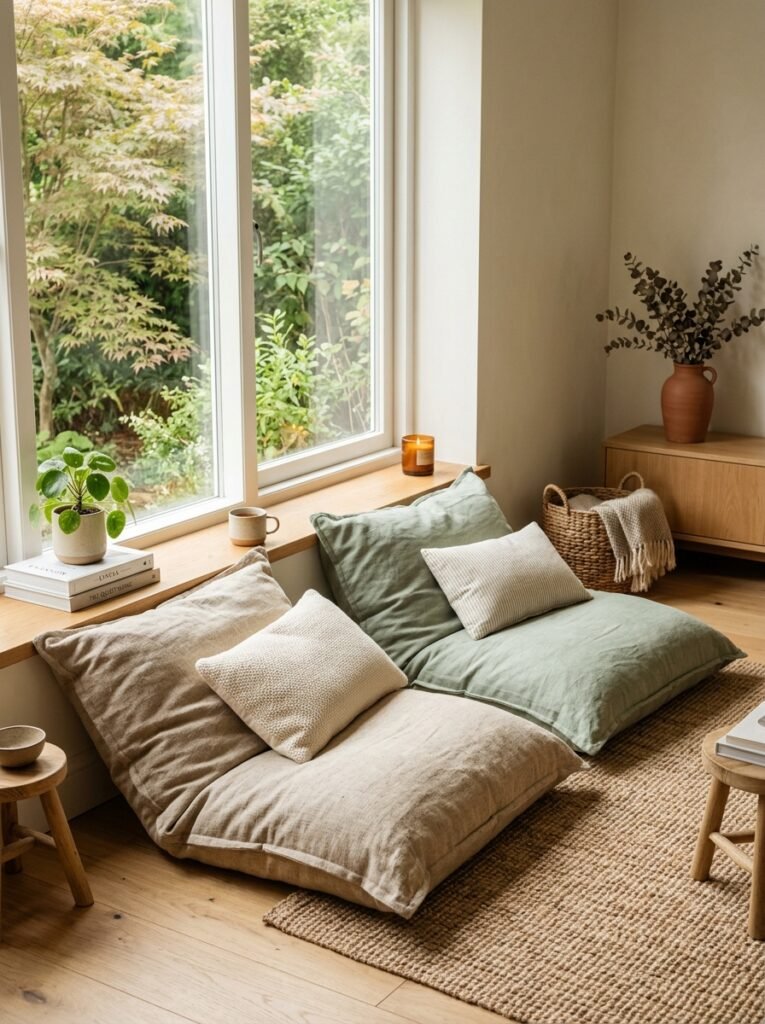
A big floor cushion or two near the window brings in that relaxed, sit-anywhere Japanese feeling. It’s extra seating when friends come over, a reading spot on slow mornings, and it costs a fraction of an armchair!
Low, soft, and simple, very Japandi.
6. Choose Curved, Soft-Edged Pieces
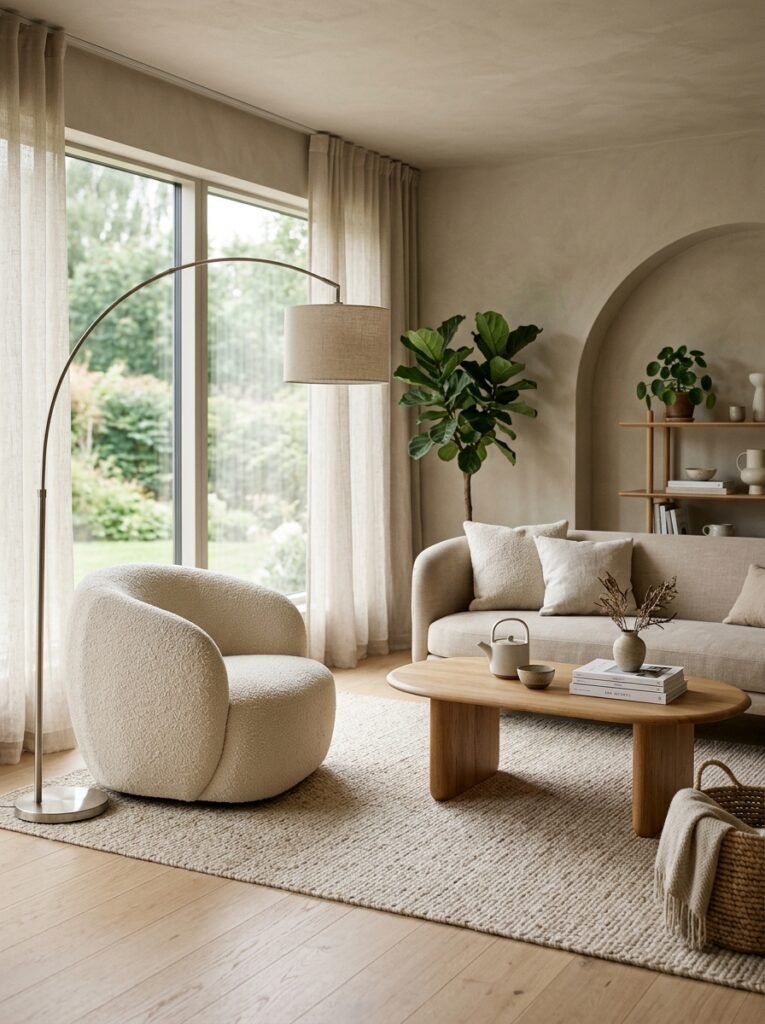
Not everything in a calm room should be a straight line. A rounded armchair, an oval coffee table, or a curved floor lamp softens all that clean-lined furniture and keeps the room from feeling boxy.
7. Try a Bench Instead of a Second Sofa
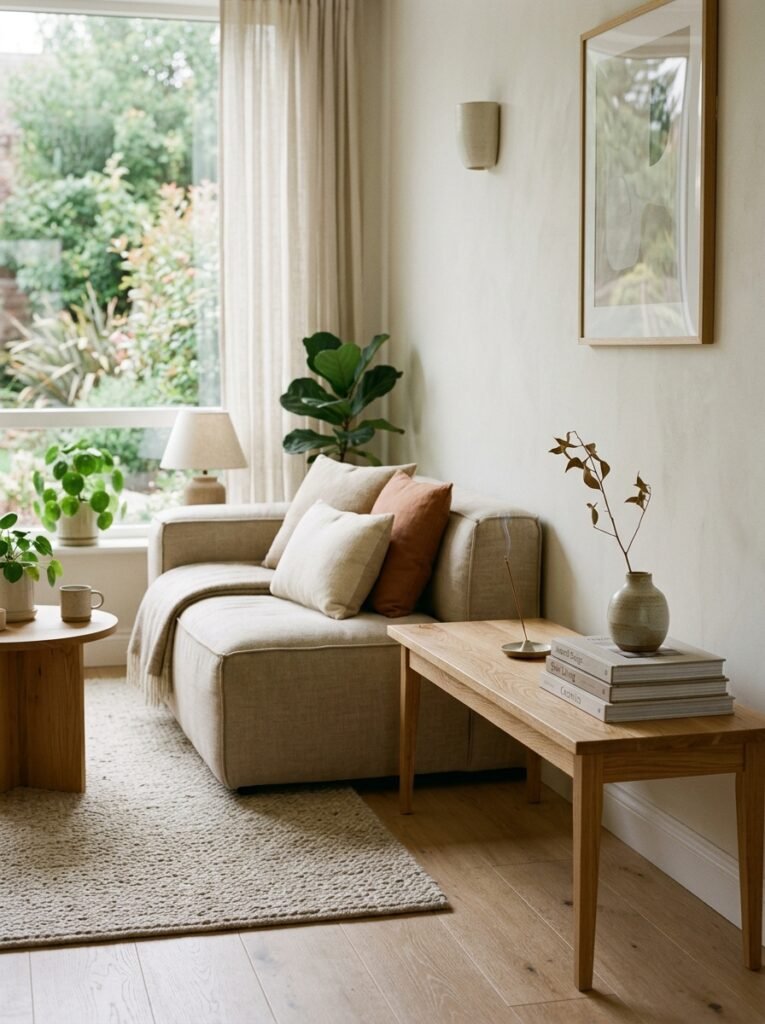
Where most living rooms squeeze in a loveseat, Japandi reaches for a simple wooden bench. It’s lighter on the eyes, easy to move, and doubles as a display surface for a ceramic or a stack of books when guests aren’t over.
Less bulk, same function, very much the Japandi way.
Japandi Colors and Textures
8. Start With Warm Neutrals, Not Cold Ones
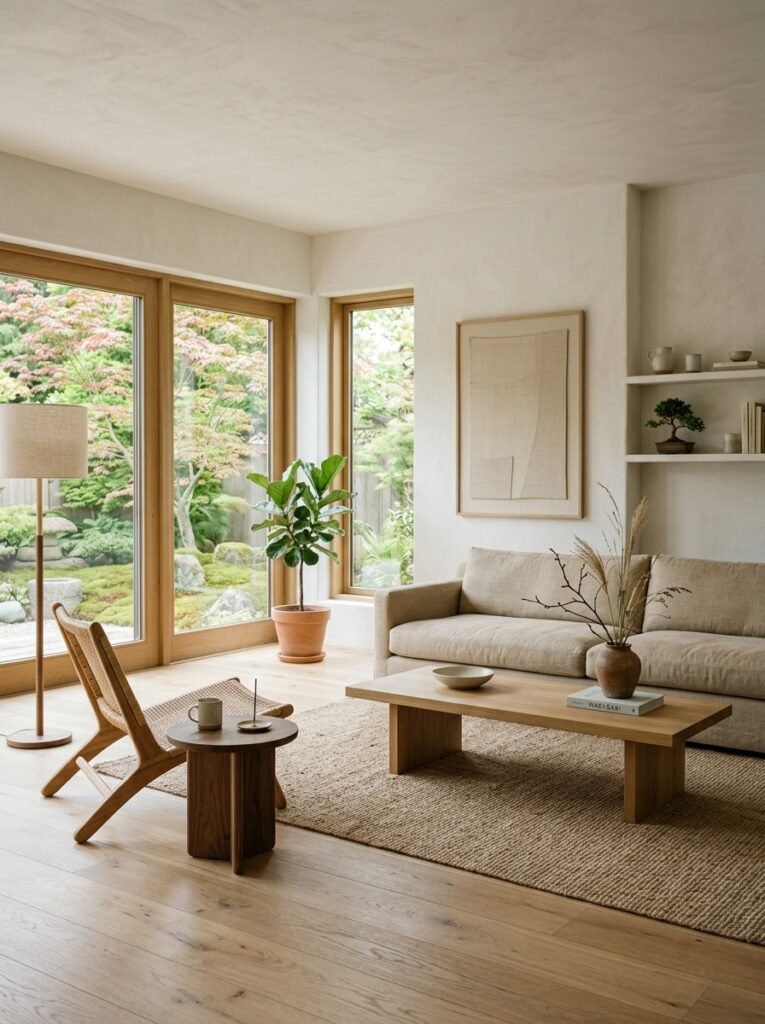
Japandi neutrals are warm. Think oatmeal, sand, soft beige, and creamy white. This is the big difference from the gray minimalism everyone got tired of: those grays felt like concrete, while Japandi tones feel like clay and linen.
Get this base right, and you get a nice foundation for the whole room even before you start adding furniture and decor.
9. Make Texture Do the Decorating
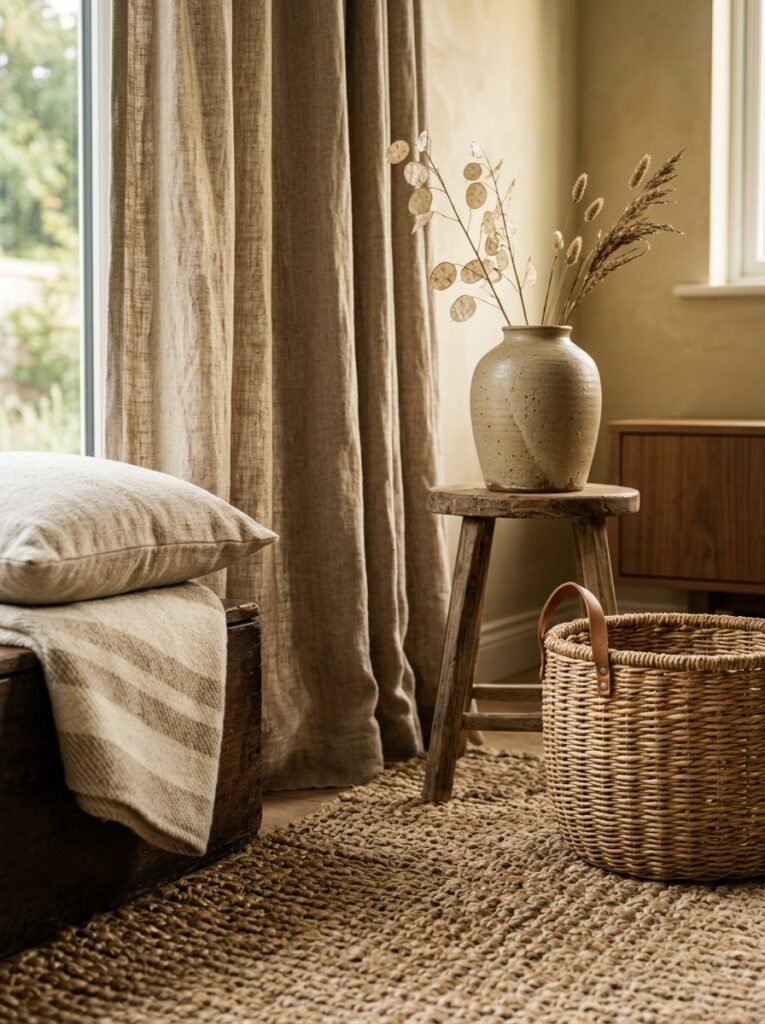
A neutral room without texture looks flat. A neutral room full of texture looks expensive.
Linen curtains, a chunky jute rug, a rough stoneware vase, woven baskets, Japandi rooms stay quiet in color but rich in touch, and that’s what keeps it from getting boring.
10. Add One Dark, Grounding Accent
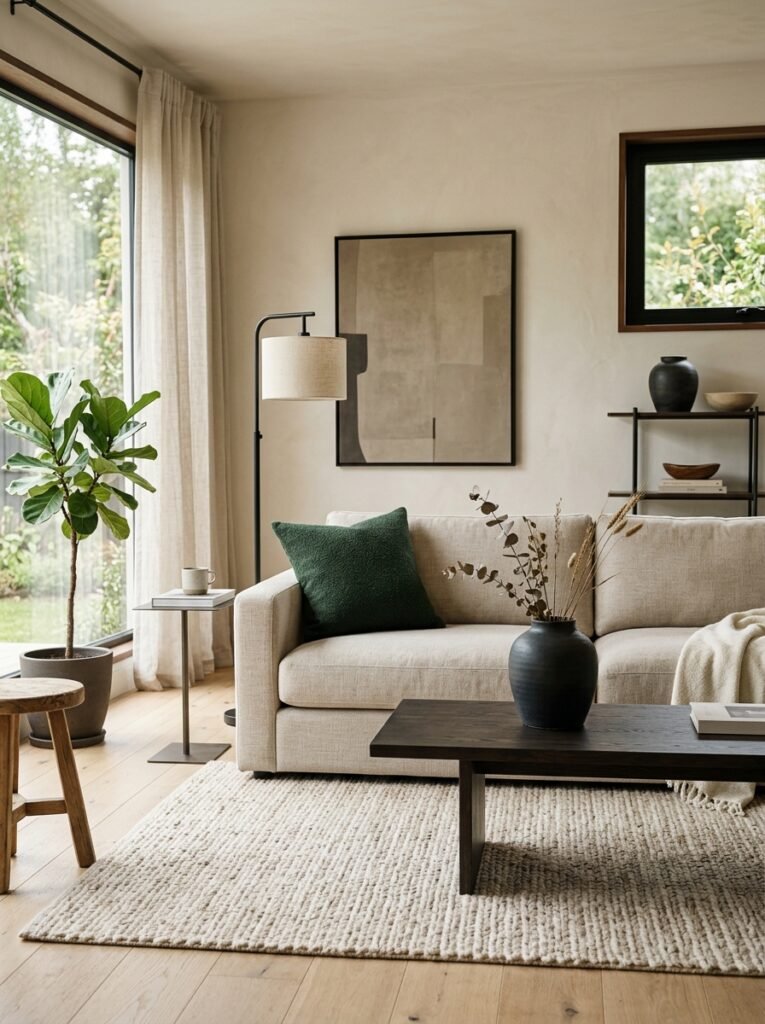
All soft and no contrast makes a room feel washed out. One black-framed artwork, a deep green cushion, or a single dark ceramic vase gives the eye somewhere to land.
The trick is stopping at one or two. Too much will overcrowd the space and ruins the Japandi vibe.
11. Choose Matte Everything
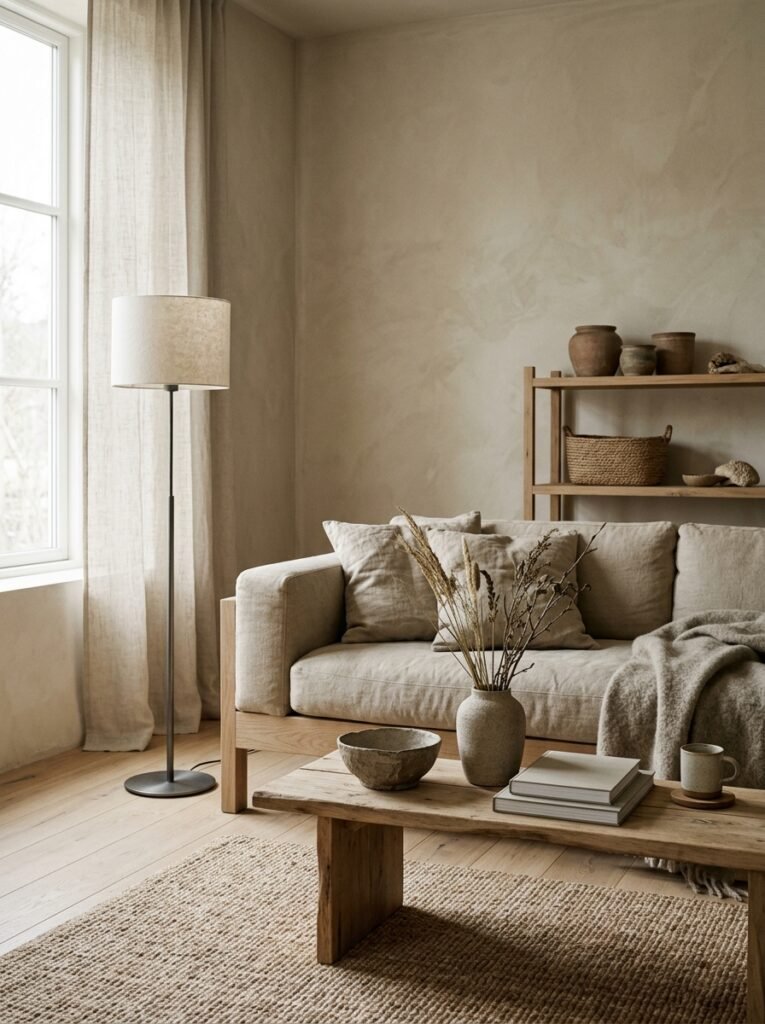
Shiny finishes ruins the Japandi mood. Matte ceramics, raw wood, brushed metal, surfaces that look natural and a little imperfect are the whole aesthetic. If it gleams like a showroom, it’s not Japandi.
12. Ground the Room With a Natural Rug
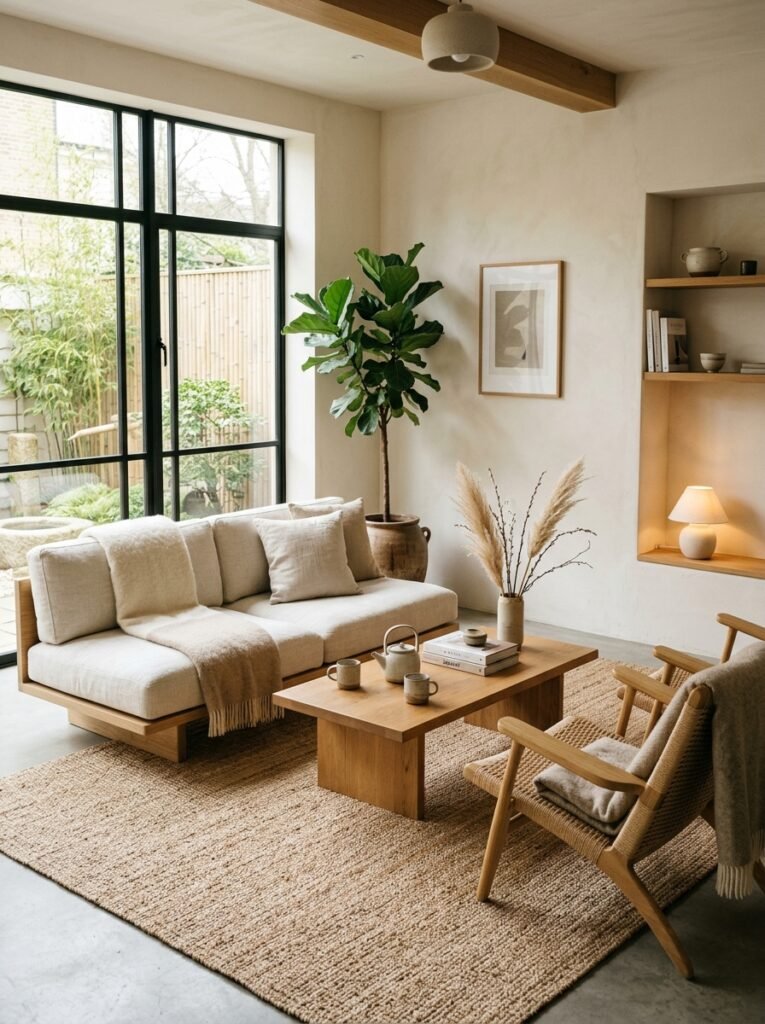
One flatweave or jute rug in a natural tone pulls the whole seating area together. Skip bold patterns here, the rug’s job is texture and warmth, not attention. It’s the quiet foundation everything else sits on, literally and visually.
13. Layer Different Shades of the Same Color
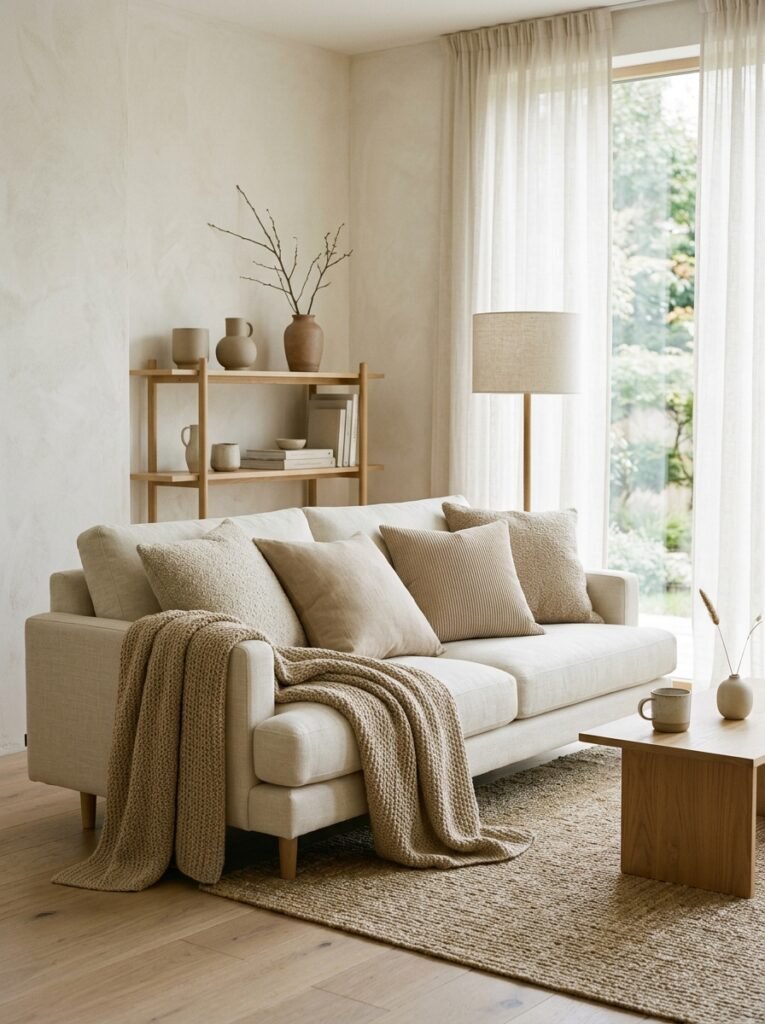
Here’s how Japandi rooms stay interesting without patterns: tone-on-tone layering.
A cream sofa, oatmeal cushions, a sand-colored throw all one family, slightly different shades. The room reads calm and cohesive, but never flat.
14. Add Warmth With a Chunky Knit Throw
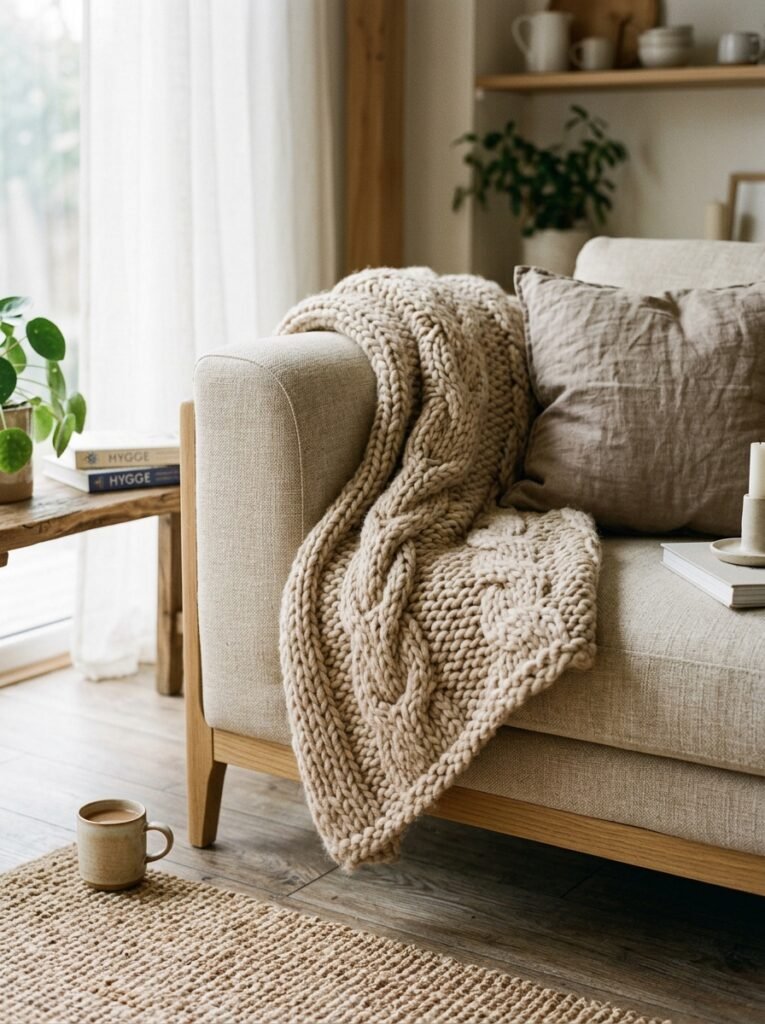
One soft, chunky-knit throw in a warm neutral draped over the sofa arm is the Scandi half of Japandi doing its job. It adds instant coziness and texture, and will be useful especially on cozy movie nights!
15. Bring In Black, Just a Whisper of It
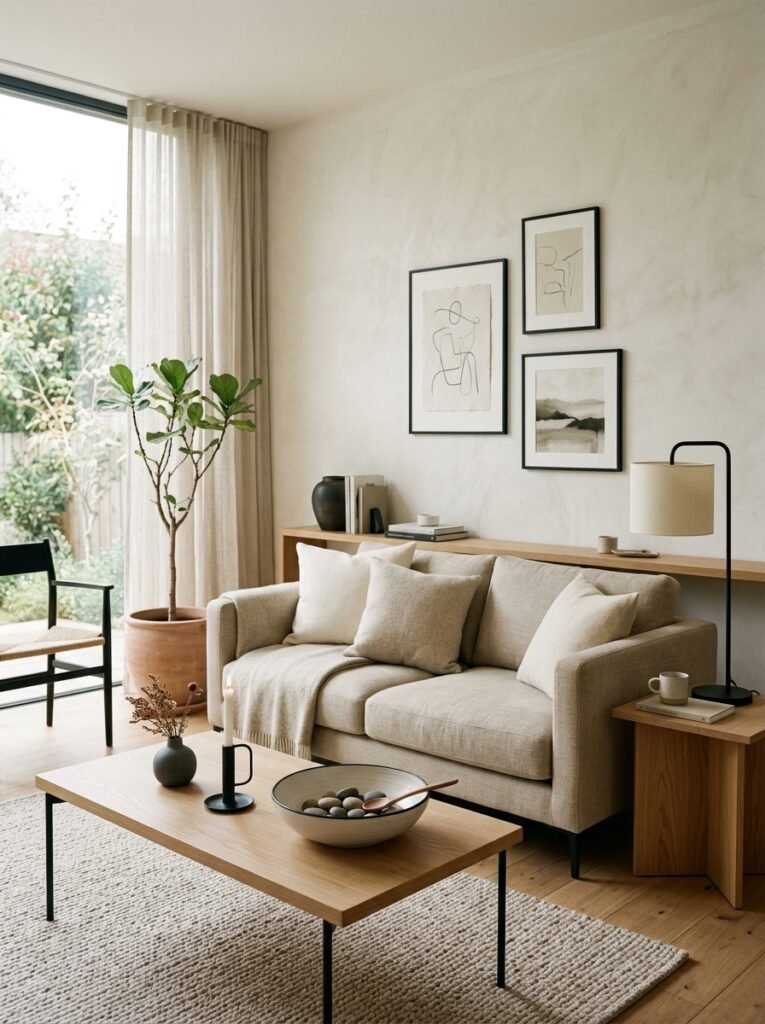
Thin black picture frames, black metal lamp legs, a black-rimmed ceramic bowl, tiny doses of black sharpens the soft neutral textures in the room. It defines edges and keeps all those warm beiges from blurring together.
The key word is whisper: black is the seasoning here, never the meal.
Japandi Decor and Styling Details
16. Display a Few Ceramics
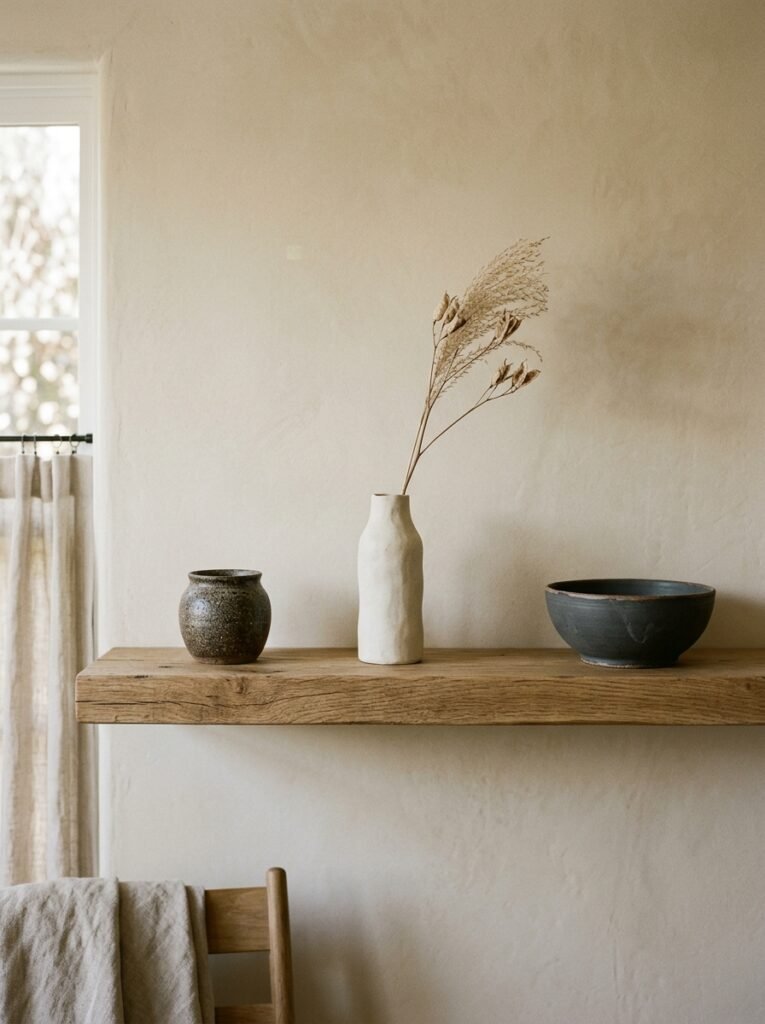
A few handmade-looking ceramic pieces with space around them will always look better in Japandi interiors than a whole shelf cluttered with decor.
Japandi styling is about giving beautiful objects room to breathe.
17. Pick One Statement Plant
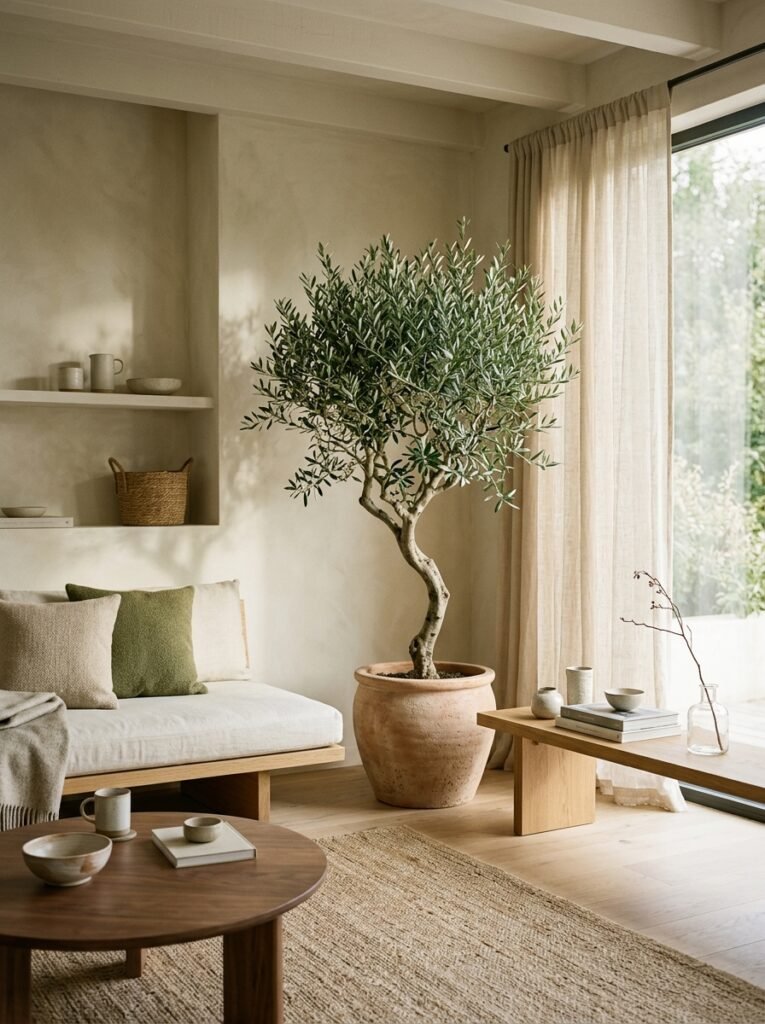
Instead of scattering small plants everywhere, go for one confident green moment like an olive tree, a fiddle leaf fig, or a tall snake plant in a simple pot.
One large statement plant is more than enough for a Japandi living room.
18. Hang Less Art Than You Think You Need
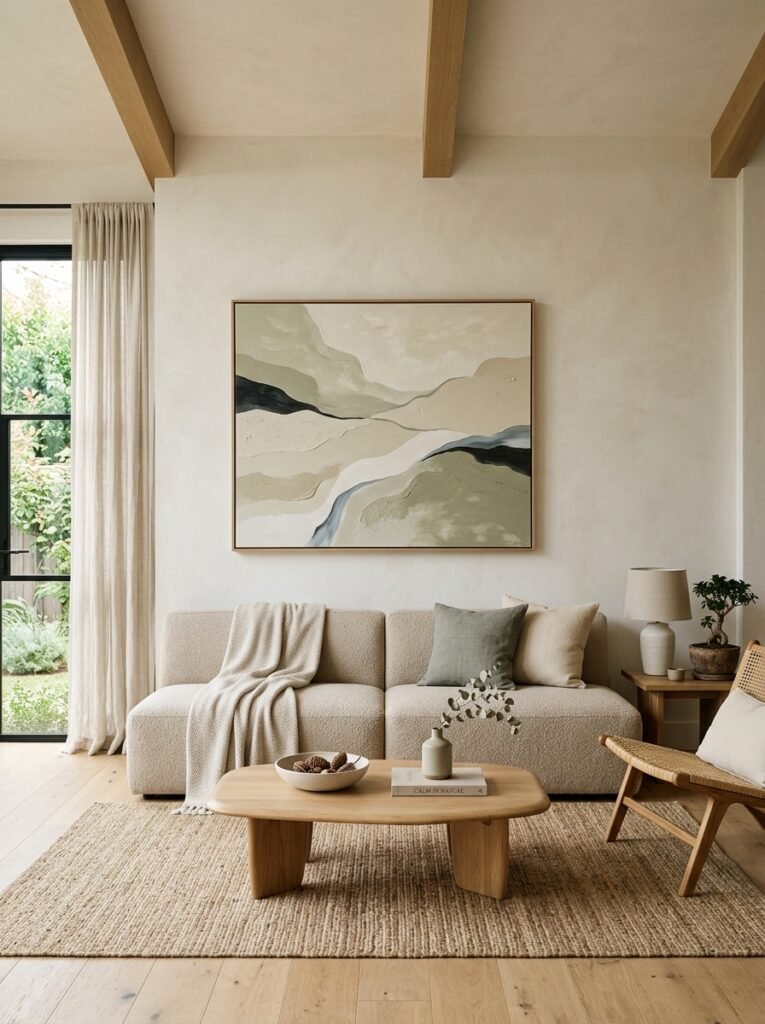
Just a few statement pieces of art above the sofa beats a busy gallery wall in this style. Nature-inspired prints, soft abstracts, or simple line art fit the mood best.
Also read: 20 Stunning Wall Decor Ideas That Will Make You Fall in Love
19. Soften Your Lighting With Paper and Linen
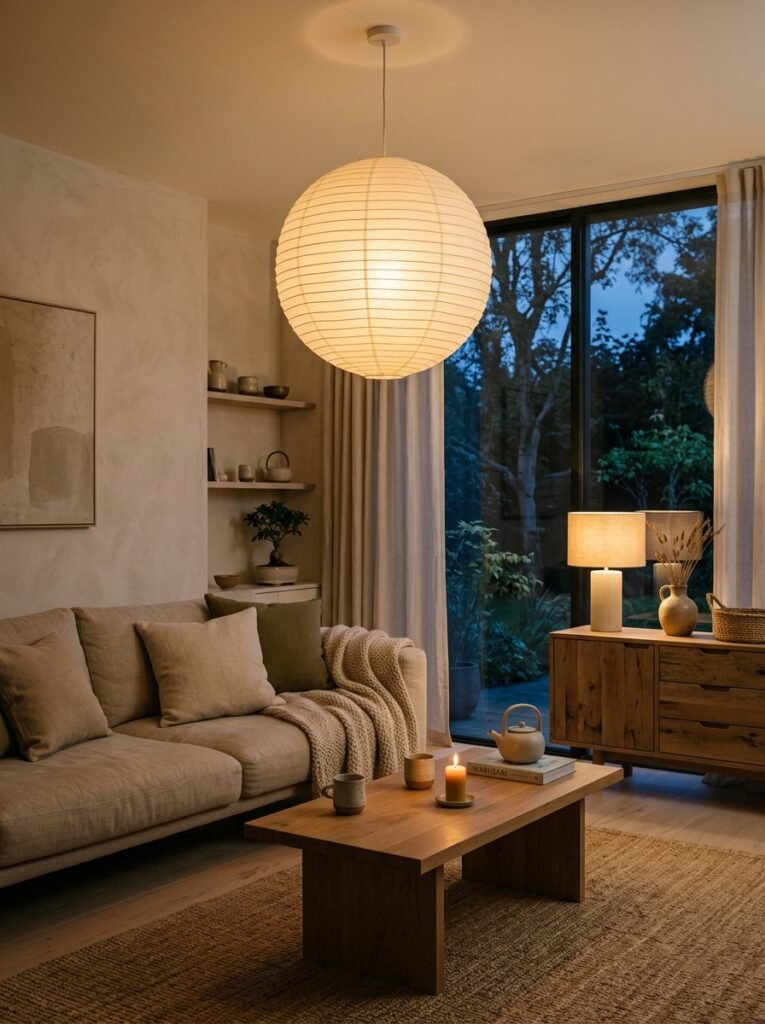
Harsh light can ruin even a perfectly styled Japandi room. Paper lantern pendants and linen lampshades scatter light into a soft, warm glow, the kind that makes evenings feel slow in the best way.
20. Use a Wooden Screen as a Room Divider
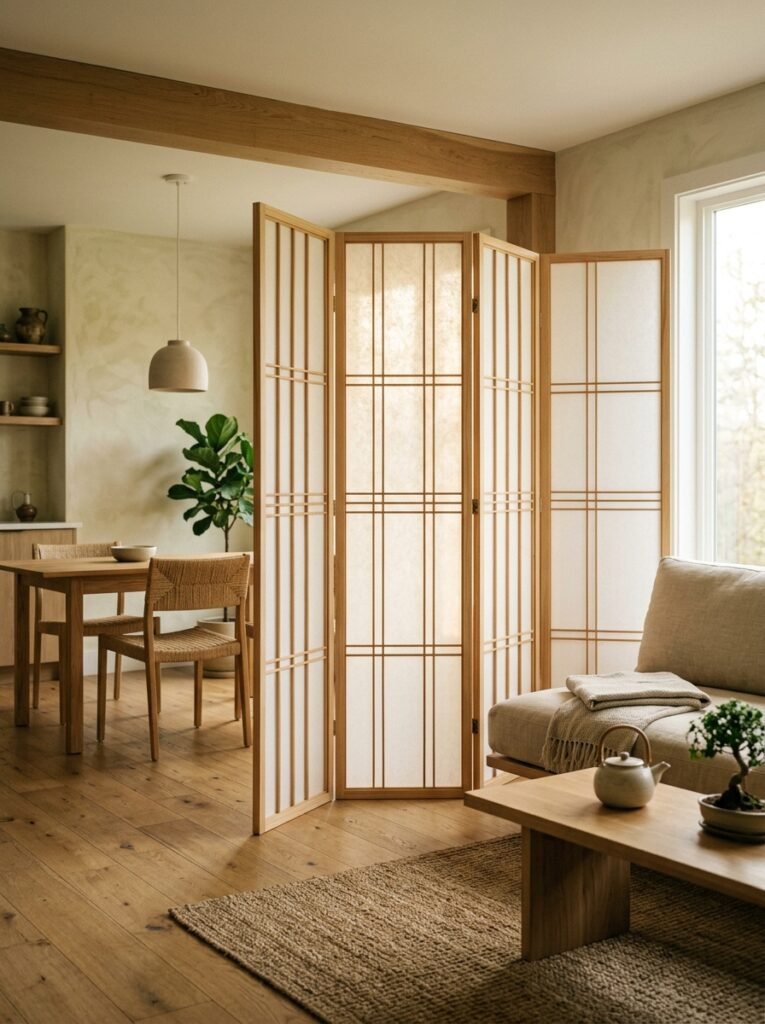
A wood-framed screen with paper or fabric panels inspired by Japanese shoji doors divides an open space without building a wall.
It filters light beautifully, adds a soft architectural moment, and folds away whenever you want the room open again!
21. Style With Dried Branches or Grasses
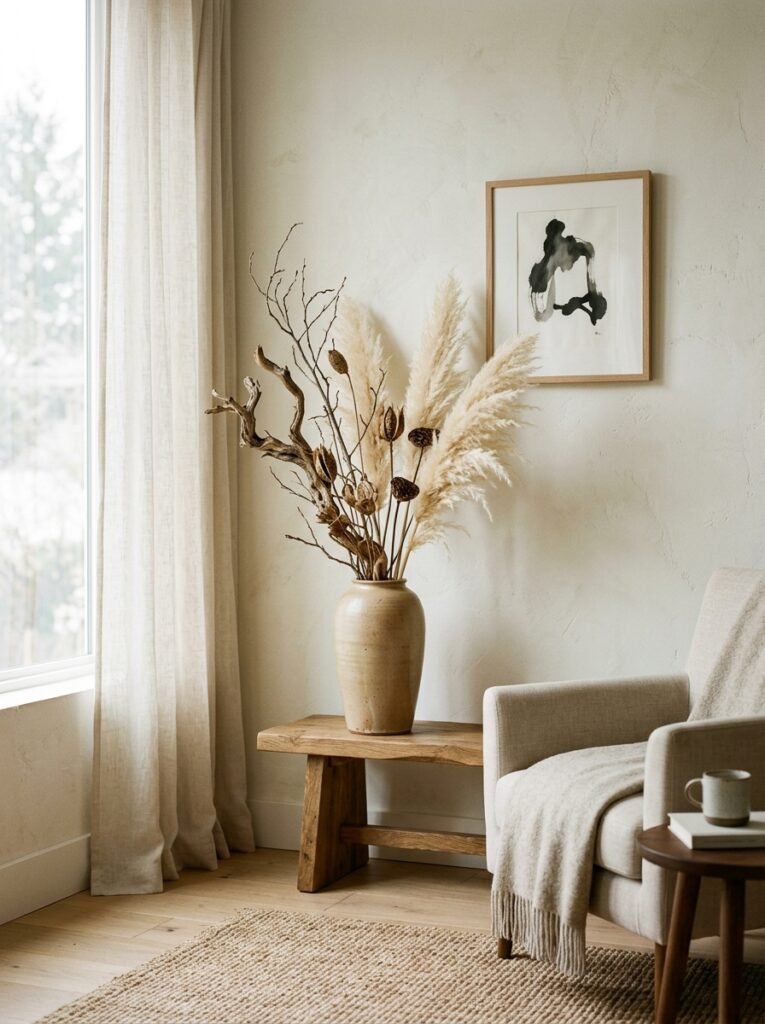
A few dried branches or pampas stems in a tall ceramic vase might be the most Japandi decor move of all. It’s sculptural, it’s natural, it never needs watering, and one arrangement is enough to fill a corner beautifully.
Cherry blossom branches in spring, dried grasses the rest of the year, nature on a schedule that suits you!
22. Add a Low Wooden Slat Bench or Tatami Corner
Slatted wood details like slat benches and wood wall panels behind the TV brings in that unmistakable Japandi architecture feeling. The repeating lines add rhythm to the room making it visually attractive.
23. Display Handmade Decor
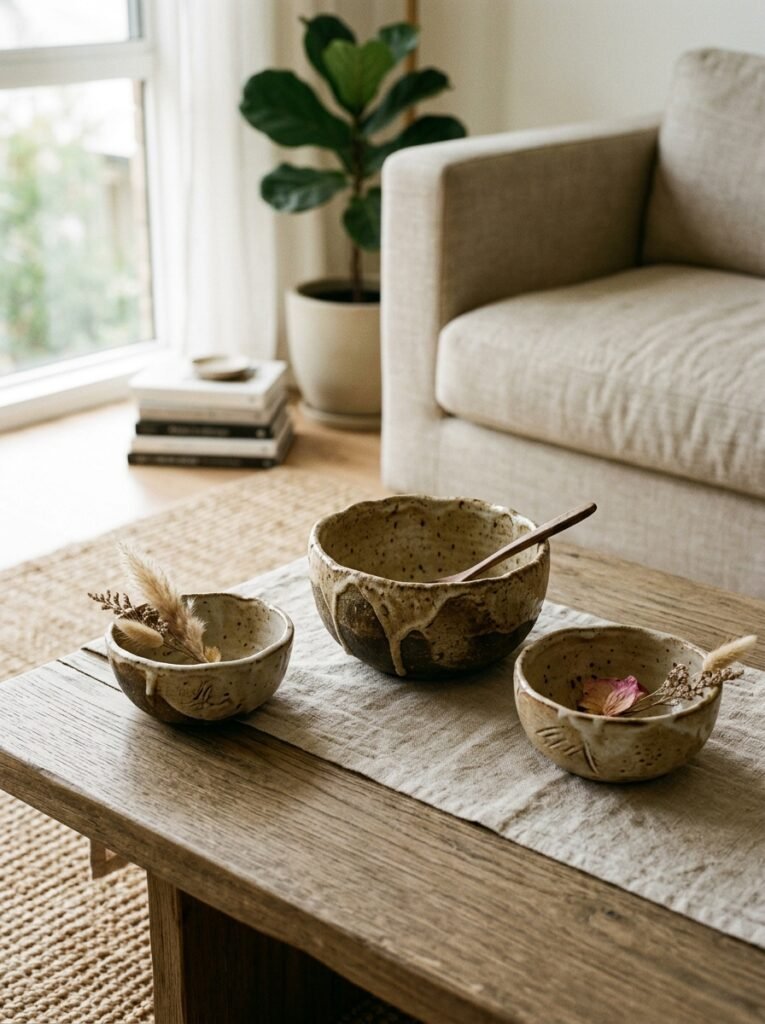
Japandi has a soft spot for objects that show the maker’s hand like a slightly uneven ceramic bowl, a hand-carved wooden tray, a vase with visible glaze drips. The Japanese call this wabi-sabi: finding beauty in imperfection.
Bringing the Japandi Feeling Home
24. Build Clutter-Hiding Into the Room
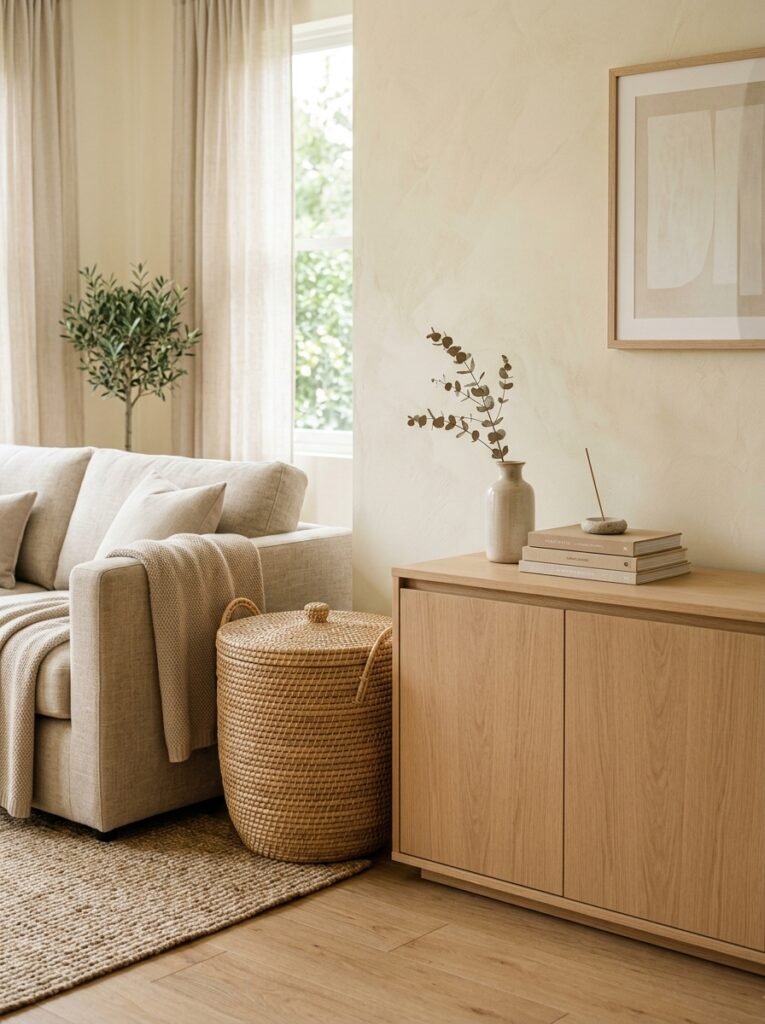
Let’s be real: everyday life comes with remotes, chargers, and random papers. Japandi survives by integrating storage so daily items stay out of sight.
Try storing all your stuff in things like lidded baskets, a cabinet with doors or a coffee table with a hidden shelf.
Keeping everything tidy while preserving the serene environment!
25. Let Natural Light Be the Main Decoration
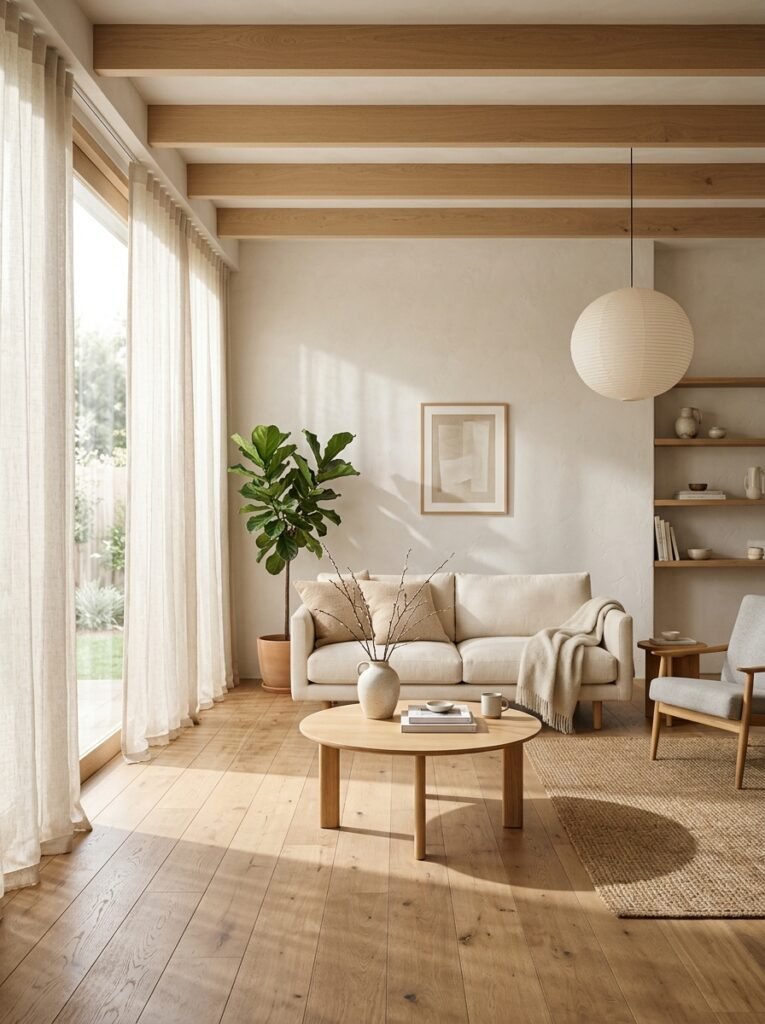
More than any object you can buy, Japandi runs on daylight. Swap heavy curtains for linen or sheer ones, keep windowsills clear, and arrange seating to catch the morning sun.
A Japandi room in good light almost decorates itself. The shadows, the wood grain, the soft glow on linen. That’s the whole show.
Final Thoughts on Creating a Japandi Living Room
Japandi is not about buying more stuff and put it all inside, but choosing better ones that fits it. Warm neutrals, natural textures, fewer but lovelier things, and enough empty space for the room to breathe.
So start by subtracting. Clear one surface, remove one piece of furniture nobody uses, and let the light in.
Then add slowly, a linen curtain here, a ceramic vase there. Japandi isn’t a weekend makeover, it’s a calmer way of living with your stuff. And once your living room feels this peaceful, so is your life!
Japandi Living Room Ideas FAQ
Japandi blends Japanese minimalism with Scandinavian coziness, two styles that both love simplicity, natural materials, and craftsmanship.
The Japanese side brings calm, low furniture, and restraint while the Scandi side brings warmth, soft textiles, and livability.
Together they create rooms that feel both serene and genuinely comfortable.
Warm neutrals like cream, oatmeal, sand, soft beige form the base, then layered with natural wood tones from light oak to dark walnut.
Accents stay muted and earthy: black, deep green, charcoal, or rusty terracotta, used sparingly. The palette should feel like nature, not like a paint store exploded.
It doesn’t have to be! Japandi is more about editing than shopping.
Decluttering costs nothing, and secondhand wooden furniture fits the style perfectly since slightly worn pieces suit its love of natural imperfection. Spend where it counts (one quality sofa or rug) and thrift the rest.
Regular minimalism can feel cold and empty. White walls, bare surfaces, not much soul. Japandi keeps the “less stuff” philosophy but adds warmth through wood, texture, and soft light.
Think of it as minimalism that actually feels like a home instead of a gallery.
Begin with subtraction: declutter surfaces and remove furniture that doesn’t earn its place.
Then work in this order: warm neutral textiles (curtains, cushions, rug), wood tones, soft lighting, and finally one or two ceramics and a statement plant.
Going step by step keeps it affordable and stops the room from feeling like an overnight costume change.