Showers get the worst lighting in the house.
Most have only one fixture somewhere near the ceiling, or no dedicated light at all, which leaves the enclosure dim while the rest of the bathroom sits under a bright vanity fixture.
Fixing it changes the room more than new tile would, since light is what makes a shower feel like a spa instead of a cubicle.
These shower lighting ideas cover the overhead options, the hidden strips that do the atmospheric work, and the fixtures worth putting on display.
Plan on revisiting? Pin this for later!
This post may contain affiliate links, I may earn an extra commission, at no extra cost to you.
How to Achieve Good Lighting On Showers
Builders treat the shower as one line item on an electrical plan: one fixture, centered on the ceiling, done. That single source is why so many showers feel flat and clinical no matter how good the tile is.
A shower that actually feels good to stand in almost always has two things layered together:
- One practical source: a downlight or a lit showerhead, so you can actually see.
- One hidden source: a niche strip, a cove, or under-bench light that nobody can point to as a fixture.
The hidden layer is what does the emotional work. Take it away and even expensive tile looks like a hospital shower.
Overhead and Ceiling Lighting
1. Center a Downlight Over the Shower
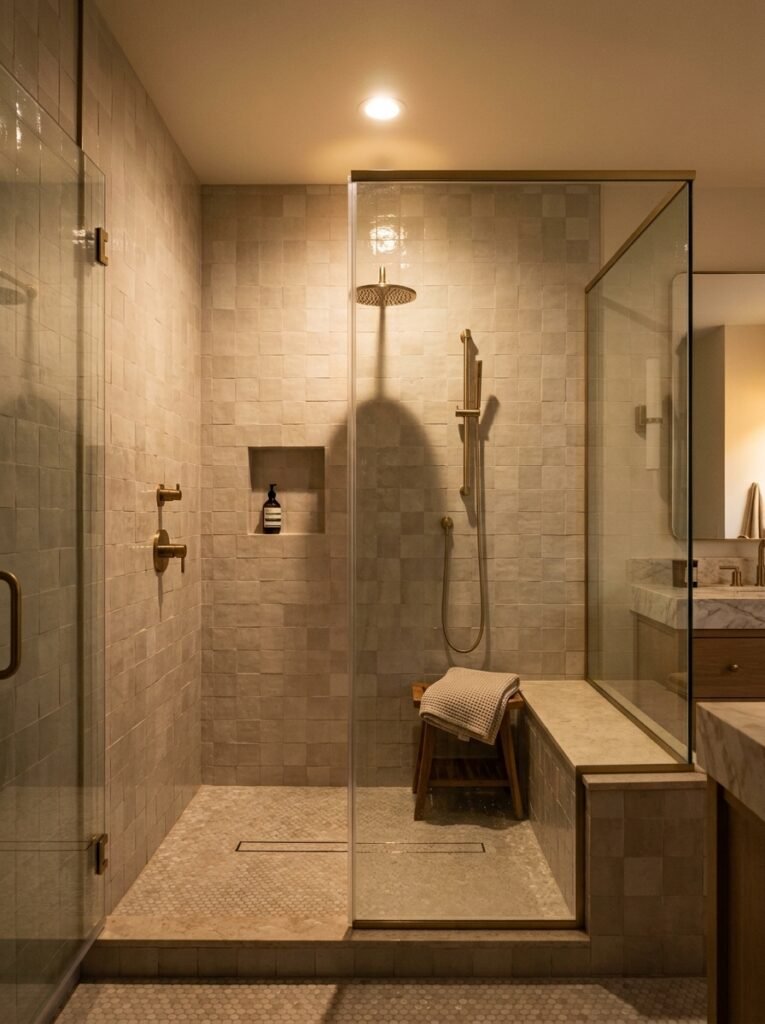
A single downlight centered above the shower puts light exactly where it’s needed while keeping the ceiling clean, since nothing hangs down into the space.
Positioning it slightly toward the showerhead wall stops your own shadow falling across the floor. Warm bulbs keep it from reading like a hospital.
2. Wrap the Ceiling in Cove Lighting
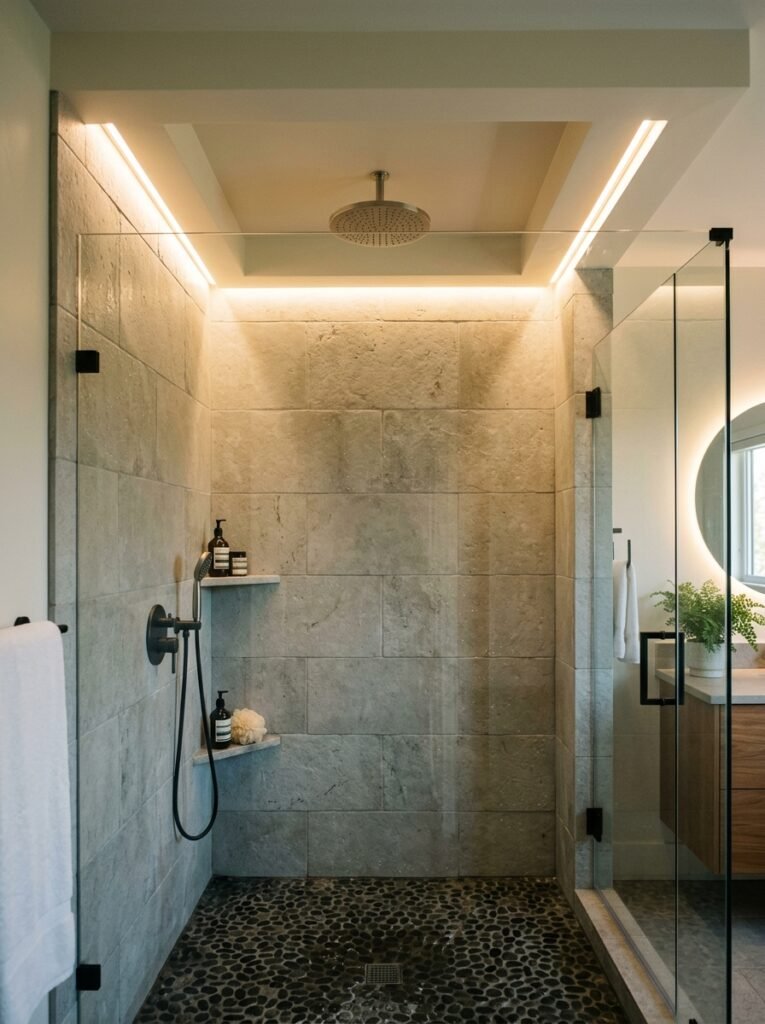
An LED strip running around a recessed ceiling perimeter washes light down the walls instead of pointing it straight at the floor, so the whole enclosure glows evenly.
The effect makes a small shower feel taller, because the eye follows that line of light around the ceiling edge.
3. Light the Water With an LED Rainfall Head
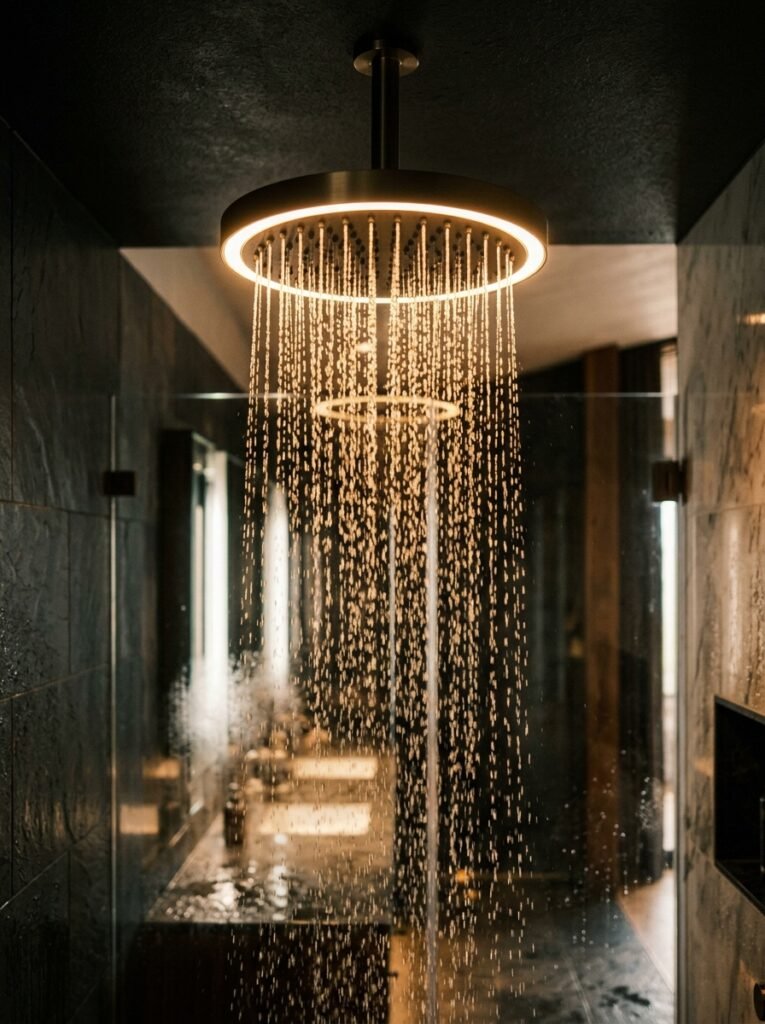
Some rainfall showerheads have LEDs set into the face, so the water falls through a ring of light.
Because the source sits directly overhead, it also works as the main light in a compact shower!
4. Run a Linear Light Along the Ceiling
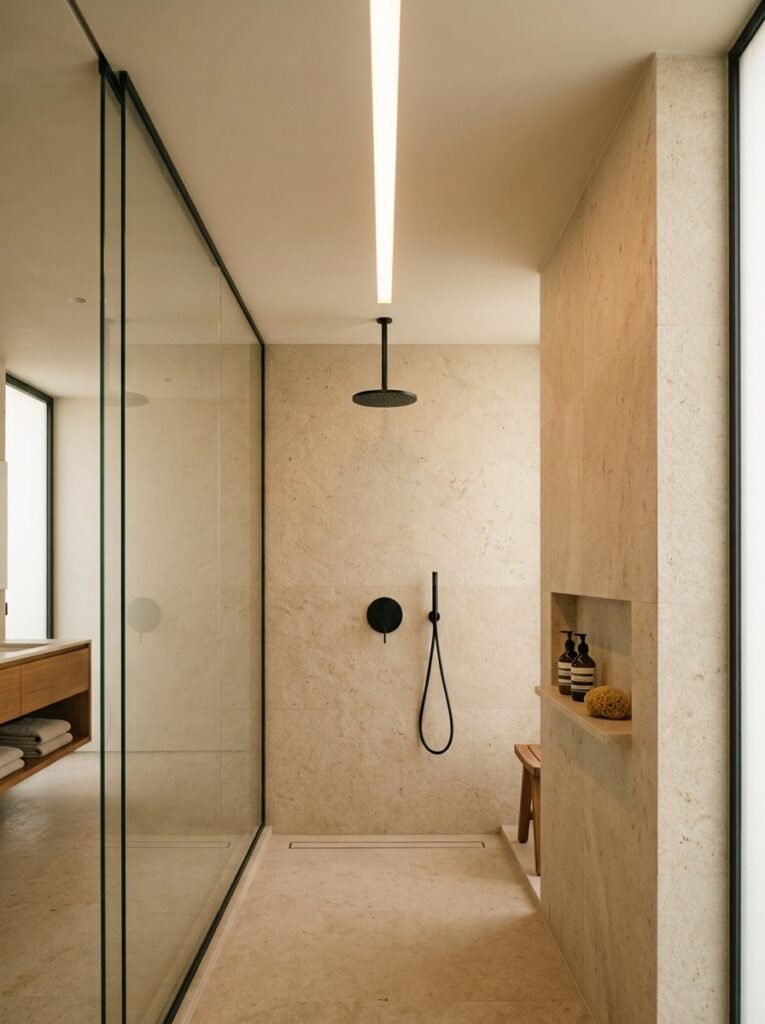
A slim linear LED channel recessed into the ceiling suits long walk-in showers better than a round downlight.
It spreads light evenly from one end to the other, so there’s no bright spot in the middle and no dim corners.
Line it up with the length of the tile pattern for the cleanest look. It reads modern without feeling cold.
5. Graze the Tile With a Wall Light
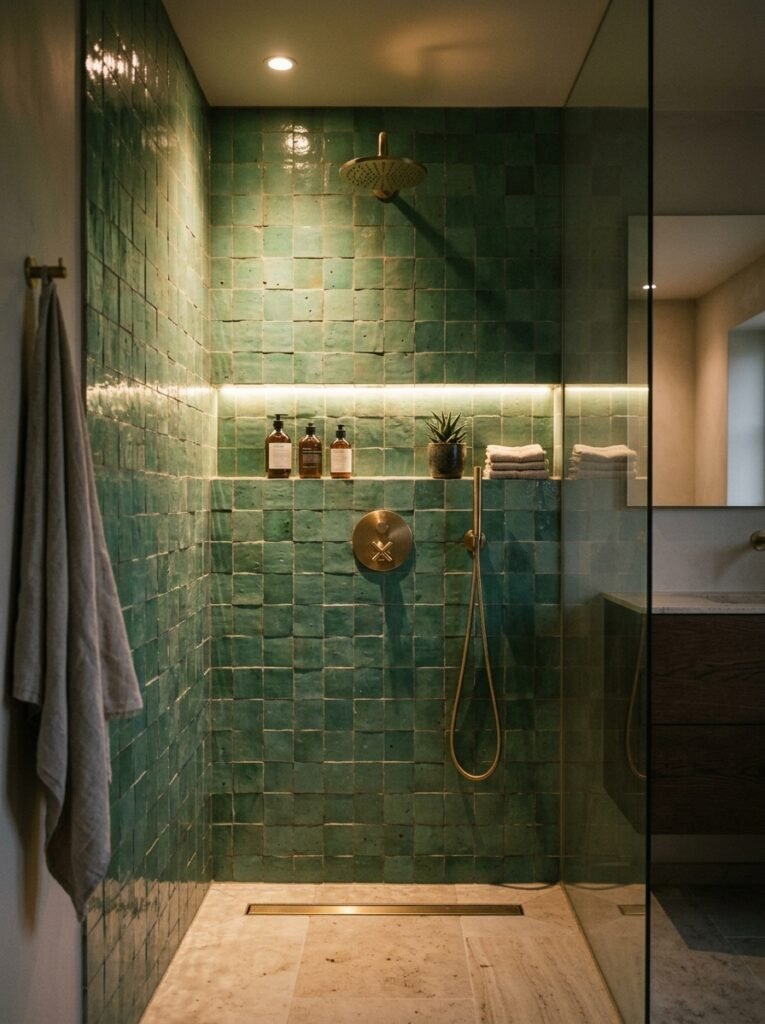
Placing a downlight close to the tiled wall, instead of in the middle of the ceiling, sends light skimming down the surface.
Every ridge, glaze, and uneven edge suddenly throws a small shadow. This works best on textured tile like:
- Handmade zellige
- Split-face or tumbled stone
- Fluted or ribbed ceramic
On flat, glossy tile the effect disappears, so save it for texture.
Hidden and Accent Lighting
6. Hide a Strip Inside the Niche
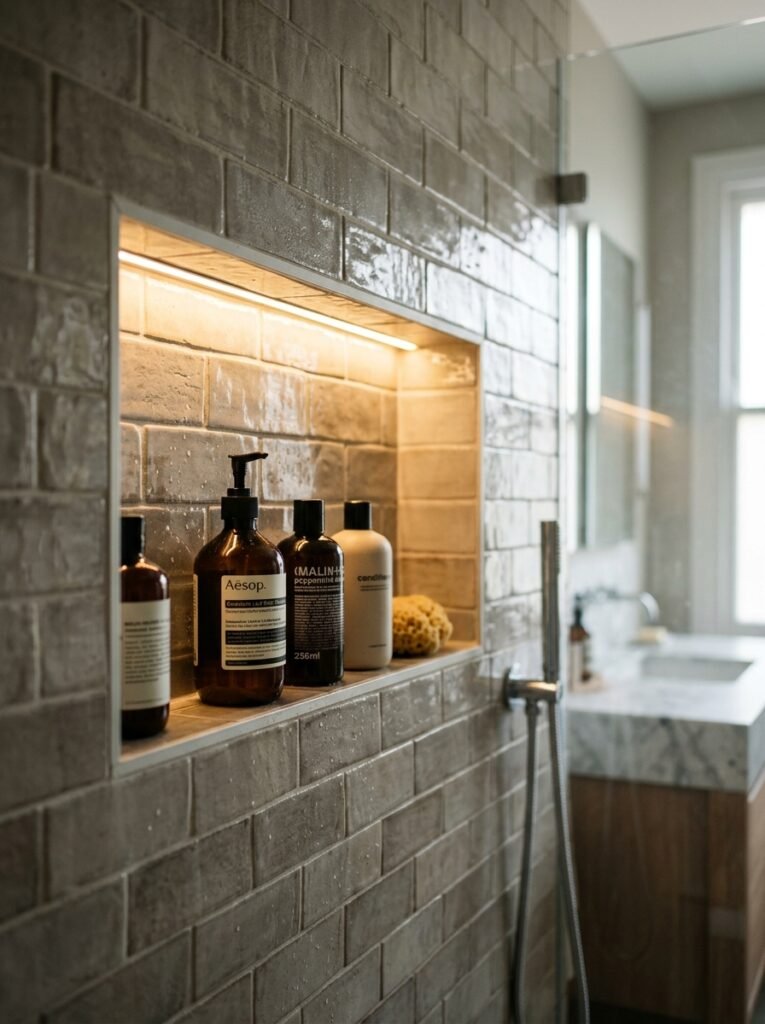
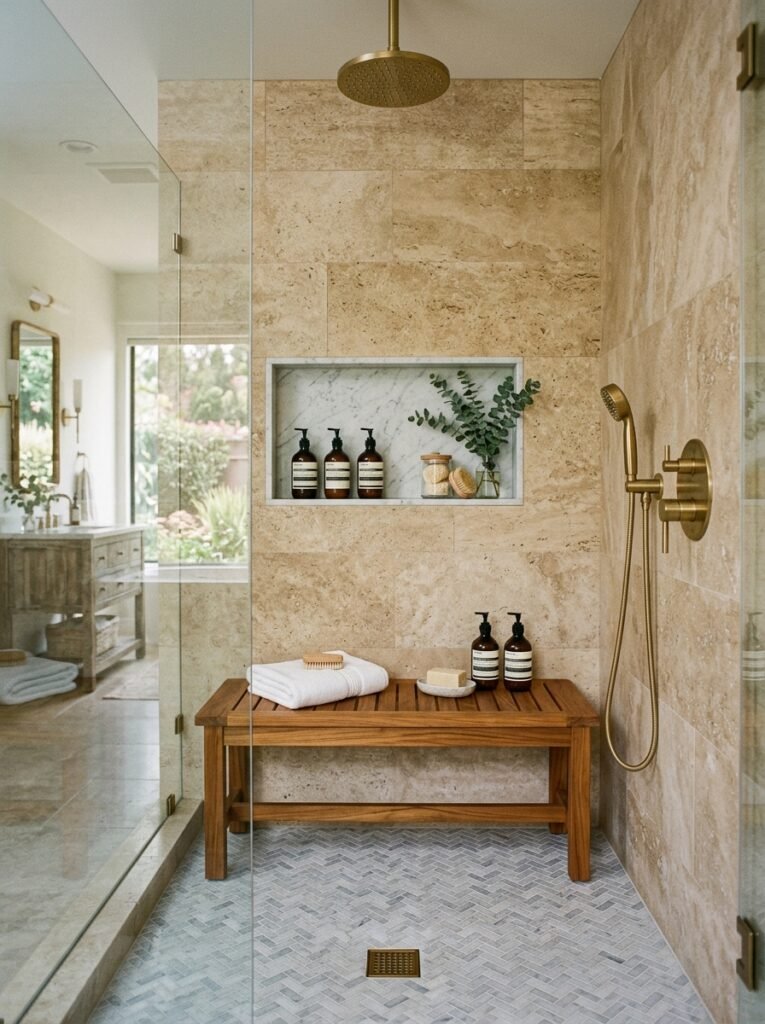
Fitting a waterproof strip light along the underside of the niche’s top edge lights the bottles from above and turns a storage recess into a feature.
The glow catches the tile inside, so the niche reads as a lit alcove. It also gives you enough soft light for an evening shower.
7. Backlight a Translucent Stone Panel
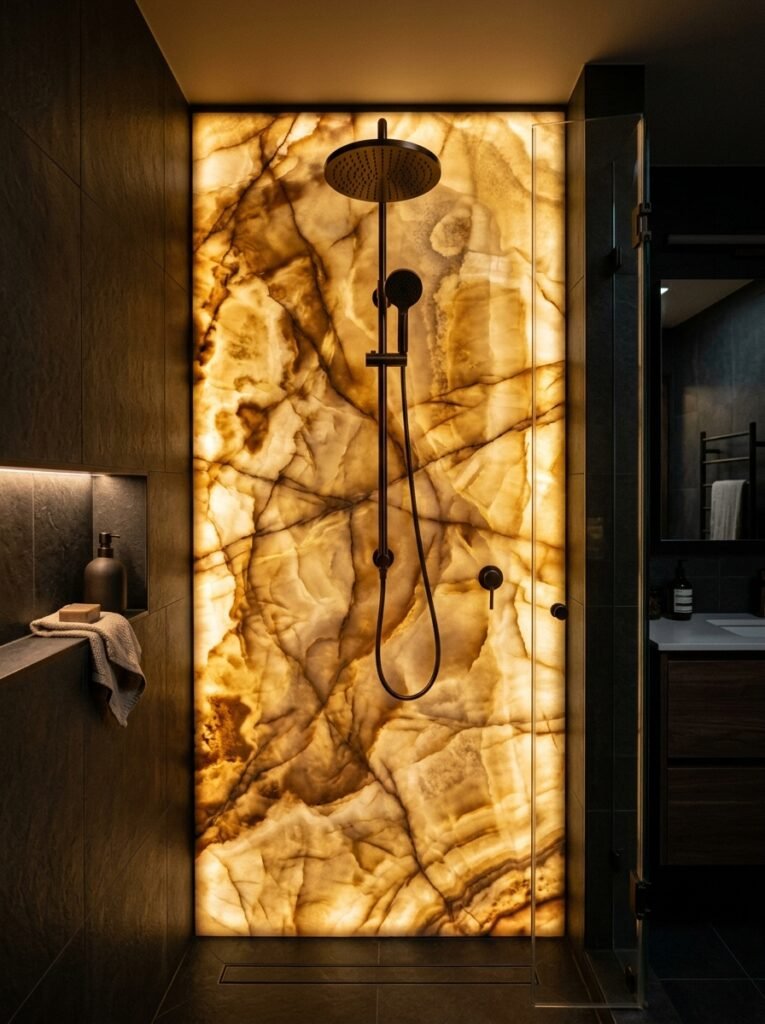
Translucent stone such as onyx glows when lit from behind, giving a shower wall a warm inner light that no fixture can replicate.
It’s the most dramatic option here and the most expensive, though a single accent panel behind the showerhead delivers most of the effect.
Also read: 24 Elegant Spa-Like Bathroom Ideas For The Ultimate Retreat
8. Float the Bench on Hidden Light
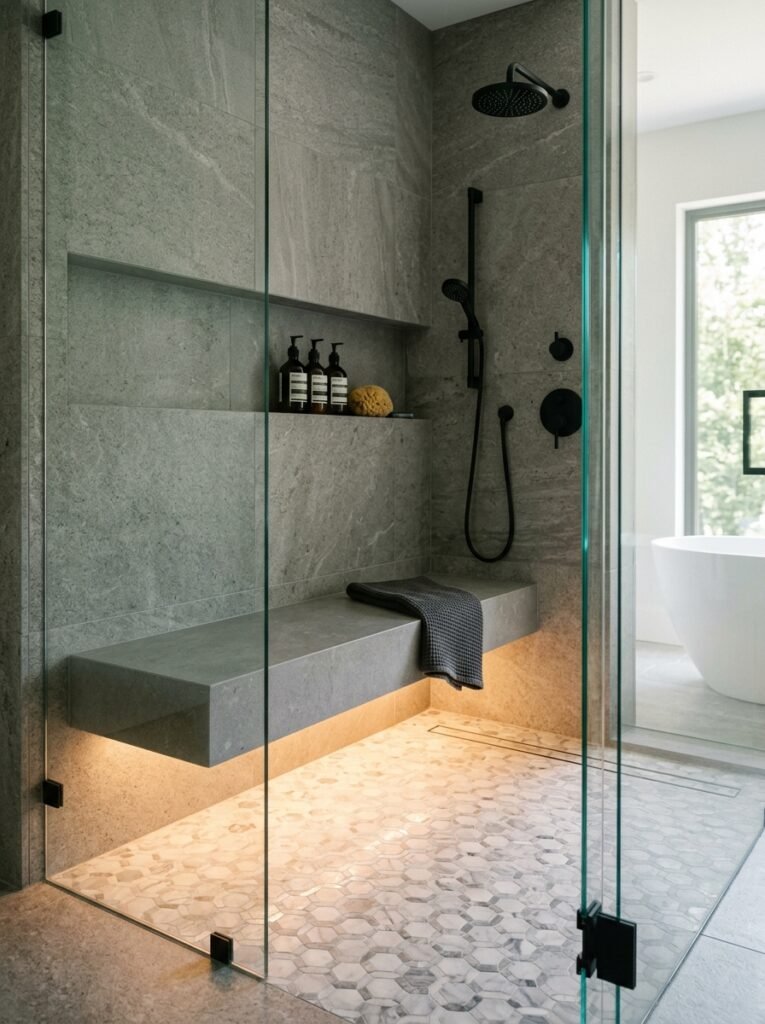
A strip light tucked under the front edge of a built-in shower bench makes the seat appear to float, and the light spilling across the floor is genuinely useful at night.
Because the source stays hidden, you see the glow without ever seeing the fixture producing it.
Also read: 24 Shower Storage Ideas To Keep Your Shower Neat & Organized
9. Wash the Floor With Toe Kick Lighting
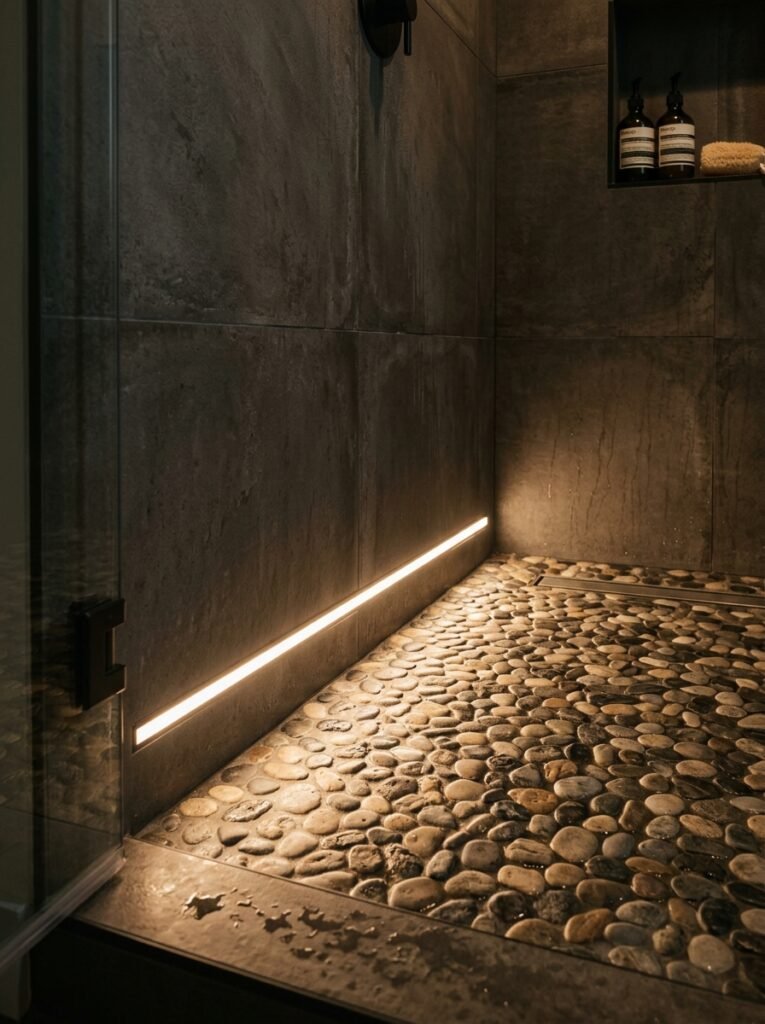
Low strips set into the base of the shower wall wash light across the floor and pick out the texture of the tile, which works especially well with pebble or mosaic flooring.
It also means a middle of the night shower doesn’t require switching on anything bright.
10. Light the Underside of a Ledge
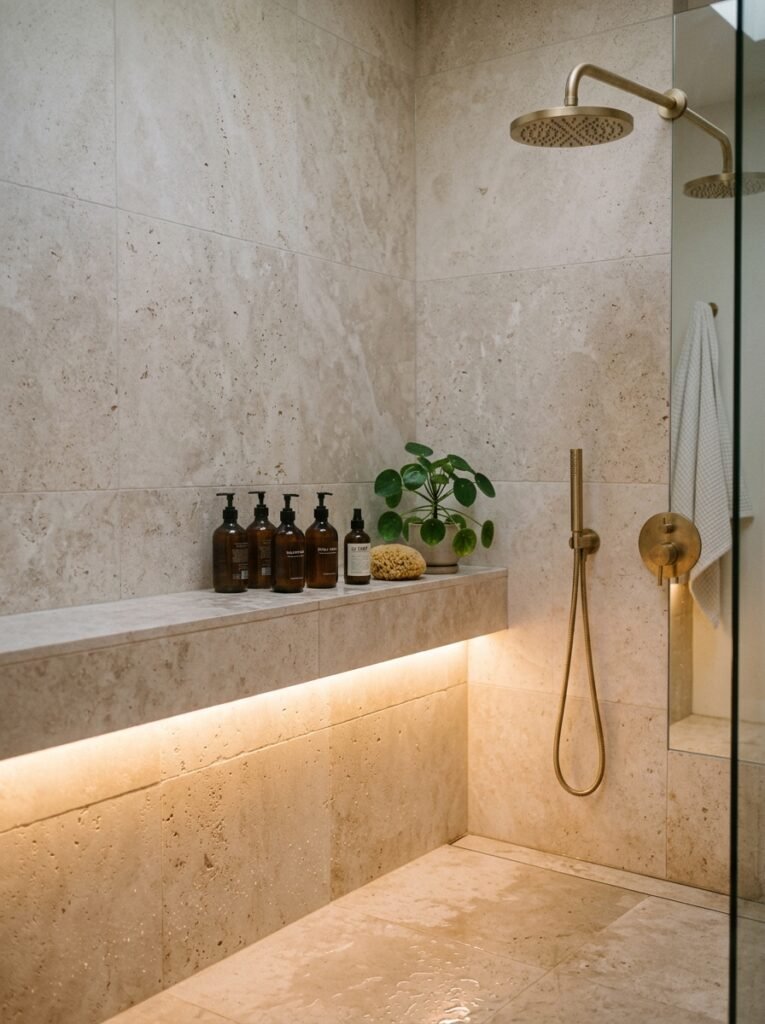
A tiled ledge running the length of the shower wall gives you somewhere to set bottles, and a strip tucked under its lip turns it into a line of glow. It’s a longer, calmer version of the lit niche.
The light falls down the wall below, which adds depth without any visible fixture. Keep the ledge shallow so it stays sleek.
11. Set a Vertical Light Into the Corner
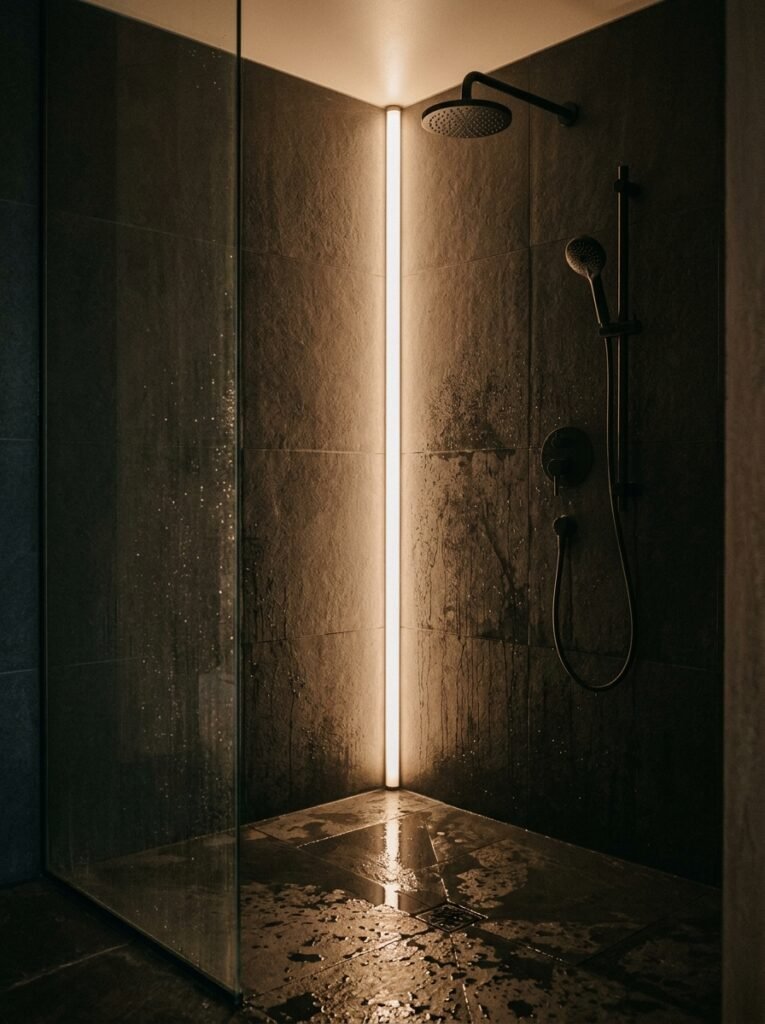
A slim vertical LED channel running up one corner of the shower draws the eye upward and makes the enclosure feel taller.
It washes both walls at once, so one strip does the work of two.
It pairs especially well with dark tile, where the line of light stands out sharply. Choose a frosted diffuser so it glows instead of glaring.
Daylight and Statement Fixtures
12. Bring in Daylight With a Skylight
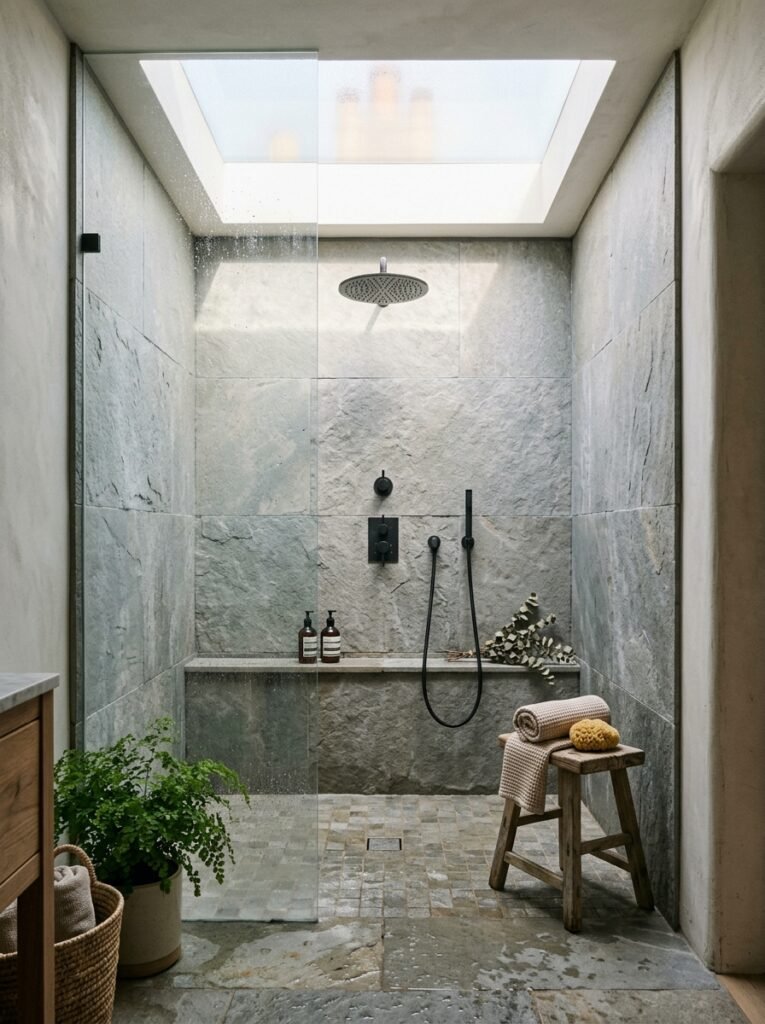
Nothing beats daylight in a shower, and a skylight delivers it with no privacy concerns since nobody can see in from above.
The light shifts through the day, which gives the space a different character morning and evening. Frosted glass softens the harshest midday sun.
13. Swap in a Frosted Shower Window
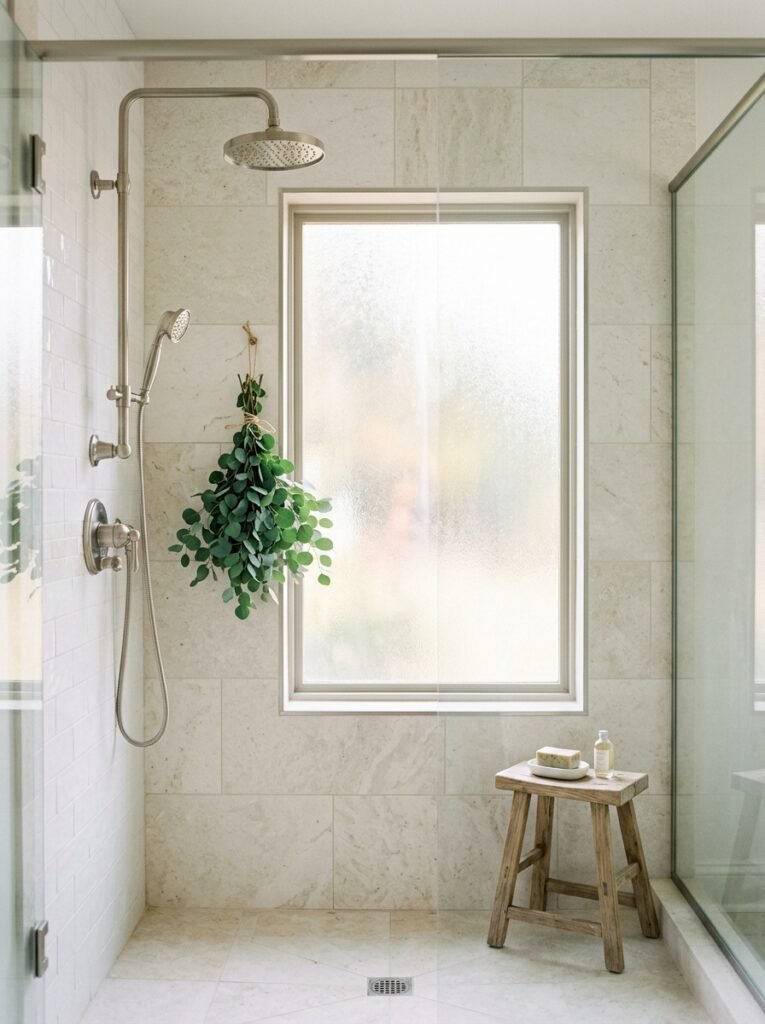
A window inside the shower brings in daylight at eye level, which feels far more natural than any fixture. Privacy is the only question, and there are a few easy ways to handle it:
- Frosted or sandblasted glass
- Reeded glass that blurs the view
- Frosted window film for a quick fix
All three let the light through while keeping the view out.
14. Build a Glass Block Wall
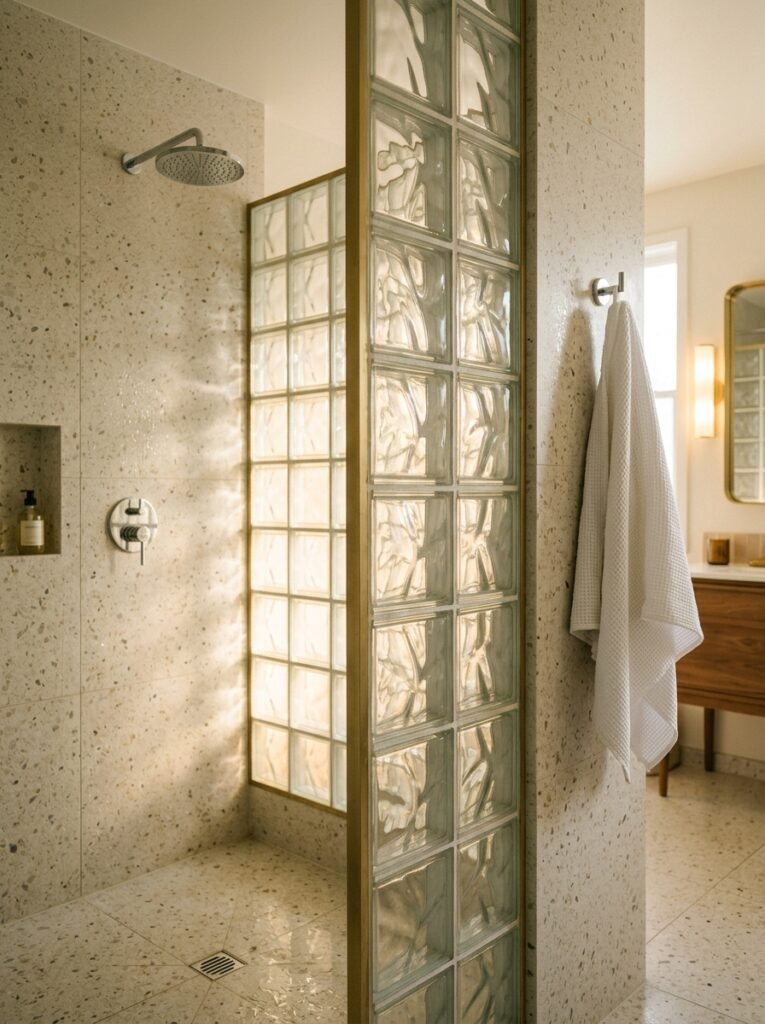
Glass block is back, and it’s one of the smartest ways to light a shower without adding a fixture. A partial wall between the shower and the bathroom borrows light from the room while blurring everything behind it.
At night, the bathroom’s own lights make the whole wall glow softly. Clear or wavy block both work.
15. Glow Light Through Fluted Glass
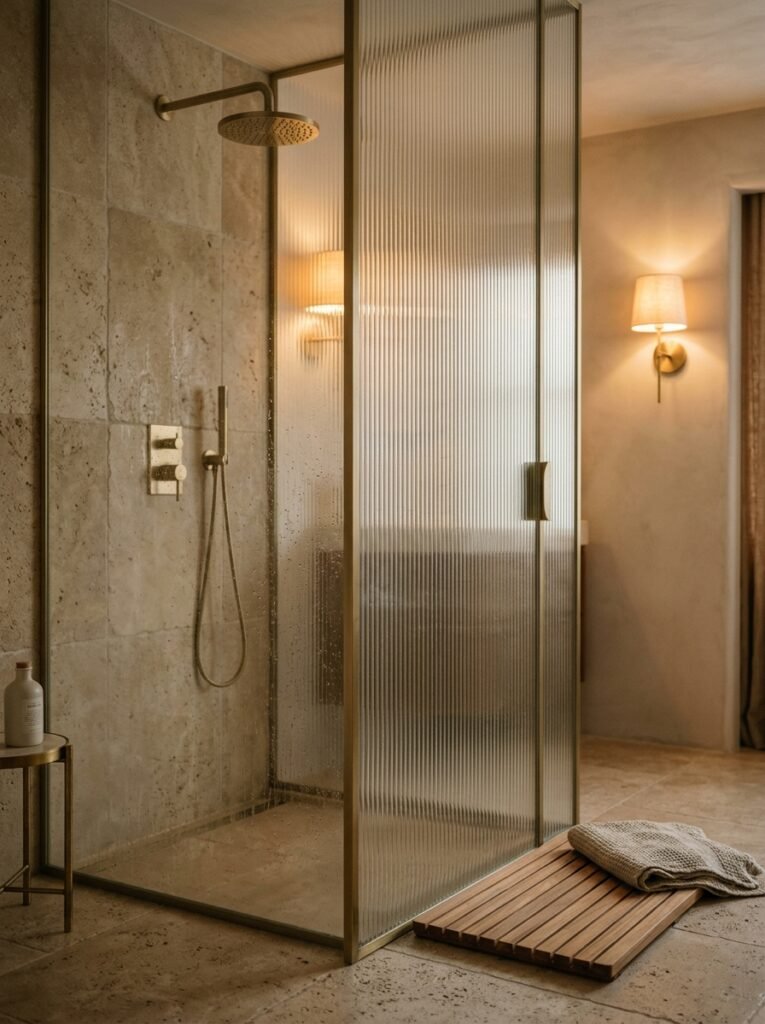
A fluted glass partition with light behind it turns into a soft, striped glow, since the ribs break the light into vertical bands.
It adds texture and privacy at the same time!
Place a strip or sconce on the dry side so the glass does the diffusing. The effect looks especially good against warm stone or wood tones.
16. Wrap the Shower Door in a Backlit Frame
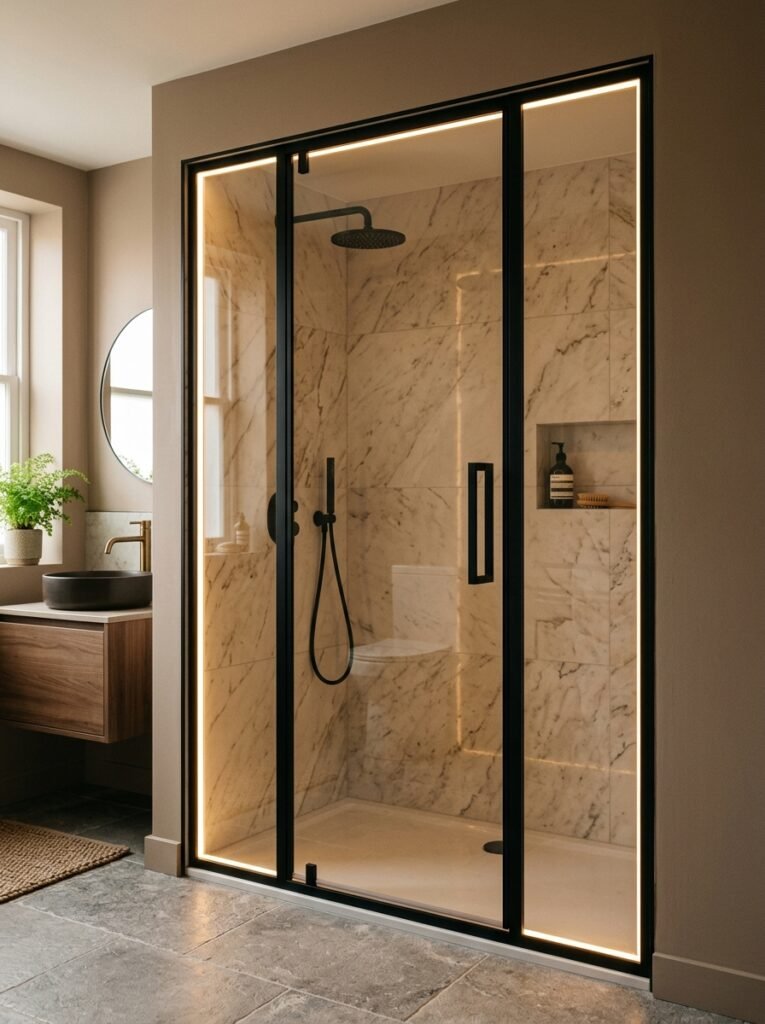
Running an LED strip behind the frame of a glass shower door outlines the whole enclosure in soft light, so the shower reads as a lit box from across the bathroom.
Matte black framing gives the strongest contrast against the glow. It also lights the entry step without any fixture pointing down at it.
17. Flank the Entry With Sconces
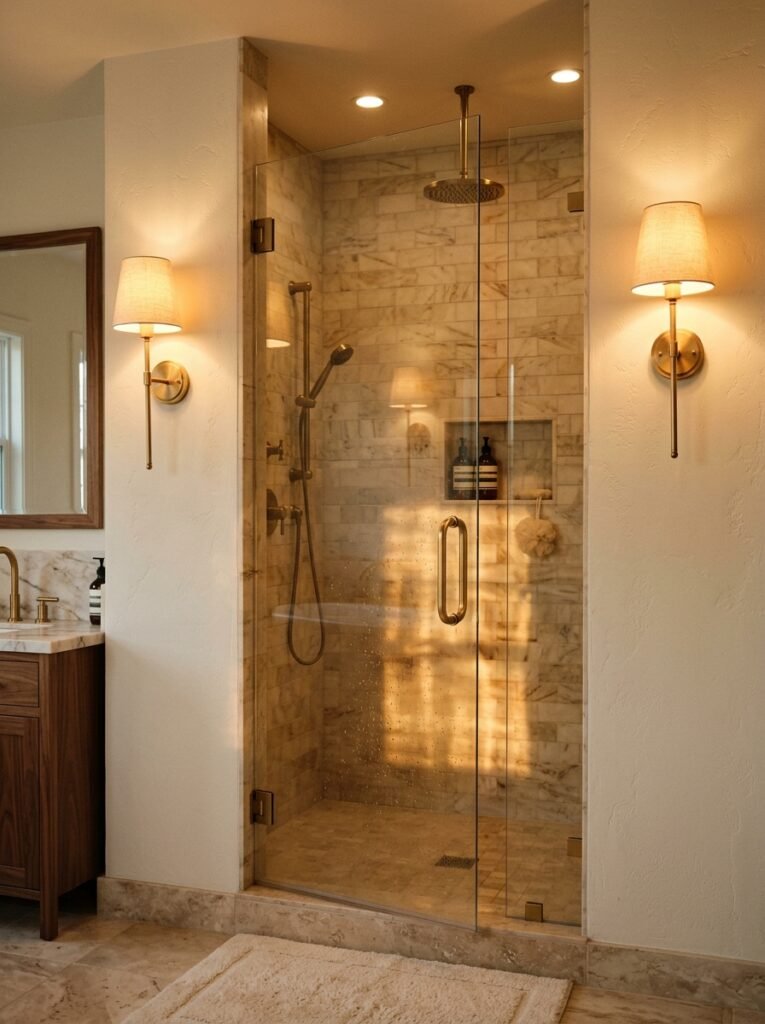
A pair of sconces either side of a glass shower door lights the entrance and reflects across the glass, which doubles the effect for free.
Since they sit outside the enclosure, you can use decorative fixtures that would be off limits inside a wet zone.
18. Add a Lit Mirror Inside the Shower
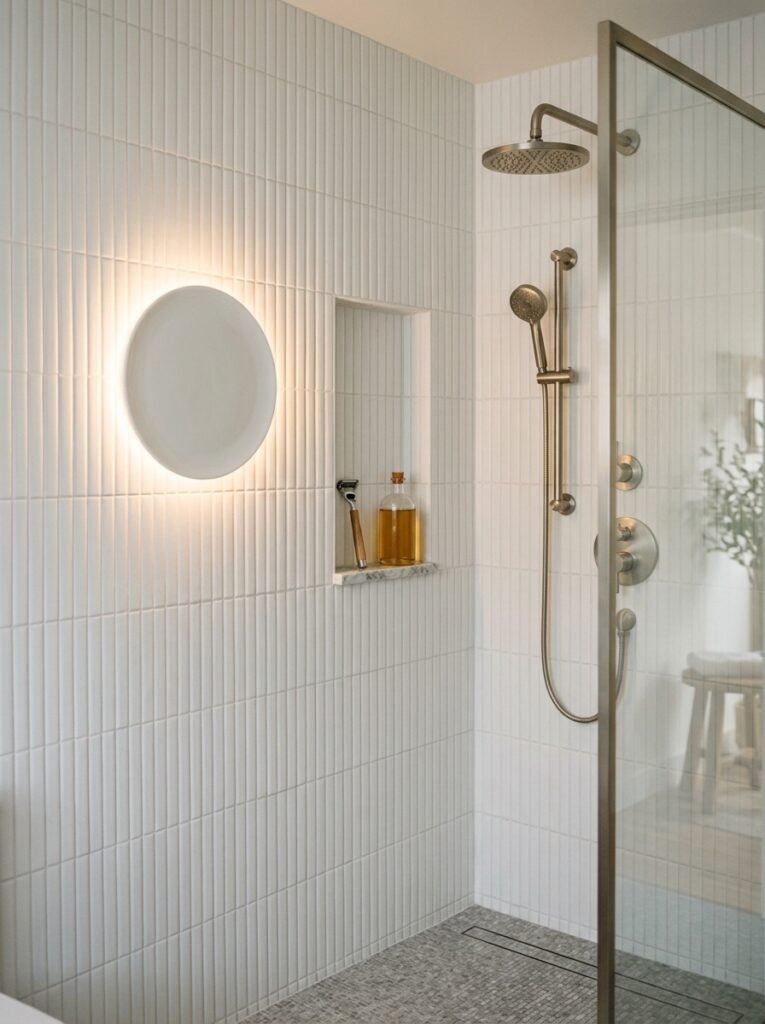
A small lit mirror mounted inside the shower makes shaving or skincare far easier, and the soft glow around its edge doubles as accent light. Fogless versions stay clear even in a steamy enclosure.
Place it at eye level on the side wall, away from the direct spray. A round shape softens all the straight lines of the tile.
Mood and Color Lighting
19. Shift the Mood With Color Changing LEDs
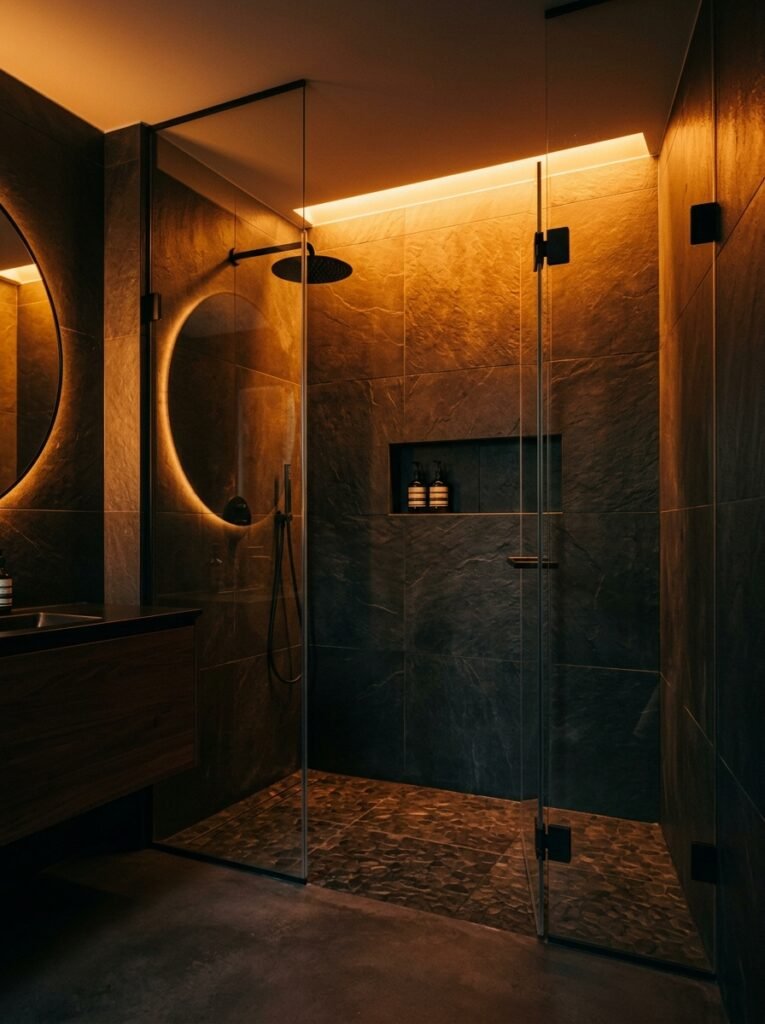
Color changing LEDs let the shower shift from bright white in the morning to deep blue or amber at night.
Two rules keep it from tipping over into gimmick territory:
- Recess the fixture so the color sits in the background
- Stick to one hue per session, never a full cycle
Skip both rules and it starts looking like a nightclub.
20. Set a Star Ceiling Into the Shower
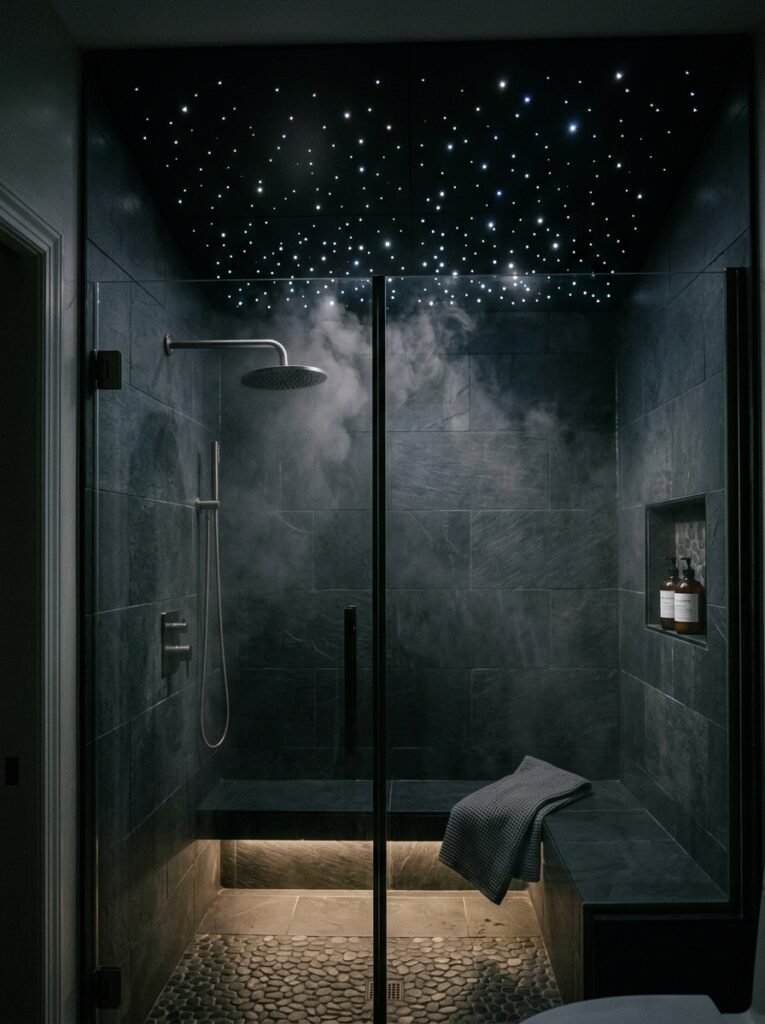
Tiny fiber optic points set into the shower ceiling read as a night sky once the main light goes off.
It suits steam showers particularly well, since an enclosed ceiling becomes something to look at while you sit. The effect stays subtle enough to leave on during an ordinary shower.
21. Put Every Light on a Dimmer
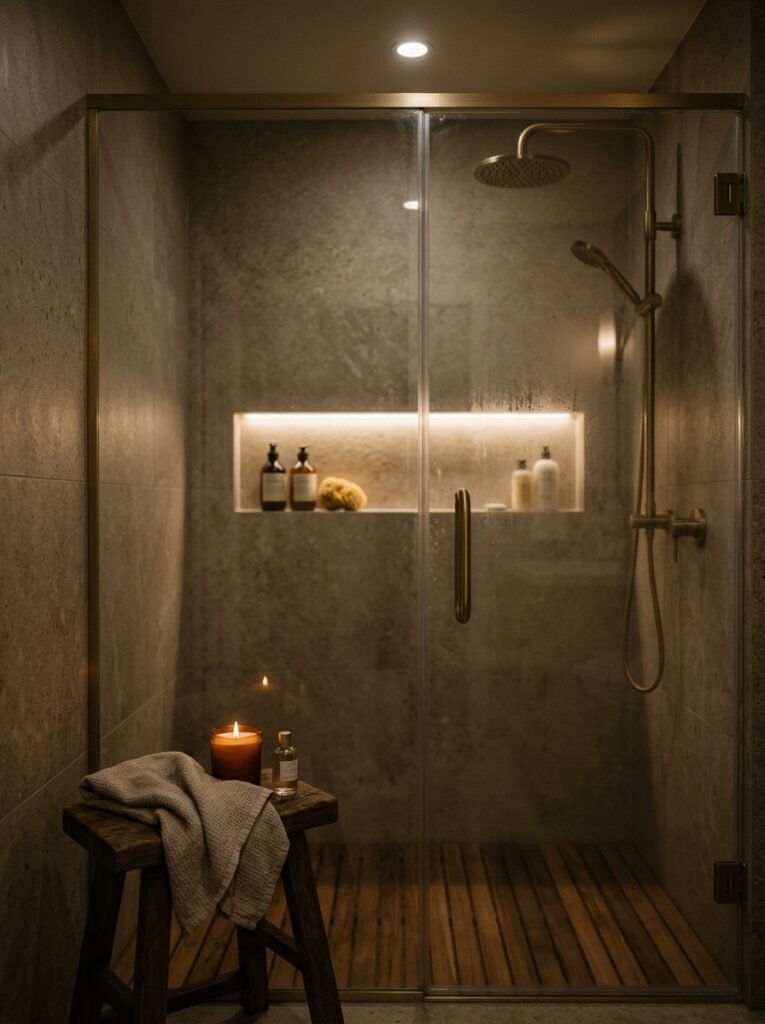
A dimmer is the single change that lets one shower handle both a rushed morning and a slow evening. Full brightness gets you ready fast, while the same lights at a quarter feel like a spa.
Put the hidden strips on a separate dimmer from the overhead light. That way you can run only the glow when you want to unwind.
22. Program Morning and Evening Scenes
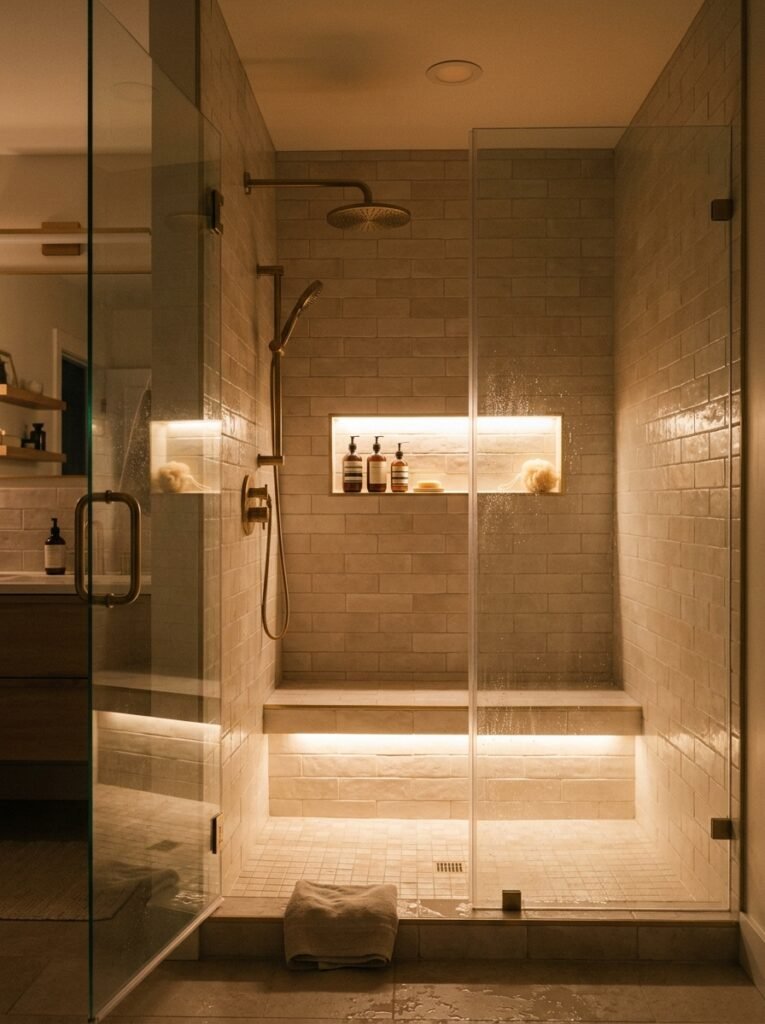
Smart bulbs and strips let you save lighting scenes, so the shower sets itself up with one tap instead of four switches. A few that work well:
- Morning: bright white overhead, strips off
- Evening: warm, dimmed overhead with the niche glowing
- Night: only the toe kick or bench light on
Once it’s set, nobody has to think about lighting again.
23. Choose Warmer Bulbs

Most bathrooms come with cool white bulbs, and they make tile look flat and skin look tired. Warm white between 2700K and 3000K flatters both, which is a big part of why spas feel so golden.
Check the number on the box, since labels like daylight or bright white usually mean cool. Keep every light in the shower at the same temperature.
24. Let the Tile Help the Light
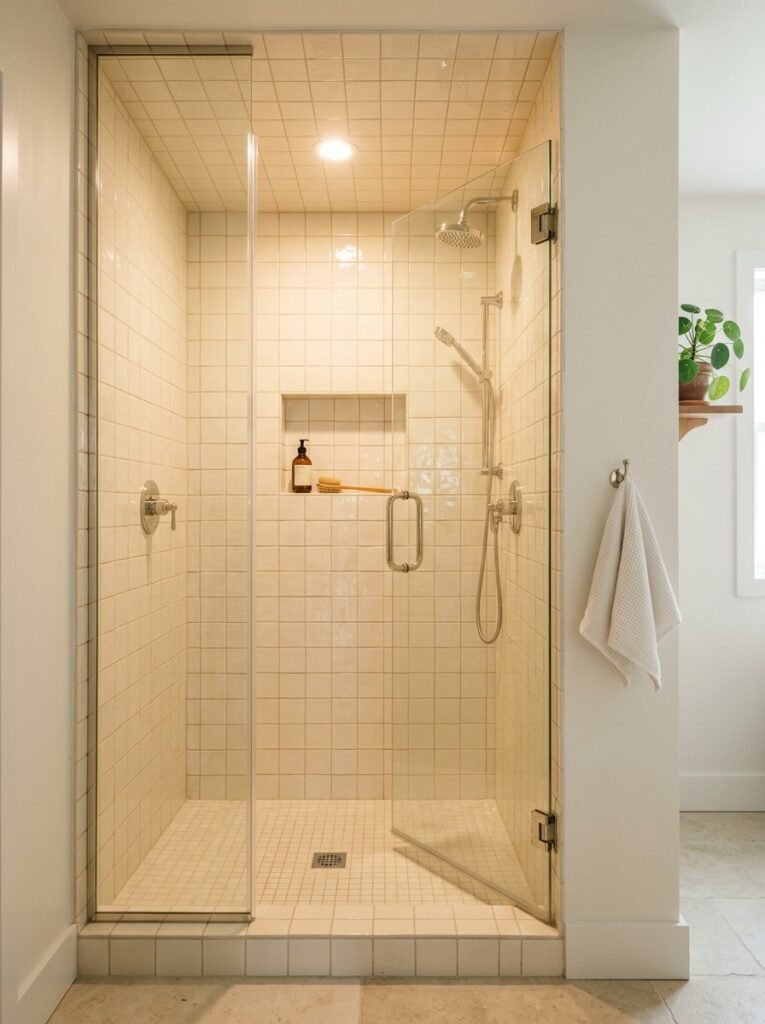
The tile you pick changes how much a light actually does. Glossy and pale surfaces bounce light around the enclosure, while matte and dark ones absorb it and need more fixtures to feel bright.
For a small, dim shower, glossy tile is the cheapest lighting upgrade there is. Save dark matte stone for showers that already get plenty of light.
Final Thoughts on Shower Lighting Ideas
One overhead light does the practical work, and everything else on this list exists to soften it.
A niche strip, an under-bench glow, or a line of cove lighting is what turns a functional shower into somewhere worth lingering, and none of them are visible as fixtures.
Warm bulbs matter as much as placement, since cool white flattens tile and makes even a beautiful shower feel clinical.
Put whatever you install on a dimmer and the same space handles a rushed morning and a long evening equally well.
Shower Lighting Ideas FAQ
Recessed downlights, LED strips in a niche or under a bench, cove lighting around the ceiling, and waterproof pendants in wet rooms all work.
Showerheads with built-in LEDs give you light and water from one fixture. Sconces work too, provided they sit outside the enclosure.
Yes, and they’re one of the most popular options, though they need to be rated for wet locations and installed where water won’t sit against them.
Common placements are inside a niche, under a bench lip, and along a ceiling cove, since all three hide the strip itself.
Layer two sources instead of relying on one. An overhead downlight covers the practical need, then a niche strip or cove lighting adds the depth a single fixture can’t.
Pale, reflective tile helps considerably, since it bounces whatever light you have around the enclosure.
Warm white around 2700K to 3000K suits most bathrooms, since it flatters skin and keeps the space feeling calm.
Cooler light around 4000K is more accurate for shaving or grooming, which is why many people run warm light in the shower and cooler light at the vanity.
Not always, since a well-placed ceiling light in a small bathroom can reach into the enclosure.
Larger showers, walk-ins, and anything with a door or a solid surround usually end up dim without their own light. Glass enclosures borrow light far better than tiled ones.