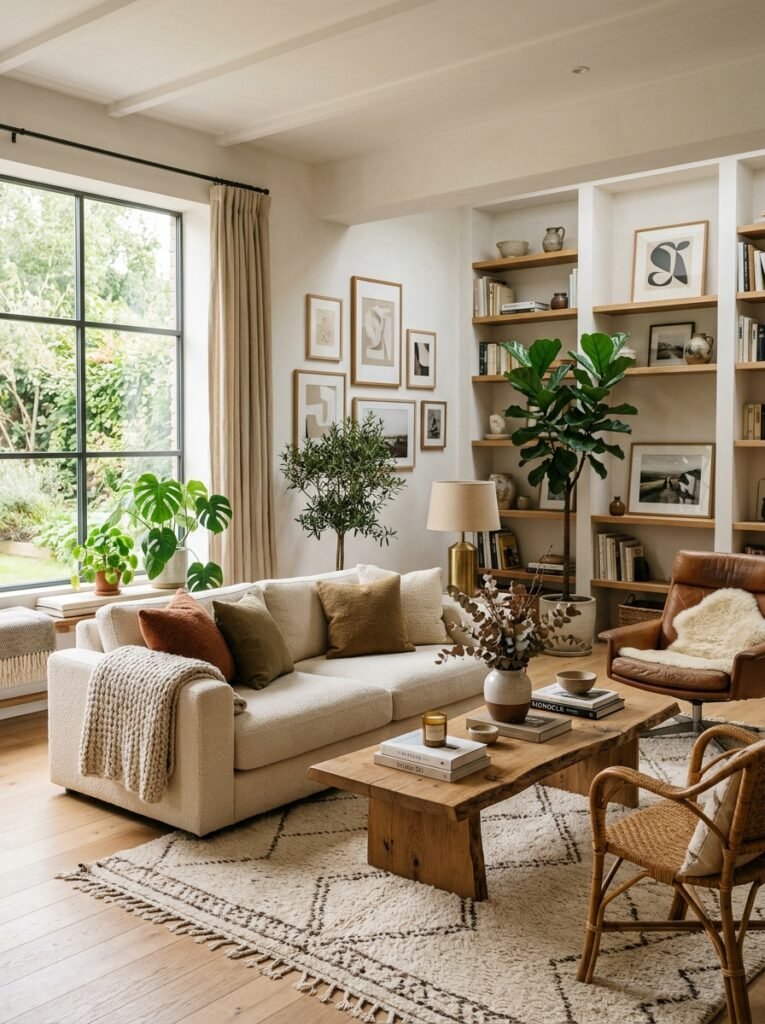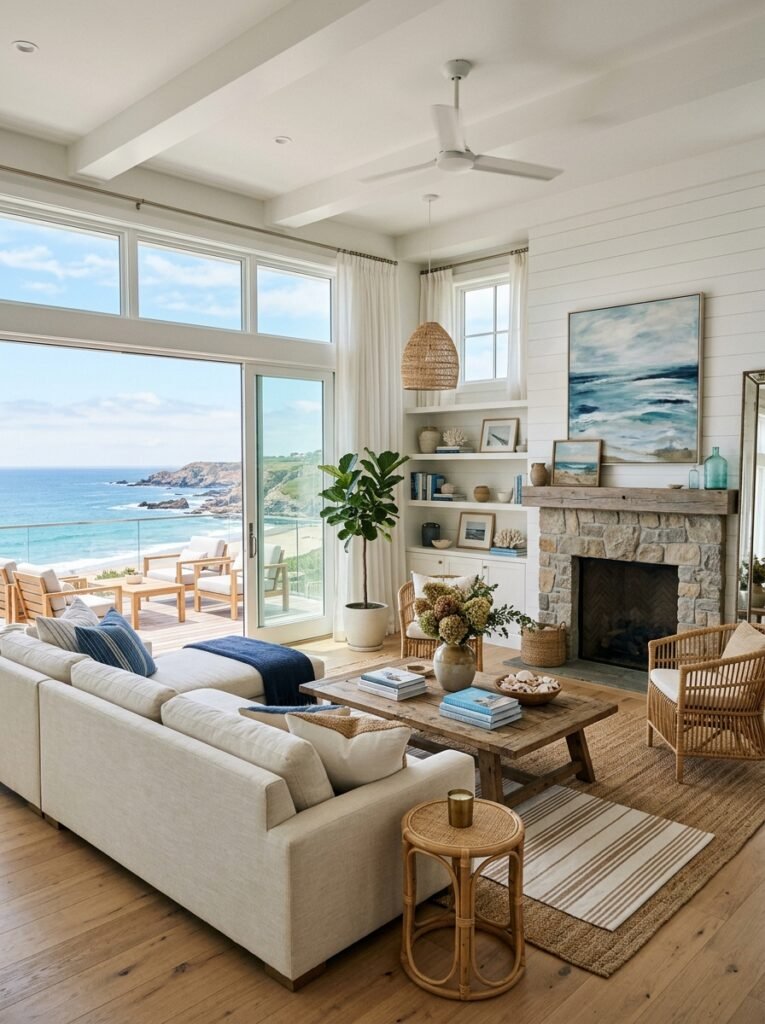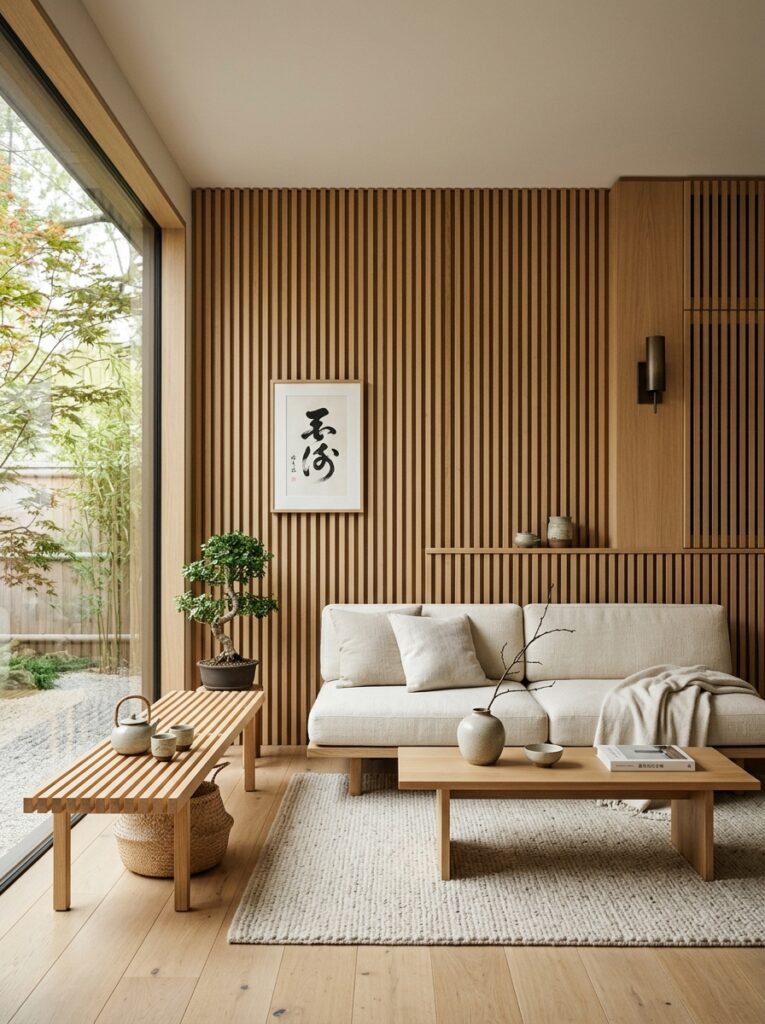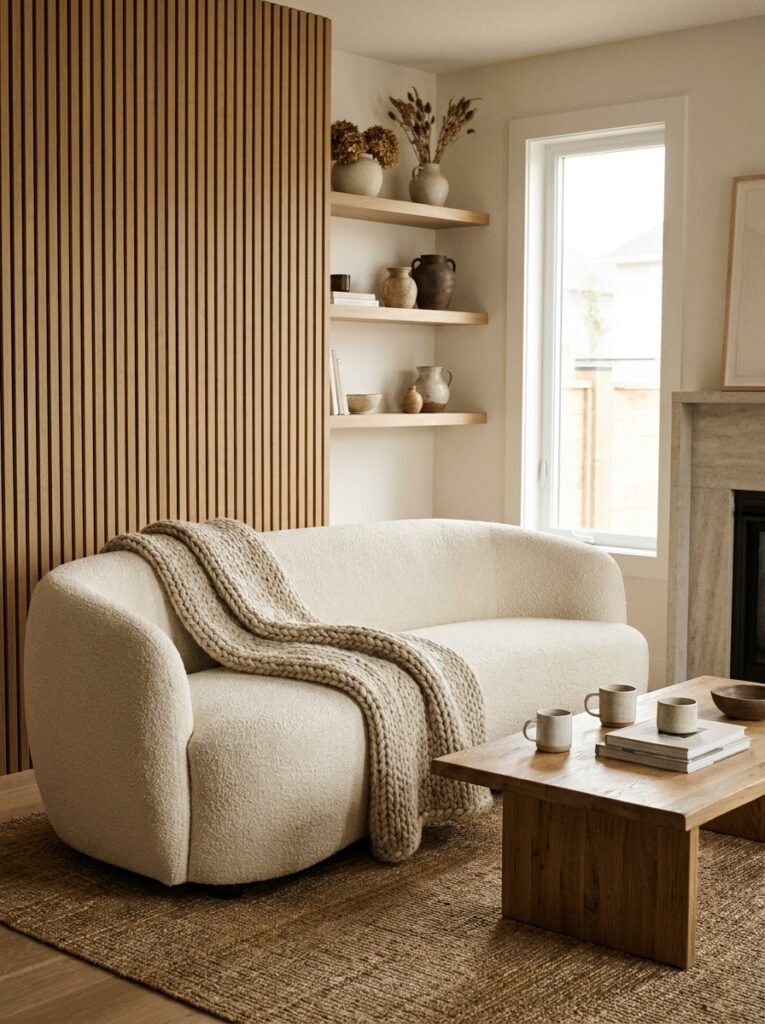
Afrohemian style is what happens when African design traditions meet bohemian comfort.
Rich patterns, handwoven craft, warm earth tones, and a room that feels deeply personal instead of decorated from a catalog.
The living room is where this style truly comes alive.
These afrohemian living room ideas will help you build a space full of color, texture, and story, whether you’re starting fresh or layering onto what you already have!
Plan on revisiting? Pin this for later!
This post may contain affiliate links, I may earn an extra commission, at no extra cost to you.
What Makes a Living Room Afrohemian
Afrohemian and regular boho can look similar at first glance, but they’re built differently. Afrohemian puts African craft and textiles at the center, and everything else supports them.
Most afrohemian living rooms share four things:
- A warm earth-tone base of terracotta, ochre, clay, and sand
- African textiles like mudcloth, kente, wax print, and indigo cloth
- Handmade craft such as woven baskets, carved wood, and Juju hats
- Plants and natural fibers to keep the room feeling alive and grounded
You don’t need everything at once.
Pick one piece from each group, and the room will already start telling its story.
Afrohemian Colors and Patterns
1. Start With a Warm Earth-Tone Base
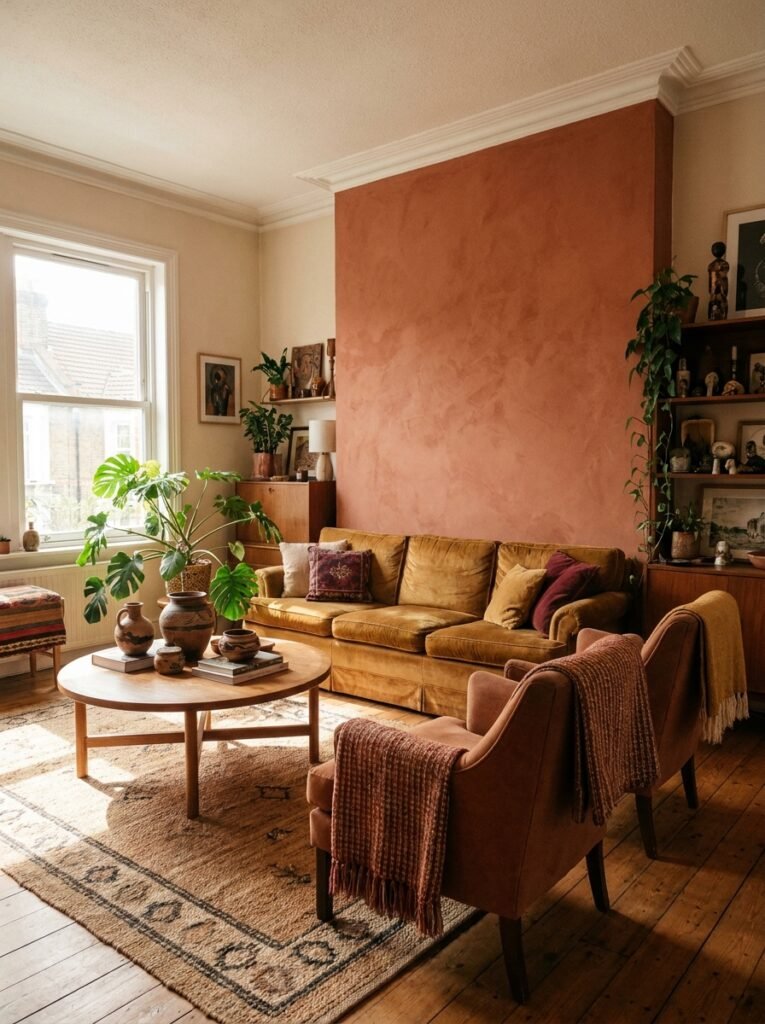
Terracotta, ochre, warm sand, and deep clay form the foundation this style is built on.
These sun-baked tones make the living room feel warm even before a single decoration goes in.
If painting a whole wall terracotta feels like too much, bring the earth tones in through furniture and textiles instead.
2. Layer In Mudcloth Patterns
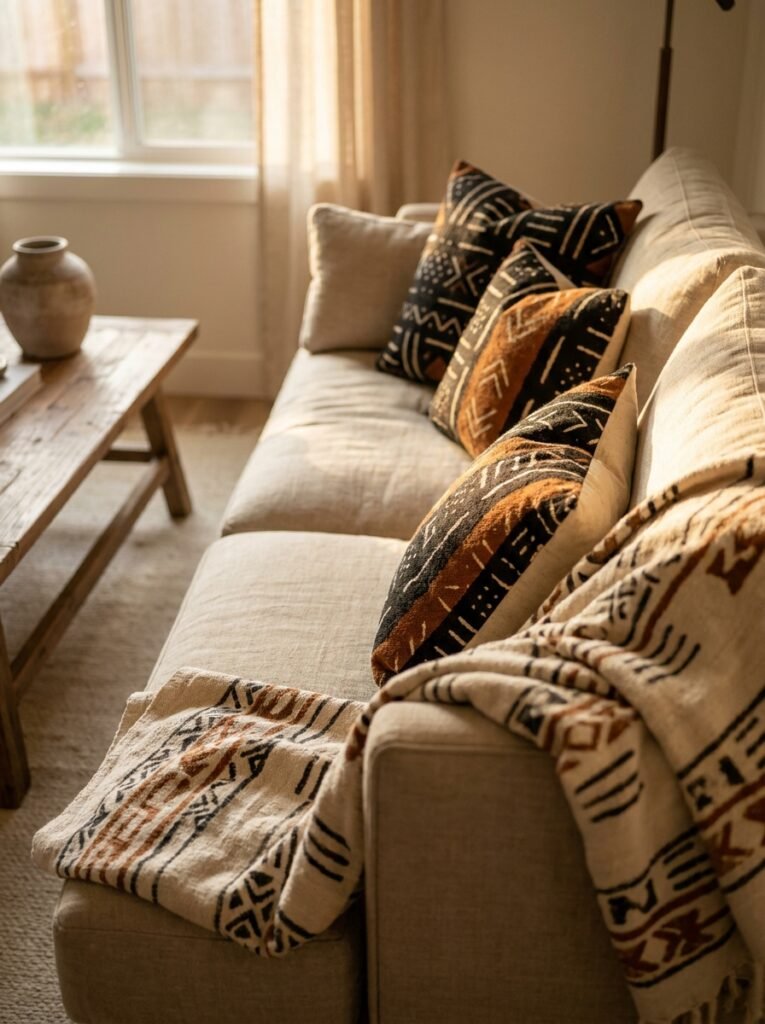
Mudcloth, the hand-dyed Malian fabric covered in bold geometric symbols, is the signature textile of this whole aesthetic.
A few mudcloth pillows or a draped throw in black and white or warm rust brings instant authenticity.
Even one or two pieces can carry the whole look for a sofa!
3. Add Kente-Inspired Color Accents
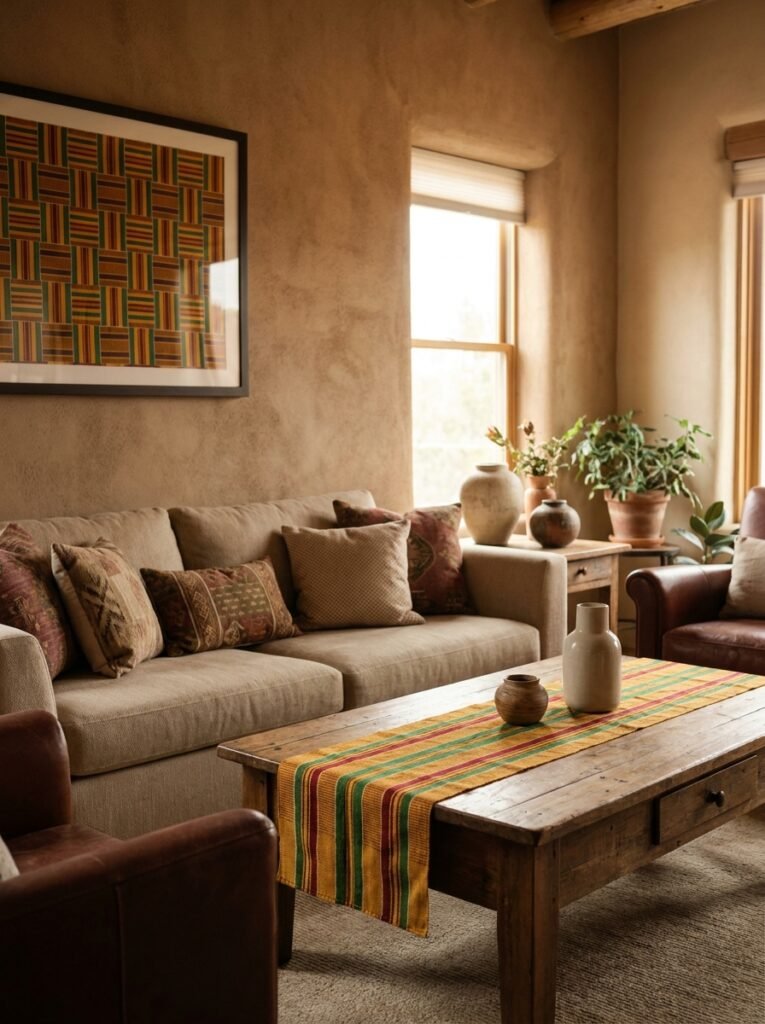
Kente’s brilliant golds, greens, and reds bring out the joyful, colorful side of afrohemian.
Use it in measured doses, like a table runner, a framed textile panel, or one statement cushion.
Against an earthy base, those vivid stripes glow like jewelry on linen.
4. Mix Prints With Confidence
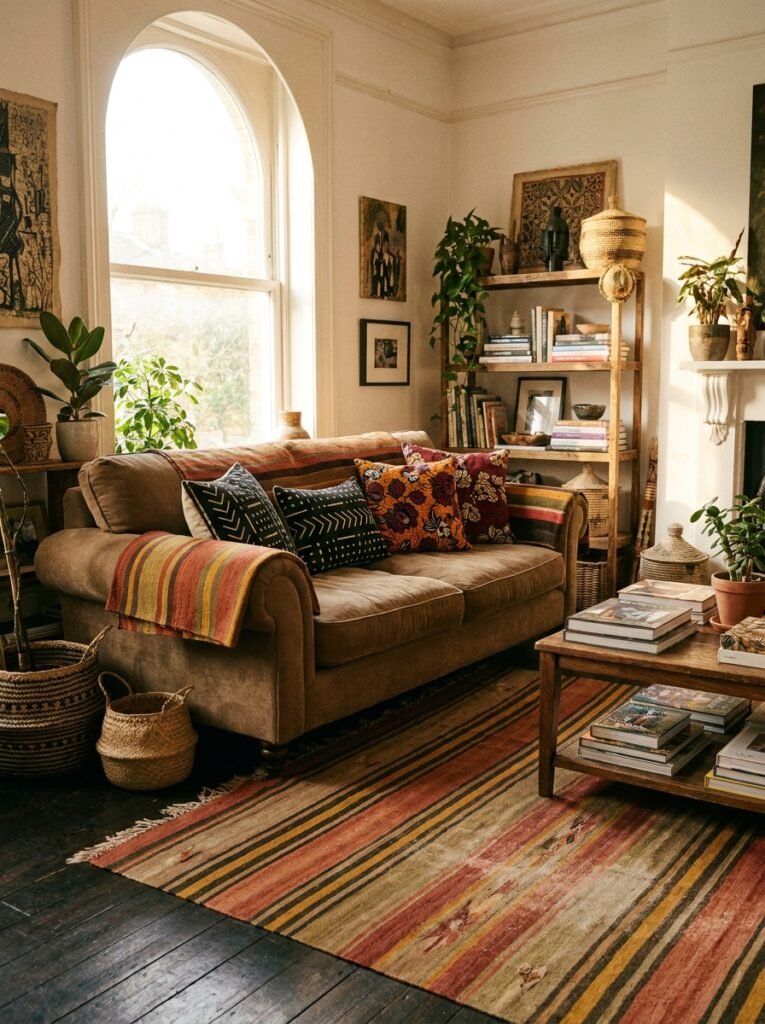
This style rewards the kind of bold mixing that would terrify a minimalist.
Mudcloth alongside wax print florals and a striped kilim is one of my favorite combos for this look.
Keep every pattern within the same warm color family, and let solid earth tones rest between them.
5. Cool Things Down With Indigo
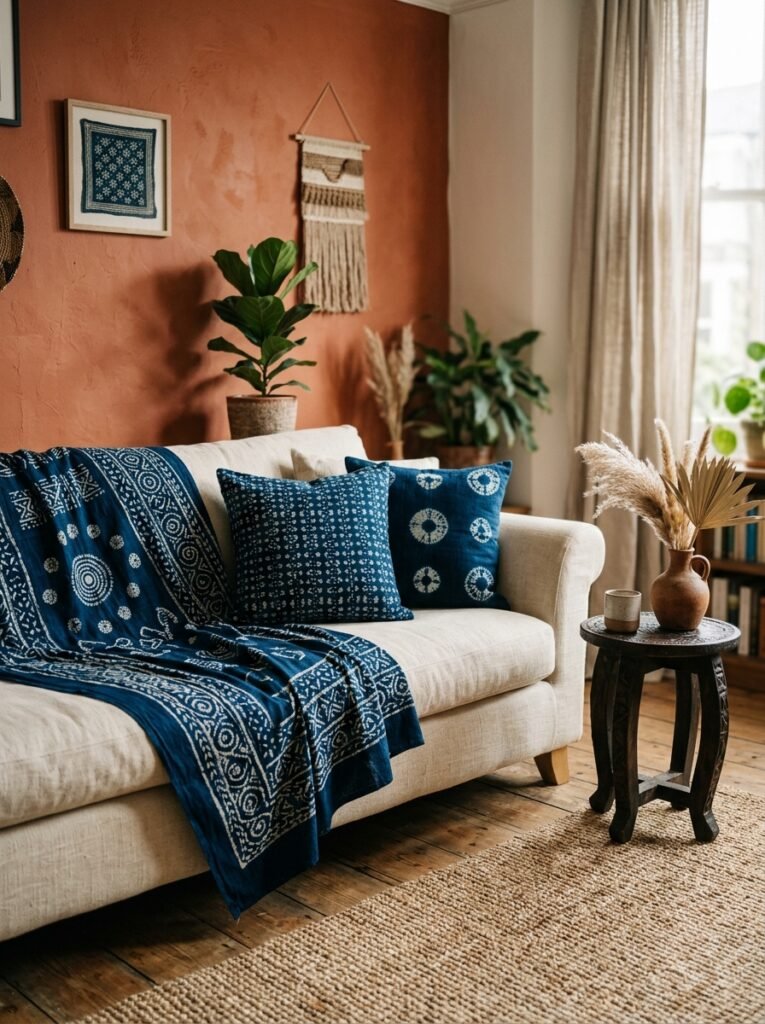
Indigo-dyed cloth, like Nigerian adire, adds a deep blue that balances all the warm terracotta and rust. It keeps the room from feeling too hot and gives the eye somewhere calm to rest.
An indigo throw or a pair of cushions is enough, since a little blue goes a long way in a warm room. It looks especially beautiful next to cream and natural wood.
Afrohemian Craft, Texture, and Statement Pieces
6. Hang a Juju Hat on the Wall
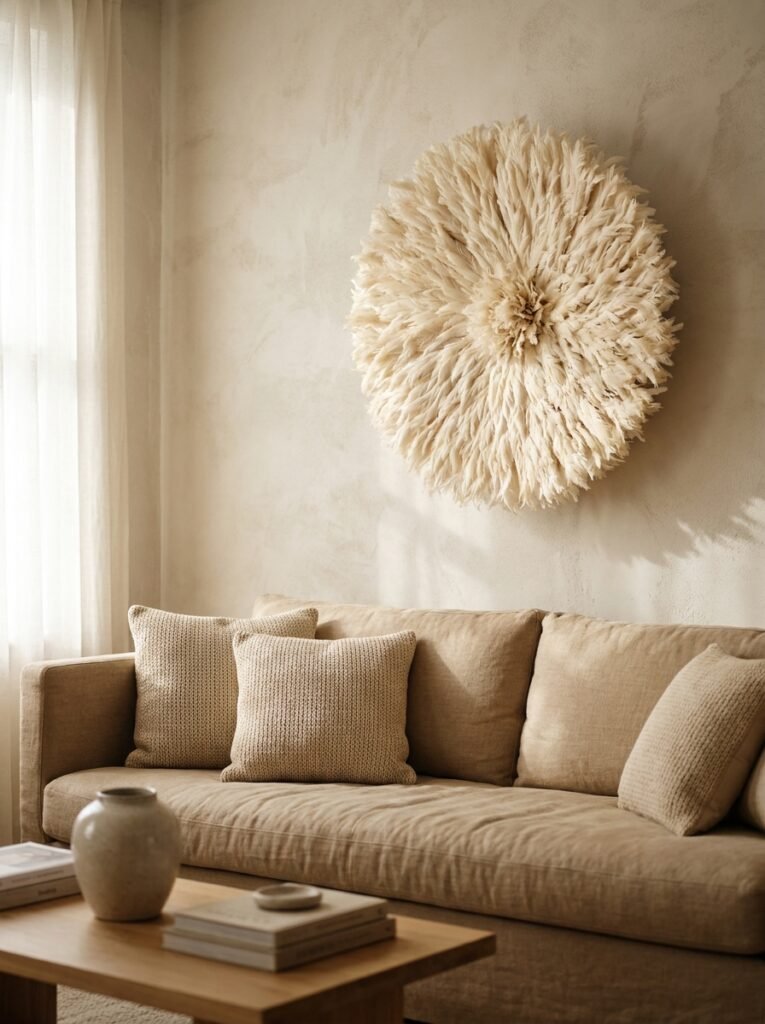
The feathered Cameroonian Juju hat might be one of my favorite pieces of afrohemian decor. Its soft circle of feathers in cream, rust, or indigo works like sculpture and softens the walls.
Hang one alone above the sofa as a statement, or a pair at staggered heights.
7. Bring In Carved Wooden Pieces
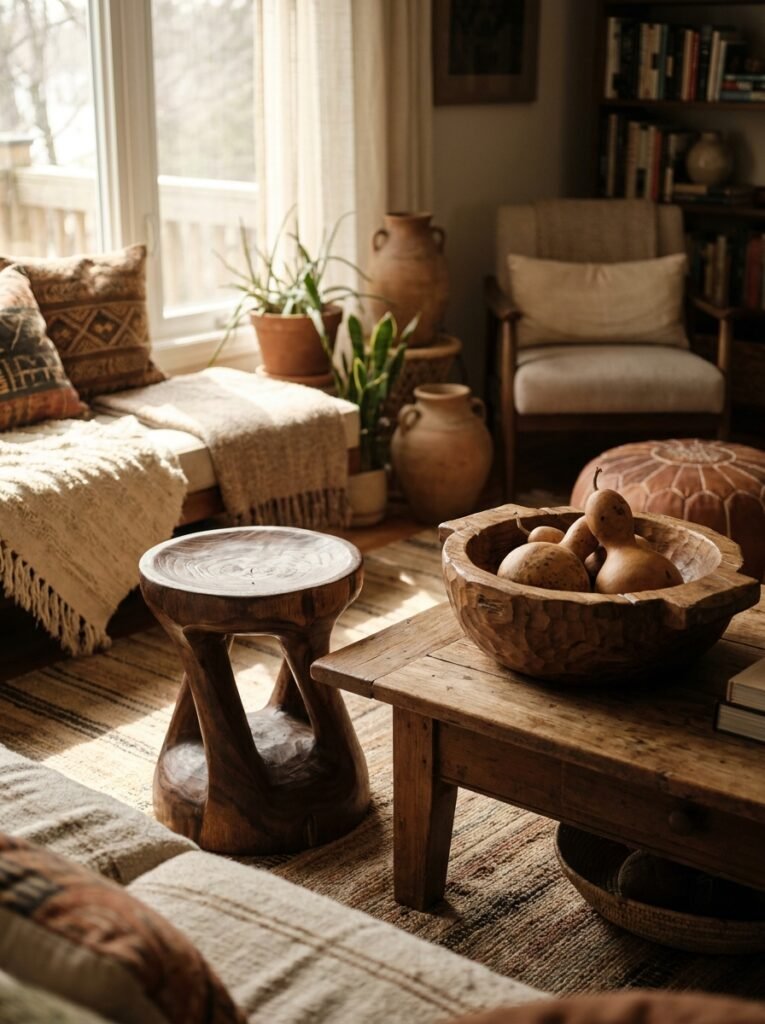
Hand-carved stools, sculptural masks, and chunky wooden bowls on the coffee table show off the craft heritage behind this style. You can almost see the maker’s hands in every piece.
One truly handmade piece adds more soul than a shelf of factory decor ever could!
8. Layer Natural Fiber Rugs
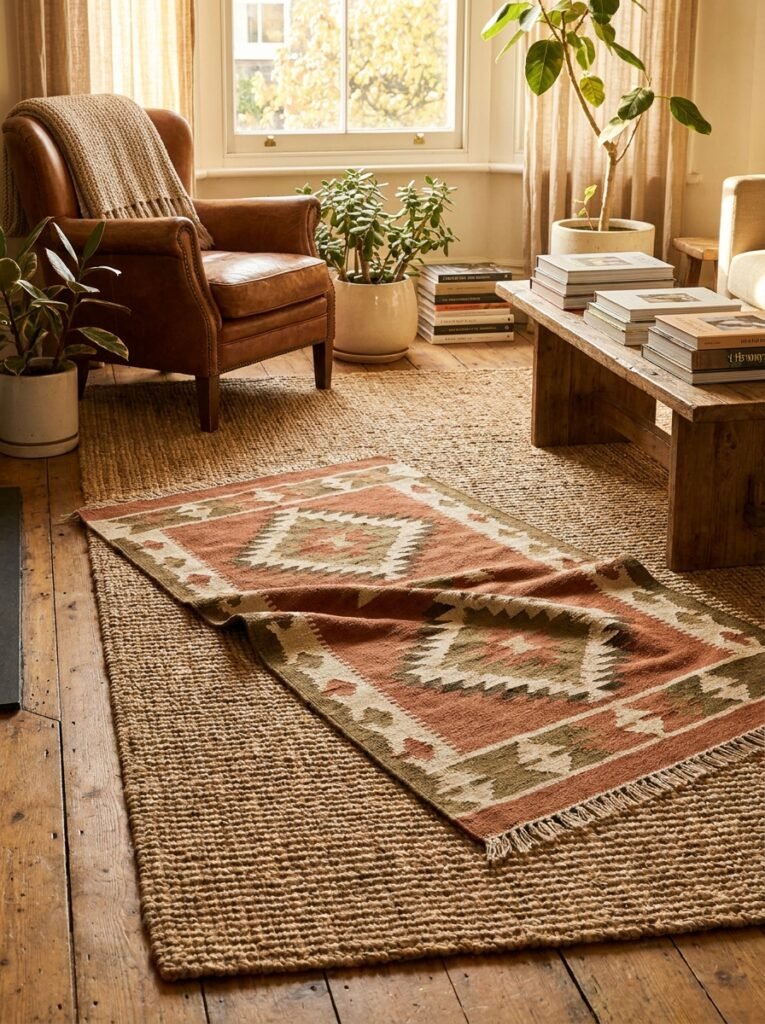
Start with a large jute or sisal rug as the base, then layer a patterned flatweave or Moroccan-style rug on top.
The layers ground the room and add depth and coziness to the floor.
Let the top rug sit at a relaxed angle, since this style looks best slightly undone.
9. Add a Rattan or Cane Statement Chair
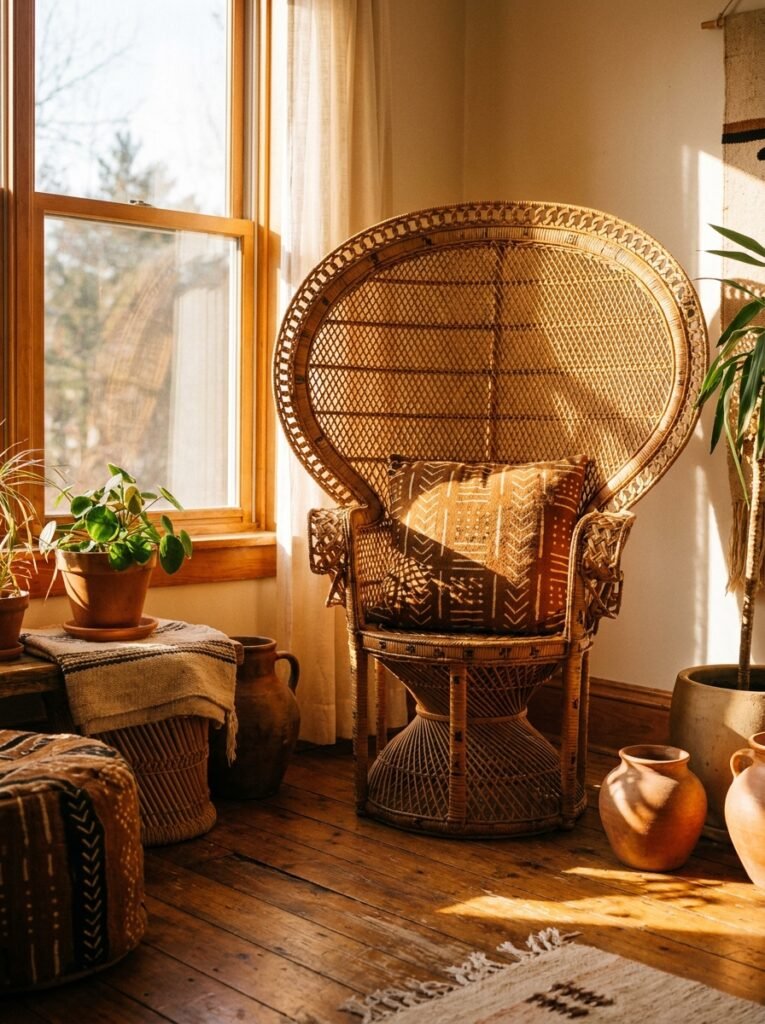
A peacock chair, a curved rattan lounger, or a cane-back armchair gives the room its bohemian silhouette. These airy woven shapes balance the visual weight of all those pattern-heavy textiles.
Thrifted and vintage versions often look even better than new ones, especially for afrohemian!
10. Create a Bolga Basket Wall
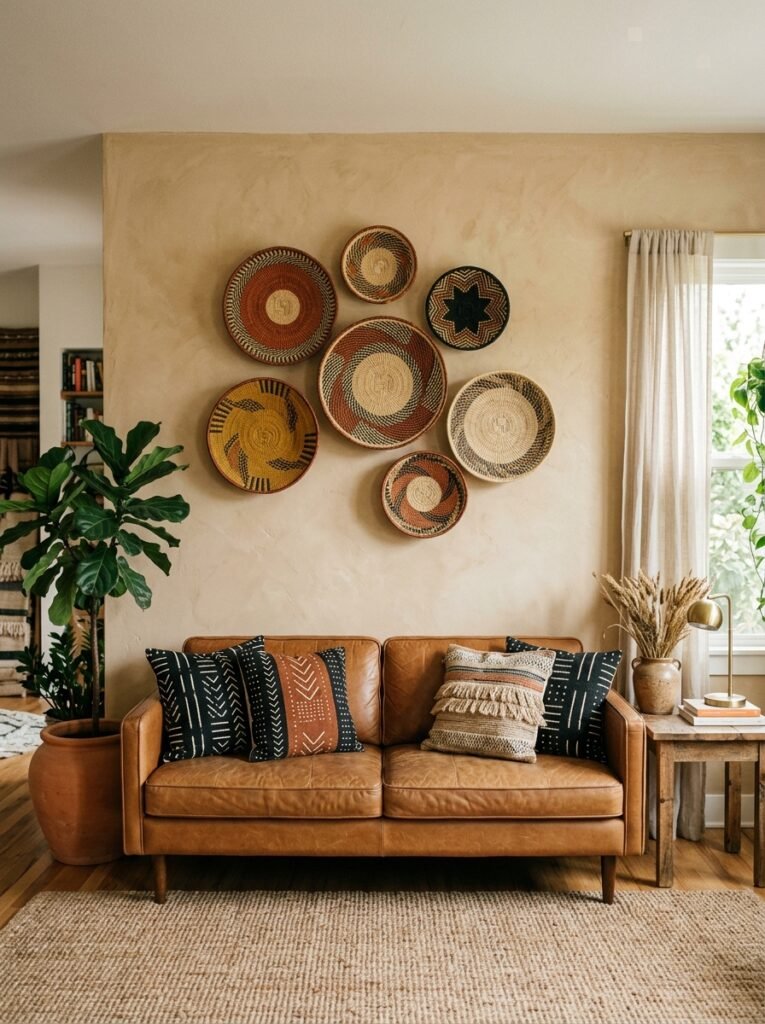
Bolga baskets, hand-woven in northern Ghana, come in bold colors and patterns that look incredible grouped on a wall.
A cluster of five to seven in mixed sizes fills a large blank wall for much less than art.
Mix a few neutral baskets in with the colorful ones so the wall feels balanced. Lay them out on the floor first to find an arrangement you love before hanging.
11. Frame a Textile Panel as Art
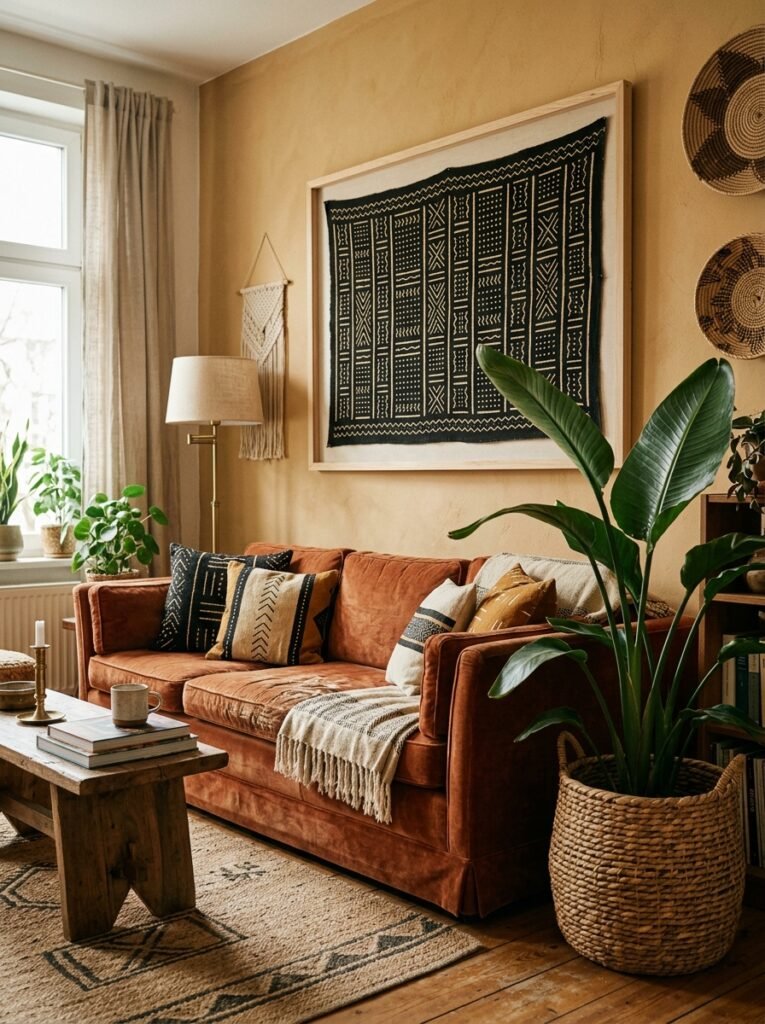
A piece of mudcloth, kente, or vintage wax print looks stunning stretched and framed like a painting. It’s an easy way to show off a textile you love without it getting worn on the sofa.
A simple wood or black frame keeps the focus on the fabric itself. One large framed panel above the sofa can anchor the whole room.
12. Choose a Low, Chunky Wood Coffee Table
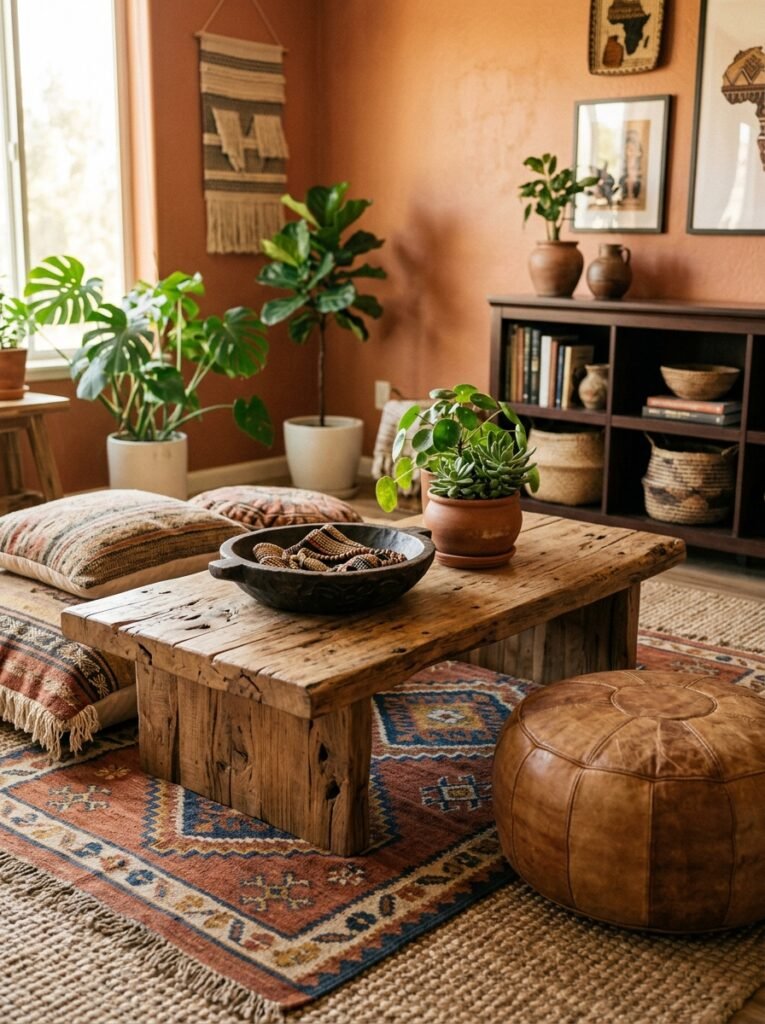
A low coffee table in solid, rough-hewn wood suits afrohemian much better than glass or anything sleek. It keeps the room grounded and pairs naturally with floor cushions and poufs.
Look for visible grain, knots, or carved details, since imperfections add character here. Style it with a wooden bowl and a small plant.
Afrohemian Plants, Lighting, and Atmosphere
13. Go Big and Wild With Plants
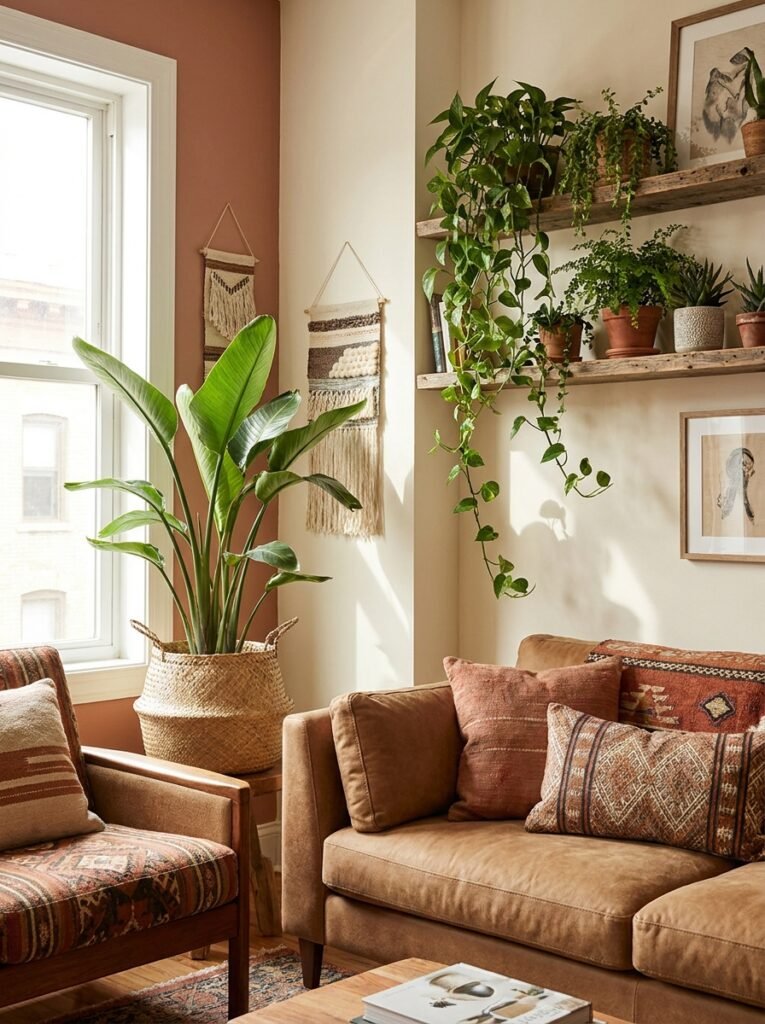
Afrohemian rooms treat plants as roommates, not accessories. The best choices have bold, architectural shapes and lush tropical fullness.
Bird-of-paradise, which is native to South Africa, looks amazing here alongside monstera and fiddle leaf figs. Style them in woven baskets or clay pots.
14. Display Collections That Tell Stories
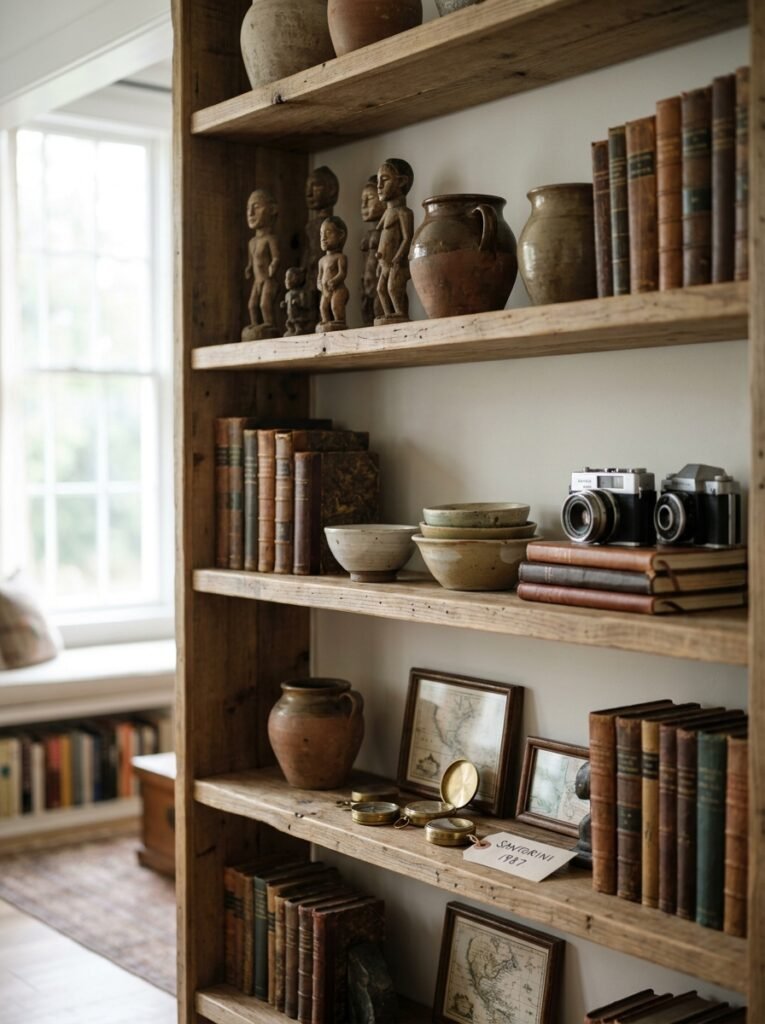
Open shelving styled with carved figures, pottery, stacked books, and travel finds gives the room its personal-museum quality.
Group objects in odd numbers and vary the heights.
The goal is a shelf that makes guests stop and ask, “Where did you even find this?”
15. Warm the Room With Layered Lighting
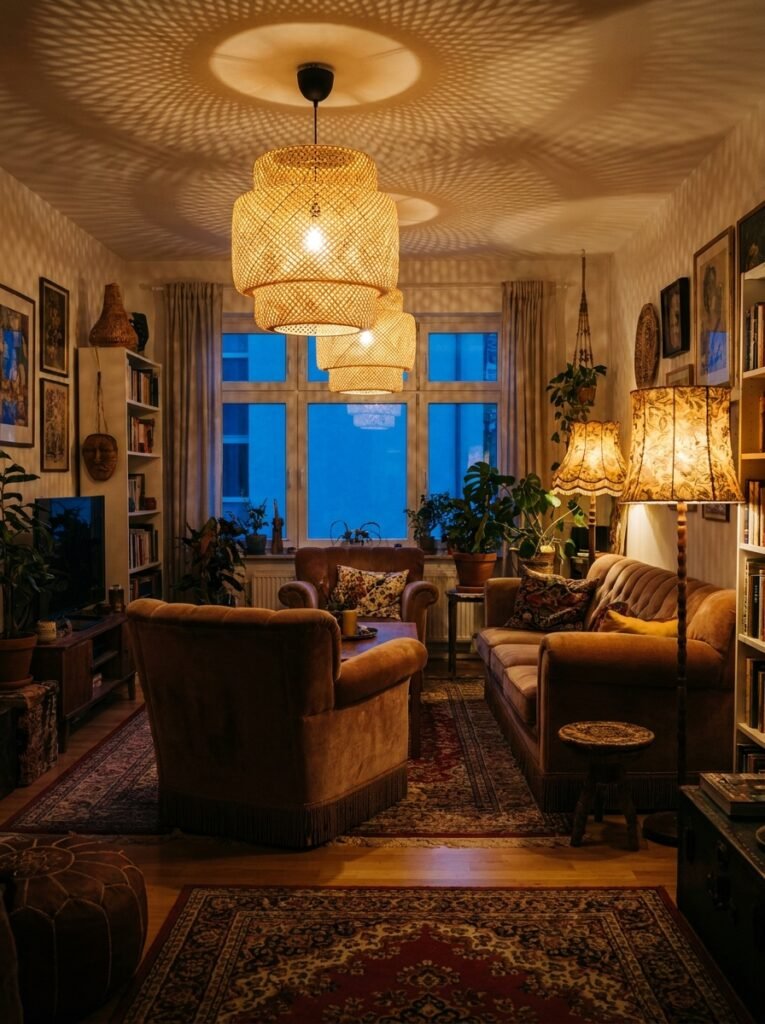
Skip the harsh overhead light and layer your lighting instead.
Try a rattan pendant up top, warm table lamps at mid-height, and a floor lamp with a woven shade down low.
Light filtering through natural fibers casts beautiful patterned shadows in the evening, and that dappled warmth is exactly what this style is about.
16. Hang Plants in Woven Hangers
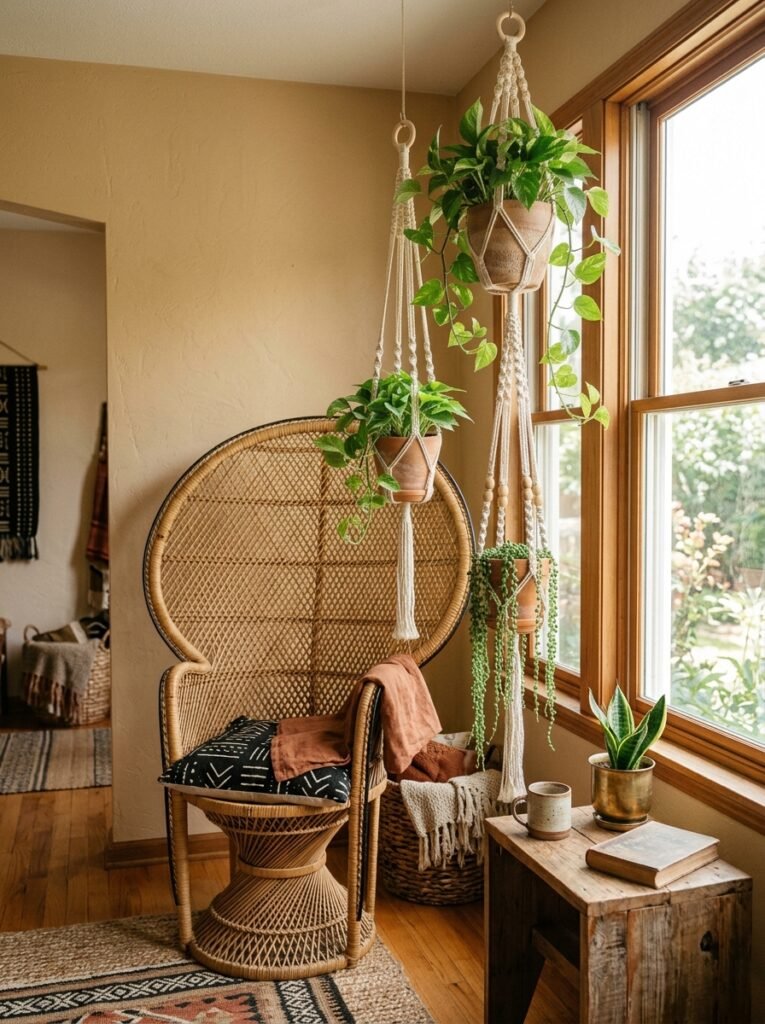
When floor space runs out, go up. Trailing pothos or string of pearls in macrame or woven hangers fills empty corners and adds greenery at eye level.
Hang two or three at different heights near a window, since a staggered group looks more natural than a single one.
Always anchor hooks into a ceiling joist, because watered plants get heavy.
17. Group Large Clay Vessels on the Floor
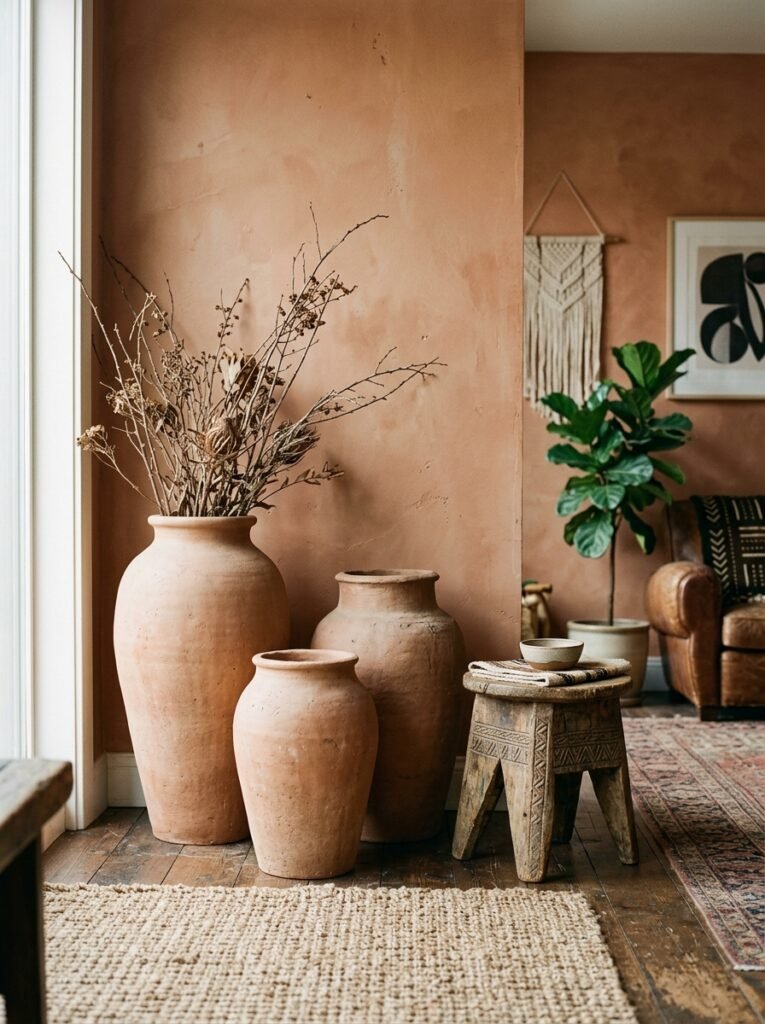
Oversized clay pots and earthenware vessels grouped on the floor add sculpture and warmth to an empty corner.
Their round, handmade shapes echo traditional African pottery beautifully.
Group three in different heights, and leave them empty or add a few dried branches. Matte, unglazed finishes look the most earthy and authentic.
Finishing the Afrohemian Look
18. Pile On Floor Seating
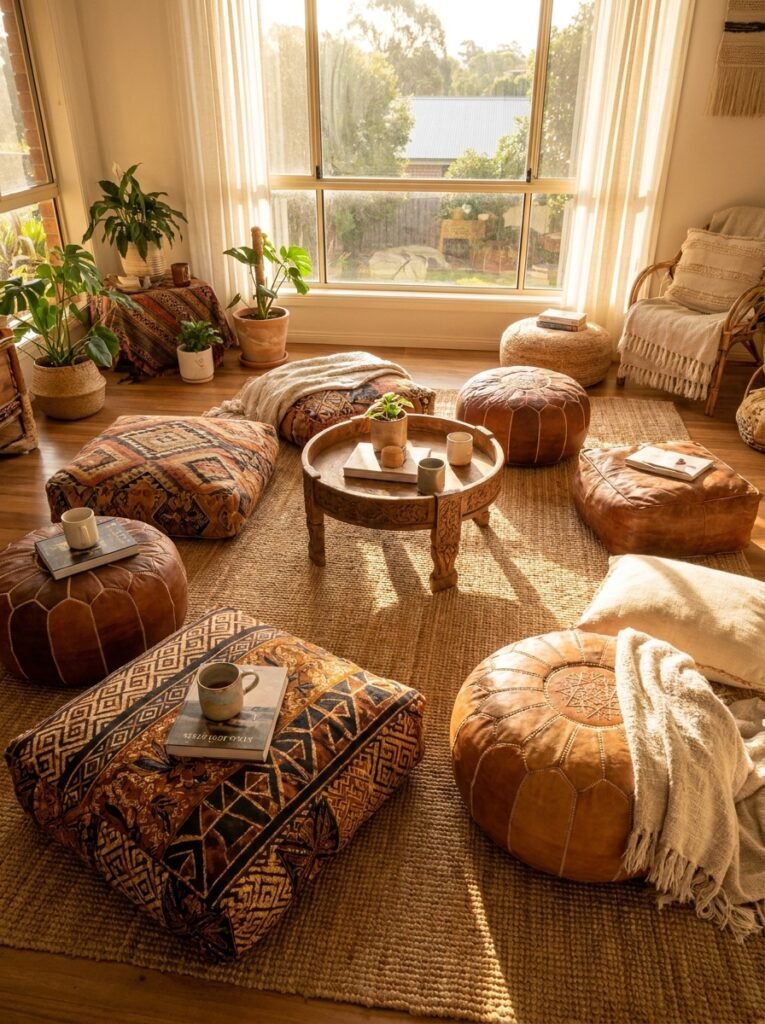
Floor seating captures the communal, welcoming spirit at the heart of this style.
Large floor cushions and leather poufs gathered in a corner with a throw blanket invite people to sit down and stay a while.
They add extra seating for guests and double as decor the rest of the time!
19. Drape and Hang Textiles
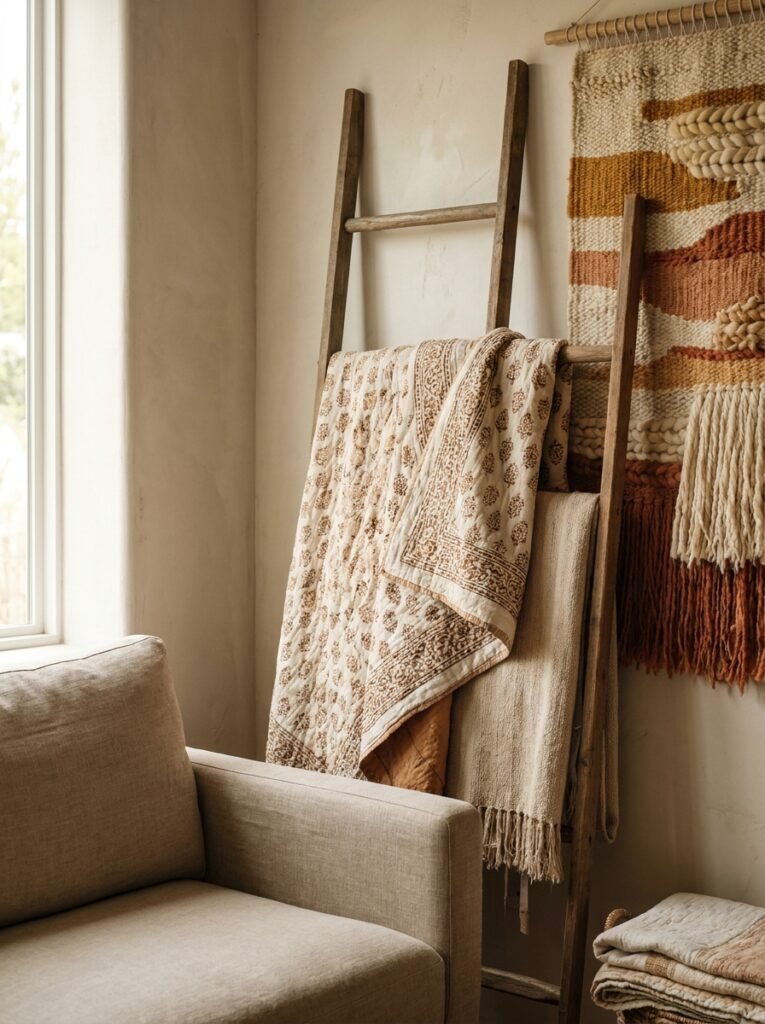
Hang a woven wall textile, drape fabric over a ladder rack, or use a vintage cloth as a table covering.
Letting textiles live on walls and furniture is what gives afrohemian rooms their soft, enveloping feel.
A blanket ladder is the easiest way to show off several textiles at once without cluttering the sofa.
20. Add a Cognac Leather Accent Chair
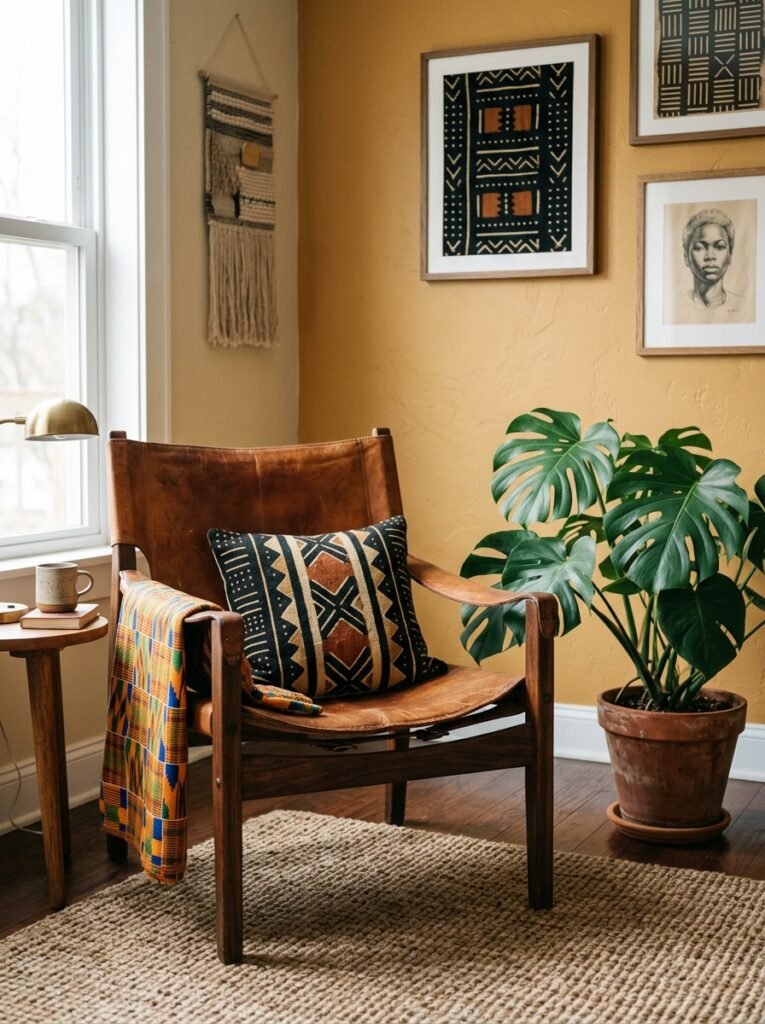
Warm cognac or tan leather fits right into the afrohemian palette and ages beautifully over time.
A leather sling chair or a worn club chair adds a relaxed, lived-in feel.
Toss a mudcloth pillow or a kente throw over it to tie the leather into the rest of the room. Vintage leather with a little wear looks even better here.
21. Layer Pillows in Different Sizes
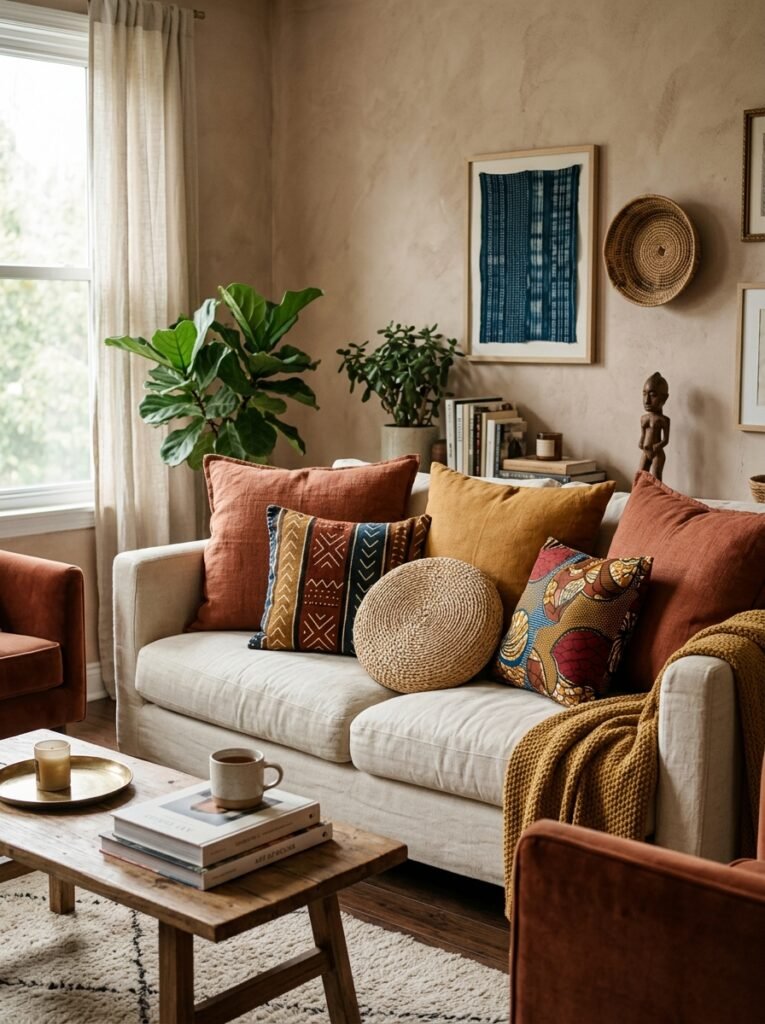
A sofa piled with pillows in mixed sizes and shapes feels abundant and inviting, which is exactly the afrohemian mood. A simple formula makes it look styled:
- Large squares in the back, in solid earth tones
- Medium patterned pillows in mudcloth or wax print in the middle
- A small lumbar or round pillow up front for texture
Mix fabrics too, like linen, velvet, and woven cotton, so the pile feels rich instead of flat.
22. Hang Cowrie Shell Decor
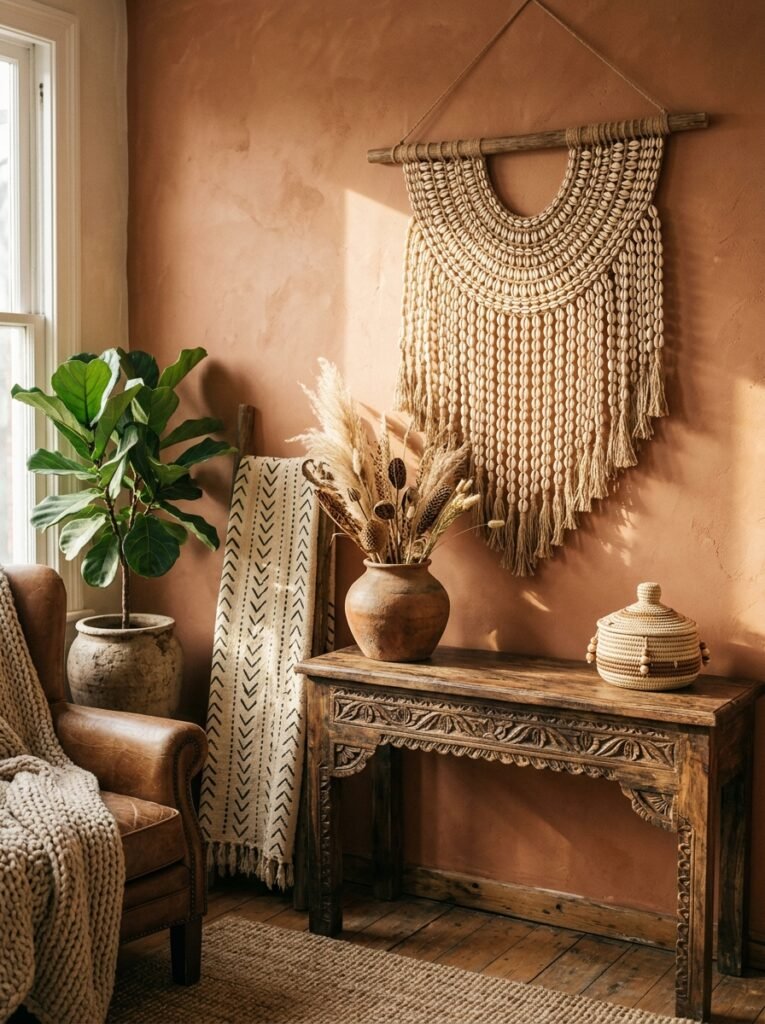
Cowrie shells have a long history across West Africa, where they were once used as currency and are still seen as symbols of prosperity.
Cowrie wall hangings and garlands add a meaningful, textural detail.
Hang a cowrie shell wall piece near the entry or above a console for a subtle touch of heritage. The creamy shells look lovely against terracotta walls.
23. Add Warm Brass and Bronze Accents
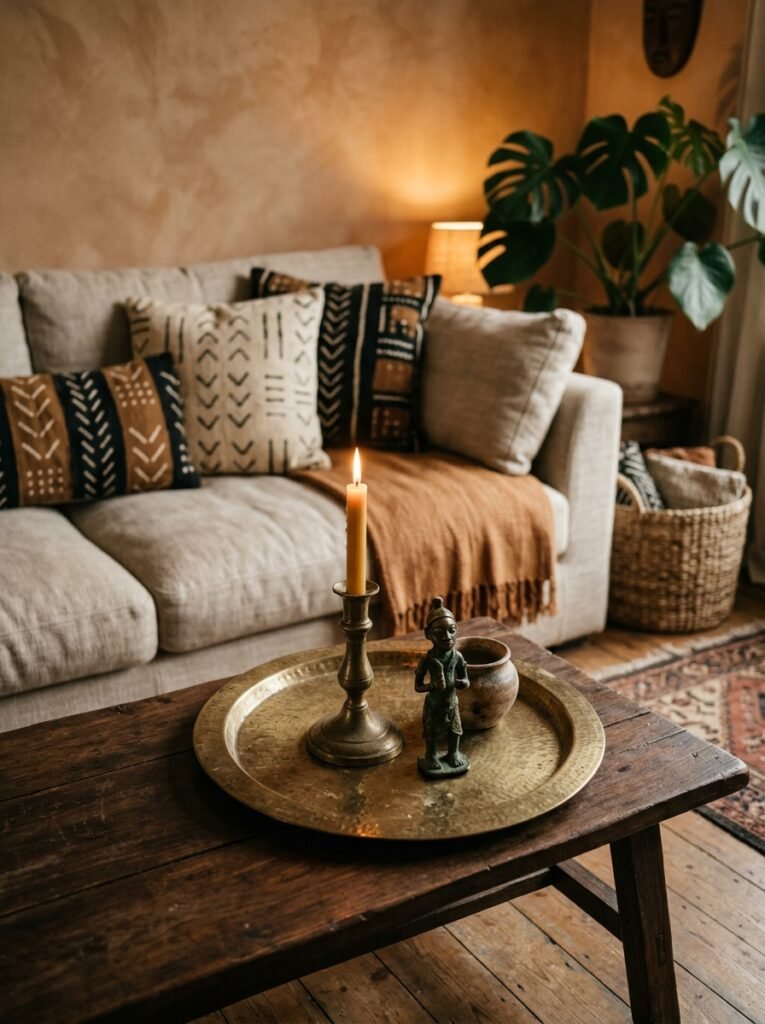
Brass and bronze bring a soft glow that suits the warm afrohemian palette perfectly.
Think a hammered brass tray, bronze figurines, or a brass candle holder on the coffee table.
Aged or hammered finishes look much better here than shiny, polished metal. A few small pieces scattered around the room are all you need.
24. Ground It All With Black Accents
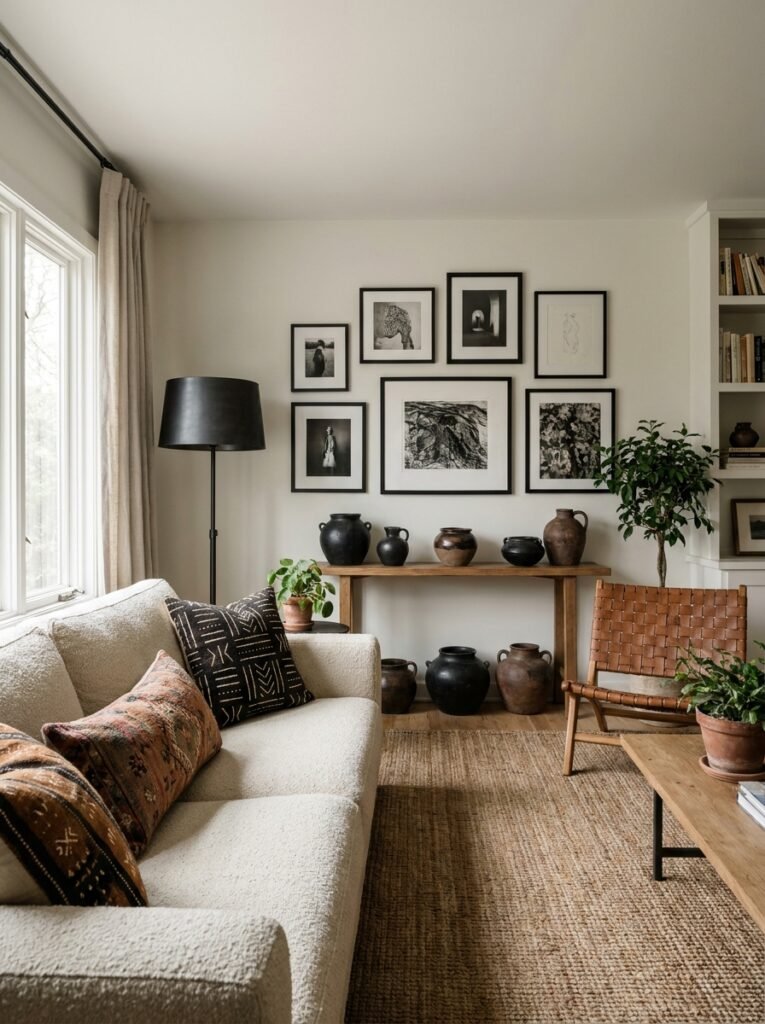
Not everything has to be earth-toned or sun-baked. A few black accents here and there give the room contrast and make all the warm colors look even richer.
Iron floor lamps, black gallery frames, and dark pottery all work beautifully, as long as you keep it to a handful of pieces.
Final Thoughts on Afrohemian Living Room Ideas
Every element in this style points back to the same idea: handmade beats factory-made, and warmth beats perfection.
Earth tones on the walls, craft on the shelves, pattern on the sofa, and plants wherever the light lands!
Start with one anchor, like a mudcloth throw or a Juju hat, and build outward from there. Once you have a base, you’ll naturally know what to add next.
That slow, collected growth is the entire spirit of afrohemian design!
Afrohemian Living Room Ideas FAQ
Afrohemian blends African design traditions with bohemian decorating.
It features rich earth tones, handwoven textiles like mudcloth and kente, carved wood, layered natural textures, and abundant plants. It’s one of the fastest-growing aesthetics in home decor right now, and it’s not too late to try it!
The base lives in warm earth tones like terracotta, ochre, clay, sand, and warm browns.
Vibrant accents in gold, green, indigo, and red arrive through textiles and art, while black accents ground everything. The palette should feel sun-warmed, not bright.
Thrift stores and markets are this style’s natural habitat, since rattan furniture, woven baskets, carved wood, and vintage textiles turn up constantly for little money.
One authentic mudcloth throw or a small basket cluster delivers more impact than a cart full of factory-made “boho” decor. Slow collecting is both cheaper and truer to the style.
Standard boho pulls loosely from everywhere, while afrohemian centers African craft traditions specifically, with mudcloth, kente-inspired patterns, Juju hats, Bolga baskets, and carved wood as defining elements.
Afrohemian also leans earthier and warmer than regular boho, which often sticks to light neutrals. Pattern play is much stronger in afrohemian too.
Look for fair-trade shops, artisan marketplaces, and importers that specialize in Ghanaian baskets,
Malian mudcloth, or Cameroonian Juju hats. Authentic pieces cost more than lookalikes, but they bring real craftsmanship and support the artisans behind the tradition.
Mixing a few authentic anchors with affordable pieces is the practical middle path.