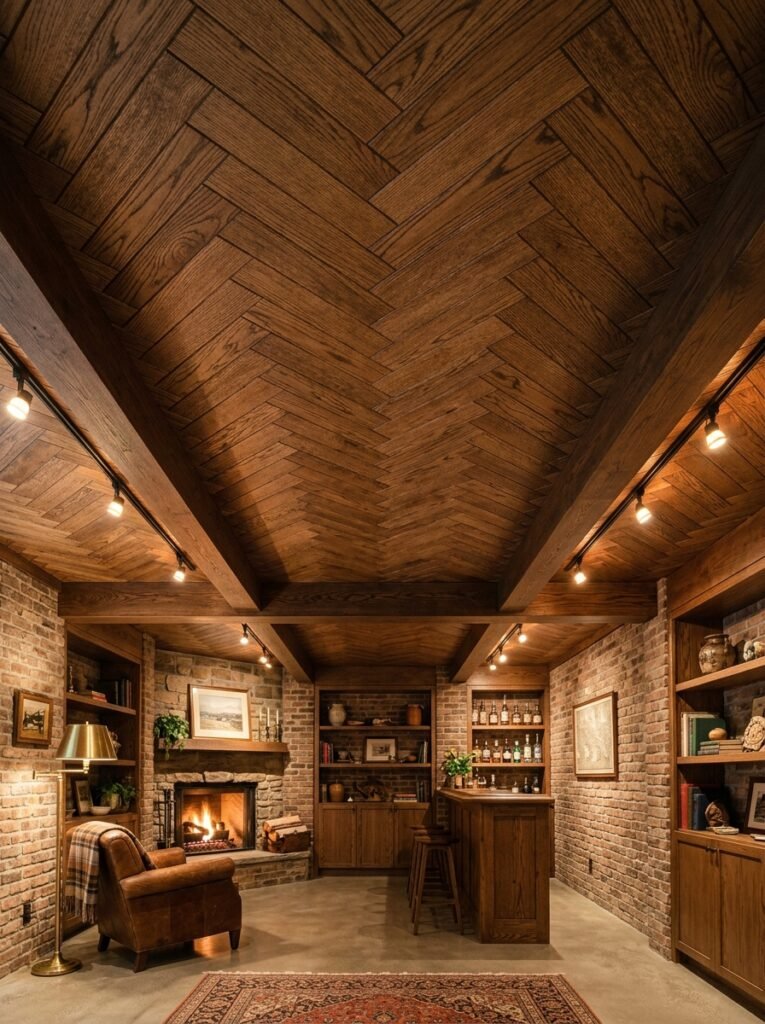
Basements make better gyms than most rooms in the house. They run cooler, which helps during cardio, and nobody minds if the space looks purely functional!
The catch is that they come with low ceilings, damp air, and a concrete slab that transmits every dropped weight straight upstairs.Sorting those three things first is what makes a nice basement gym
These basement home gym ideas cover the preparation, the flooring, and the equipment choices that work under limited clearance!
Plan on revisiting? Pin this for later!

Preparing the Space
1. Measure the Ceiling at Its Lowest Point
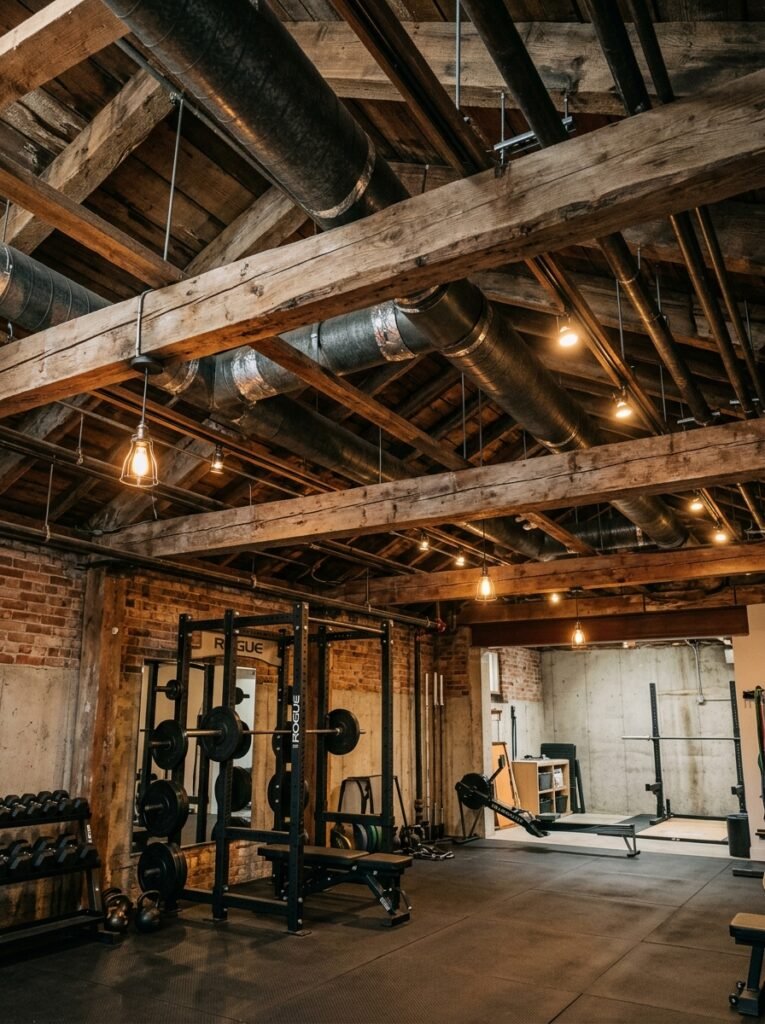
Basement ceilings are rarely one height, since ducts, beams, and pipes hang lower than the rest.
Measure under the lowest obstruction, since that number decides what you can install. Then add your equipment’s step-up height, since treadmills add six to nine inches and ellipticals can add sixteen.
Also read: 15 Basement Ceiling Ideas From Exposed to Fully Finished
2. Get Humidity Under Control First
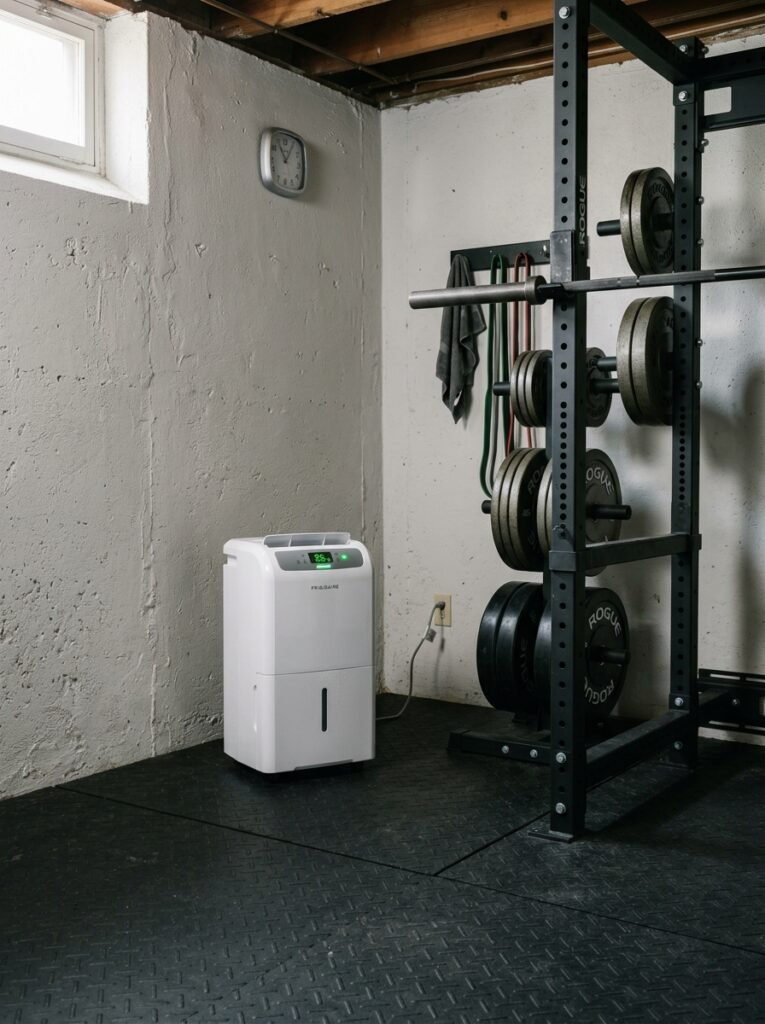
Basement humidity regularly climbs past sixty percent in summer, which rusts equipment and encourages mold.
The EPA recommends keeping indoor humidity between thirty and fifty percent, so a properly sized dehumidifier belongs in the budget before any flooring goes down.
3. Plan Airflow Before Equipment
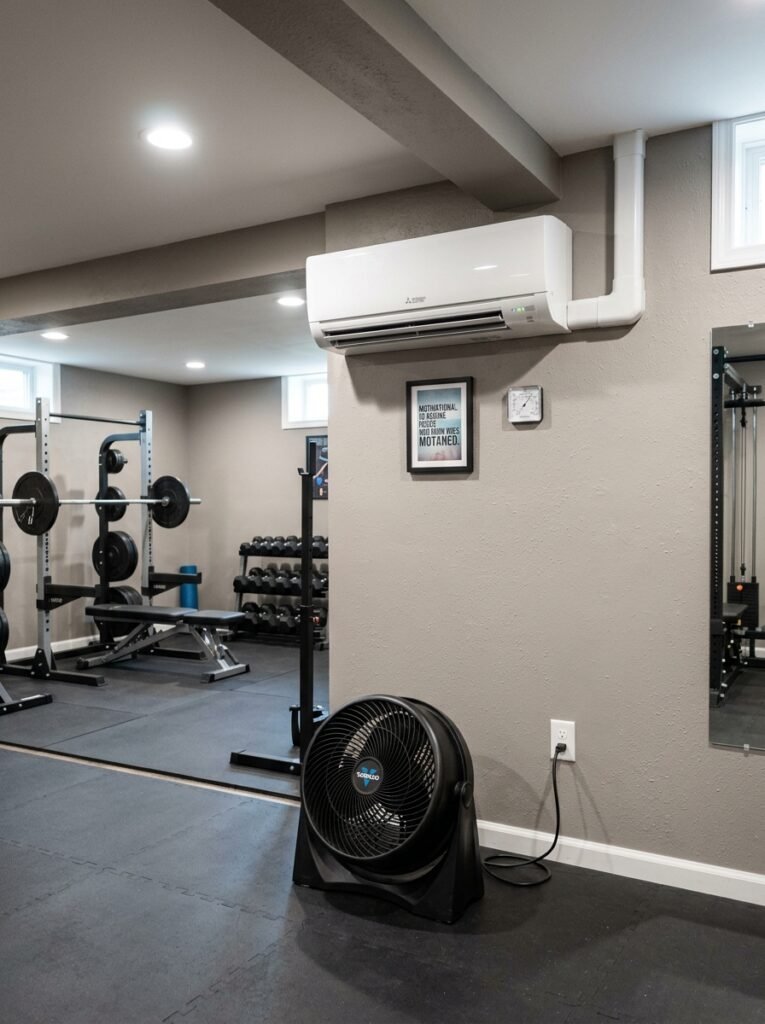
A basement that feels fine when empty gets stuffy fast once someone is training in it.
Extending existing ductwork works if it reaches, though a ductless mini split gives independent temperature control and handles humidity at the same time.
Where neither is realistic, an exhaust fan plus a floor fan keeps air moving.
Flooring and Sound Control
4. Layer Rubber Over the Slab
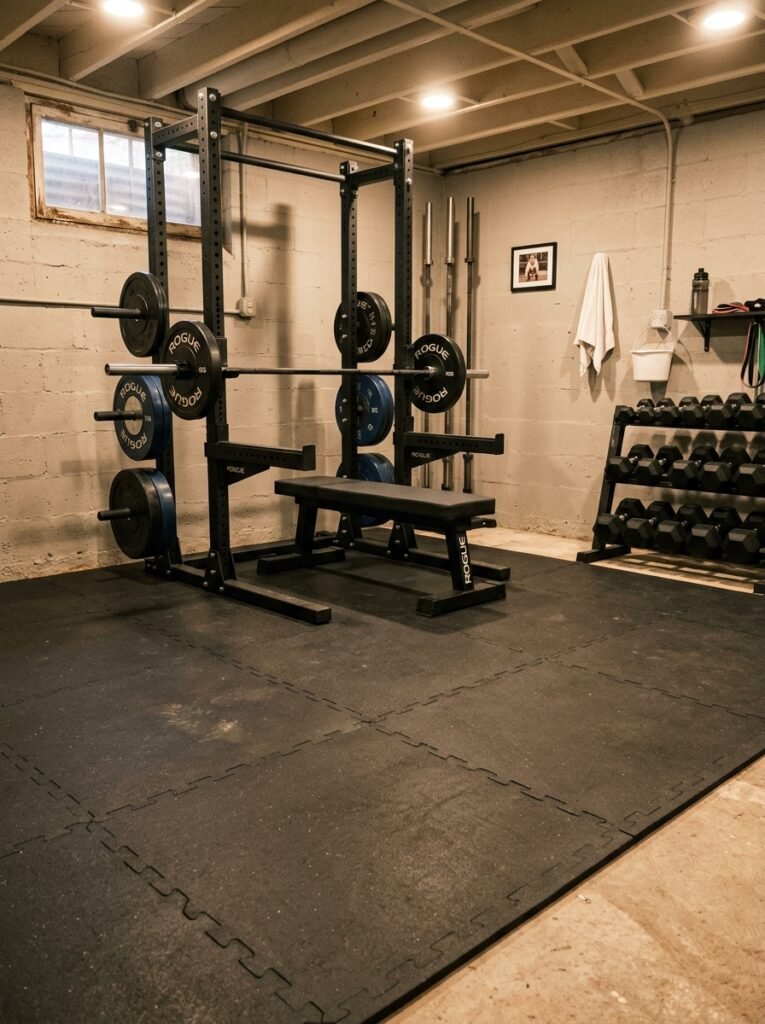
Bare concrete is hard on joints and unforgiving when weights get dropped. Rubber mats between eight and twelve millimetres cover most training, while three quarter inch horse stall mats handle heavy lifting.
Interlocking tiles suit rooms you might reconfigure later, since they lift and relay without tools.
5. Add Sound Dampening Underneath
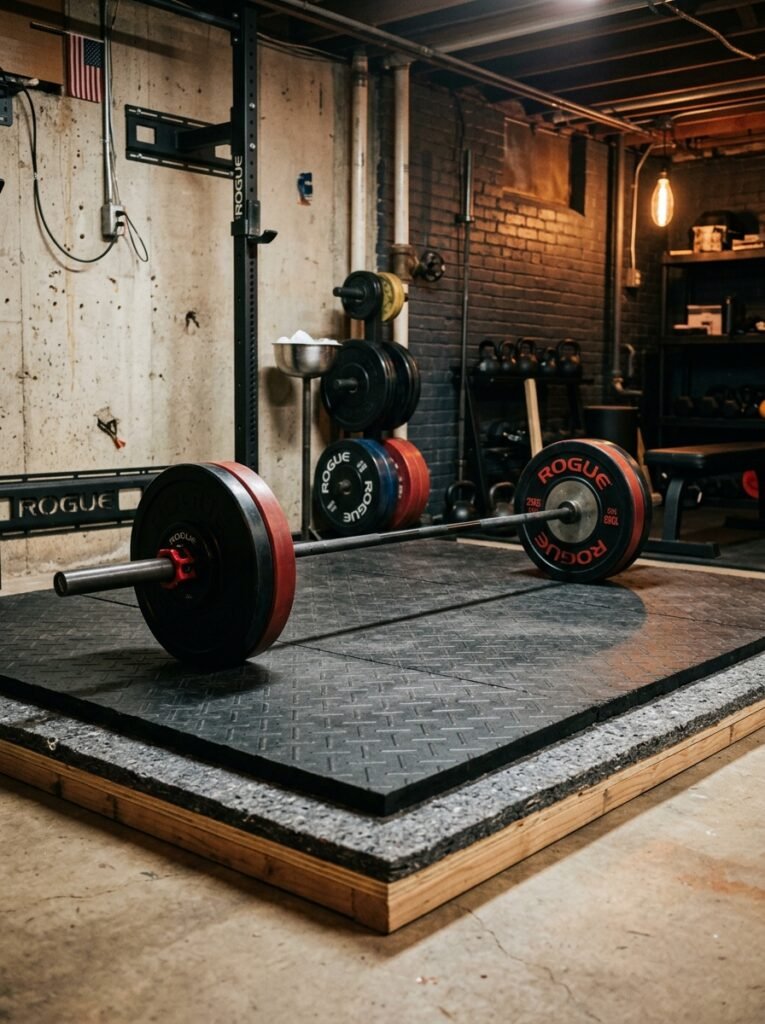
Dropped weights travel through a slab and straight into the rooms above, which becomes a problem fast if anyone trains early or late. An acoustic underlayment beneath your rubber absorbs most of the impact.
Stacking mats under a dedicated lifting platform handles the rest, and it protects the concrete while it does.
Equipment and Layout
6. Check It Fits Down the Stairs
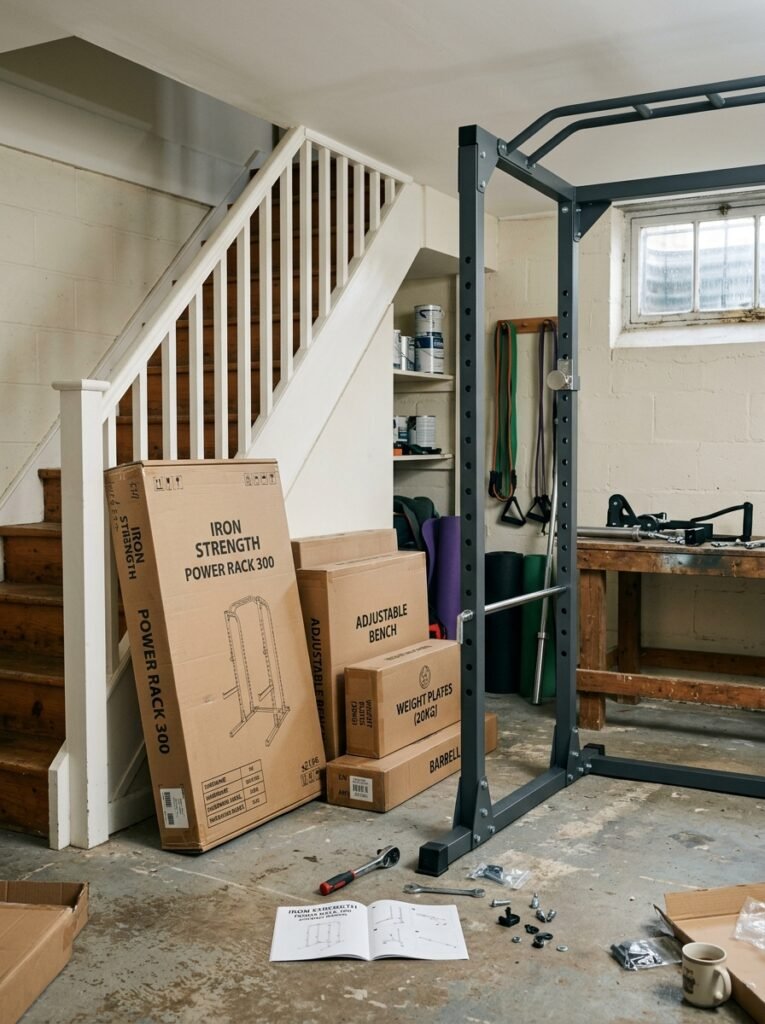
Basement stairwells are narrow, often turn a corner, and have a low header at the top. Plenty of racks and machines simply won’t make it down in one piece, so check the assembled dimensions against your stairs before ordering.
Equipment that ships flat-packed and builds in the room solves this entirely.
7. Build a Storage Wall for Plates and Dumbbells
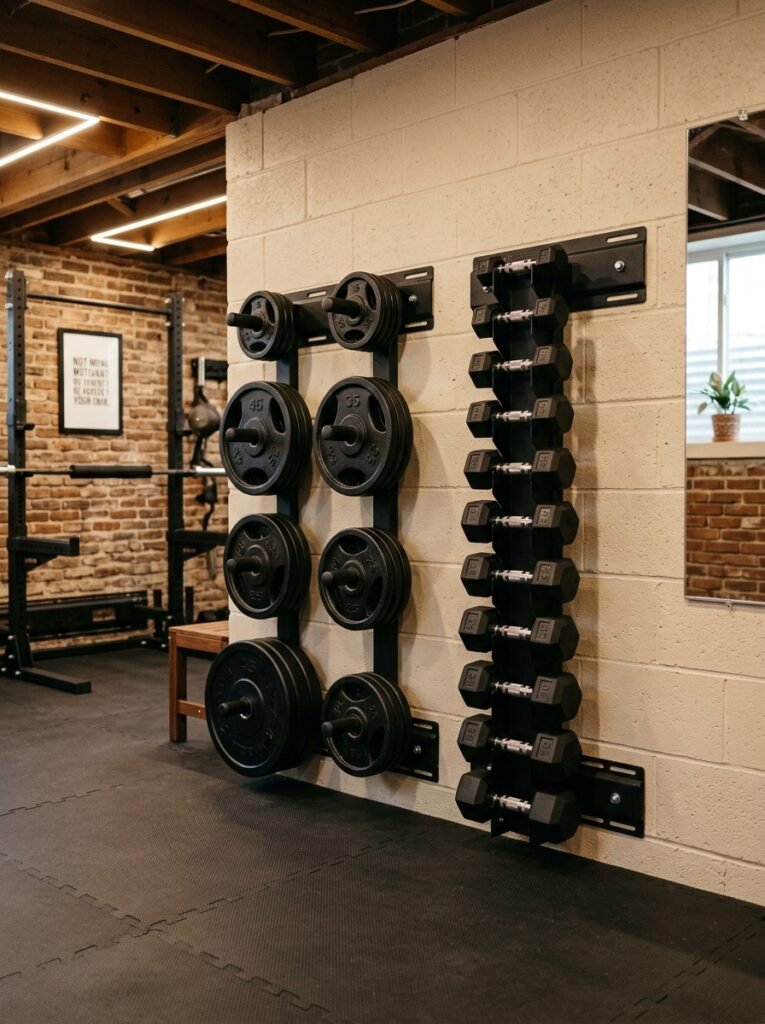
Basement gyms get cluttered faster than any other room, since equipment has nowhere else to go once you’re finished with it.
A wall-mounted plate tree and a vertical dumbbell rack clear the floor and stop you working around your own gear. Mounting into studs matters here, because loaded plate storage gets heavy quickly.
8. Work the Support Poles Into the Layout
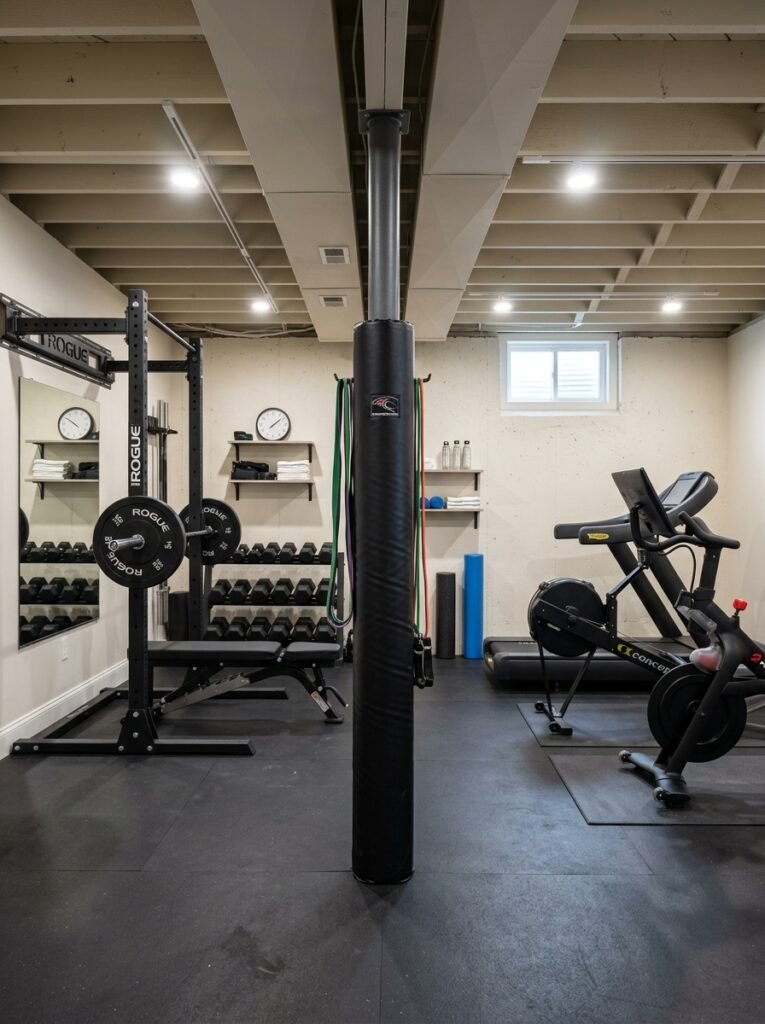
Nearly every basement has a steel pole somewhere inconvenient, and moving it isn’t an option.
Treat it as a fixed divider and plan zones around it, so lifting sits on one side and cardio on the other. Boxing it in wood or padding it also stops it becoming a hazard mid-set.
Styling the Space
9. Paint the Walls a Single Dark Color
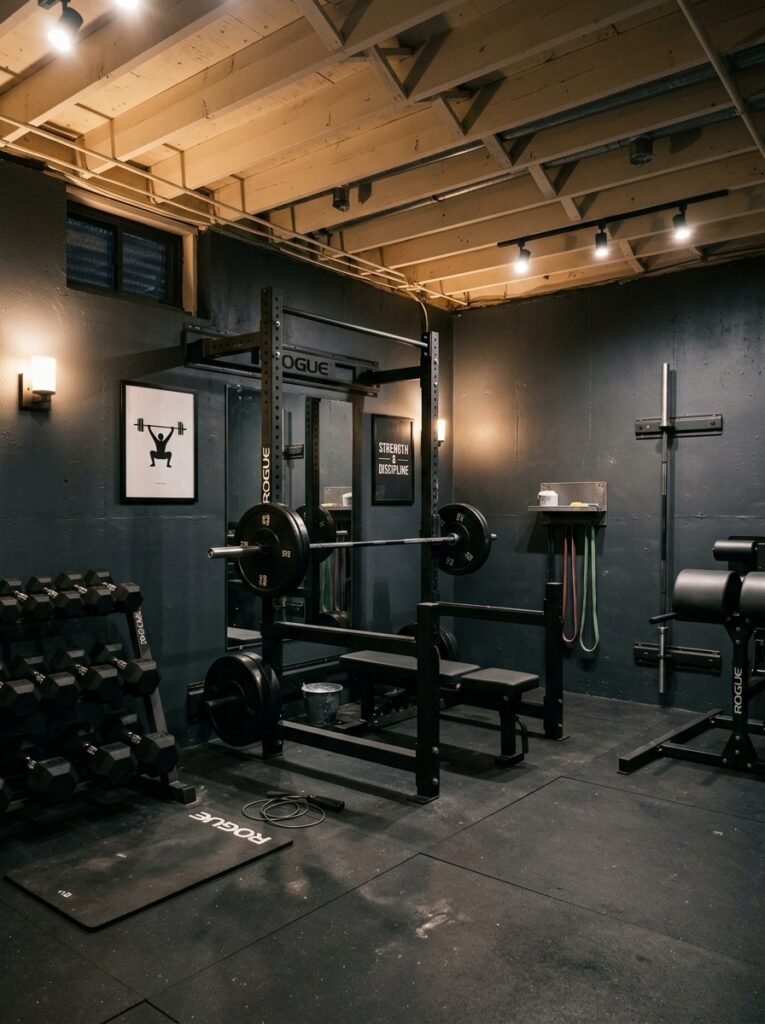
Basement gyms usually inherit bare block or builder white, and neither does anything for the room.
A deep charcoal or forest green across all four walls makes equipment read as intentional against it, since black steel and rubber stop looking like clutter dropped in a storage room.
Quick tip: keep the ceiling and floor lighter so the space doesn’t close in!
10. Use One Accent Wall for Texture
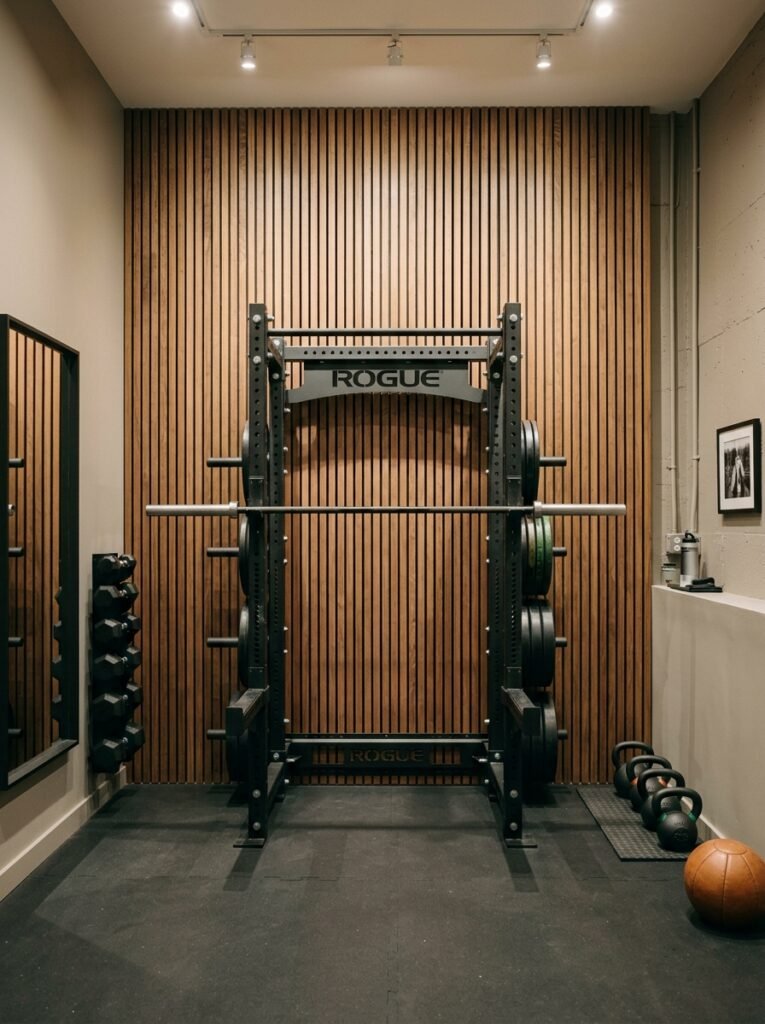
A single wall in wood slats, black brick veneer, or vertical shiplap gives the room something to look at during rest sets.
It also breaks up the flat expanse most basements have, which matters when the rest of the space is necessarily plain. Put it behind the rack, since that’s where the eye lands.
11. Hang Motivational Quotes
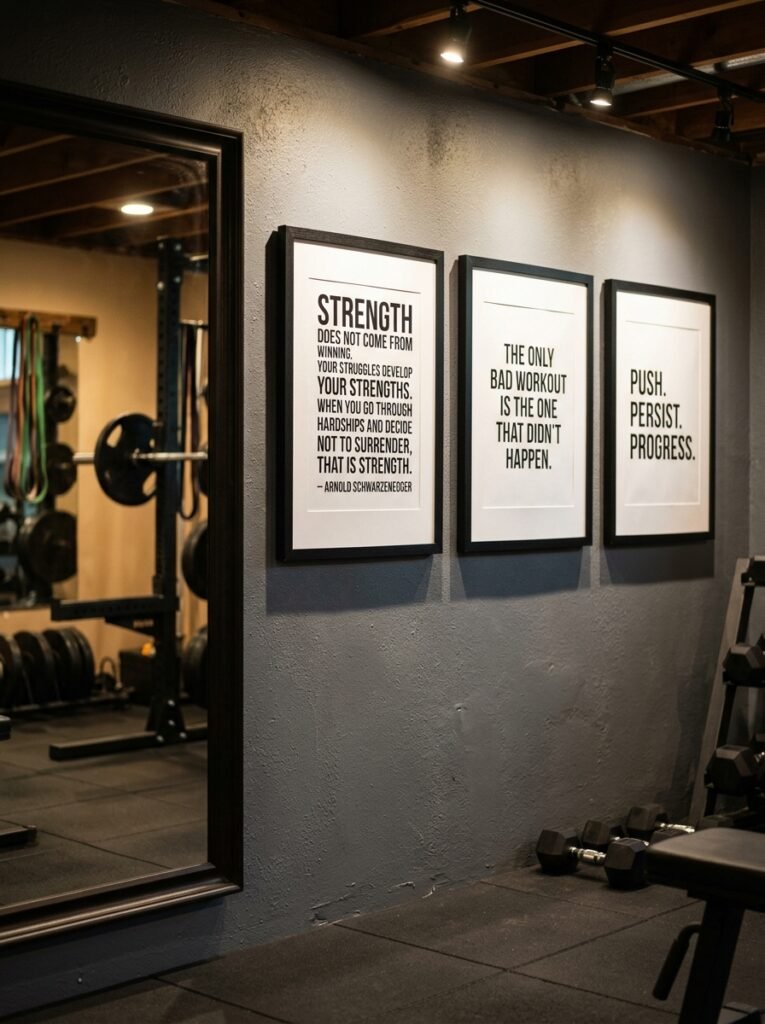
The right words on the wall do genuine work on the days you’d rather skip the session. Keep it to one line and one placement, ideally facing you mid-set so it lands when it matters.
A framed print or metal sign holds up better than vinyl lettering, which peels and starts looking cheap within a year.
12. Match the Equipment Finishes
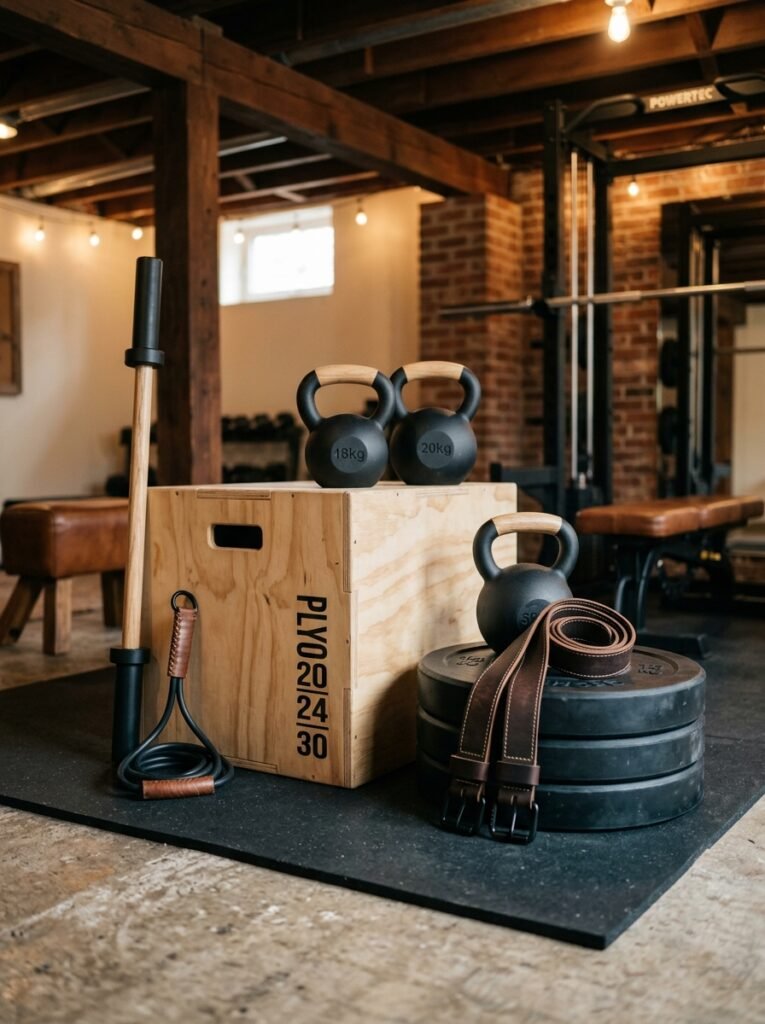
Mismatched chrome, red, and black gear makes a small room feel chaotic.
Choosing predominantly black or predominantly natural wood accessories pulls everything together, and it costs nothing extra when you’re buying anyway.
Wooden plyo boxes, leather straps, and matte black plates all read considerably more designed than the standard bright rubber.
13. Add One Non-Gym Piece
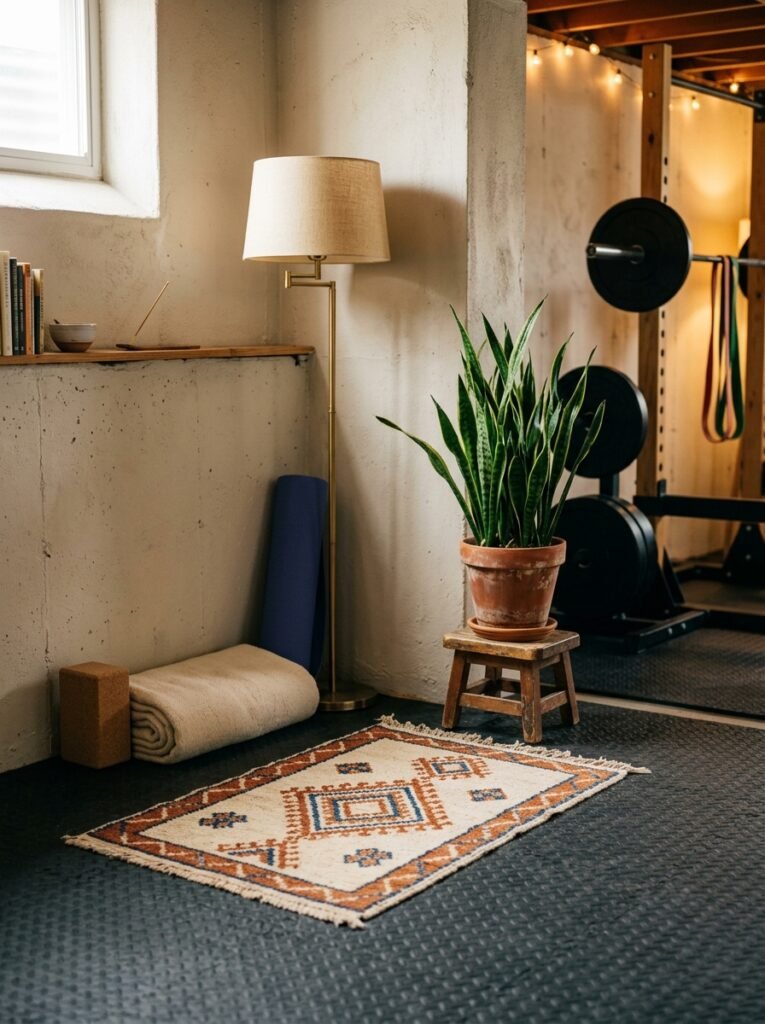
A basement gym that contains nothing but equipment feels like a garage.
A small rug in the stretching corner, a plant under the lights, or a decent speaker on a shelf softens the room enough that you don’t mind spending an hour in it. Just keep it out of the lifting zone.
14. Light It Properly
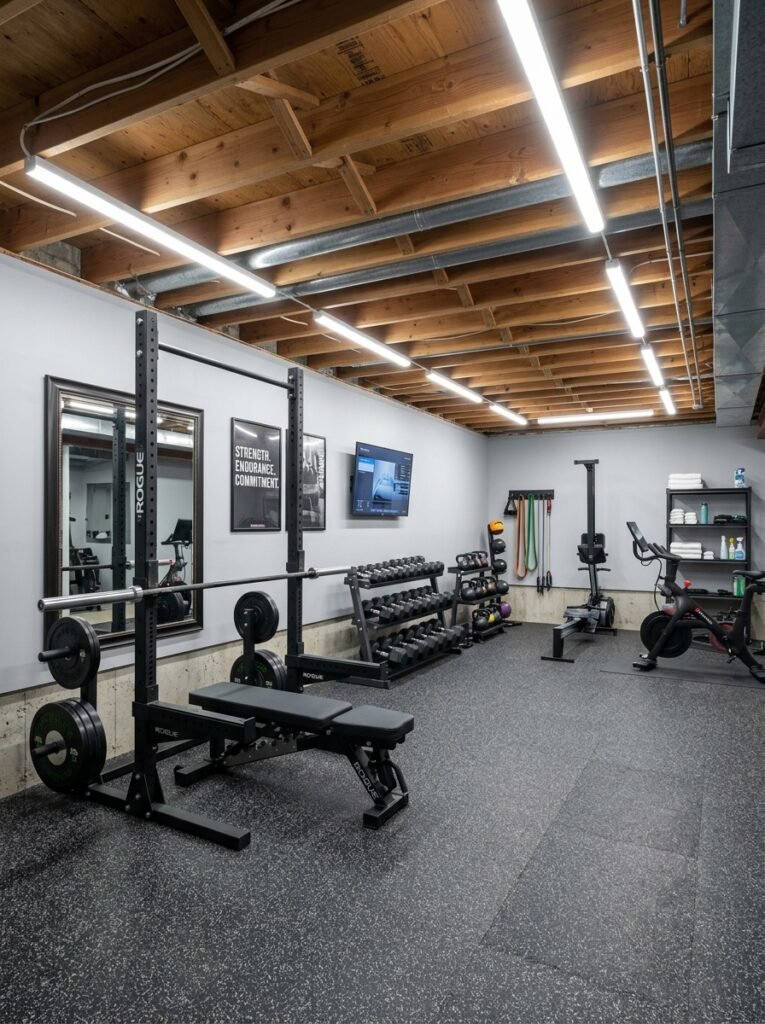
Most basements have one dim fixture and a lot of shadow, which makes form hard to check and the room unpleasant to be in.
Aim for roughly fifty lumens per square foot using LED shop lights or track lighting. Spreading fixtures across the ceiling matters more than raw brightness, because shadows come from poor placement.
15. Mirror One Wall
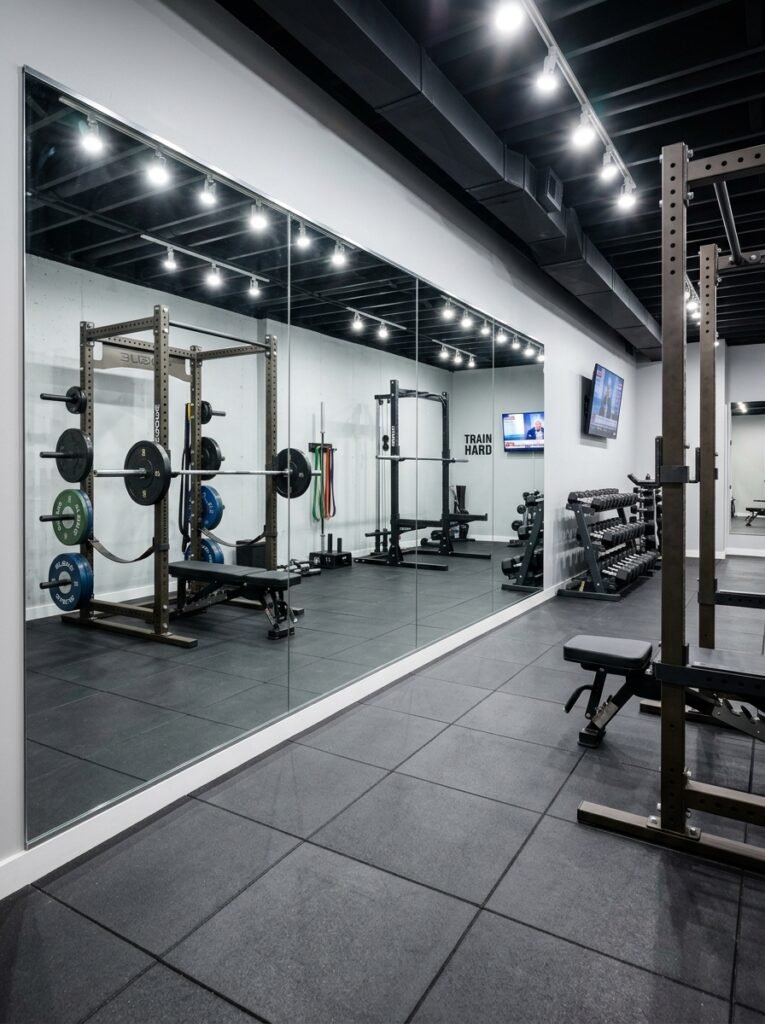
A mirrored wall does two jobs: checking form during lifts, and making a low, enclosed room feel considerably larger.
Gym mirrors come in large panels designed to be glued or clipped to the wall, and one wall is plenty. Position it to reflect whatever light you have rather than having a blank corner.
Final Thoughts on Basement Home Gym Ideas
Four things decide whether this works: clearance, humidity, airflow, and flooring. Get those right and the equipment choices become straightforward. Get them wrong and you’ll have a rusting rack in a stuffy room nobody wants to enter!
So start with a tape measure and a hygrometer first. Once you know your real ceiling height and where your humidity sits, everything else follows from it, and you’ll spend the budget on gear that actually fits rather than gear you have to return.
Basement Home Gym Ideas FAQ
Seven feet is the practical minimum, while seven and a half to eight feet suits most strength and cardio work comfortably. Overhead pressing, pull-ups, and jump work want nine feet or more.
Measure at the lowest point, under ducts and beams, since that’s what actually limits you.
Rubber is the standard, with eight to twelve millimetre mats covering general training and three quarter inch horse stall mats handling heavy lifting. Interlocking tiles work well if you might rearrange later.
Whatever you choose should tolerate moisture, since anything trapping damp against the slab invites mold.
Run a dehumidifier sized for the square footage and target thirty to fifty percent relative humidity year round.
Add ventilation through an exhaust fan or mini split, since airflow does as much as dehumidification.
Check with a hygrometer first, because basement humidity often exceeds sixty percent in summer.
Properly distributed equipment won’t harm a slab, since concrete handles the weight easily.
The risk comes from dropped weights chipping the surface, which rubber mats and a dedicated lifting platform prevent.
Mats also spread the load under heavy racks and stop equipment feet from marking the floor.
Usually not, since adding equipment doesn’t change the structure. Permits typically come into play with new electrical circuits, plumbing, or major ventilation work like installing a mini split.
Rules vary by area, so check with your local building department before any wiring or HVAC changes.