Thanksgiving is the one meal of the year where the table itself gets noticed, which is why so many people panic-buy orange plastic pumpkins the week before.
The result rarely matches the food or the occasion.
A good Thanksgiving table is calmer than that, built from linen, candlelight, and a few seasonal things that look like they came straight from the kitchen.
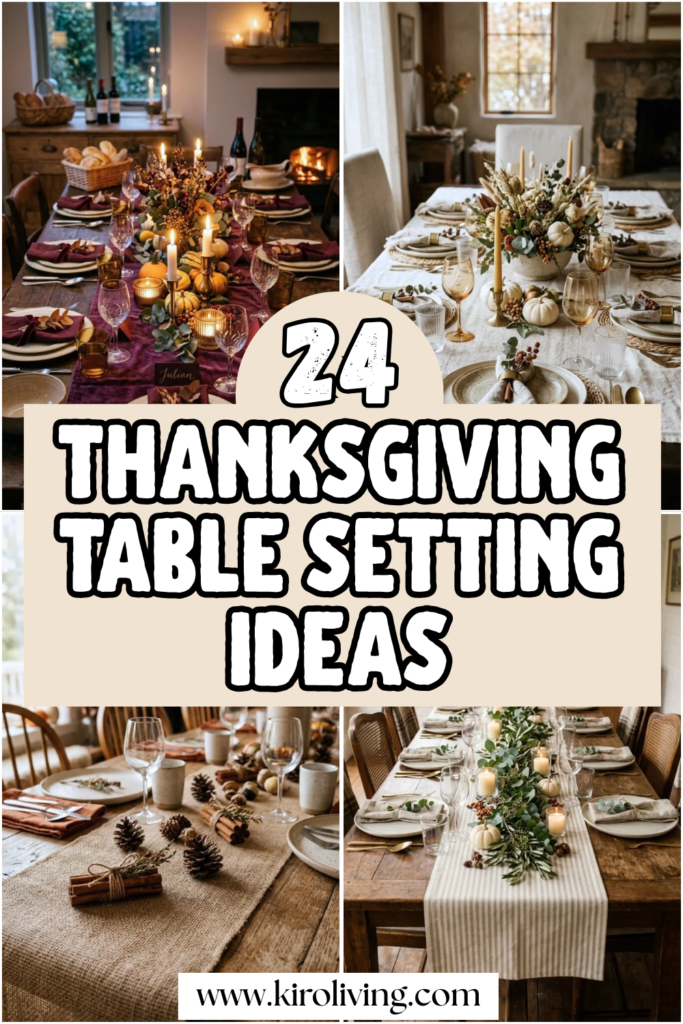
These Thanksgiving table setting ideas cover it all, from moody velvet runners to a bare wood table dressed with nothing but candles and greenery.
Plan on revisiting? Pin this for later!
How a Thanksgiving Table Comes Together
Most holiday tables go wrong in the same way. Everything gets added at once, the centerpiece grows too tall, and by the time dinner is served there’s no room left for the food.
It’s far easier to build the table in order, one layer at a time:
- The base: a cloth, a runner, or bare wood. It sets the mood before anything else goes down.
- The center: one continuous line down the middle, kept low enough to talk across.
- The setting: plates, napkins, and one small detail repeated at every seat.
That last layer matters more than people think. A sprig of rosemary or a handwritten name card repeated twelve times does more than any centerpiece, because repetition is what makes a table look planned.
The ideas below follow the same order, so you can pick one from each section and have a finished table.
Linens and Base Layers
1. Dress the Table in Deep Plum Velvet
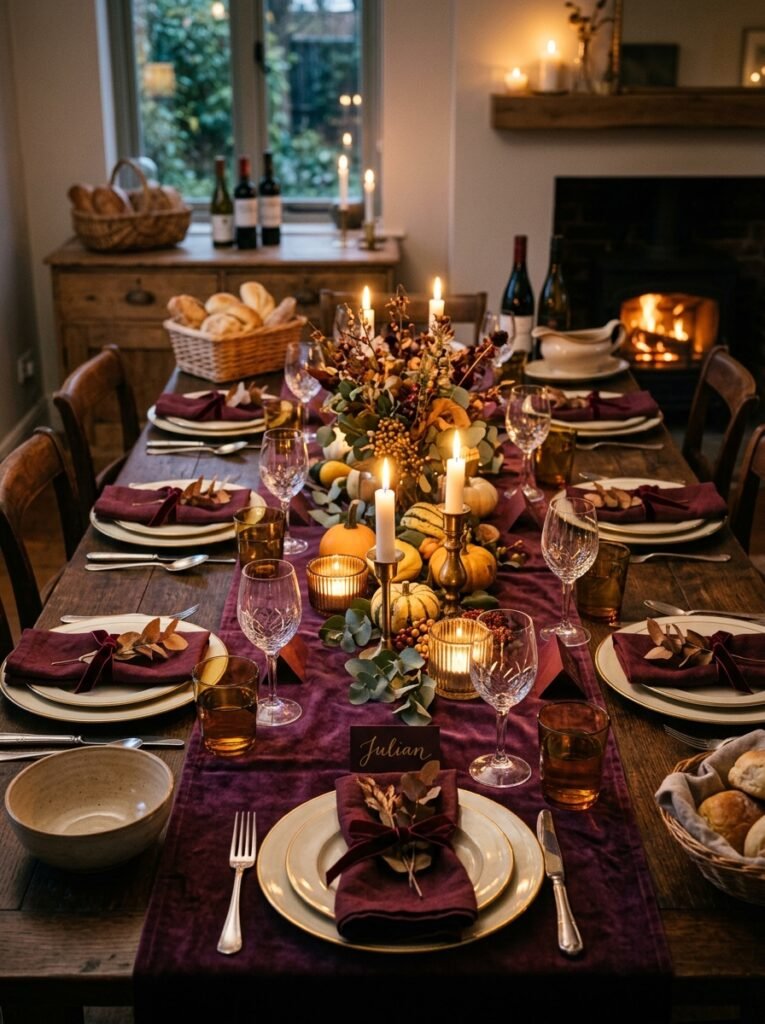
Velvet in deep plum or charcoal changes the mood of a table immediately, pulling it from casual lunch to candlelit dinner.
Its soft pile also makes candlelight look richer as it moves across the surface.
A fabric-store remnant costs a fraction of a finished runner. Fray the edges on purpose and you won’t need to hem it at all.
2. Keep It Quiet With Cream and Oatmeal
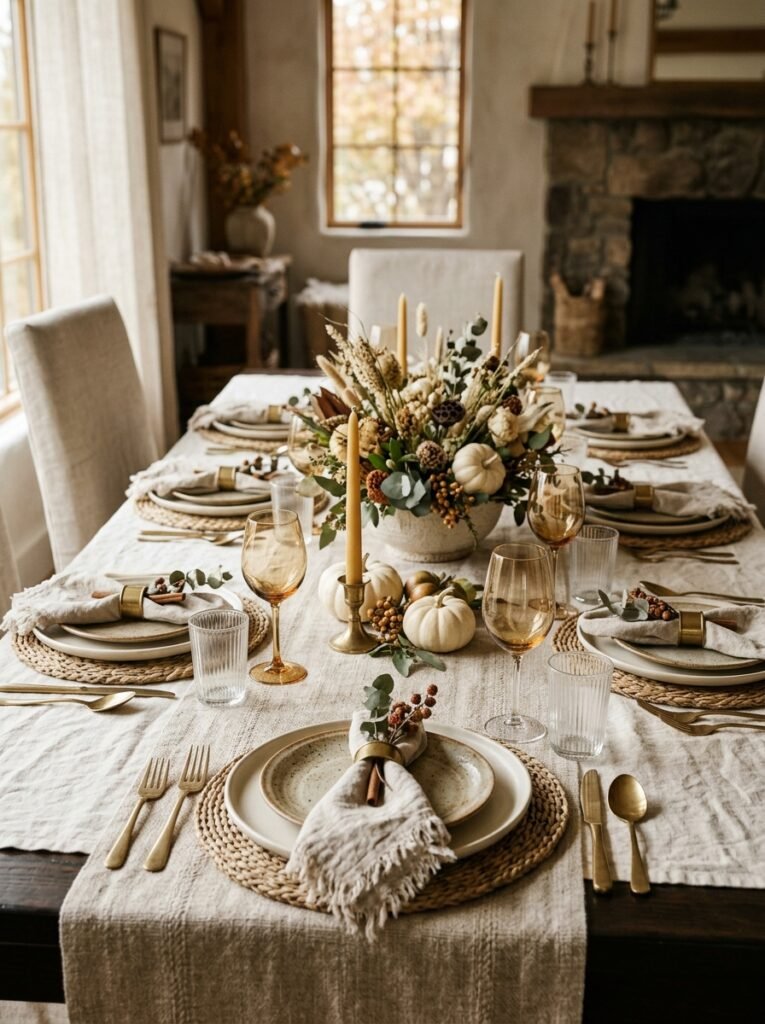
A textured cloth in cream and oatmeal gives you a calm base that flatters the food and lets everything else stand out.
Because the table stays in one tonal family, the interest comes from weave and shadow instead of color.
Slubby linen or waffle cotton shows that texture best. Avoid anything smooth and shiny, which flattens the look.
3. Run Burlap With Cinnamon Bundles
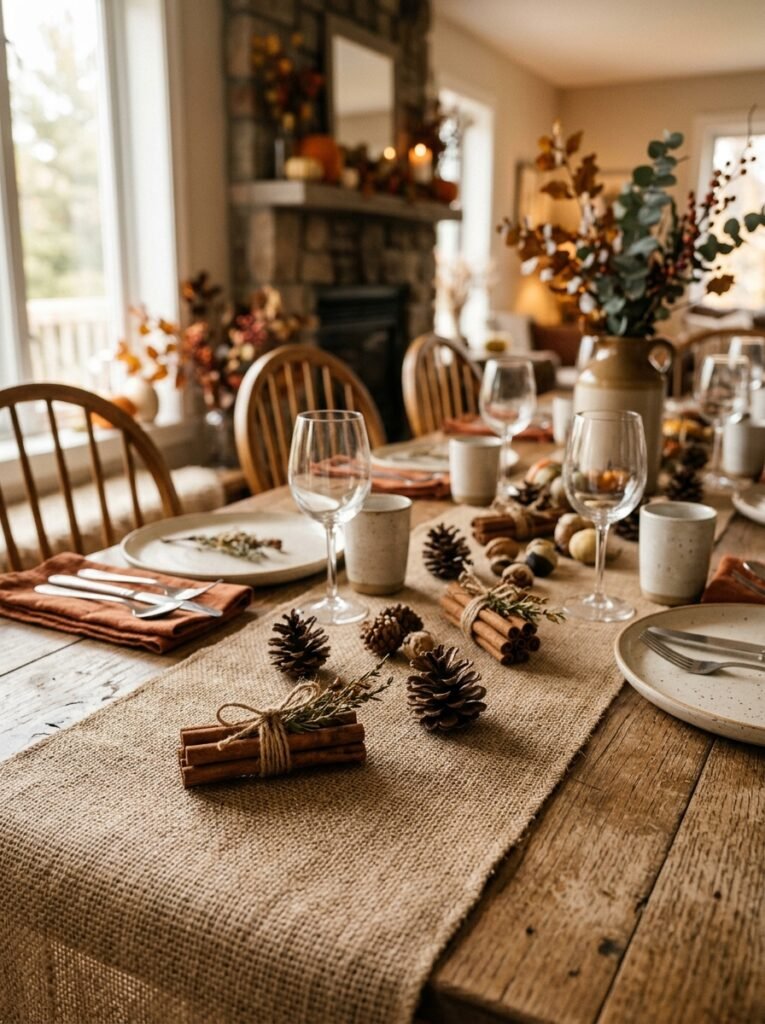
A burlap runner laid straight onto bare wood gives you farmhouse texture without hiding the grain.
Scatter pinecones along it, then tie small bundles of cinnamon sticks with jute for detail.
The cinnamon adds scent as well as style, warming up as the candles burn beside it. It’s also one of the cheapest runners on this list.
4. Try a Neutral Ticking Stripe
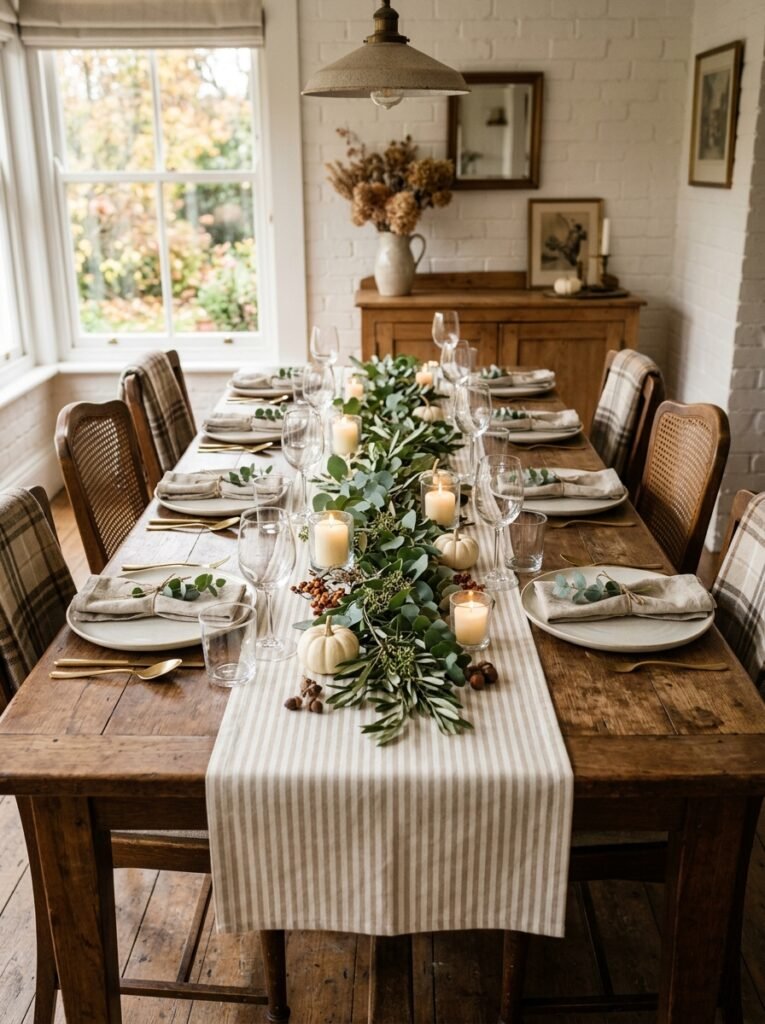
Ticking stripe brings pattern to a table without competing with the food, since the lines are narrow enough to read as texture from a seat.
Paired with a simple eucalyptus garland, it looks styled with just two elements.
Keep everything else plain so the stripe stays the only pattern. White plates and clear glass suit it best.
5. Borrow a Plaid Wool Throw
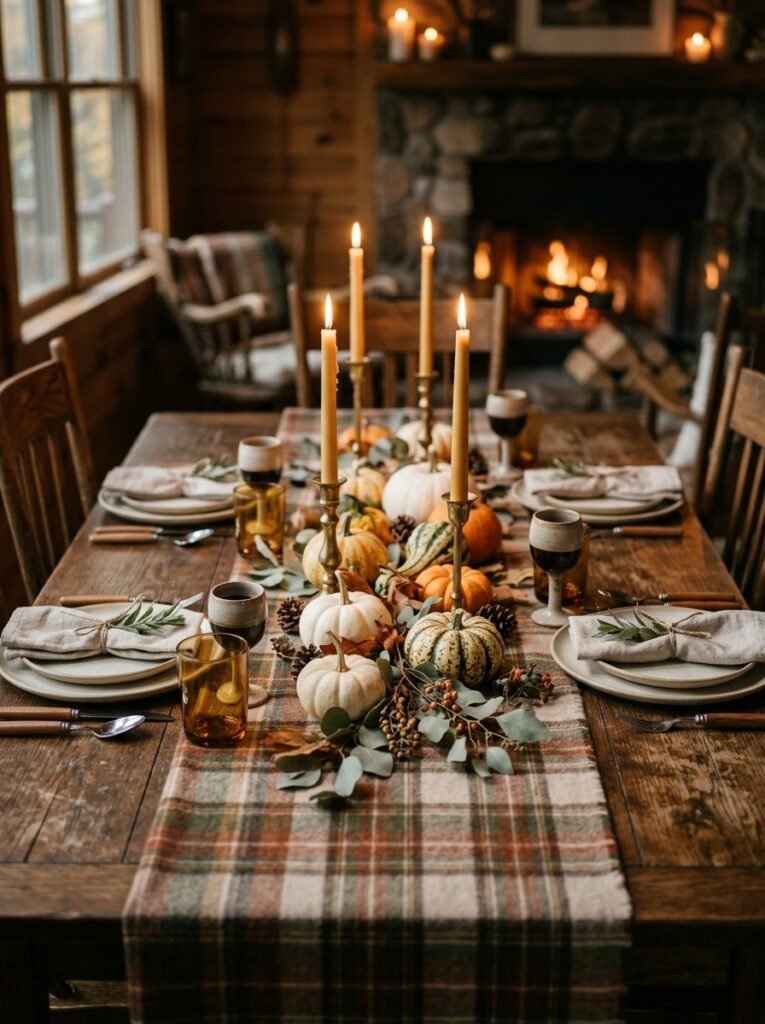
A folded plaid wool throw laid down the table makes an instant cozy runner, and it’s probably already in your living room.
Muted tartans in rust, olive, and cream feel like a cabin dinner instead of a formal one.
Choose a flat weave over a chunky knit so plates and glasses sit level. Brass candlesticks look especially good against it.
6. Roll Out Kraft Paper as a Runner
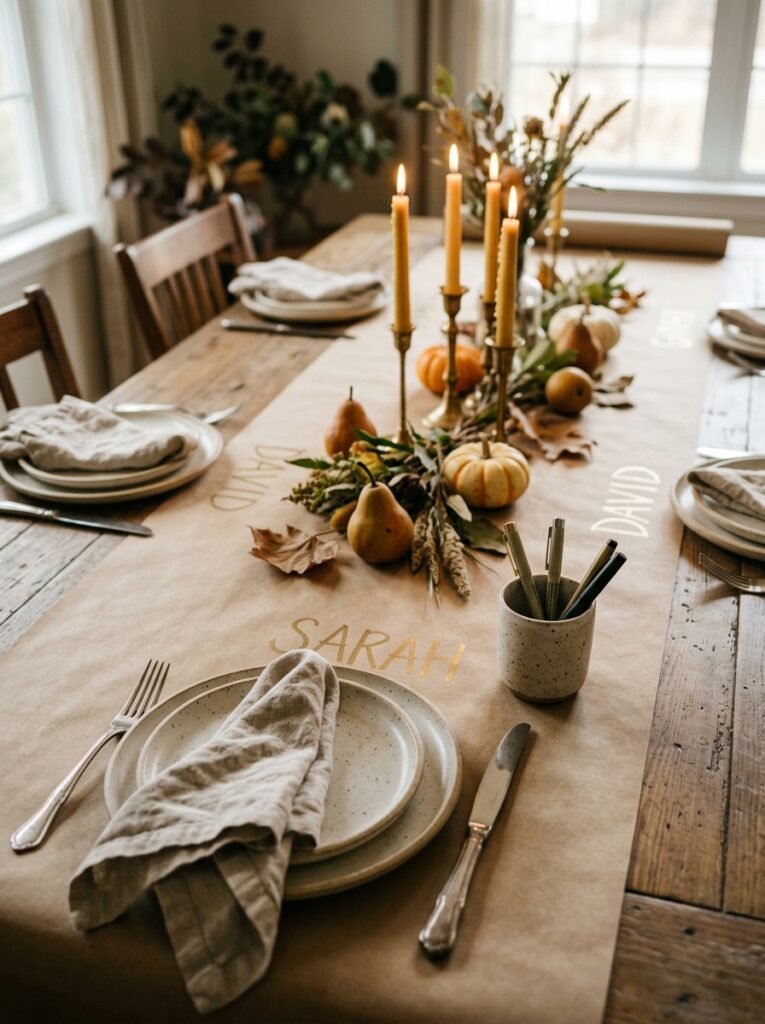
A roll of brown kraft paper down the center costs almost nothing and turns the table into something guests can play with. It also protects the wood from gravy drips. Set out a few extras:
- A cup of pens or gold markers
- Each guest’s name written at their seat
- A spot for everyone to write what they’re thankful for
It keeps the table lively long after the food is gone.
Centerpiece Ideas
7. Nestle White Pumpkins Into Magnolia
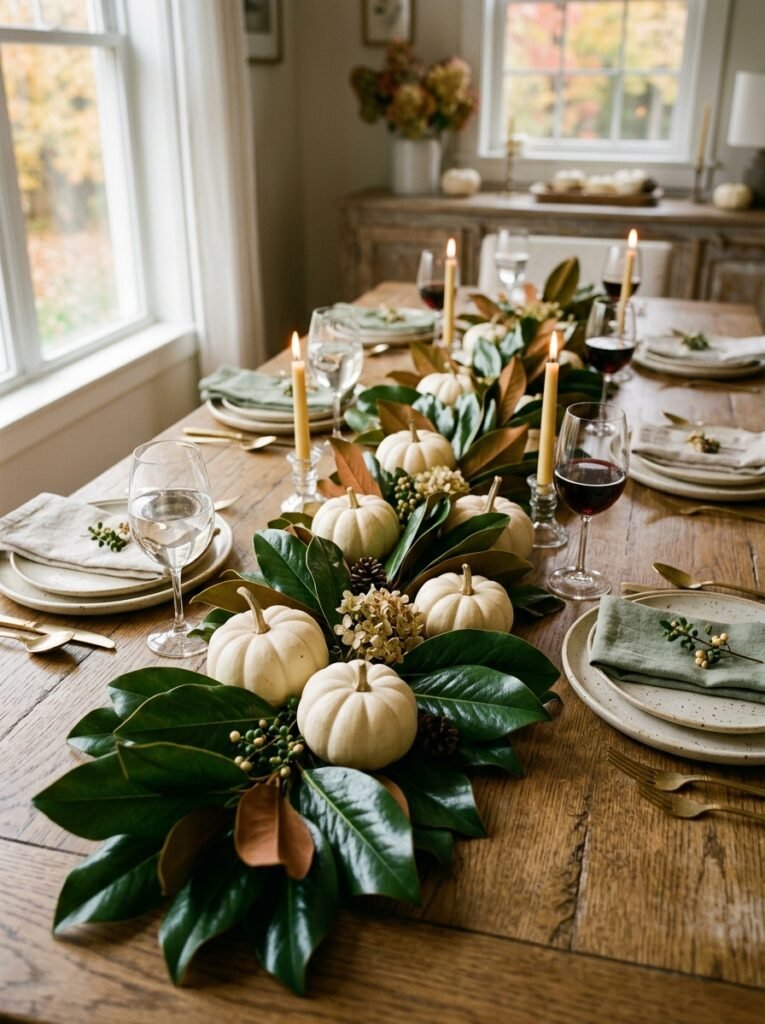
Magnolia leaves running down the center with small white pumpkins tucked in give you a centerpiece built from two ingredients. The glossy dark green against pale pumpkin skin does all the contrast work on its own.
Magnolia holds its shape all evening, so you can set it up the day before. Let a few leaves show their copper undersides.
Also read: 24 Beautiful Fall Centerpiece Ideas to Upgrade Your Table
8. Pair Olive Branches With Pomegranates
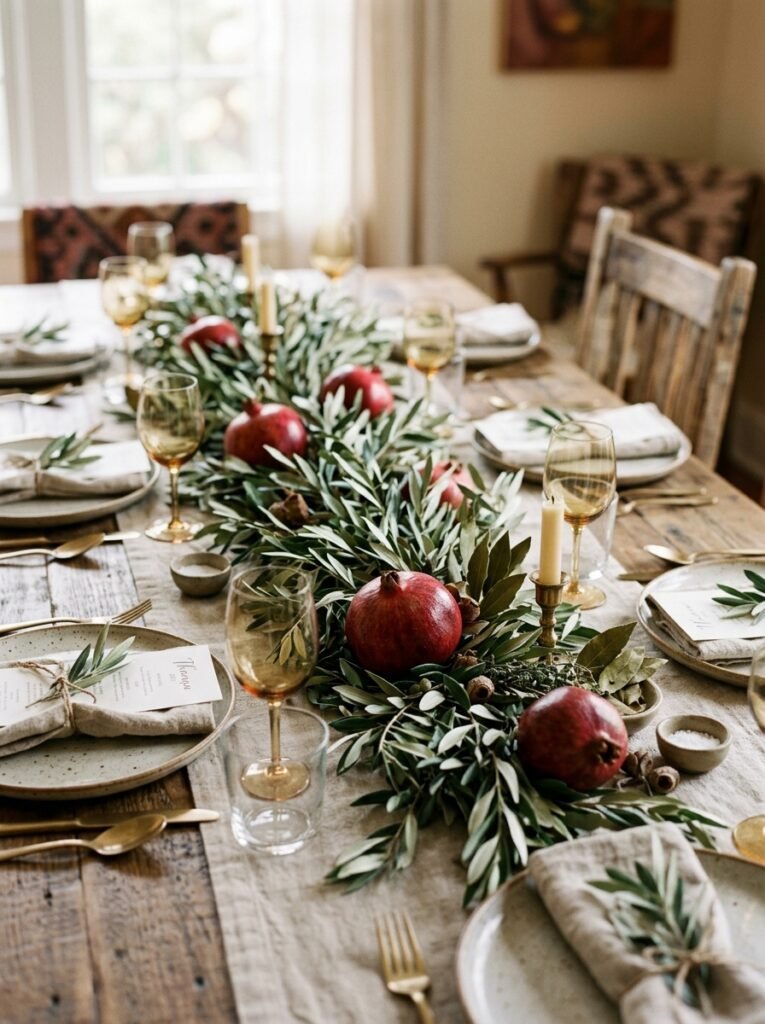
An olive branch garland laid loosely down the table with whole pomegranates tucked in reads Mediterranean instead of harvest. It’s a welcome change from the usual gourds and orange leaves.
The deep red fruit against silvery leaves is one of the best color pairings for fall. Cut one pomegranate open to show off the seeds.
9. Lay Dried Wheat With Amber Glass
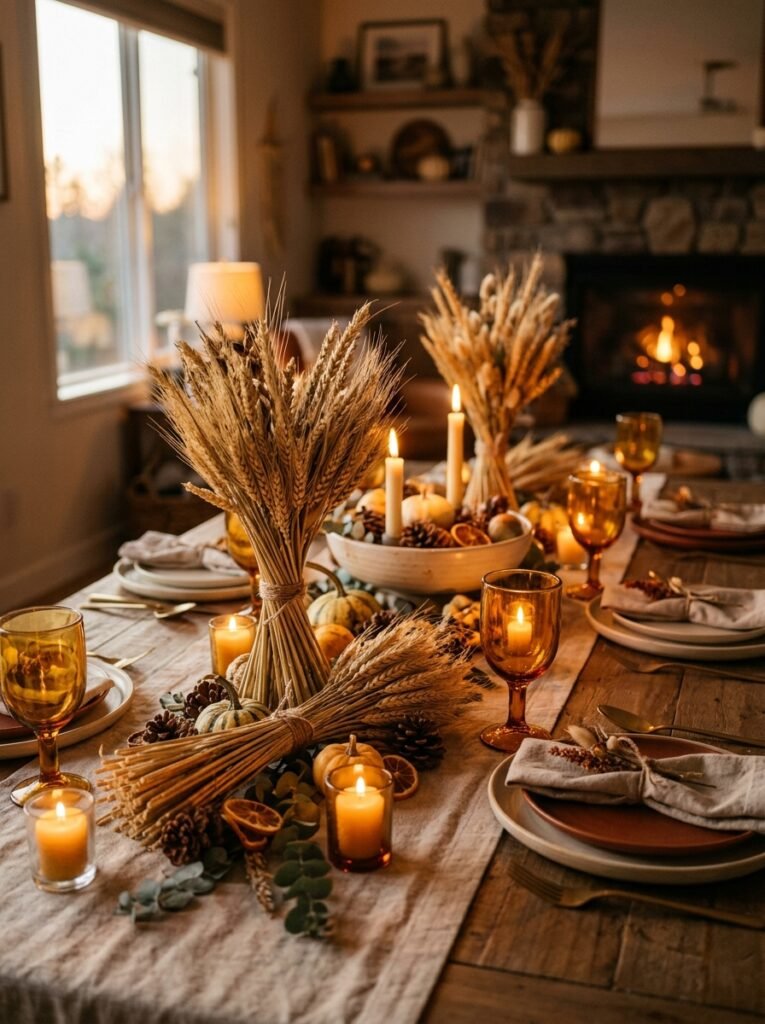
Bundles of dried wheat laid flat down the center, paired with amber glass goblets, give the table a golden warmth that lasts right through the meal. The glass also catches candlelight and throws amber across the cloth.
Wheat costs almost nothing and stores flat for next year. Tie each bundle with a strip of linen instead of wire.
10. Fill Glass Compotes With Figs and Walnuts
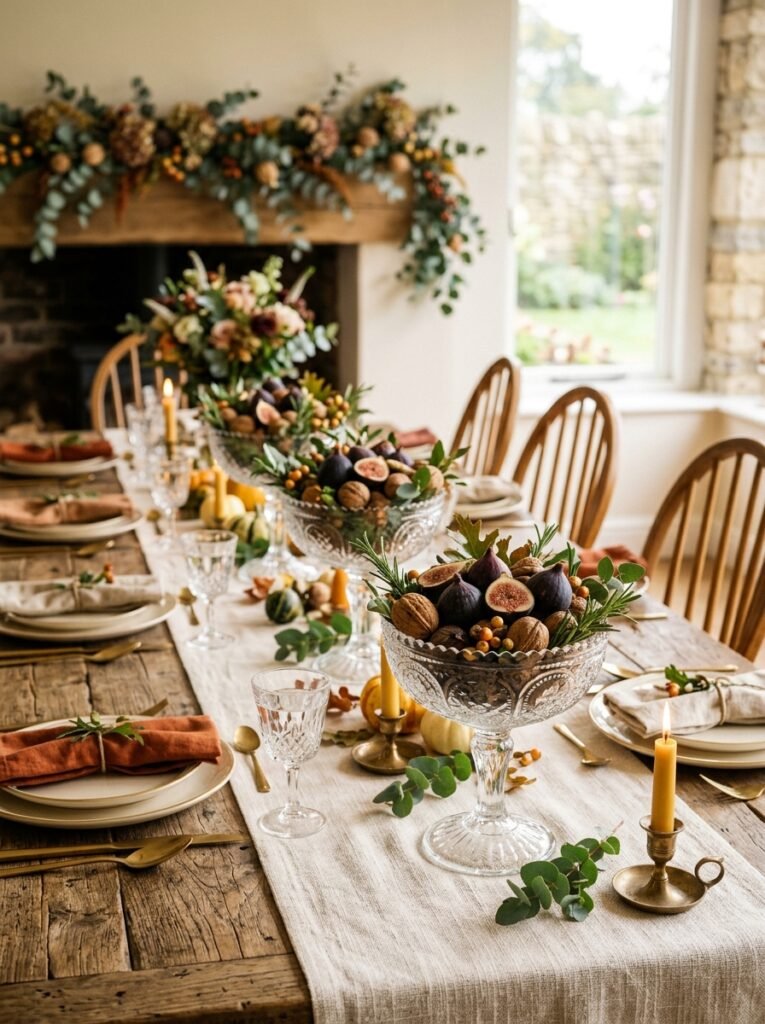
Pressed glass compotes filled with figs, walnuts, and a few sprigs of greenery add height without blocking anyone’s view, since the stems are narrow.
Guests can even snack from them between courses!
Three compotes spaced down the table beat one large arrangement. Mismatched vintage pieces look more charming than a matching set.
11. Arrange a Still Life of Squash and Grapes
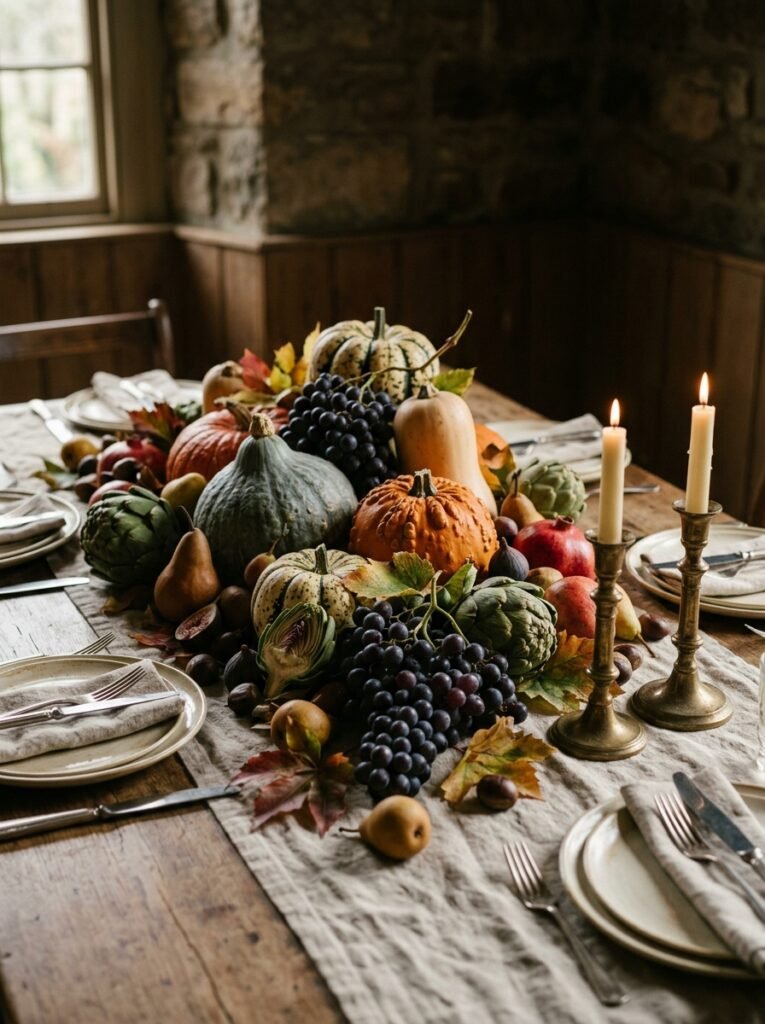
Think of the centerpiece like an old painting: a loose pile of produce that looks freshly gathered. It’s generous, seasonal, and entirely edible afterward. Mix a few of these:
- Heirloom squash in odd shapes
- Draping bunches of dark grapes
- Artichokes, pears, or persimmons
Vary the heights and let a few pieces spill onto the runner.
12. Line Up Bud Vases Down the Table
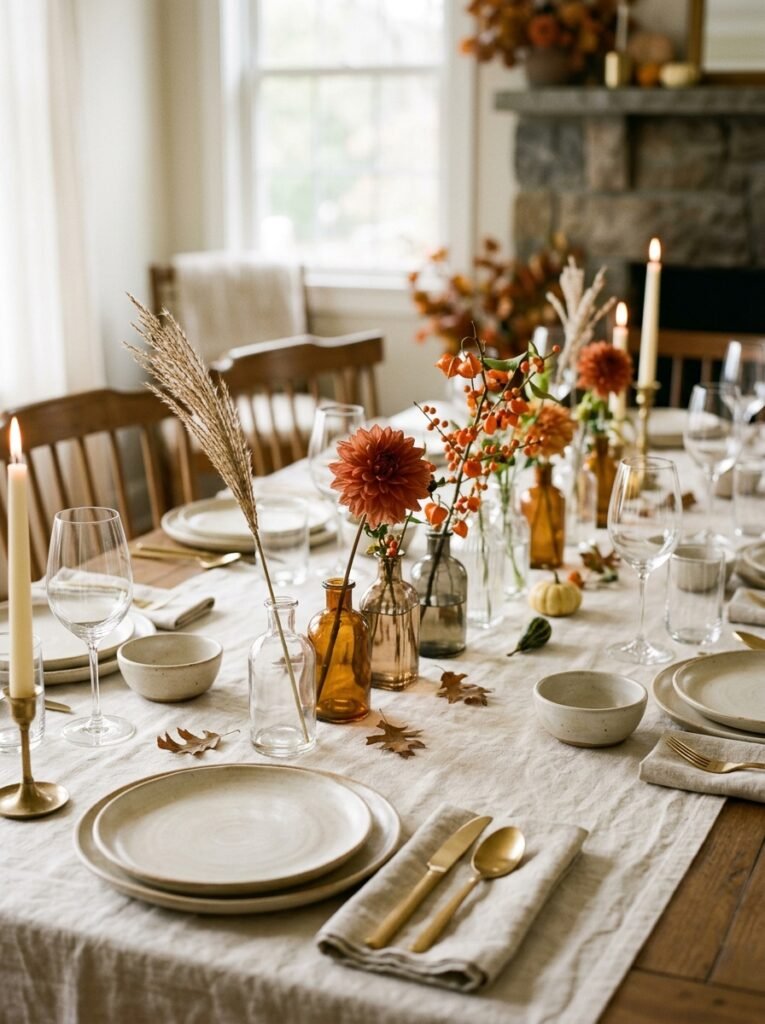
A row of small mismatched bud vases, each holding a single dried grass, dahlia, or stem of bittersweet, runs down the table like a quiet line of color. It stays low, so conversation flows easily across it.
Use odd numbers and space them unevenly for a relaxed look. Clear, amber, and smoke glass all mix well together.
Dinnerware and Flatware
13. Set Terracotta Stoneware With Frayed Linen
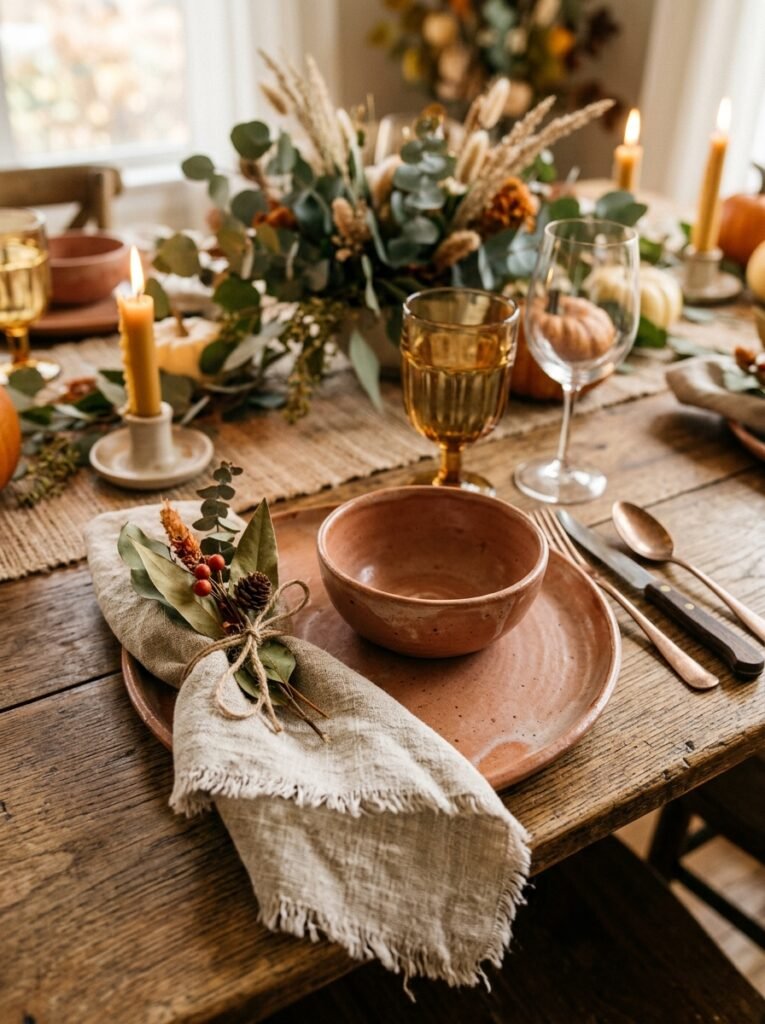
Muted terracotta stoneware brings a warmth white porcelain can’t manage, and the slight irregularity of handmade pieces suits a table meant to feel gathered.
Frayed linen napkins in oatmeal or rust finish each setting without needing a ring.
Let the fraying stay loose, since neat hems undo the whole effect. A little imperfection is the point here.
14. Layer Wood Chargers With Gold Flatware
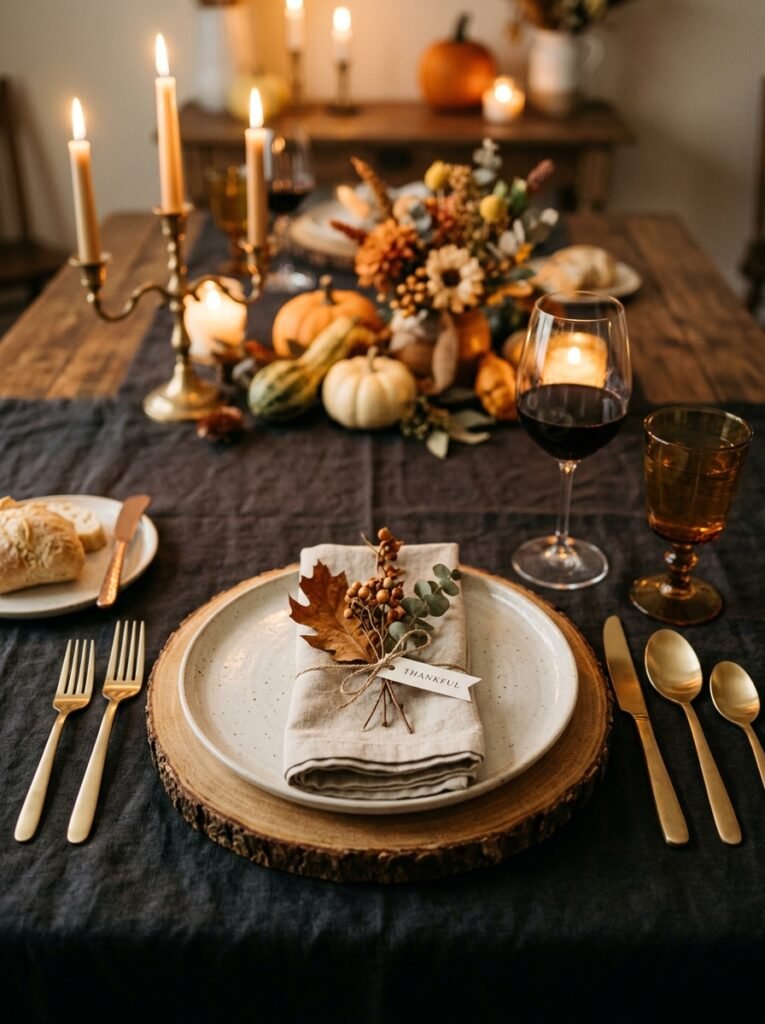
Raw wood chargers give each setting a defined edge and a warm base, which matters most on a dark cloth where plain white plates tend to float. Brushed gold flatware on top ties into the wood tones nicely.
The combination looks expensive for very little money. Skip polished silver here, since the shine fights the natural wood.
15. Anchor Settings With Rattan Placemats
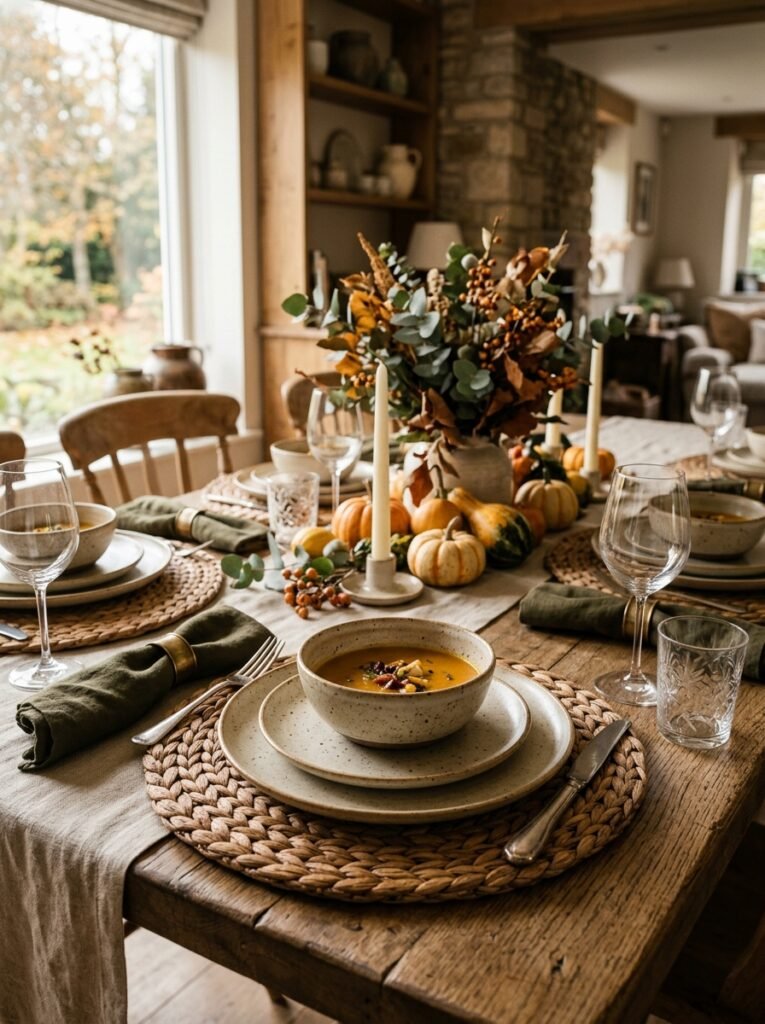
Woven rattan placemats under earthy ceramic dishes give every setting texture from the base up. It’s the easiest way to make a plain table feel considered, even without a cloth.
Round mats soften a rectangular table. The natural fiber also ties into any wheat, wood, or jute elsewhere on the table, so the whole setting feels connected.
16. Go Modern With Matte Black Cutlery
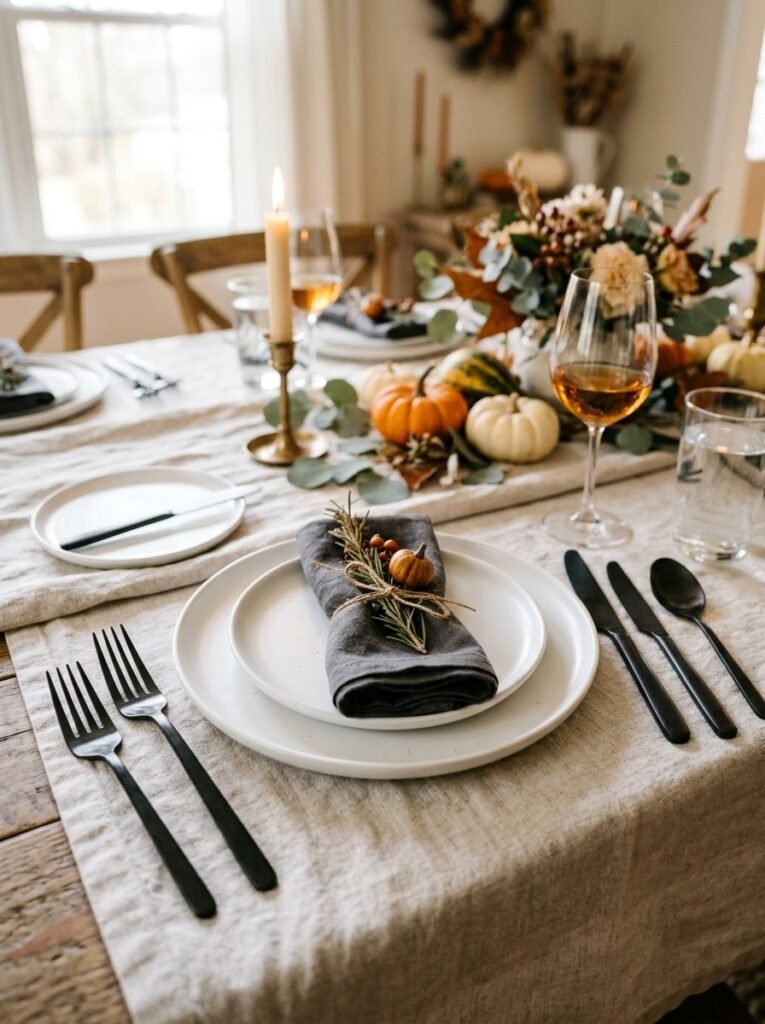
Matte black flatware against crisp white porcelain is the sharpest look on this list, and it suits homes where farmhouse styling would feel out of place. The high contrast makes each setting read cleanly from across the room.
Keep the linens plain white or pale gray so nothing competes. A single green sprig adds just enough warmth.
17. Mix Blue Transferware With Copper
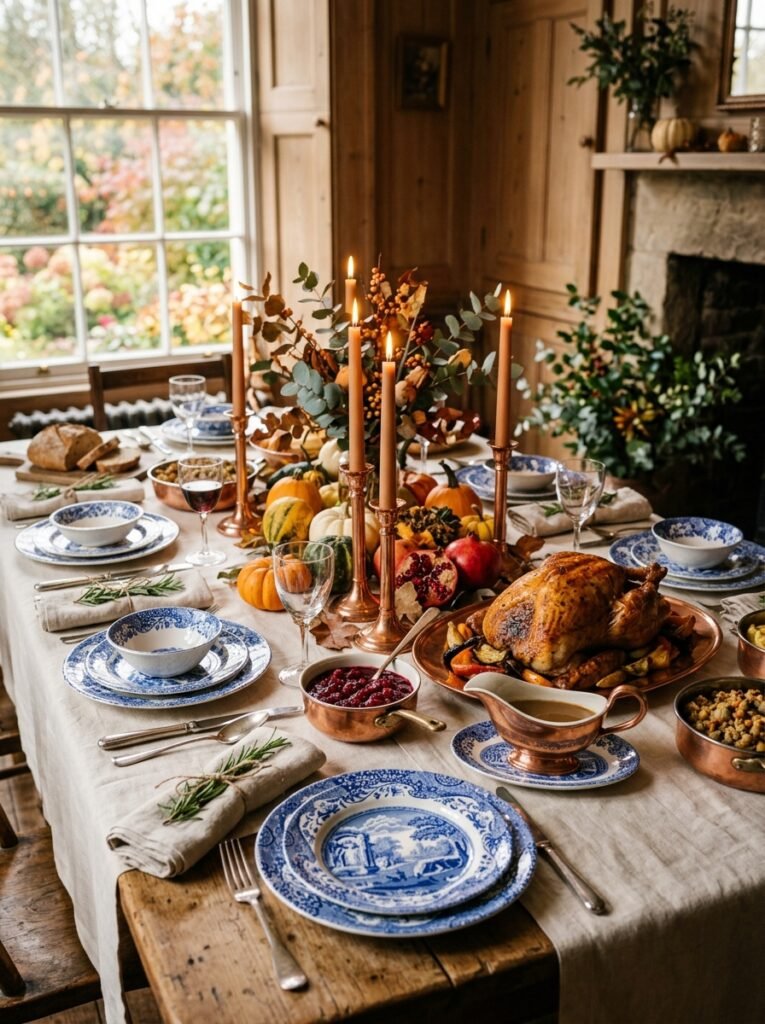
Vintage blue and white transferware is an unexpected Thanksgiving choice, and the cool patterned china against warm copper accents is what makes it work. Mismatched pieces from different sets look even better here.
Copper candlesticks and serving pieces pull the whole table together. Thrift stores and flea markets are great places to find transferware.
18. Add Amber or Smoke Glassware
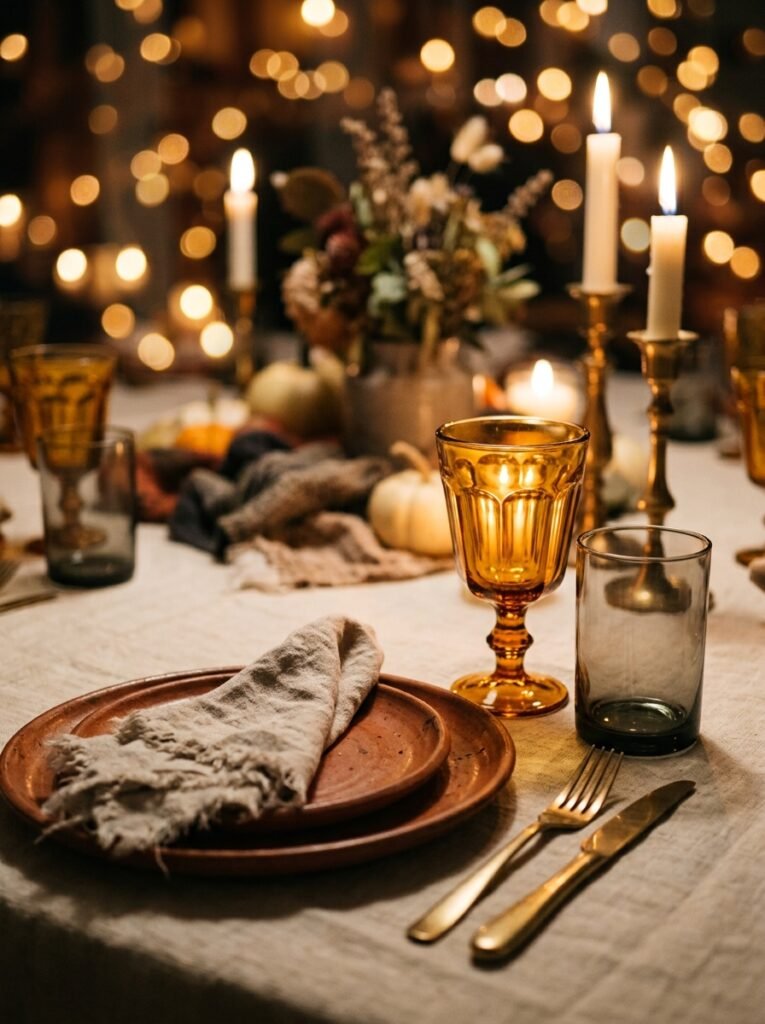
Colored glassware changes a table more than most people expect, since light passing through it tints the cloth below. Amber feels warm and vintage, while smoke gray looks moody and modern. A few ways to use it:
- Amber goblets for wine
- Smoke tumblers for water
- One colored glass per setting, mixed with clear
Pick one tone and repeat it at every seat.
Candles and Place Details
19. Cluster Brass Candlesticks at Varied Heights
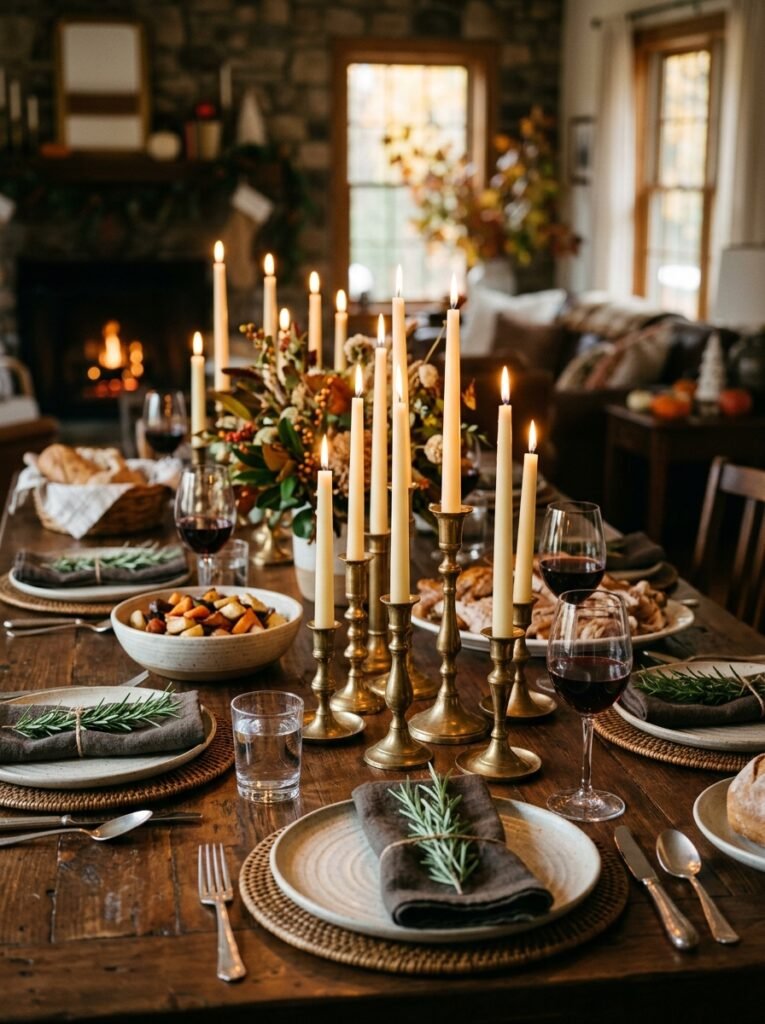
Brass taper candlesticks clustered at different heights carry the center of the table, glowing warmly without taking up much room. Laying a single rosemary sprig across each napkin ties every setting back to them.
The rosemary releases its scent as the room warms up. Mismatched secondhand candlesticks look better than a matching set.
Also read: 24 Fall Mantel Decor Ideas for Cozy Autumns
20. Pair Green Tapers With Gilded Pears
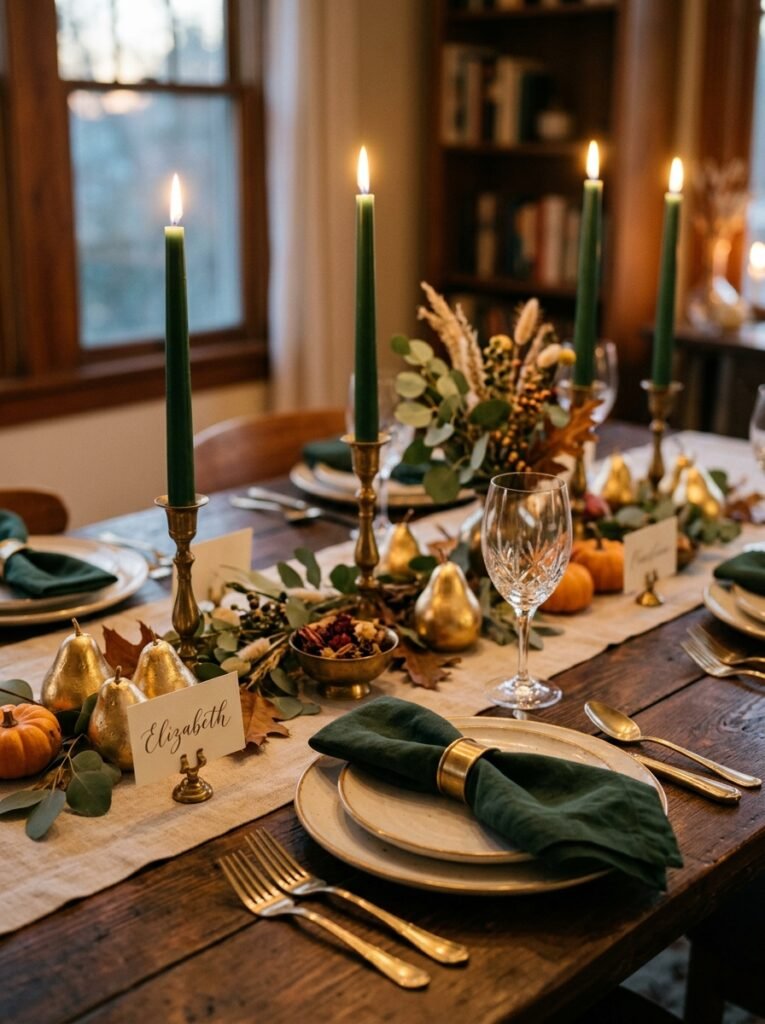
Forest green tapers give a table a depth that ivory candles don’t. Then set a small gilded pear at each place, with a name card tied to the stem, for a finishing touch guests will remember.
Gold leaf or metallic paint on a real pear takes about ten minutes for a whole table. Brush it on unevenly so some green shows through.
21. Scatter Low Votives Between the Dishes
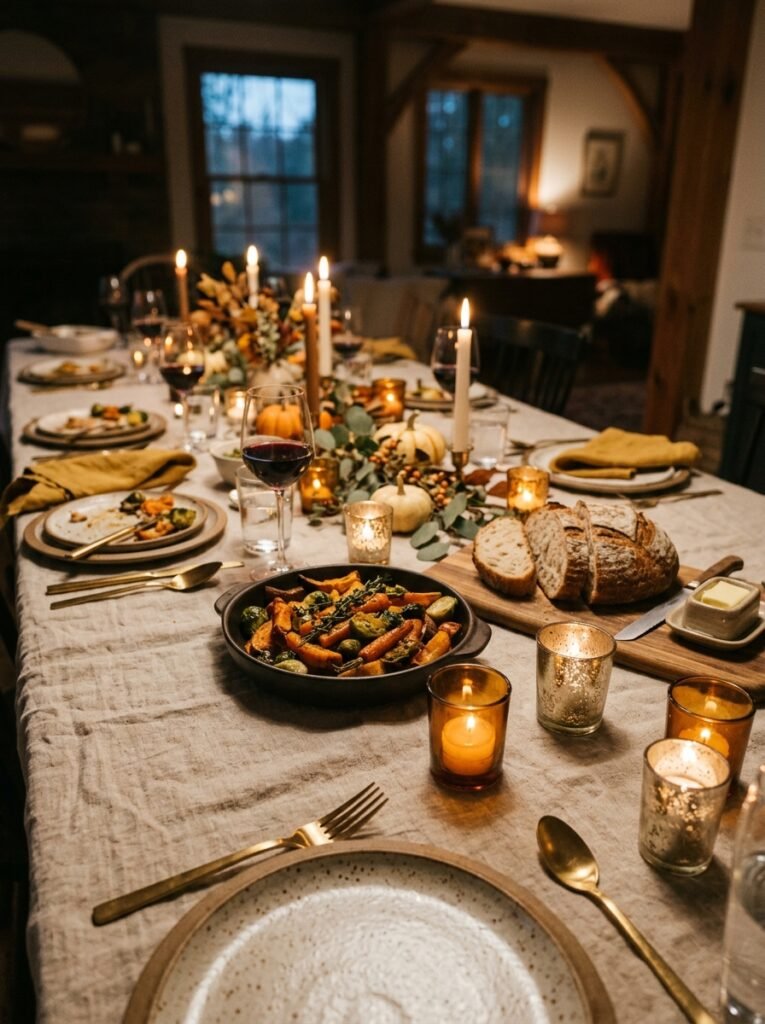
Small glass votives scattered between the serving dishes fill the gaps with flickering light at plate level. Unlike tapers, they never block anyone’s view, so the table glows without feeling crowded.
Use unscented candles near the food so they don’t compete with dinner. Amber or mercury glass holders add extra warmth.
22. Write Names on Magnolia Leaves
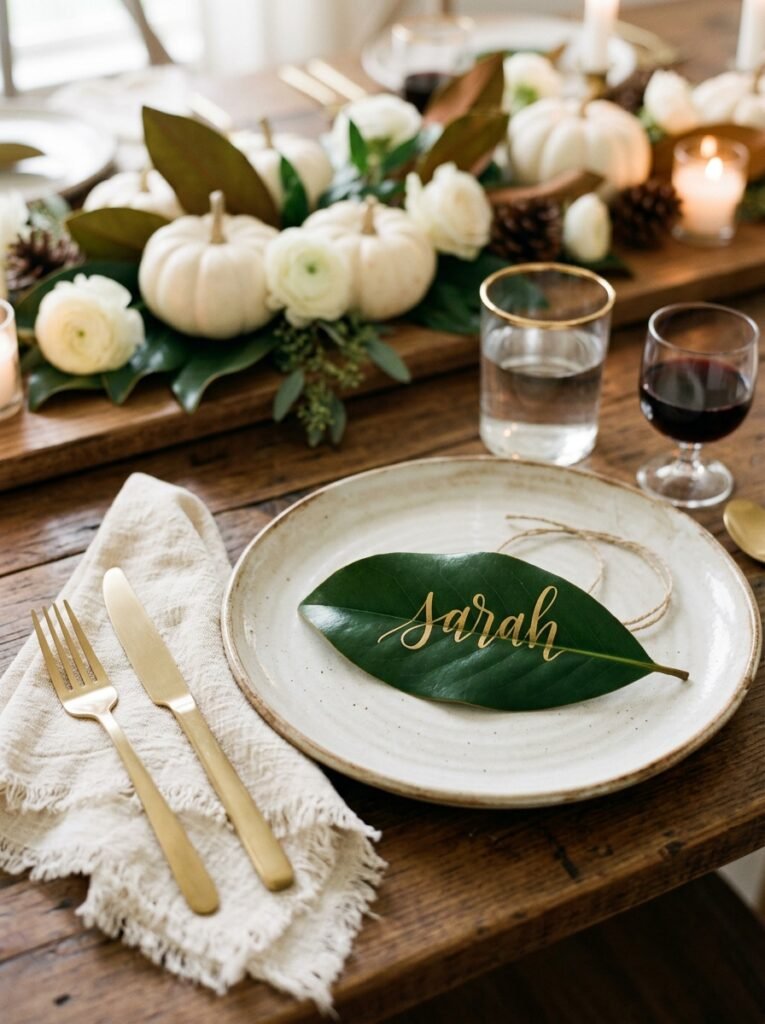
A single magnolia leaf with a guest’s name written in gold pen makes a place card that costs nothing, and it ties back to a magnolia centerpiece. The glossy side takes metallic ink beautifully.
Write on the leaves a day ahead so the ink has time to set. Lay each one across the plate or tuck it under the napkin.
23. Tuck a Menu Into Each Napkin
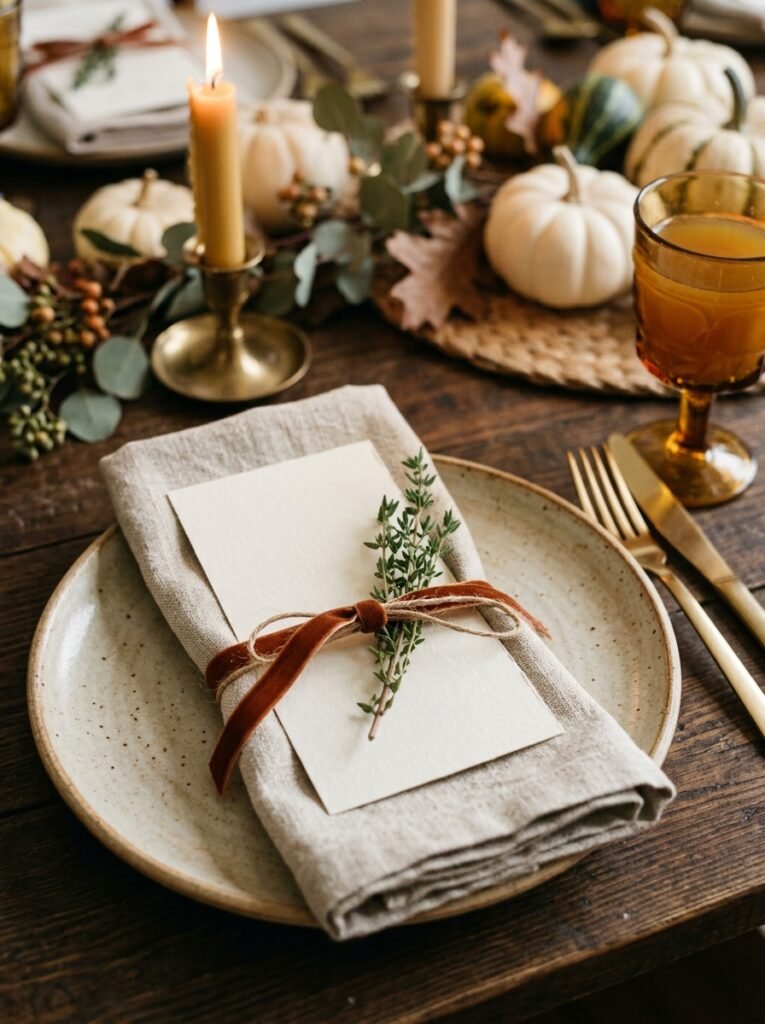
A small printed menu tucked into a folded napkin tells guests what’s coming and makes the meal feel like an occasion. It’s a restaurant touch that takes very little effort at home.
Print on heavy cream card stock and keep the design simple. A thin ribbon or a sprig of thyme holds everything in place.
24. Leave a Small Favor at Each Seat
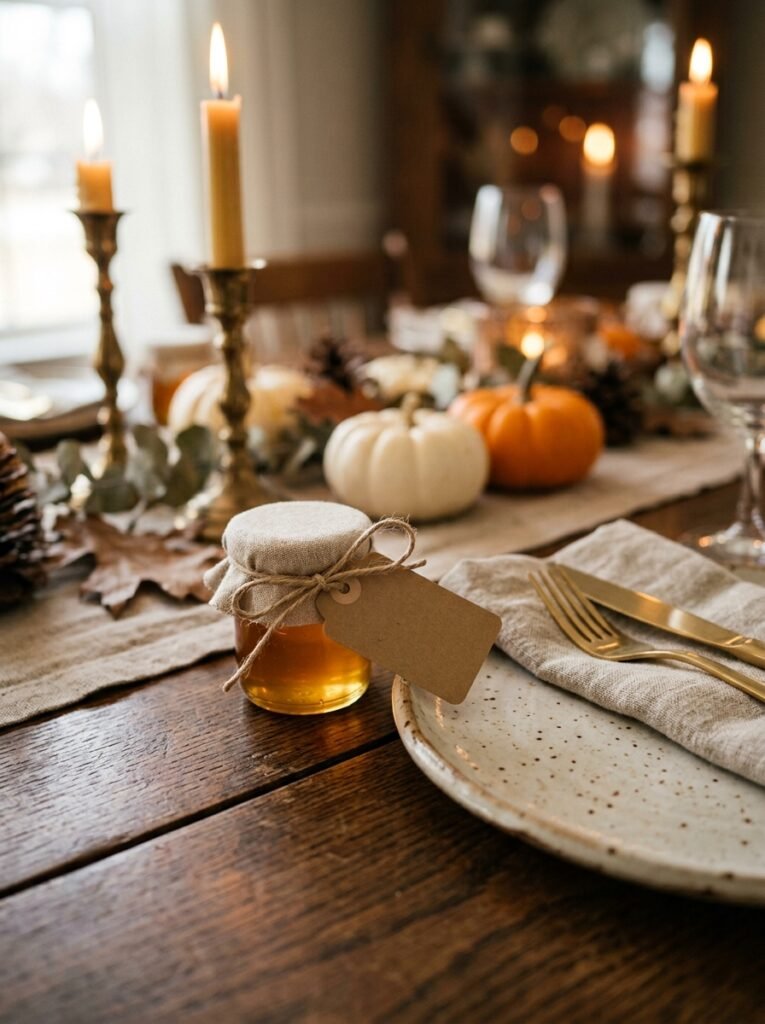
A tiny take-home favor at each place gives guests something to remember the evening by, and it doubles as table decor until then. Keep it small and edible:
- A mini jar of honey or apple butter
- A wrapped slice of pumpkin bread
- A small bag of spiced nuts
A handwritten tag makes even the simplest favor feel personal.
Final Thoughts on Thanksgiving Table Setting Ideas
Decide the base layer first, since a dark velvet cloth and a bare wood table lead to completely different tables. Everything after that follows from the choice.
Then run one thing down the center and repeat one small detail at each place setting, which is what ties the whole table together.
Keep the centerpiece low enough to talk across, use real candles if you can, and stop before it feels finished.
A table with a little space left on it always looks better than one where every inch has been decorated.
Thanksgiving Table Setting Ideas FAQ
Start with the cloth or runner, then build the centerpiece down the middle, then lay each place setting.
Charger, plate, napkin, flatware, and glass is the standard order. Repeating one element at every seat, like a sprig of rosemary or a name card, is what makes the table read as a set.
Warm neutrals form the safest base, so cream, oatmeal, terracotta, and natural wood.
For depth, add plum, forest green, or charcoal through linens and candles, with brass or copper for warmth. Bright orange tends to date a table, and muted autumn tones photograph considerably better.
Keep it under about twelve inches so guests can see each other across the table.
If you want height, use narrow candlesticks or slim stemmed compotes, since both read tall without blocking sightlines. Anything wide and dense is better placed on a sideboard.
Buy fabric by the yard instead of a finished runner, collect mismatched brass candlesticks and glassware secondhand, and use what’s in the kitchen for the centerpiece.
Pomegranates, figs, walnuts, and rosemary all cost little and get eaten afterward. Handwritten name cards cost pennies.
Not at all, and a bare wood table with a runner down the center often looks better, since the grain adds warmth a cloth hides.
Placemats give each setting definition without covering the table. Cloths make more sense for protecting a surface or setting a moodier tone.