Most new kitchens get built the same way. One countertop material, one cabinet color, every surface installed on the same day by the same crew.
The result is technically finished and somehow still feels unfinished at the same time!
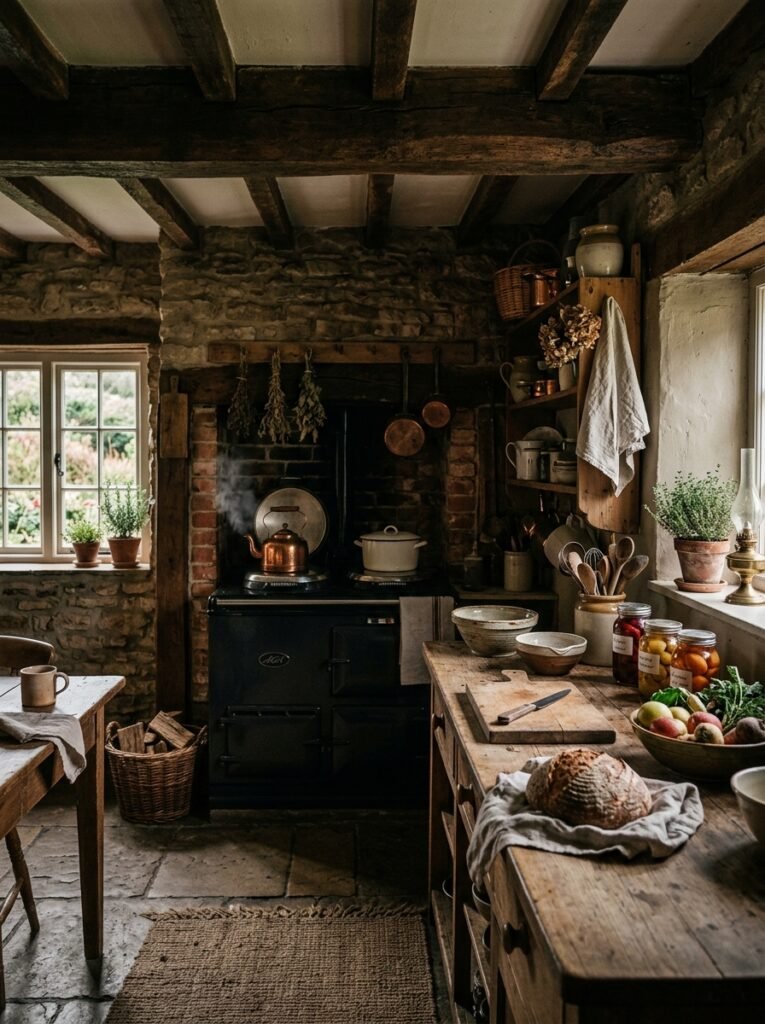
Farmhouse kitchens work because they don’t do that. Wood sits next to stone, old pieces sit next to new ones, and nothing pretends to have arrived all at once.
These farmhouse kitchen ideas cover the cabinetry, the materials, and the details that give a kitchen that gathered-over-time feeling!
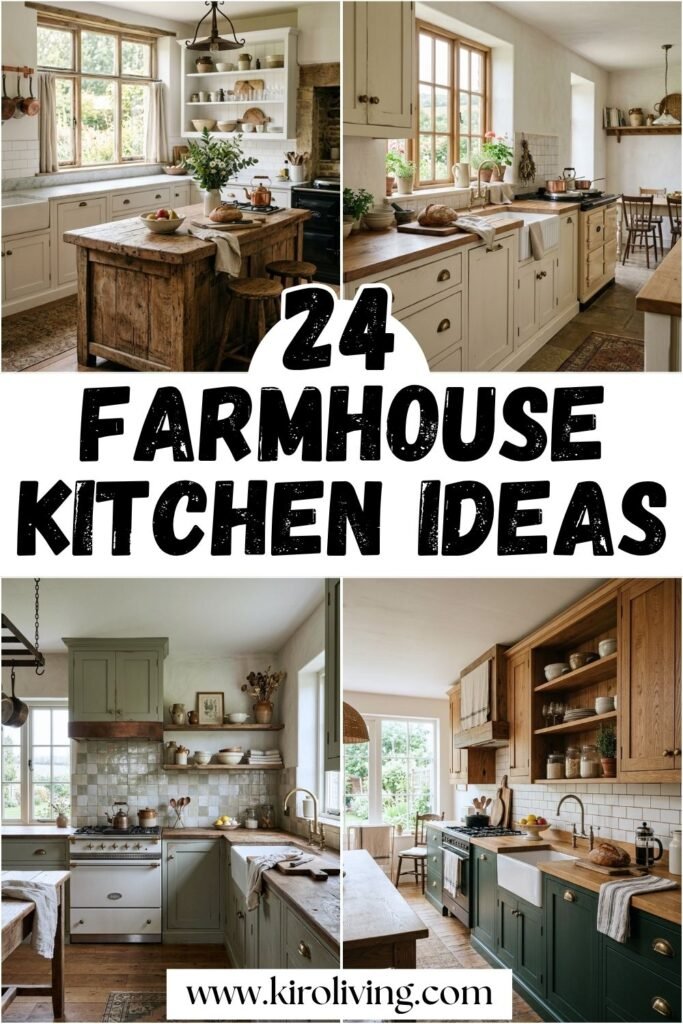
Plan on revisiting? Pin this for later!
This post may contain affiliate links, I may earn an extra commission, at no extra cost to you.
The One Rule Behind Every Good Farmhouse Kitchen
The word “farmhouse” gets stretched to cover almost anything with a shiplap wall, which is why so many kitchens claim the style and still feel generic. The real version rests on a much narrower idea: contrast between surfaces that were clearly made at different times.
Look at any kitchen that actually earns the label and you’ll usually find two or three of these running through it:
- Old material next to new: a reclaimed wood top on a freshly built island, a vintage stove inside modern cabinetry.
- Function on display: open shelves, a visible sink, a hood that looks built rather than bought.
- One material that ages: wood, brass, or stone that’s allowed to weather instead of staying showroom-new.
A kitchen that’s simply painted white with shaker doors isn’t automatically farmhouse. It needs that friction between old and new somewhere in the room.
Cabinetry and Color
1. White Shaker Cabinets With a Reclaimed Wood Island
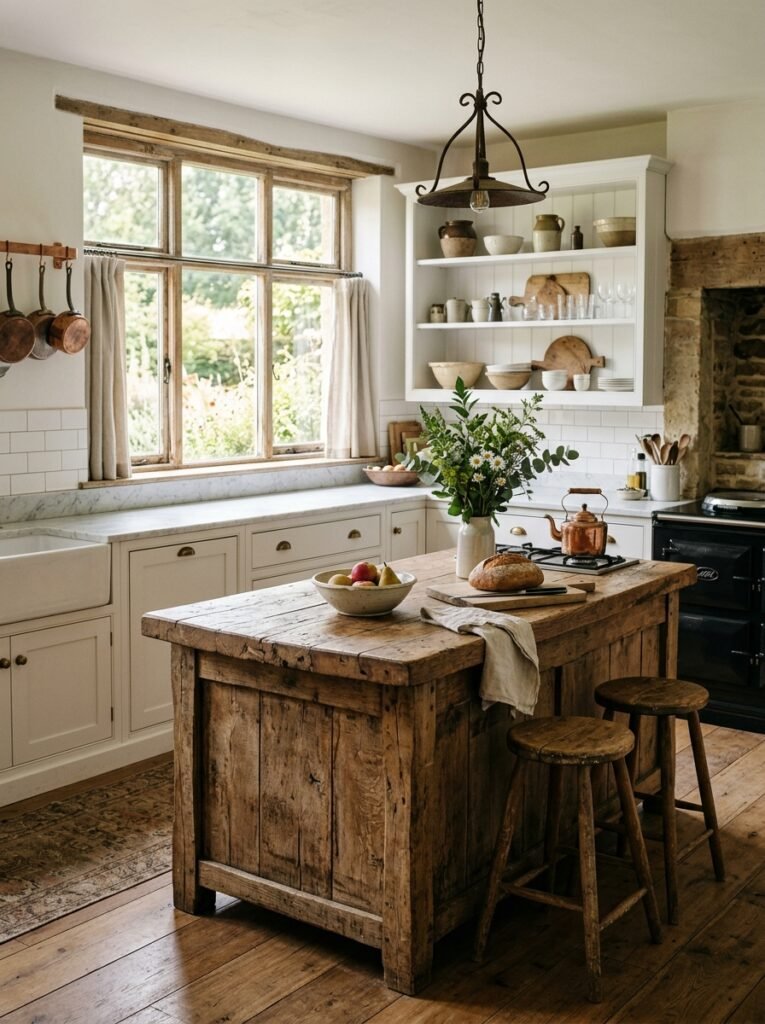
White shaker cabinets are the neutral backbone of this style, and pairing them with a reclaimed wood island is what actually earns the farmhouse name.
The contrast between crisp painted doors and rough salvaged timber is the whole idea in one piece of furniture.
2. Cream Cabinets With Aged Brass Hardware
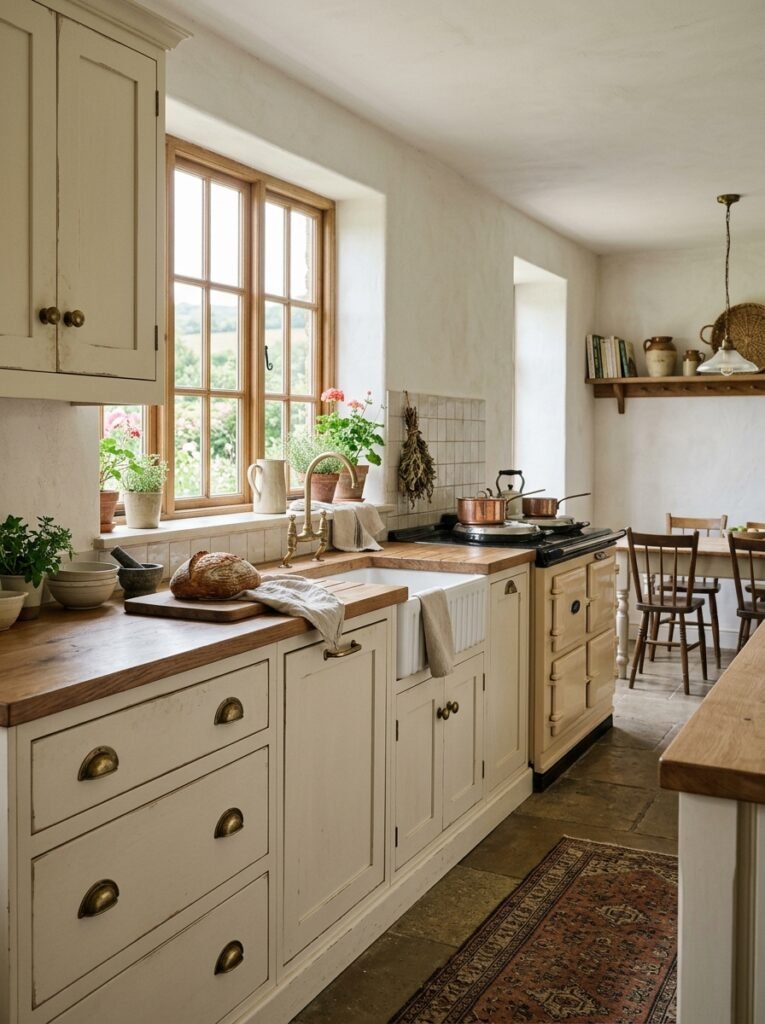
Cream reads warmer than stark white and photographs less clinical, especially once aged brass hardware goes on the doors.
Unlacquered brass darkens with handling, so the pulls genuinely look older every year, which is exactly the direction this style wants them moving.
3. Sage Green Cabinets With Handmade Zellige Tile
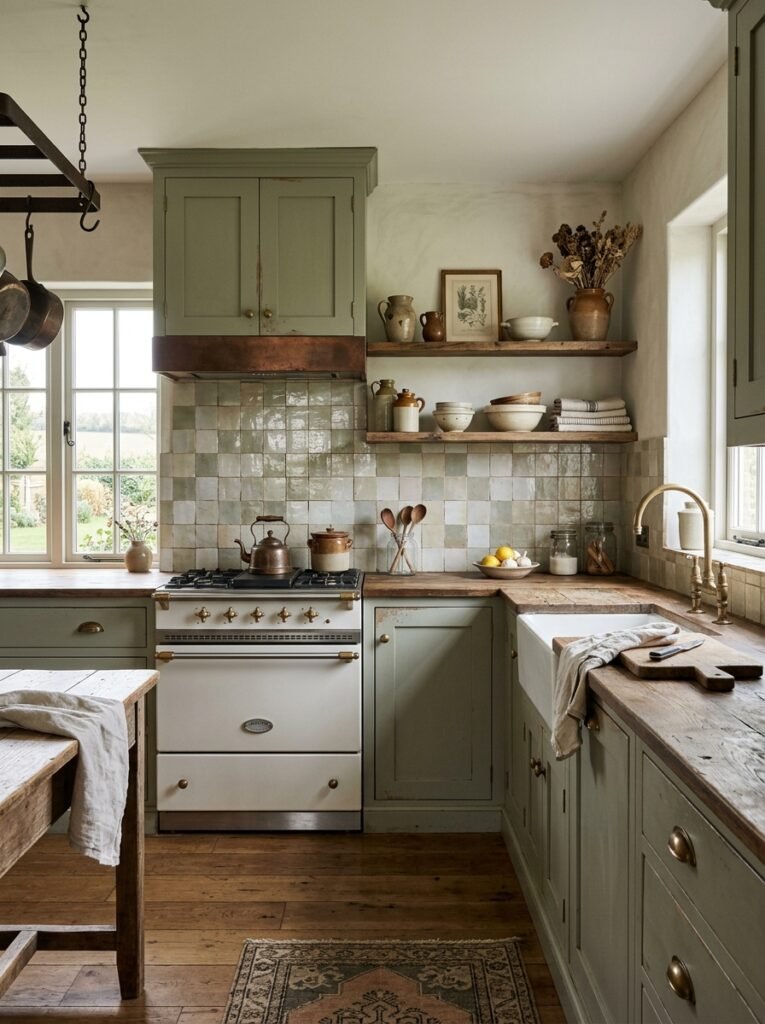
Sage is the color farmhouse kitchens reach for when white starts feeling too safe, and handmade zellige tile behind it adds the irregular, uneven glaze that machine tile can’t fake.
The two together read considerably more collected than a matched cabinet-and-backsplash set.
4. Dark Green Lower Cabinets With Natural Oak Uppers
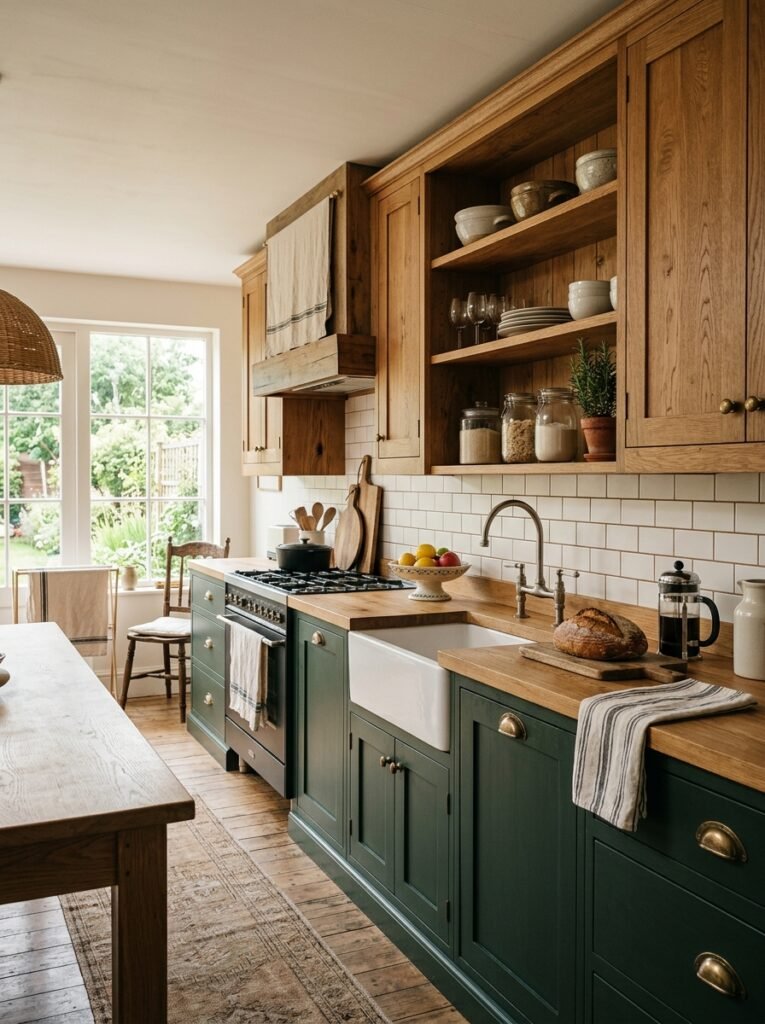
Splitting the palette, deep green below and warm oak above, gives a kitchen visual weight where it needs it and lightness where the eye should travel upward.
It also solves the problem of an all-dark kitchen feeling like a cave, since the top half stays bright.
Also read: 24 Dreamy Dark Cottagecore Kitchen Ideas You’ll Absolutely Love
5. Soft Blue Cabinets With Butcher Block Counters
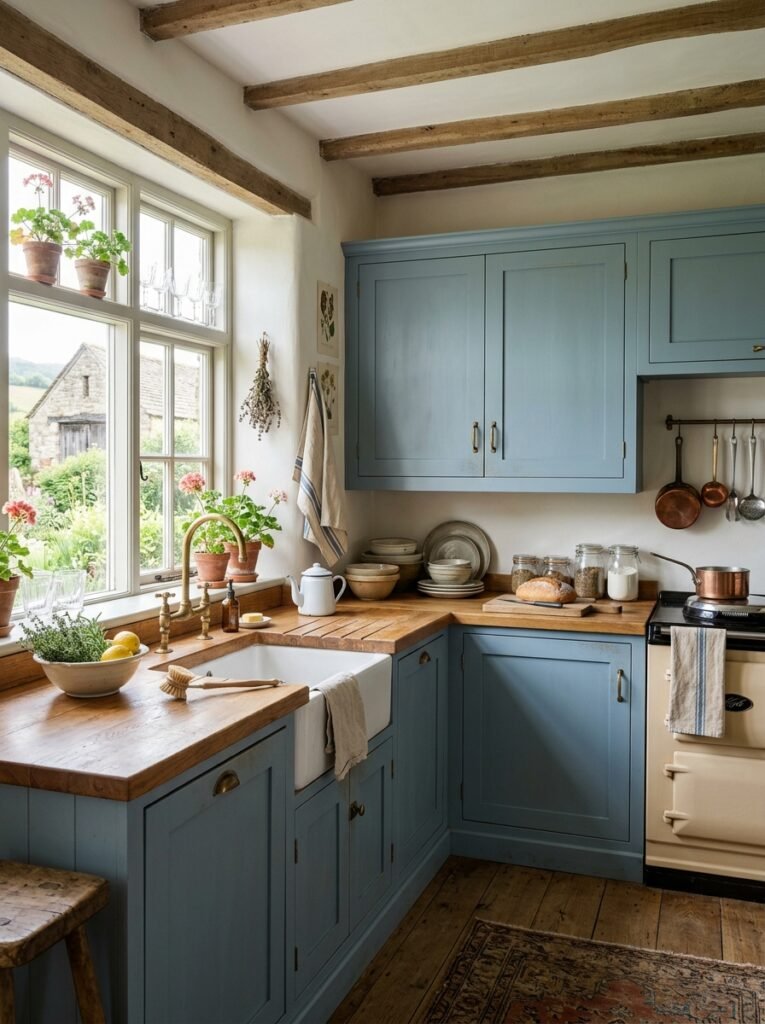
A muted, grayed-down blue avoids the coastal association that brighter blues carry, and it sits comfortably next to warm butcher block instead of fighting it.
Keep the blue dusty rather than clear, since a saturated version pulls the room toward beach house instead of farmhouse.
6. Black Window Frames With Cream Cabinets
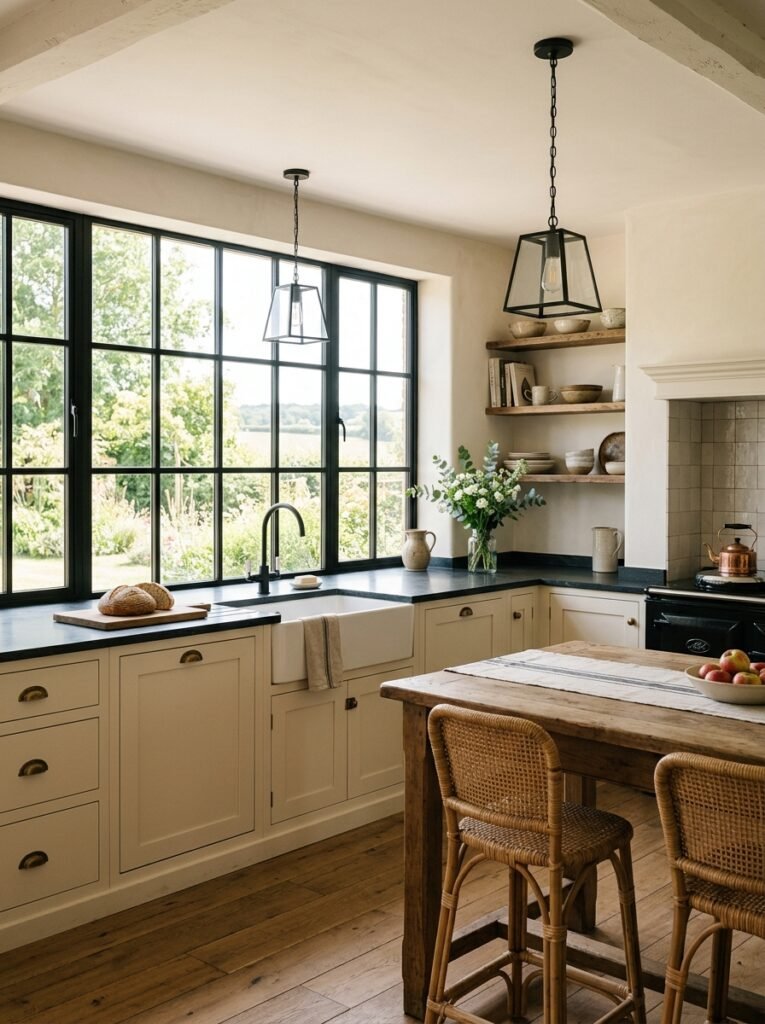
Black-framed windows against cream cabinetry give the room one sharp, graphic line that keeps all that softness from turning shapeless.
Repeating the black once more, in a faucet or a light fixture, ties the window frame back into the rest of the room instead of leaving it isolated.
Sinks and Fixtures
7. A Deep Apron-Front Sink
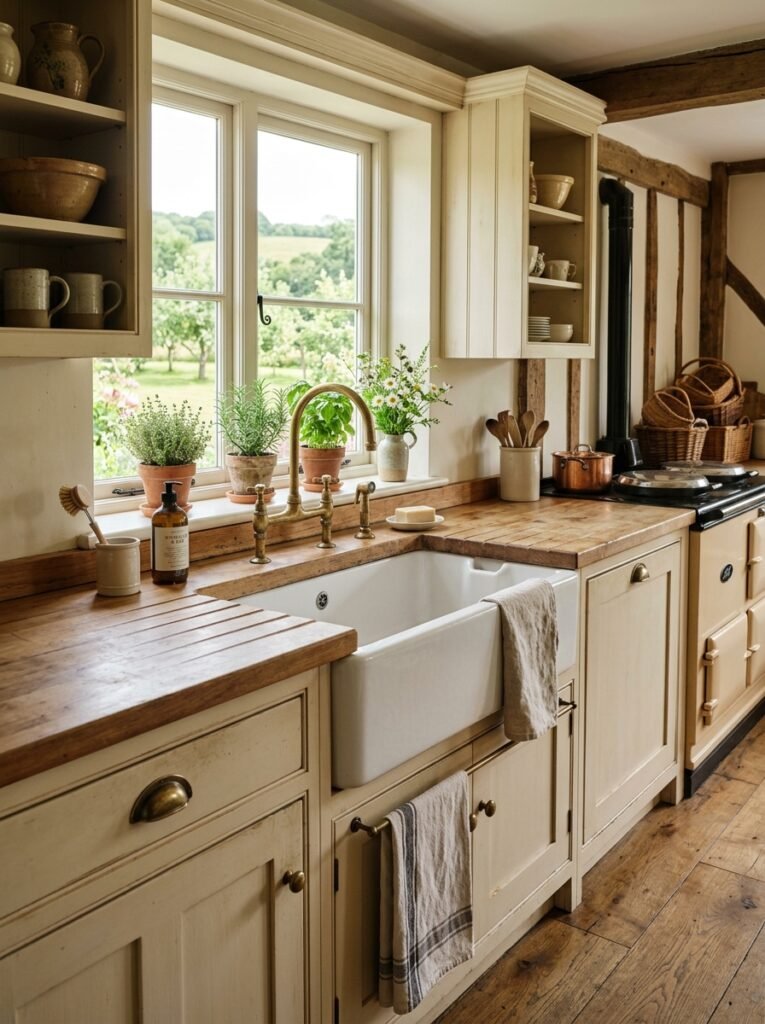
The apron-front sink is the single most recognizable farmhouse fixture, and the exposed front panel is what gives it away, since a standard undermount sink hides that entire face inside the cabinet.
Fireclay holds up best to daily use and stays white far longer than enamel.
8. An Apron Sink Under a Divided-Pane Window
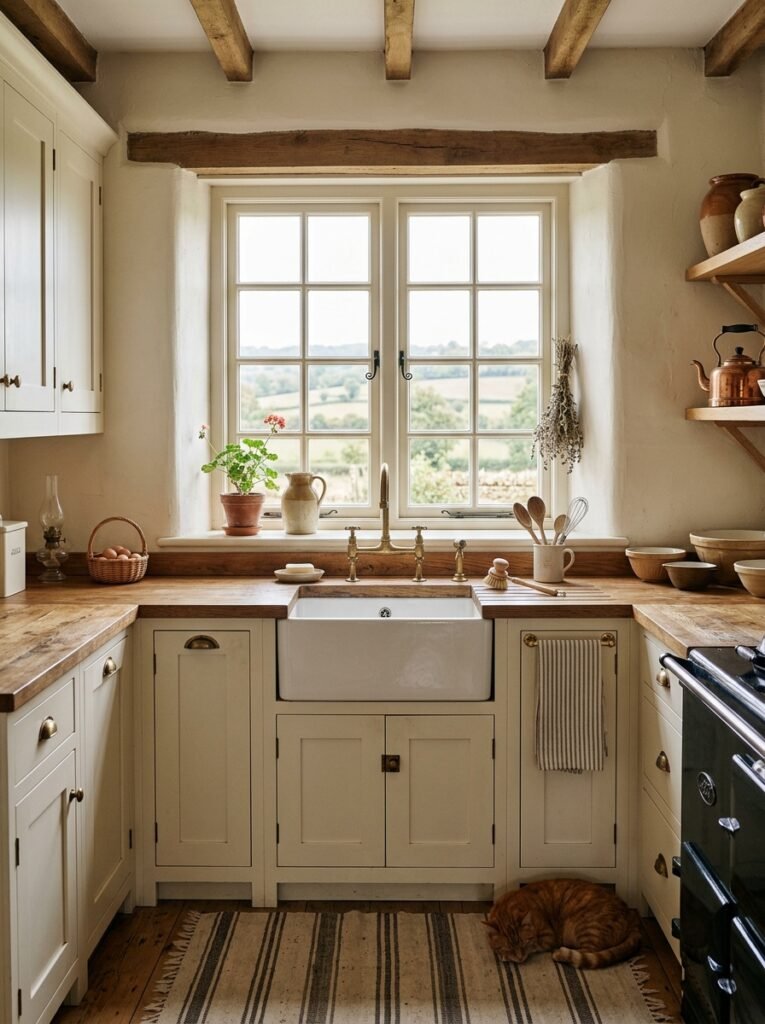
Placing the sink directly under a large window with divided panes gives the most-used spot in the kitchen the best light and the best view, which is exactly where old farmhouses put their sinks.
The grid of small panes also reads more period-correct than one uninterrupted sheet of glass.
9. A Skirted Sink Instead of Lower Doors
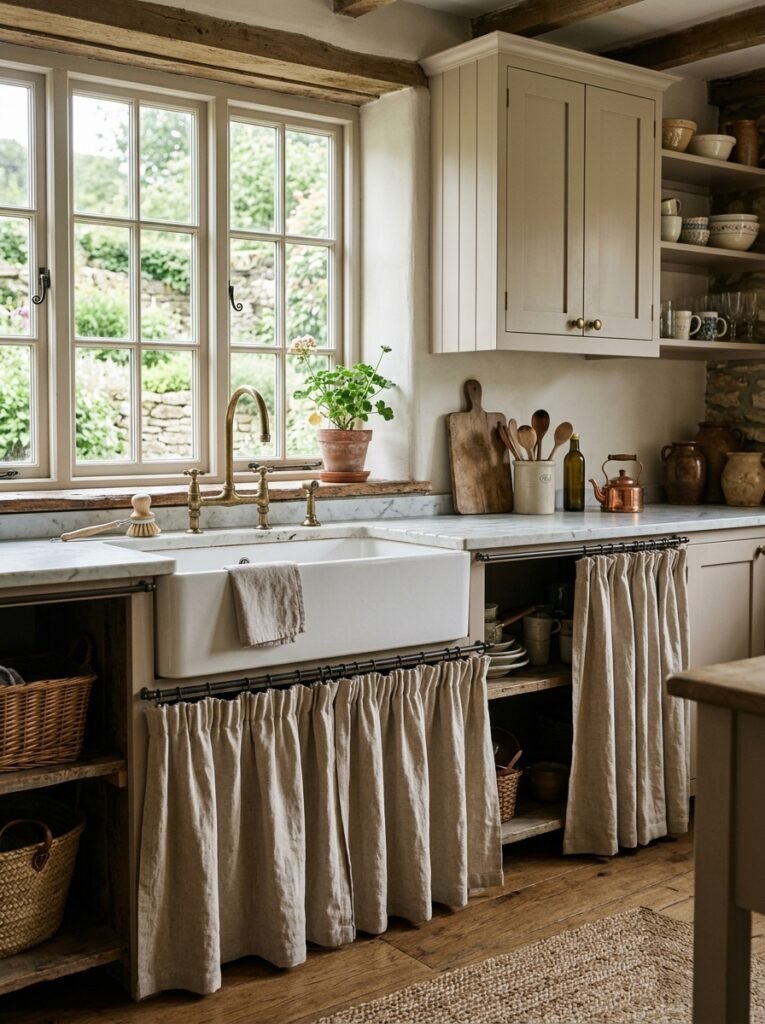
Swapping the cabinet doors under the sink for a gathered fabric skirt is how these spaces were handled before fitted cabinetry existed.
It’s also the easiest reversible move on this entire list, since it fits on a simple tension rod and can be changed with the seasons.
Countertops and Islands
10. Warm Oak Cabinets With Soapstone Counters
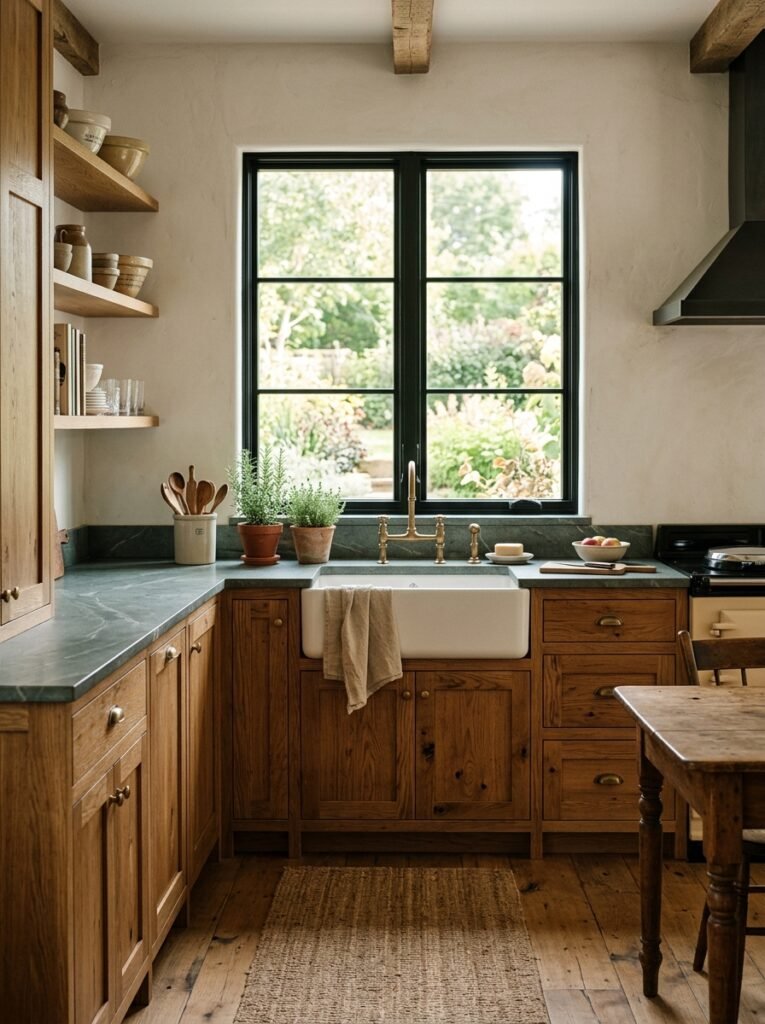
Soapstone darkens and develops a soft patina with use, which puts it philosophically closer to farmhouse than a stone that’s engineered to stay pristine.
Against warm oak cabinetry, the gray-green stone reads considerably richer than it does next to white paint.
11. A Butcher Block Island in a White Quartz Kitchen
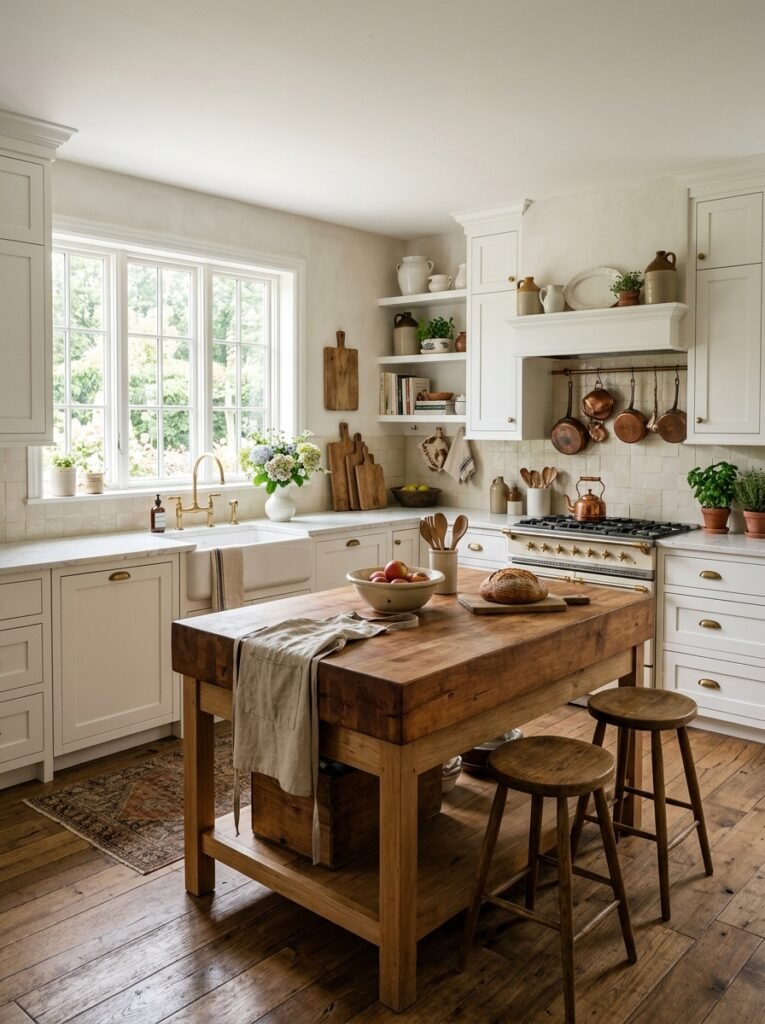
Keeping the perimeter counters in easy-care quartz while the island wears solid butcher block gives you one warm anchor without sacrificing practicality everywhere else.
It’s the version of this style that suits a busy household best, since the perimeter stays low-maintenance.
12. Rustic Limestone Countertops
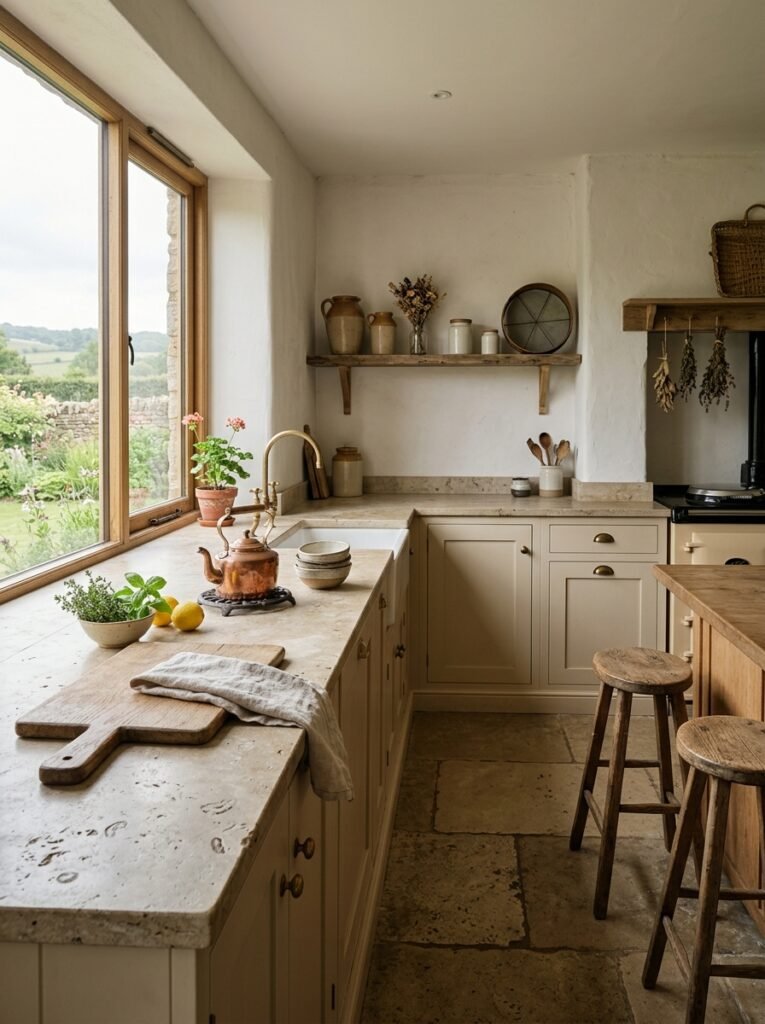
Limestone brings visible fossils, soft color variation, and a matte finish that no manufactured surface quite replicates.
Seal it properly, since it’s porous enough to stain from lemon juice or wine within an evening.
13. A Freestanding Furniture-Style Island
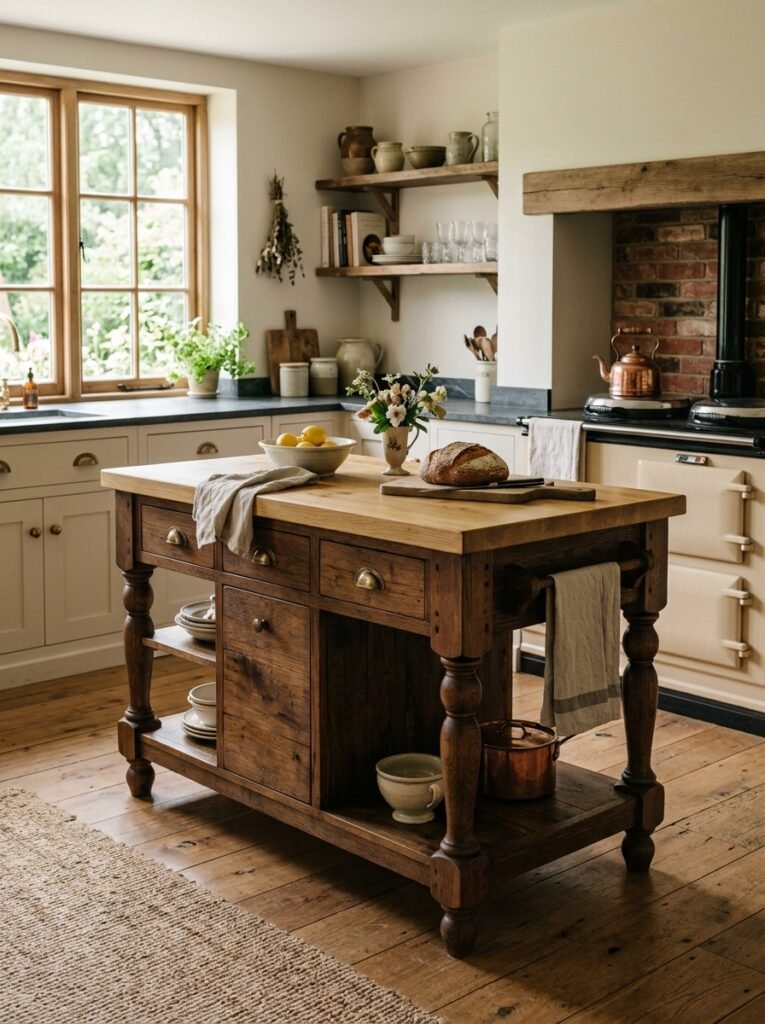
An island built to look like a piece of standalone furniture, turned legs, a contrasting top, visible joinery, breaks the fitted-kitchen uniformity that most builders default to.
It’s also the easiest way to fake decades of accumulation in a kitchen built last year.
Walls, Ceilings and Architecture
14. Beadboard Walls With Open Wood Shelving
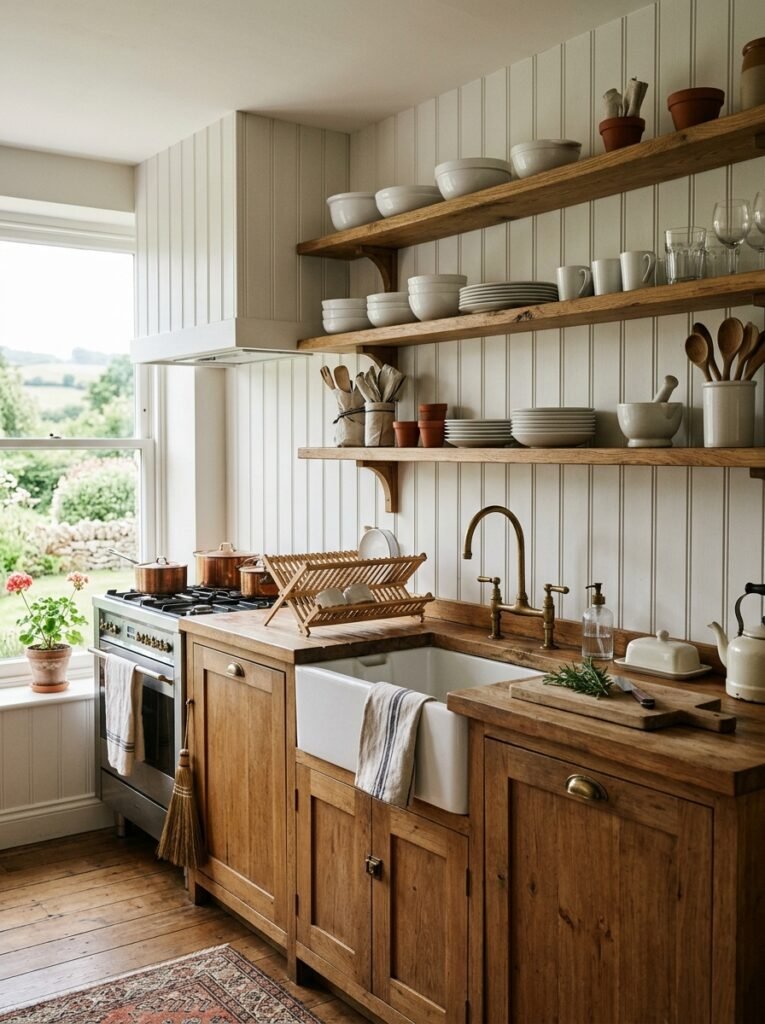
Beadboard’s narrow vertical grooves add texture without pattern, so it pairs cleanly with open shelving instead of competing with whatever sits on it.
Run it to counter height rather than ceiling height in a small kitchen, since full coverage can start closing in a tight room.
15. Exposed Ceiling Beams
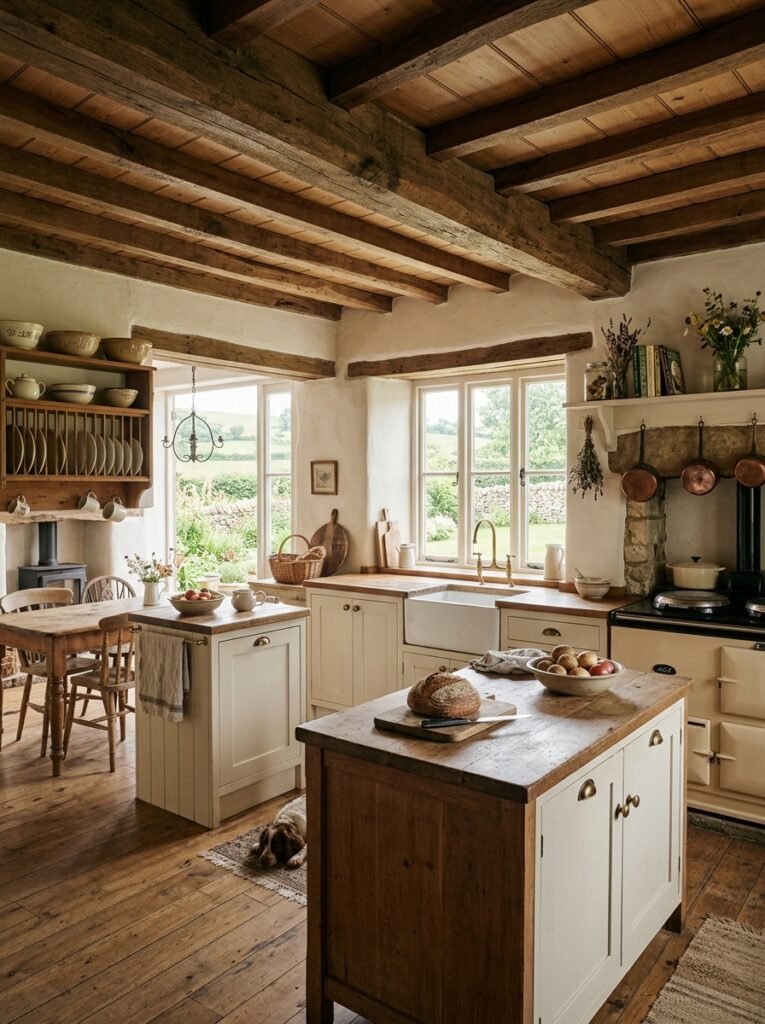
Real or added beams overhead do more for a farmhouse kitchen’s architecture than almost any other single element, since they read as structure rather than decoration.
Faux lightweight beams install in a weekend and are convincing from below.
Also read: 24 Grandmacore Kitchen Ideas For a Warm, Collected Look
16. A Brick Range Hood
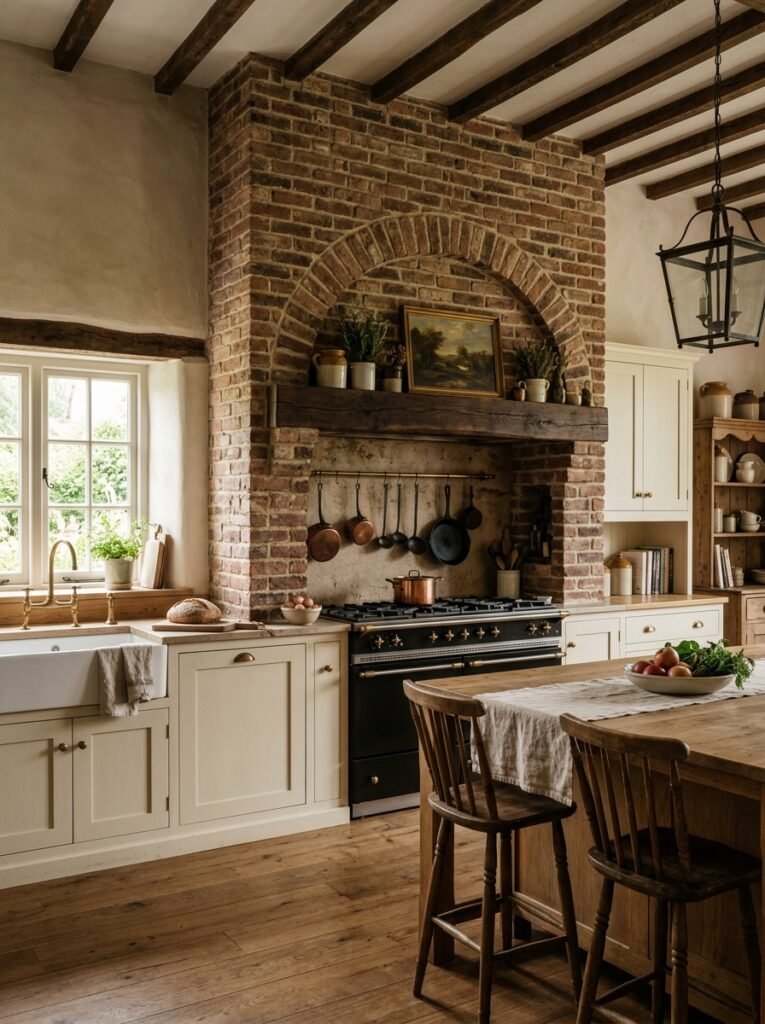
Cladding a hood in real or veneer brick turns the least attractive appliance in the kitchen into an architectural feature, since the mass and texture make it look load-bearing.
It suits kitchens with a genuine old-house bones already, brick pairs oddly against a very modern floor plan.
17. A Terracotta Tile Floor
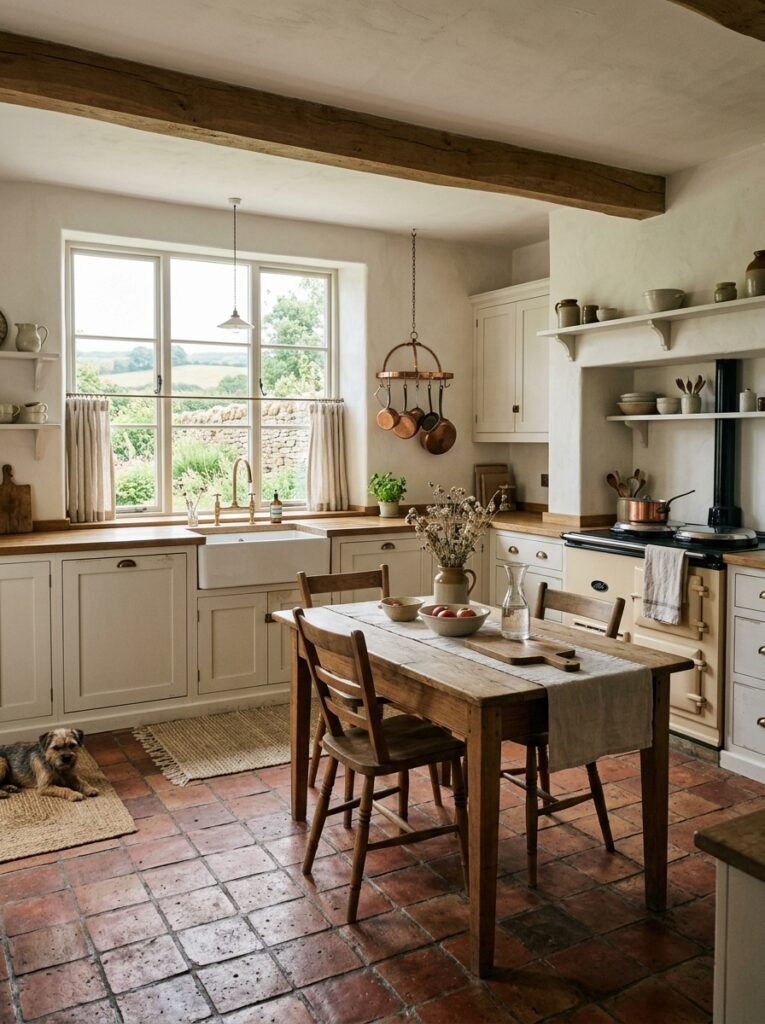
Terracotta underfoot brings warmth that most kitchen flooring can’t match, and it ages visibly, developing a richer patina with every year of foot traffic.
It works best against a genuinely warm-white kitchen, since a cool white throws the terracotta’s undertone slightly off.
Also read: 24 Spanish Style Kitchen Ideas Full of Mediterranean Soul
Appliances and Fixtures With History
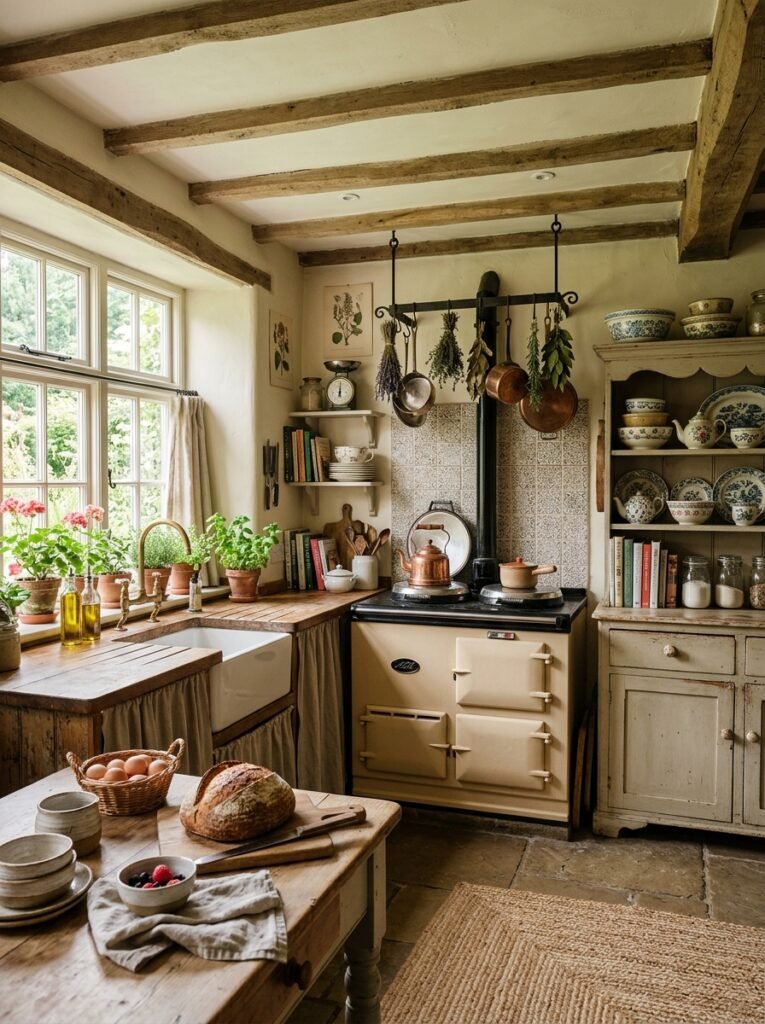
18. A Vintage Freestanding Stove

A restored antique stove, enamel body and chrome trim, gives the kitchen a genuine anchor instead of a decorative one, since the piece is doing real work every day.
Let it be the only loud element in the room, since a hero appliance and a busy backsplash compete for the same attention.
19. A Wooden Pot Rack Over the Island
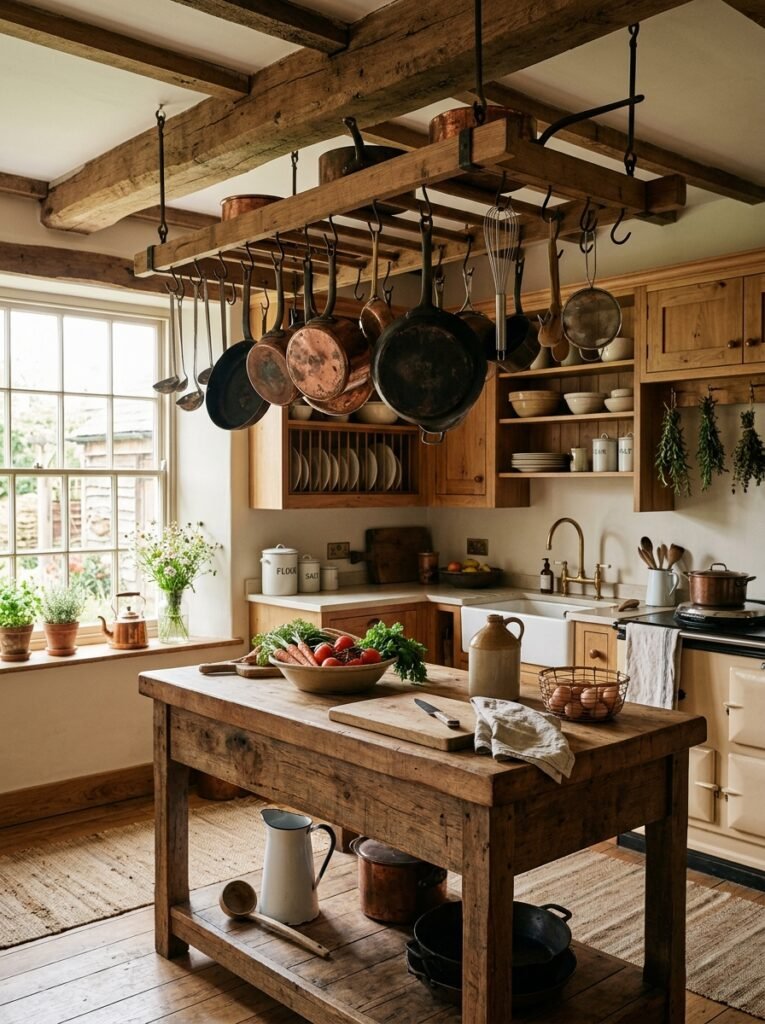
Hanging cookware from a wooden pot rack above the island solves cabinet storage and adds a display layer at the same time, since the pots do double duty as decor.
Hang pieces you actually cook with, an unused rack just collects dust instead of patina.
20. Open Plate Shelves With Everyday White Dishes
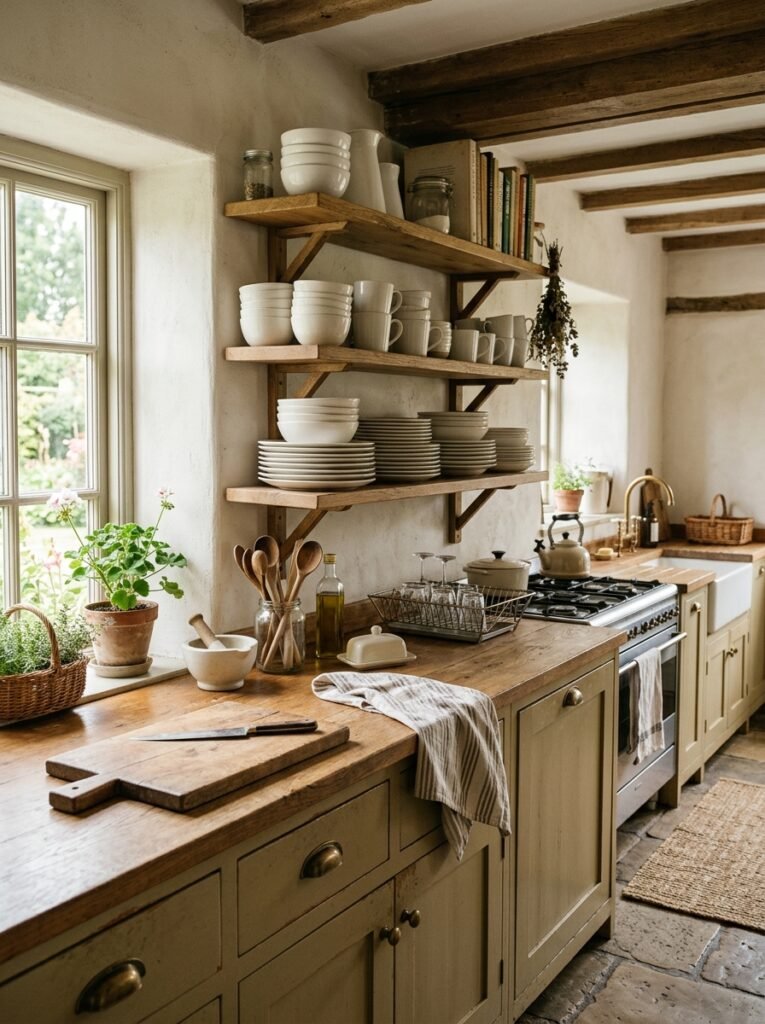
Stacking the dishes you use daily on open shelves rather than behind closed doors is a genuinely old farmhouse habit, back when cabinetry was expensive and shelving was cheap.
Sticking to one color of dishware is what keeps an open shelf looking curated instead of cluttered.
21. A Freestanding Pantry Cabinet
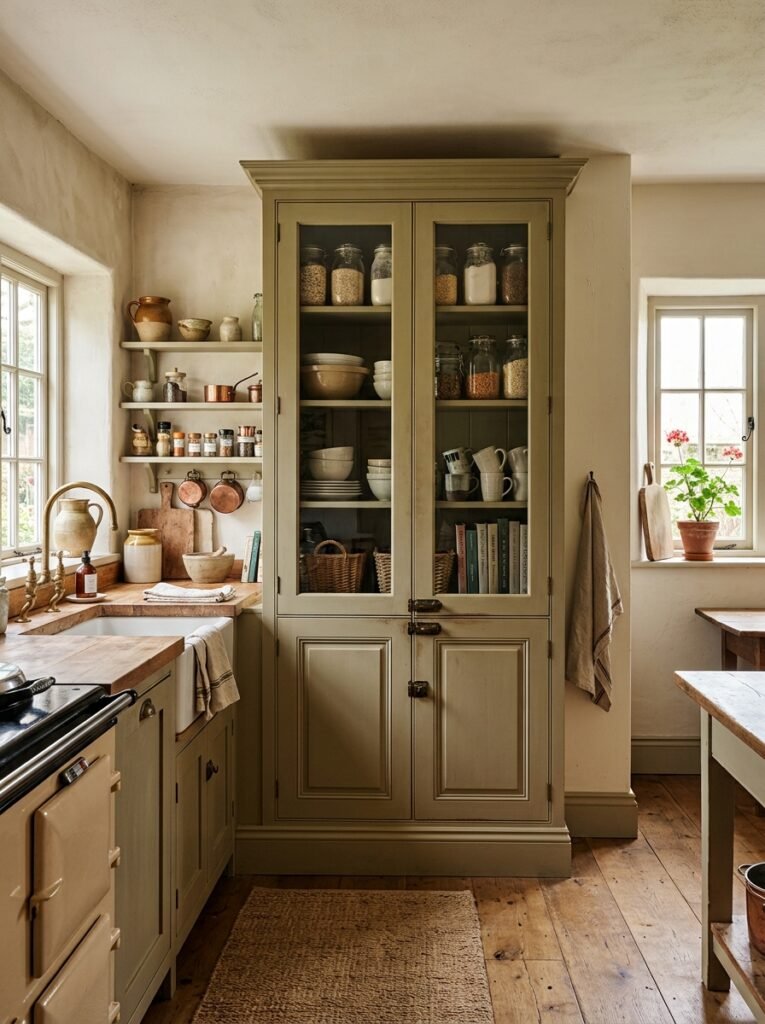
In a small kitchen with no room for a walk-in pantry, a tall standalone pantry cabinet solves storage while reinforcing the furniture-not-fitted-units look this style depends on.
Leave a gap on either side so it reads as a piece that was brought in, not built into the wall.
Layout and Gathering Spaces
22. A Long Wooden Table Instead of an Island
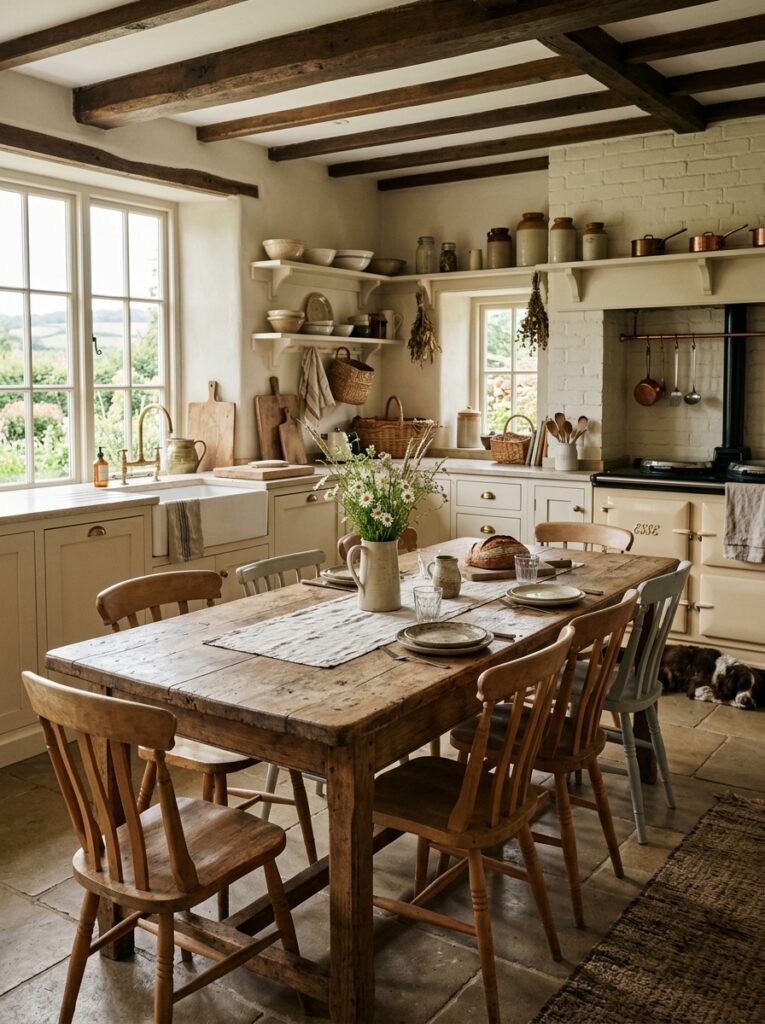
Skipping the island entirely in favor of a substantial farmhouse table gives the room its actual gathering point, the way kitchens worked before islands existed.
It suits kitchens open to a dining area, since the table can genuinely serve both roles at once.
23. A Built-In Breakfast Nook
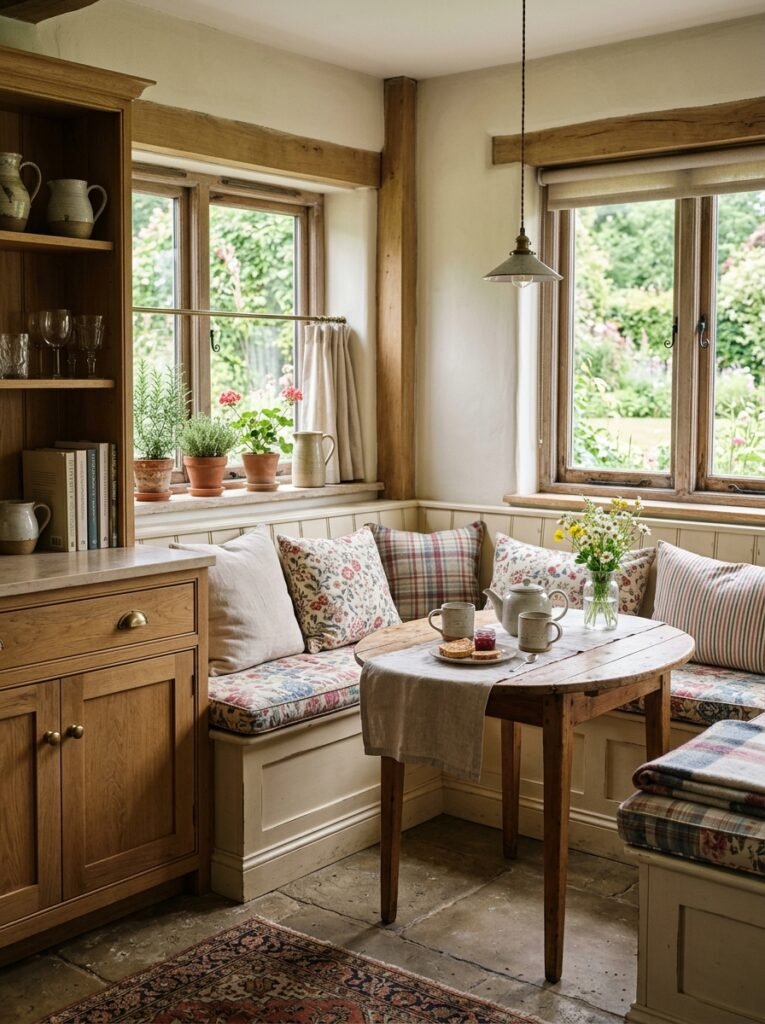
Wrapping a corner in built-in bench seating with a small table gives the kitchen somewhere to sit that feels held rather than perched, which pairs naturally with the rest of a breakfast nook setup.
Add cushions in a fabric that can go in the wash, since a nook this close to the stove sees plenty of spills.
Also read: 20 Brilliant Breakfast Nook Ideas That Are Worth Copying
24. A Collected Kitchen With Mixed Woods
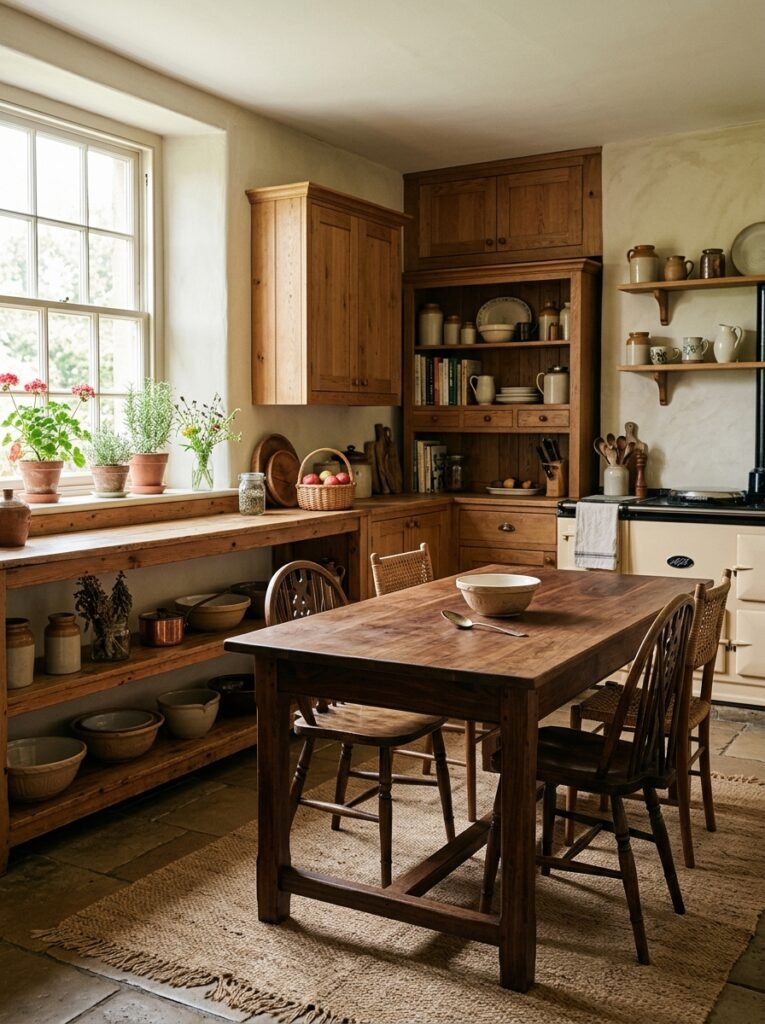
The maximalist version of this style layers two or three different wood tones on purpose, oak cabinets, a walnut table, a pine shelf, and lets vintage decor fill in around them.
It sounds risky, though it’s closer to how farmhouse kitchens actually accumulated over real time.
Three rules to not make a mistake:
- Keep every wood tone warm, never mix warm and cool-toned woods together
- Repeat each tone at least twice so no single piece looks orphaned
- Leave one surface completely bare as a visual rest point
Final Thoughts on a Farmhouse Kitchen Ideas
The contrast is what carries this style, not any single material on its own. Old wood against new paint, a vintage stove against modern cabinets, open shelves against closed ones.
Pick a version of that tension that suits your budget and lean into it fully.
Start with the one piece that has the most visible history, a reclaimed island top, a restored stove, an apron sink, and build the rest of the room to support it.
A kitchen assembled around one genuine anchor will always look more considered than one where every surface arrived from the same showroom.
Farmhouse Kitchen Ideas FAQ
Farmhouse kitchens rely on contrast between old and new.
Reclaimed or vintage pieces sitting beside newly built cabinetry, function left on display through open shelving and visible sinks, and at least one material, wood, brass, or stone that’s allowed to weather and age rather than staying showroom-new.
White and cream form the base, with sage green, soft blue, and deep green as the common accent choices, usually on lower cabinets or an island.
Warm undertones matter more than the specific shade, since a cool white or a bright saturated color pulls the room away from the style’s inherited feeling.
They share the same roots, but modern farmhouse leans cleaner and more graphic, black window frames, flat-panel shaker doors, less visible pattern, while a traditional farmhouse kitchen carries more texture and genuine age through beadboard, vintage fixtures, and collected decor.
Most real kitchens sit somewhere between the two.
Paint, hardware, and one secondhand piece do most of the work.
Painting existing cabinets, swapping in aged brass or black hardware, adding open shelving, and sourcing a vintage table or stove from an estate sale delivers most of the character without a full renovation.
It suits small kitchens well, since the style relies on material and detail rather than square footage.
Keep the contrast to one clear moment, a butcher block counter against white cabinets, or a single reclaimed shelf, rather than layering pattern and texture everywhere in a tight space.