Most modern kitchens are designed to look like nobody cooks in them.
Flat handleless cabinets, one uninterrupted stretch of stone, everything hidden behind a door, and not a single object left out where you can see it.
Grandmacore is the correction to that, and it works because it treats a kitchen as a room that has been used for decades instead of a showroom photographed once.
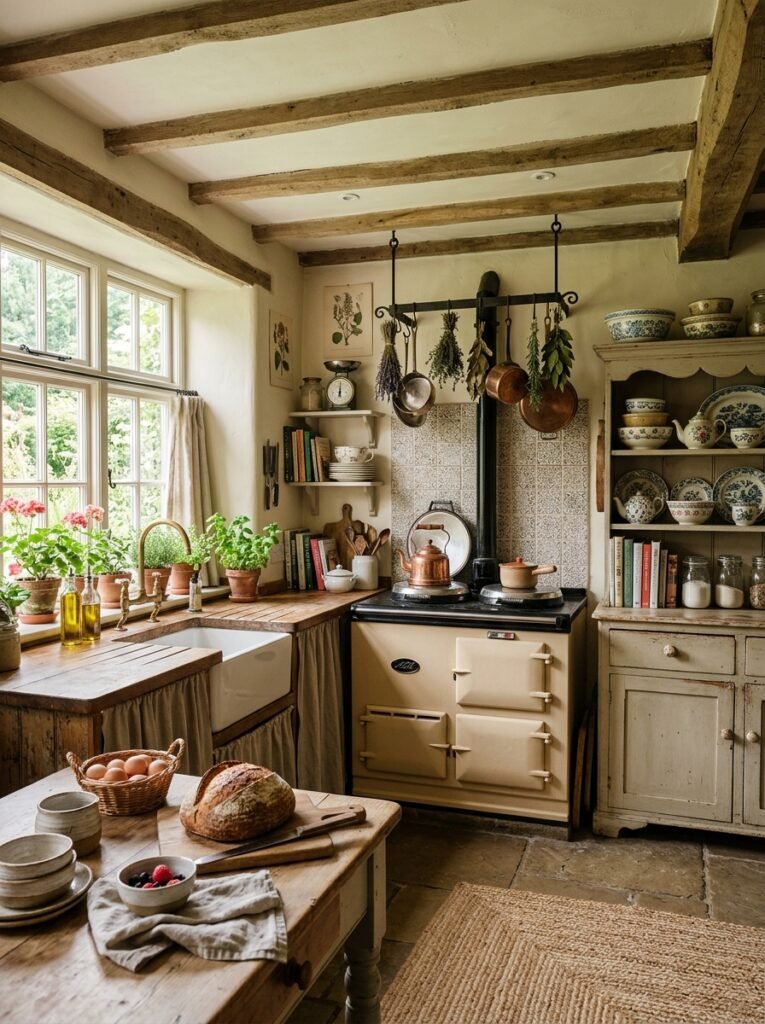
These grandmacore kitchen ideas cover the cabinetry, the color, and the collected details that give a kitchen that inherited feeling.
Plan on revisiting? Pin this for later!
This post may contain affiliate links, I may earn an extra commission, at no extra cost to you.
What Actually Makes a Kitchen Grandmacore
The mistake is treating this as a shopping list. People buy a few floral canisters, hang a lace valance, and end up with a modern kitchen wearing a costume.
What actually carries the style is the sense that the room was assembled over decades by someone who never threw anything away. Five things get you there:
- Furniture instead of fitted units: a dresser, a hutch, a freestanding cabinet standing where a run of cabinetry would normally go.
- Things left on display: plates, copper, glass jars, anything that would usually be shut away.
- Pattern on a surface nobody expects: a backsplash, a range hood, the inside of a pantry door.
- Soft color with age in it: buttercream, sage, dusty rose, powder blue, never anything clean and saturated.
- Fabric in the kitchen: cafe curtains, a sink skirt, a cushioned bench.
Get three of those five right and the room reads grandmacore before a single ceramic hen arrives. It also means the cheapest moves are the most effective ones, since fabric and paint do more here than new cabinetry ever will!
Cabinetry and Built-In Furniture
1. Blue Willow Cabinets With Mismatched Hardware
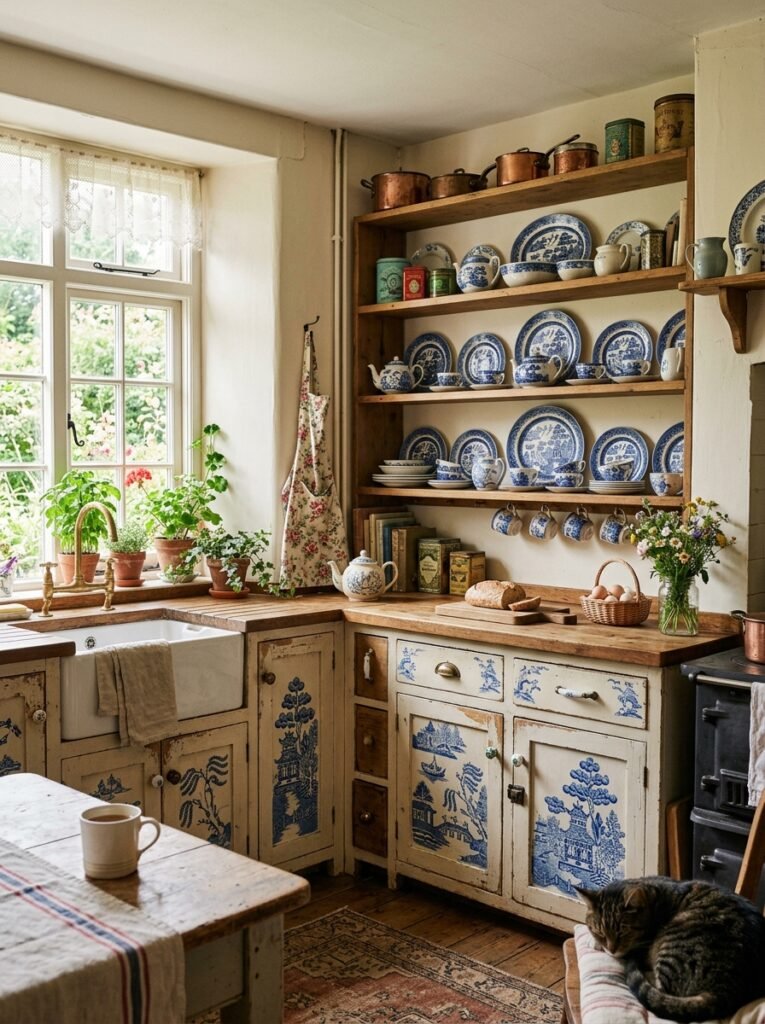
Painting cabinets the soft blue and white borrowed from old transferware china gives a kitchen instant age, since the palette reads inherited instead of chosen.
Mismatched vintage cup pulls finish the effect, because nothing in a genuinely old kitchen ever matched.
Buy the hardware secondhand where you can, as the tarnish does half the work for you.
2. A Scalloped Valance Over Hidden Uppers

Running a scalloped oak valance along the underside of the upper cabinets softens the hard horizontal line that makes fitted kitchens look installed. The curve alone shifts a plain run of doors toward something closer to furniture.
Keep the scallops shallow and wide, since a deep decorative edge starts reading as a children’s bedroom.
Also read: 24 Cottagecore Kitchen Ideas That Look Straight Out of a Fairytale
3. A Freestanding Hoosier Cabinet
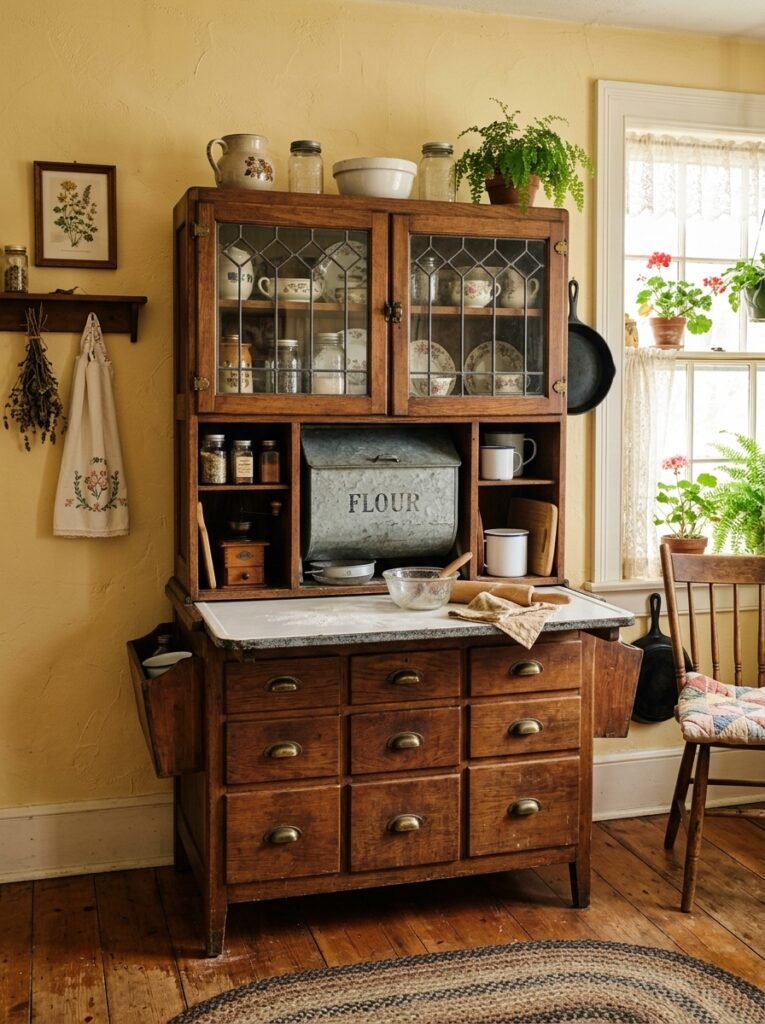
Standing a Hoosier cabinet against a buttercream wall brings in the one piece that says early twentieth century kitchen more clearly than anything else. The enamel work surface pulls out, and the flour bin still works.
Leave a gap either side so it reads as furniture, because pushing it tight between units turns it back into cabinetry.
4. A China Cabinet Built Into the Wall
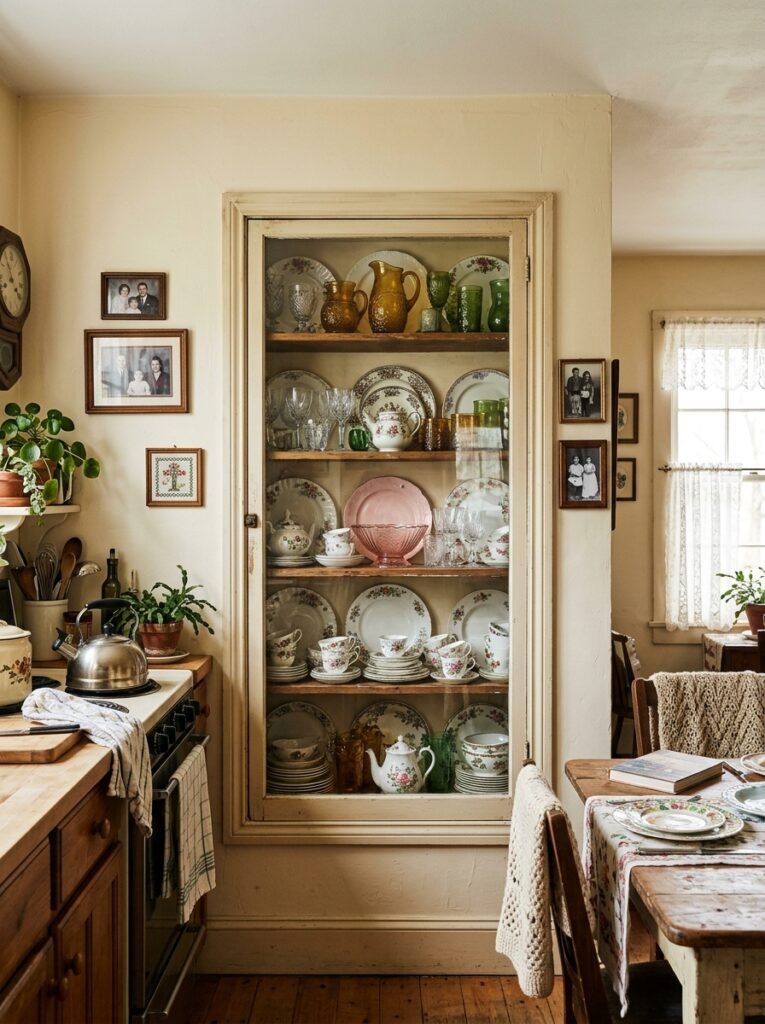
Recessing a glass-fronted china cabinet into the wall itself gives you display storage that looks original to the house, since nothing projects into the room.
It suits the wall between a kitchen and a dining area particularly well!
Fill it with things that share a color story:
- Inherited china, even incomplete sets
- Cut glass and colored pressed glass
- A few pieces that clearly do not match
Repurposed Antique Pieces
5. An Antique Dresser Turned Island
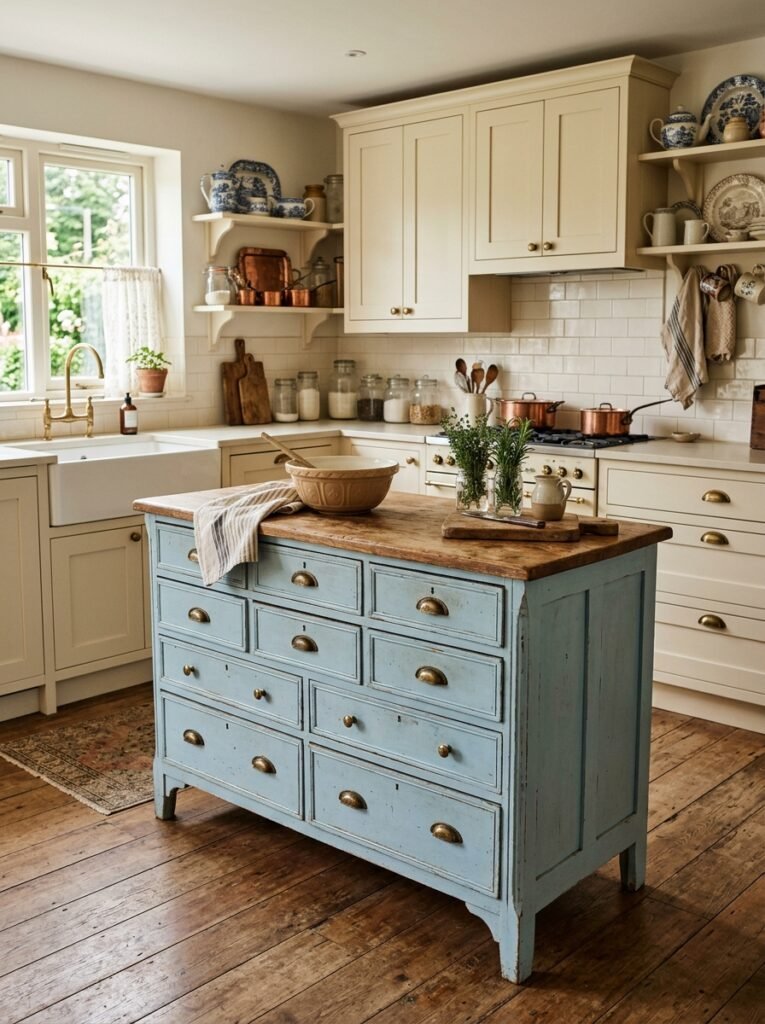
Converting an old dresser into a kitchen island gives you the one thing a built-in island cannot buy, which is a piece with visible history. Painted powder blue with the original drawers left in place, it reads as furniture that wandered in.
Check the height before committing, since most dressers sit lower than the thirty-six inches a work surface wants.
6. A Wallpapered Pantry Door

Papering a pantry door in a small floral hides the most utilitarian surface in the kitchen and turns opening it into a small event. The pattern also stops the door reading as the flat white slab it usually is.
Paper the inside face too, since a plain reverse undoes the surprise the moment anyone opens it.
7. A Kitchen Built Around a Restored Stove
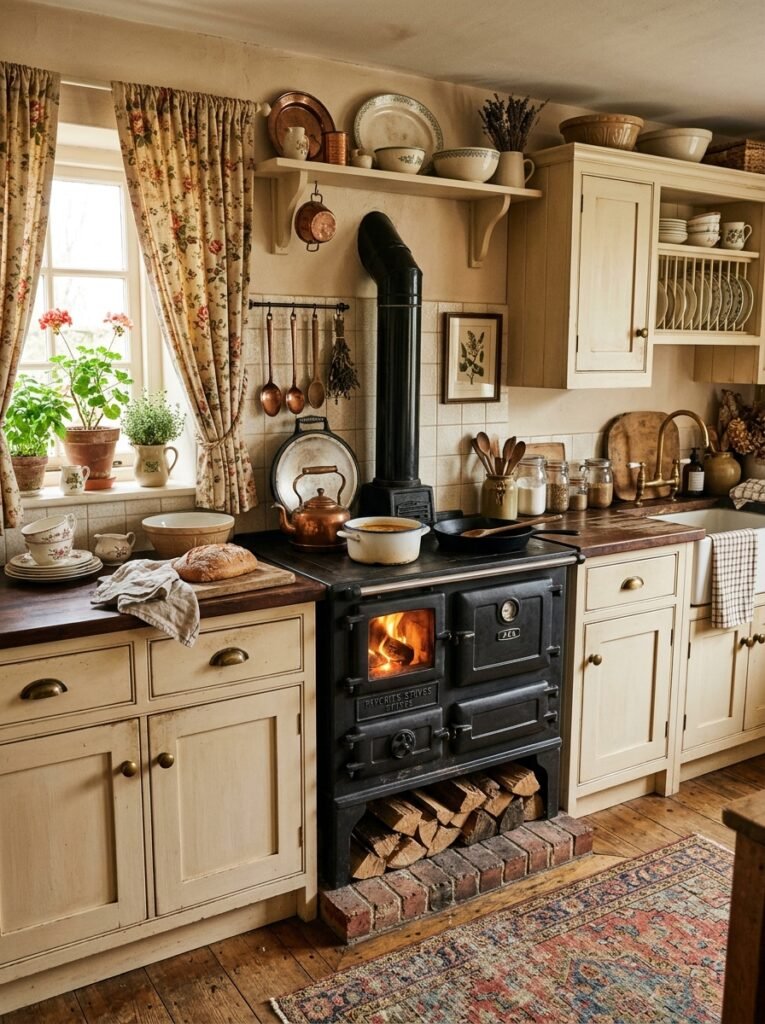
In a small kitchen, letting a restored antique stove be the only statement gives the room a center it would otherwise lack. Cream enamel and chrome trim against plain cabinetry does all the work on its own.
Keep everything else quiet, because a tiny room cannot carry a hero piece and a patterned backsplash at once.
8. An Open Plate Rack Wall
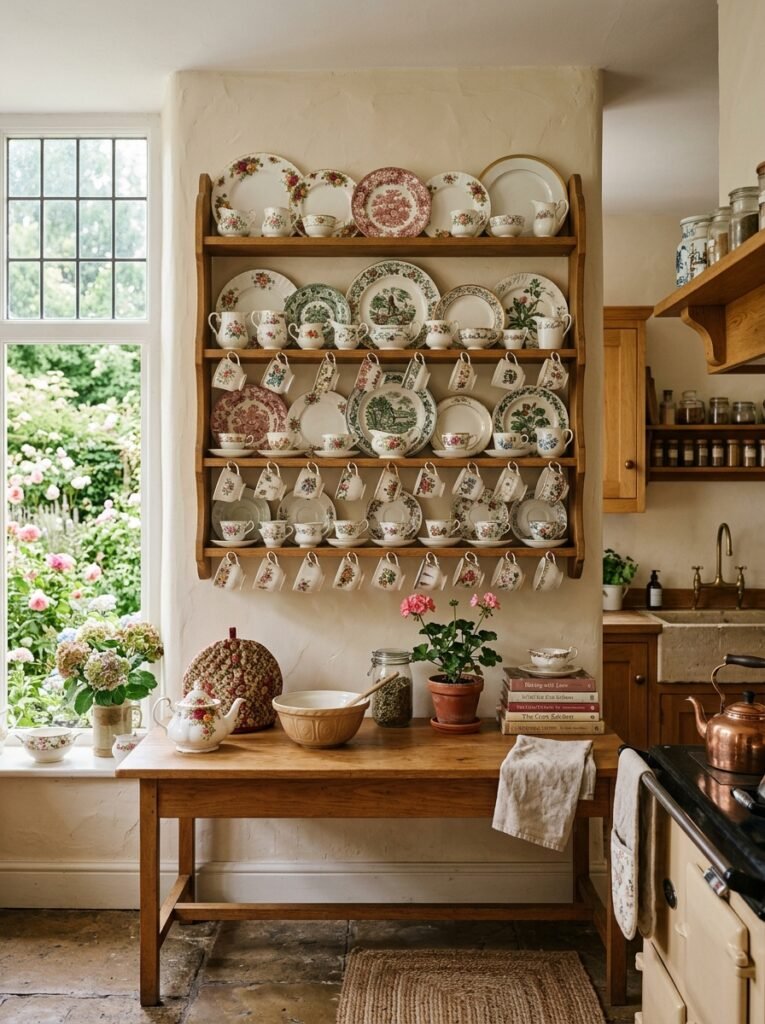
A full wall of open plate racks holding mismatched heirloom china turns everyday dishes into the decoration, which is exactly how old kitchens handled storage before upper cabinets existed. The repetition of circles across a wall is what makes it look composed rather than cluttered.
Group by color instead of by set, so the mismatch reads deliberate.
Color Palettes
9. Sage Green With Delft Tile
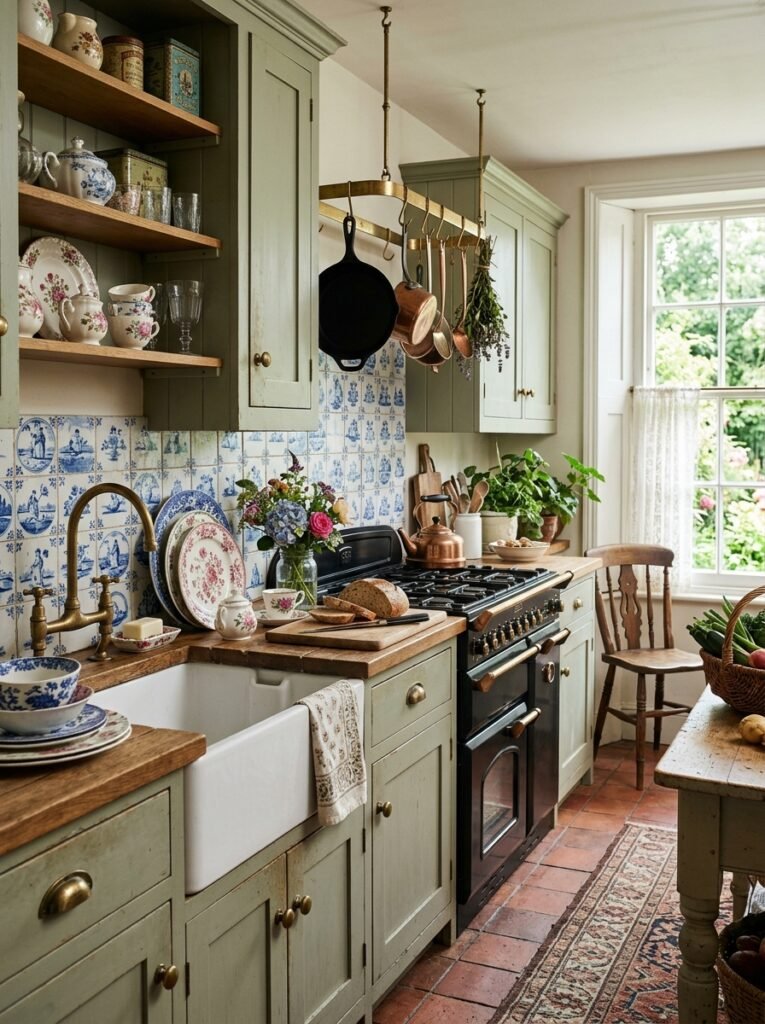
Sage cabinetry gives blue and white Delft tile something soft to sit against, since the muted green shares enough gray to keep the blue from shouting. The combination is old European kitchen more than farmhouse.
Run the tile only behind the stove, because a full wall of figurative Delft becomes exhausting to cook in front of.
Also read: 24 Dreamy Dark Cottagecore Kitchen Ideas You’ll Absolutely Love
10. Rose Pink With Tarnished Brass
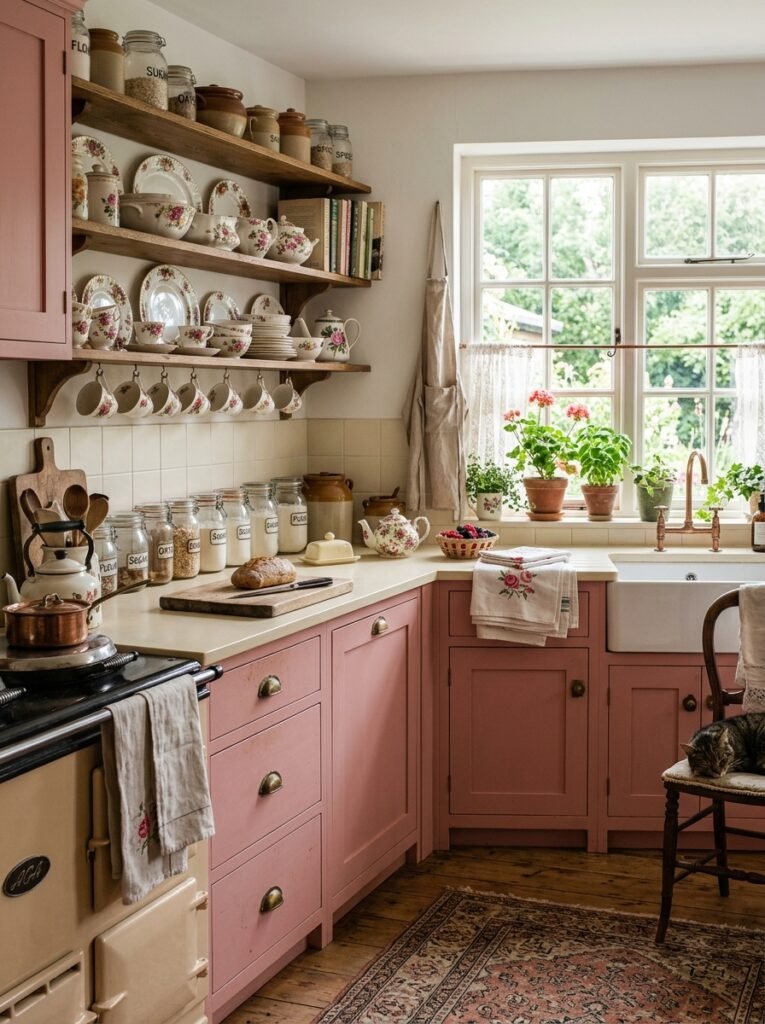
Dusty rose walls stop looking sweet the moment you put aged brass against them, because the darkened metal supplies the weight the color lacks. Floral ceramics on open shelves complete the palette without adding another surface.
Choose unlacquered brass so it keeps darkening, since a polished finish will make the pink read modern.
11. Dusty Lilac With Gingham Shades
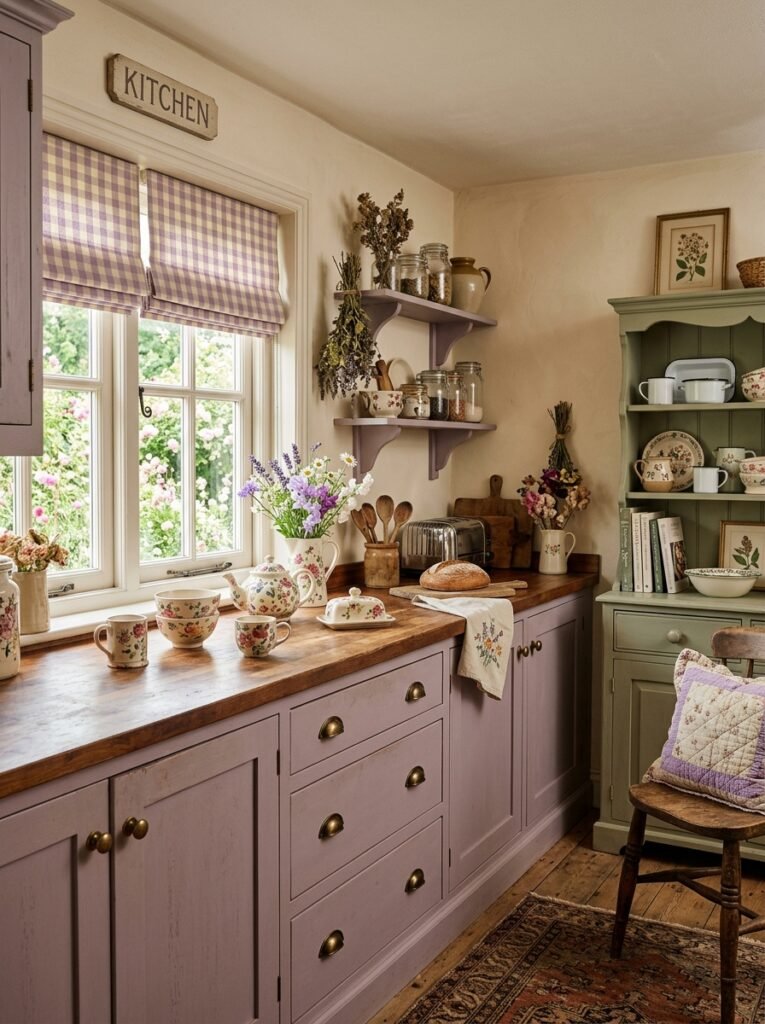
Lilac is the grandmacore color nobody expects, and gingham roman shades give it the homespun structure that keeps it from drifting toward a nursery.
Painted furniture in the same family ties the room together.
Keep the gingham check small, because oversized checks read contemporary and undo the whole effect.
12. Cream and Moss With a Skirted Sink
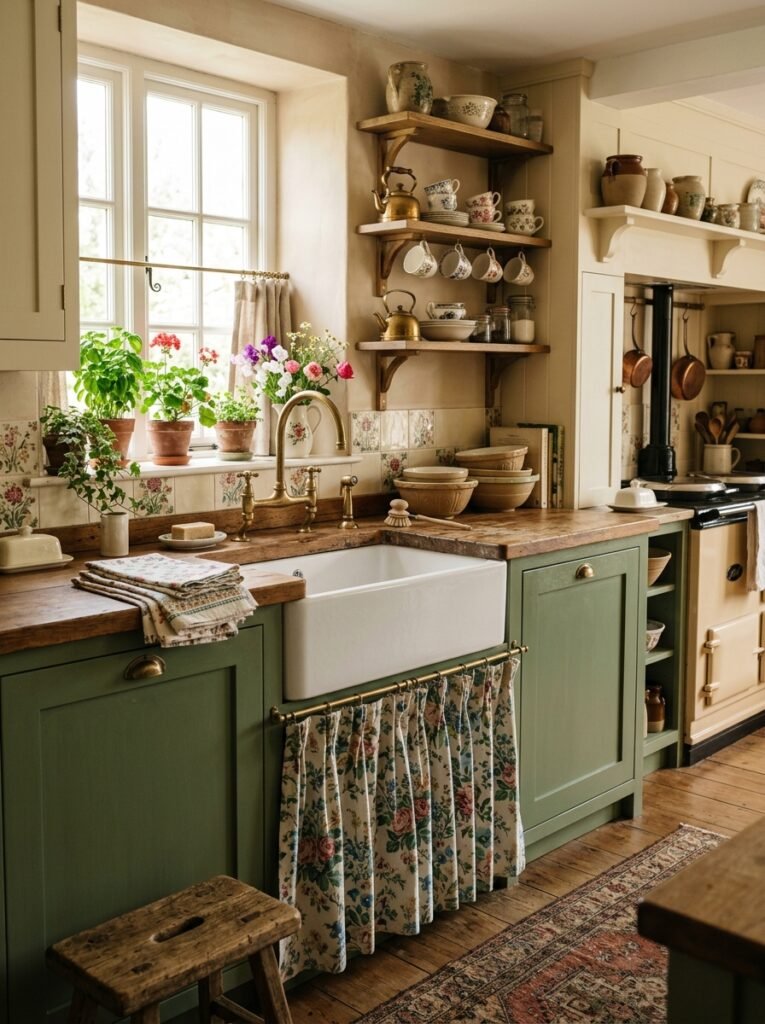
Cream cabinetry with deep moss green below keeps a kitchen warm without going dark, since the green grounds the room while the cream holds the light. A gathered skirt under the farmhouse sink adds the softness paint cannot.
Use a washable cotton, because anything under a sink will get splashed within a week.
Walls, Tile and Pattern
13. Framed Botanical Wallpaper Behind the Range
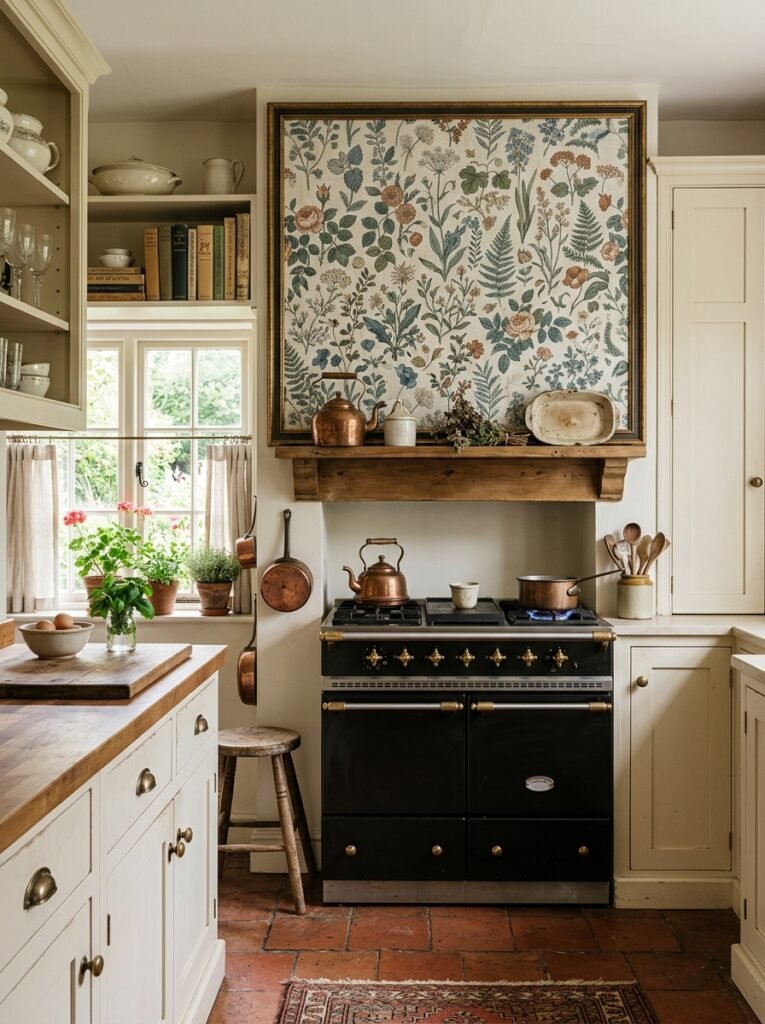
Treating a panel of botanical wallpaper like artwork, framed in slim molding behind an antique range, gives the cooking wall a focal point that tile cannot match. The frame is what stops it looking like wallpaper someone gave up on halfway.
Put glass or acrylic over the panel if it sits close to the burners.
14. A Needlepoint-Inspired Backsplash
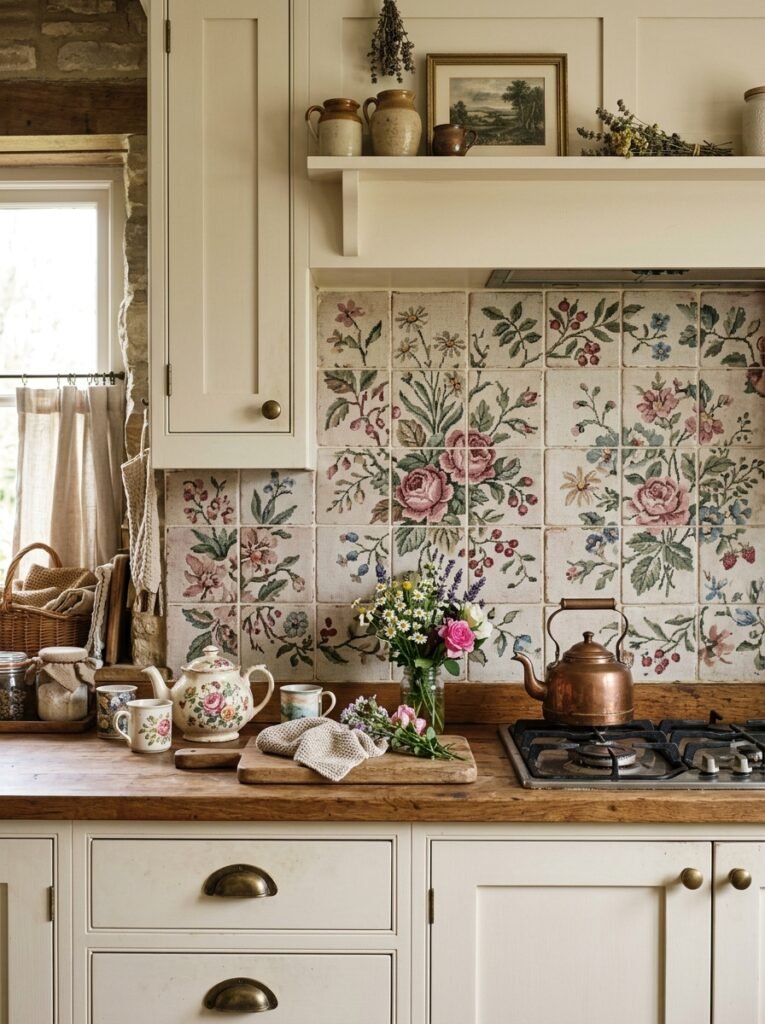
Tile laid in a muted cottage floral that mimics old needlepoint gives a backsplash the handmade quality that printed patterns never quite reach. The faded palette is what sells it, since bright florals read new immediately.
Keep the surrounding cabinetry plain, because pattern on pattern in a small kitchen becomes difficult to look at.
15. A Floral Ceramic Range Hood
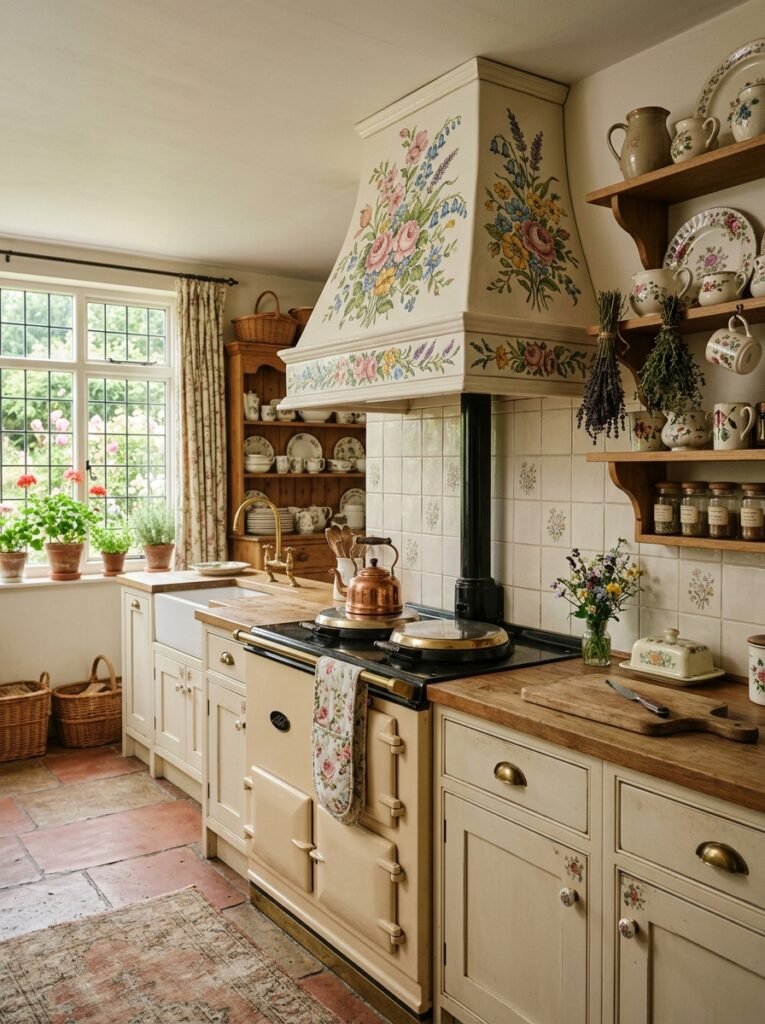
A hood clad in hand-painted floral ceramic turns the least attractive appliance in the kitchen into the reason people look at that wall.
Vintage English kitchens did this constantly, and it still reads as craftsmanship.
Match the tile colors to something already in the room, so the hood belongs instead of arriving as a novelty.
16. Hand-Painted Fruit Motif Tiles
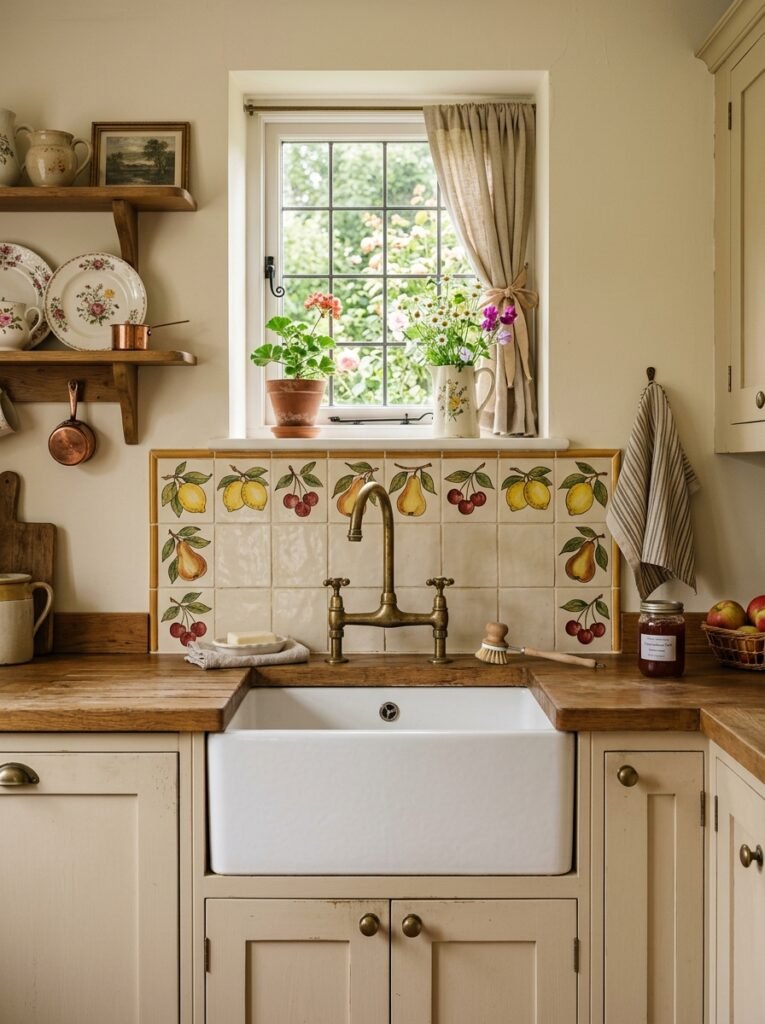
Framing the sink wall in hand-painted fruit tiles brings back a decorative tradition that disappeared when kitchens went minimal.
Lemons, pears, and cherries on a cream ground carry warmth that a plain subway wall never will.
Use them as a border around plain tile instead of covering the whole wall, since the restraint is what keeps it charming.
Counters, Floors and Wood Tones
17. An Oversized Marble Pastry Counter

A generous slab of marble set at a slightly lower height gives you a proper pastry surface, since marble stays cool and dough behaves on it. It also looks more like a kitchen where someone actually bakes!
Accept that it will stain and etch, because a spotless marble counter looks new and new is the enemy here.
18. A Checkerboard Floor Under Cream Cabinets
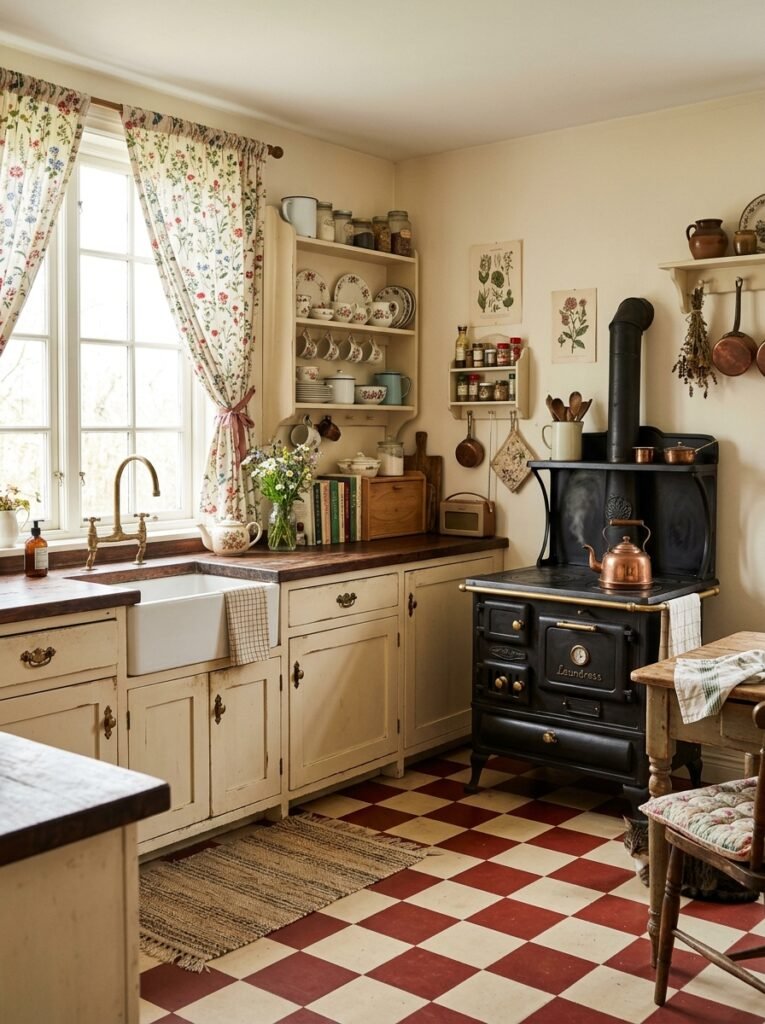
Checkerboard flooring is the single fastest way to date a kitchen backward, since the pattern belongs so completely to mid-century domestic interiors. Under cream cabinets with dark wood counters, it stops being retro and starts being period.
The three-part formula is worth following exactly:
- Muted checkerboard underfoot, never high-contrast black and white
- Cream or buttermilk cabinetry above it
- Dark wood counters to separate the two
19. Cherry Butcher Block With Floral Cafe Curtains

Deep cherry butcher block brings a red warmth that oak and walnut cannot, and floral cafe curtains at the window pick up the same tone in fabric. The two together make a kitchen feel considerably older than it is.
Hang the curtains at the halfway point of the window, since full-length panels in a kitchen read as a dining room.
20. Antique Pine With a Sink Skirt
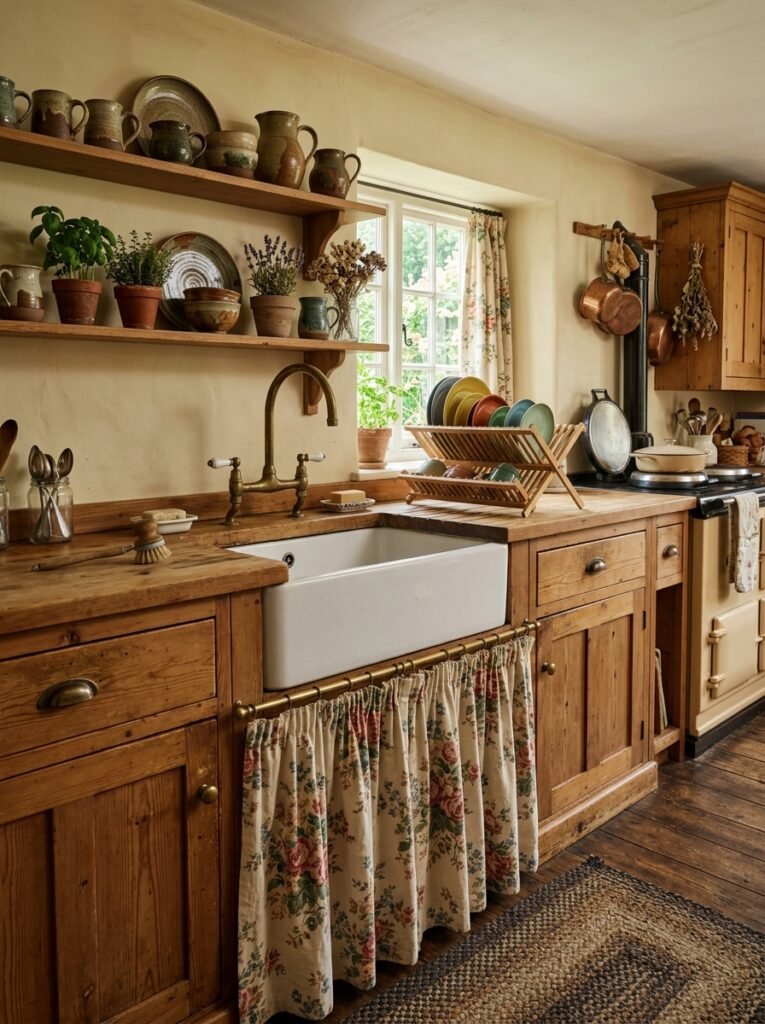
Replacing the lower cabinet doors under the sink with a gathered fabric skirt is how kitchens handled that run before fitted units existed. Against honey-toned antique pine, it looks like the room was always this way.
Fit it on a simple tension rod, because the whole appeal is that it comes down and goes in the wash.
Textiles and Collected Details
21. An Enclosed Nook With Quilted Cushions
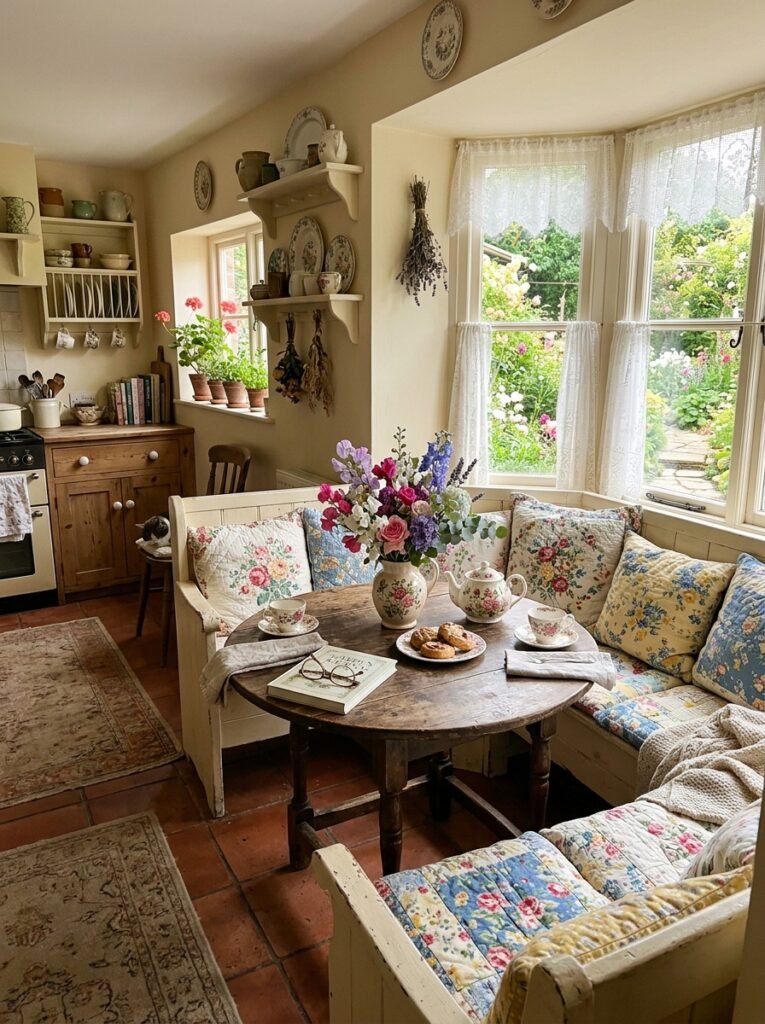
Built-in benches wrapping a corner give a kitchen somewhere to sit that feels held rather than perched, and quilted cushions add the softness a wooden bench badly needs.
It works in kitchens too small for a proper table, which is worth remembering when planning a breakfast nook.
Choose a quilted cotton over foam, since it flattens into something that looks used instead of staying showroom plump.
22. A Copper Pot Wall Against Cherrywood
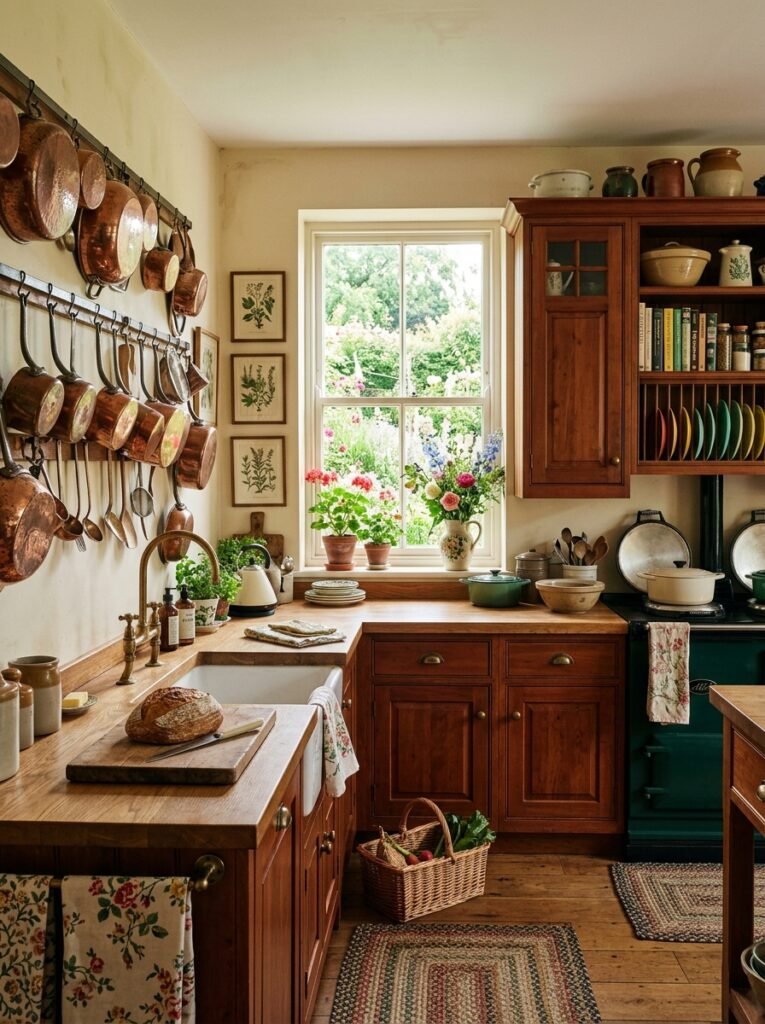
Hanging copper pots on a rail turns cookware into a display that improves as it tarnishes, and against cherrywood cabinetry the two warm tones reinforce each other. Small botanical prints between the pans fill the gaps.
Hang pots you genuinely use, because a wall of unused copper develops dust instead of patina.
23. Walnut With Lace, Brass Rails and Glass Jars
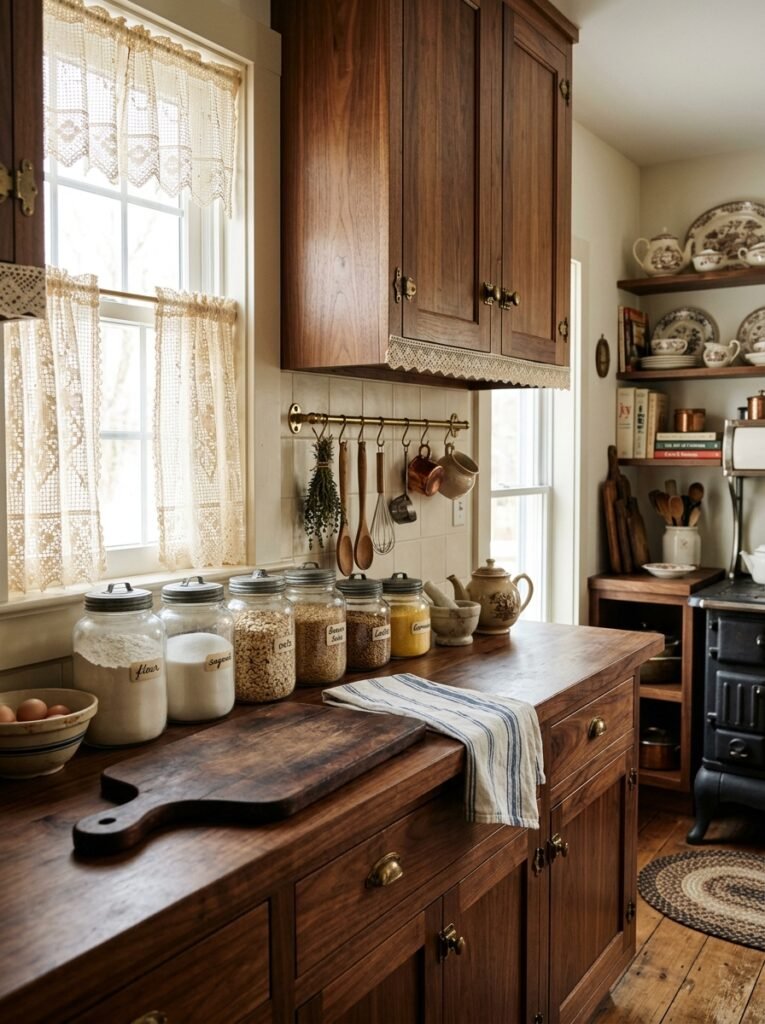
Warm walnut cabinetry takes lace curtains better than any pale wood, since the contrast between dark grain and fine white fabric is what makes both register. Brass rails and glass canisters of dry goods finish the counter.
Decant into glass rather than hiding packaging away, because visible flour and sugar is half the look.
24. The Full Maximalist Version

Floral wallpaper, heirloom china on every surface, and three different wood tones in one room sounds like chaos, though it is closer to how these kitchens actually looked. Nobody inherited a coordinated house!
Three rules keep it readable:
- Hold every element inside one warm color family
- Vary the pattern scale, so one large print and two small ones
- Leave one surface completely empty as a rest point
Final Thoughts on a Grandmacore Kitchen Ideas
The cheapest moves carry this style furthest.
A sink skirt, cafe curtains, glass jars on the counter, and a coat of buttercream paint will get you closer than new cabinetry, because what reads as grandmacore is softness and visible history instead of joinery.
Start with one piece of freestanding furniture and one surface of pattern, then let the collected details arrive slowly.
A kitchen assembled over two years will always look more inherited than one finished in a weekend, which is the entire point.
Grandmcore Kitchen Ideas FAQ
Grandmacore kitchens borrow from mid-century and early twentieth century domestic interiors.
You get freestanding furniture instead of fitted units, open display of china and copper, soft faded colors, pattern on backsplashes and wallpaper, and fabric through cafe curtains and sink skirts!
The room should look assembled over decades instead of installed in one go.
Soft, slightly faded shades carry the style best, so buttercream, sage green, dusty rose, powder blue, moss, and cream form the core palette.
Blue and white borrowed from old transferware china is the other classic route.
Avoid anything clean and saturated, since brightness reads modern and undoes the inherited quality immediately.
They overlap heavily, though grandmacore leans harder into mid-century domestic details like Hoosier cabinets, checkerboard floors, and heirloom china, while cottagecore leans rural and romantic with dried flowers and open pantries.
Grandmacore feels like a suburban grandmother’s kitchen, and cottagecore feels like a countryside one. Most rooms borrow from both.
Paint, fabric, and secondhand finds do nearly all of it.
A sink skirt, cafe curtains, vintage cup pulls, glass canisters, and a coat of soft color cost very little combined.
Charity shops and estate sales supply mismatched china and copper cheaply, and the mismatch is genuinely part of the look.
Small kitchens suit it well, since the style relies on soft color and displayed objects instead of square footage.
Keep one hero element, like a restored stove or a plate rack wall, and let everything else stay plain.
The mistake in a tight room is layering pattern on pattern until the space feels closed in.