Most bathrooms get finished in whatever cool gray tile was on offer that year, which is why so many of them feel like a hotel nobody remembers staying in.
The surfaces are hard, the light is flat, and there’s nothing in the room that looks like it was made by hand.
Tuscan style solves that with materials that age instead of wearing out.
Plaster, limestone, terracotta, and unlacquered brass all improve with time and use, which is the whole point of the look.
These Tuscan bathroom ideas cover the stone, the color, and the details that make a bathroom feel like it’s been there for a hundred years.
Plan on revisiting? Pin this for later!
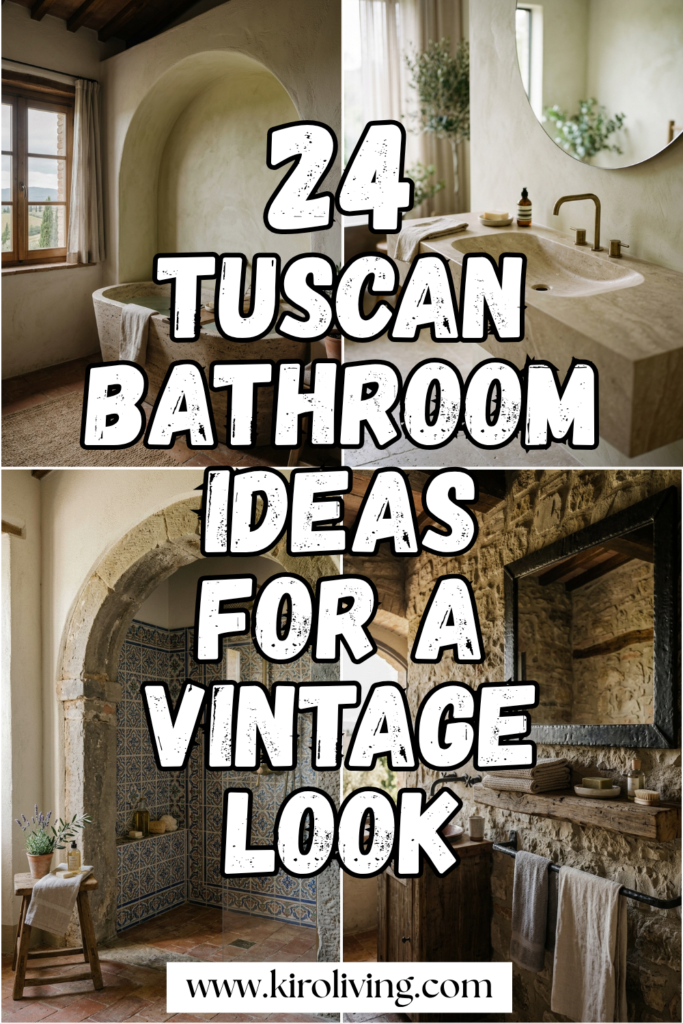
What Actually Makes a Bathroom Tuscan
The mistake most people make is treating this as a color scheme.
They paint the walls terracotta, hang a wrought iron mirror, and wonder why the room still reads suburban.
Color is the easy part. What carries the style is material, and specifically whether that material looks like it was shaped by hand. Five things do most of the work:
- Textured walls: limewash or plaster instead of flat paint, so the surface catches light unevenly.
- Natural stone: limestone, travertine, or anything with visible variation across the slab.
- Warm earth tones: terracotta, cream, and sand rather than gray or stark white.
- Unlacquered brass or forged iron: both darken with use, which is the point.
- A curve somewhere: an arched niche, doorway, or shower opening.
Most of the twenty-four ideas below only work because two or three of those are already true in the room. A stone tub in a plaster niche is really just texture plus a curve.
Stone and Surfaces
1. Set a Stone Tub Into a Plaster Alcove
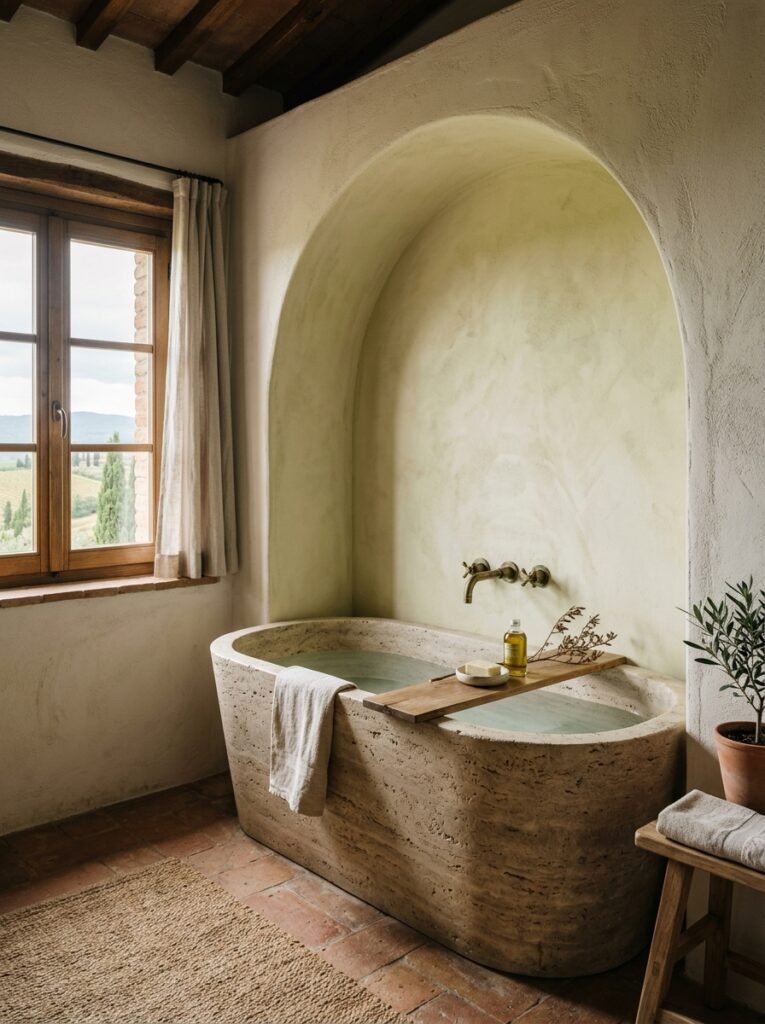
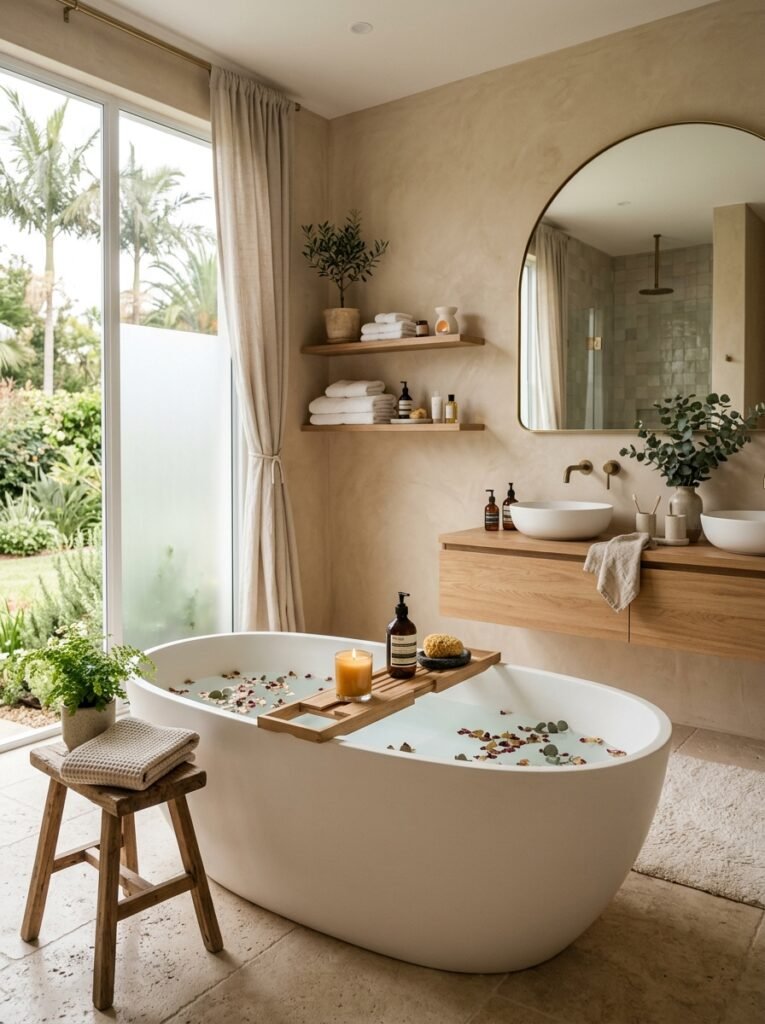
Building a deep travertine tub into a softly arched niche gives the bathroom its anchor, since the curve of the plaster frames the stone the way a doorway frames a view.
The recess also makes the tub feel built rather than placed.
Keep the arch shallow and hand-finished, because a sharply cut opening loses the softness the whole look depends on.
2. Carve the Vanity From One Slab
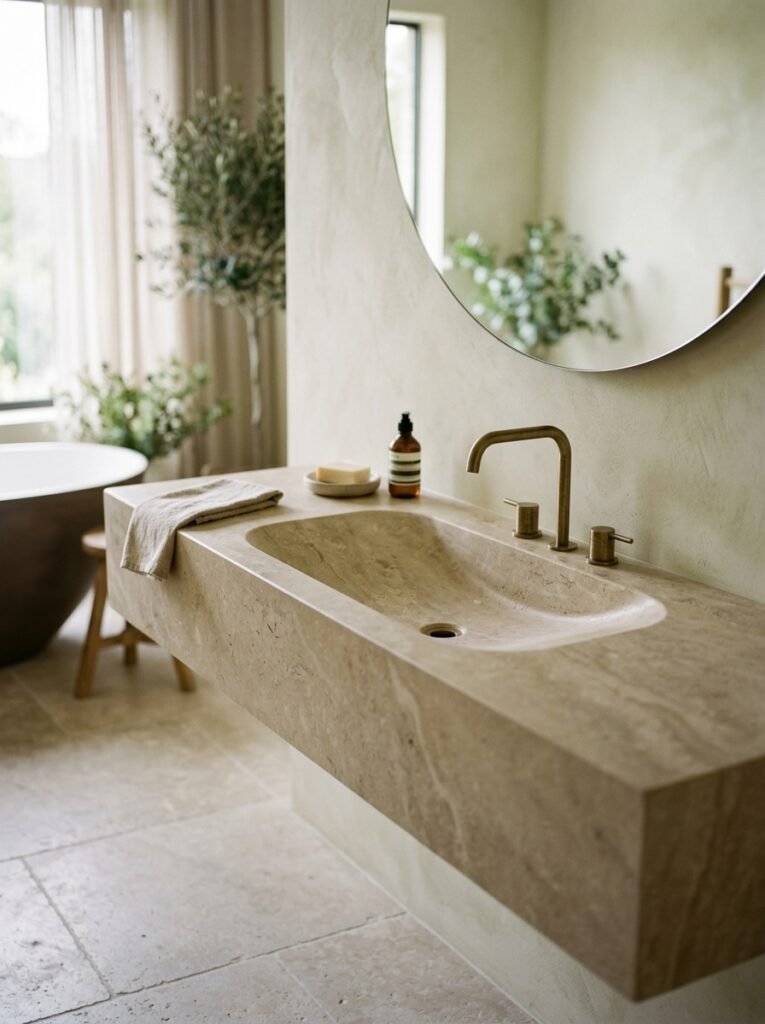
A single oversized limestone block shaped into an integrated sink and counter removes every seam and joint from the most-used surface in the room.
There’s no basin sitting on top, just one continuous piece of stone with a shallow bowl cut into it.
Seal limestone properly before use, since it’s porous enough to stain from toothpaste and soap within weeks.
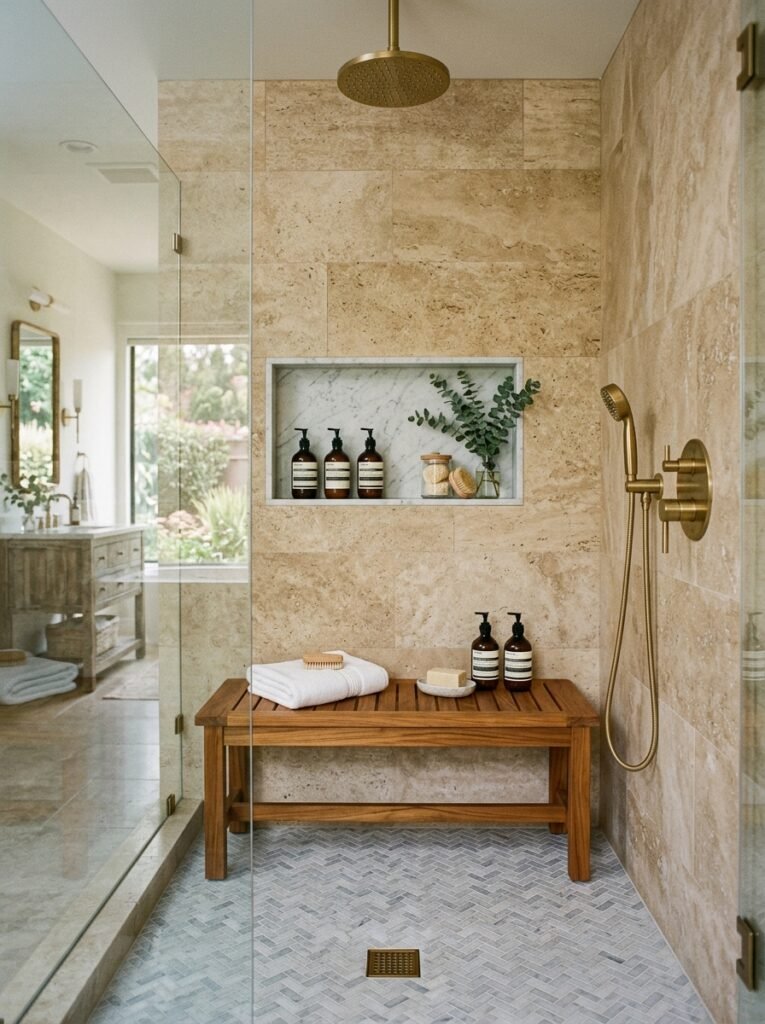
3. Build the Shower Around a Stone Arch
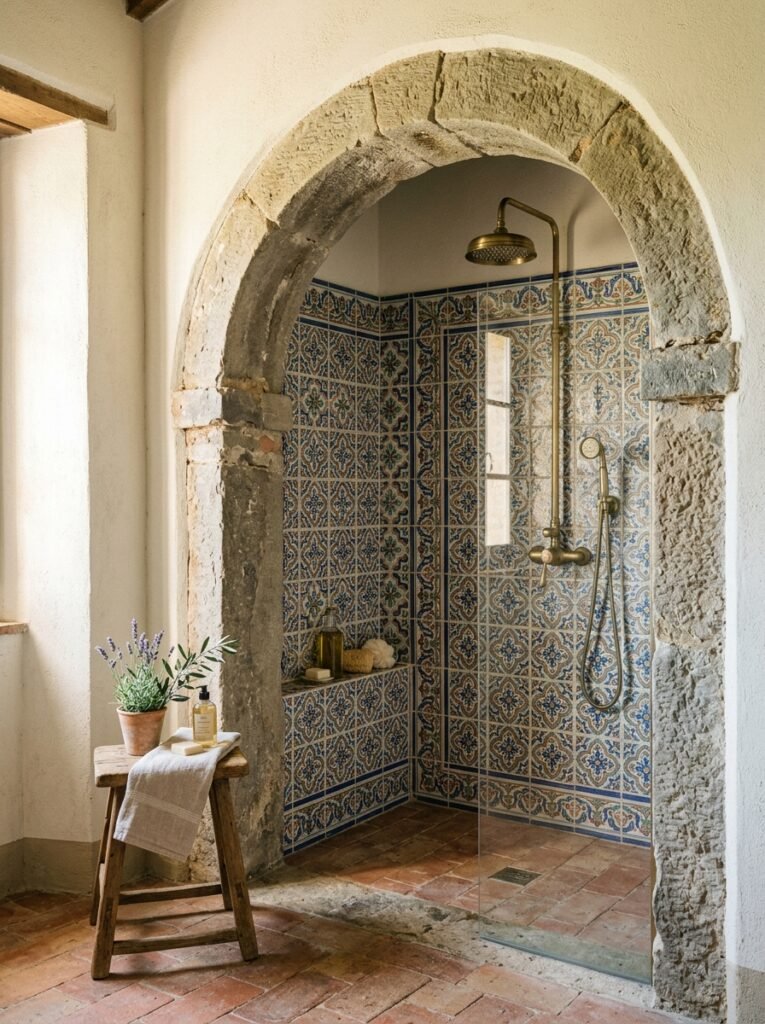
Framing the shower opening in weathered stone turns a functional corner into architecture, and pairing it with Mediterranean tilework inside gives you pattern where the rest of the room stays plain.
The arch does the work that a glass enclosure usually does badly.
Keep the stone rough-cut on the outer face and smooth on the inner, so the shower stays comfortable underfoot.
4. Mix Limestone With Hand-Forged Iron
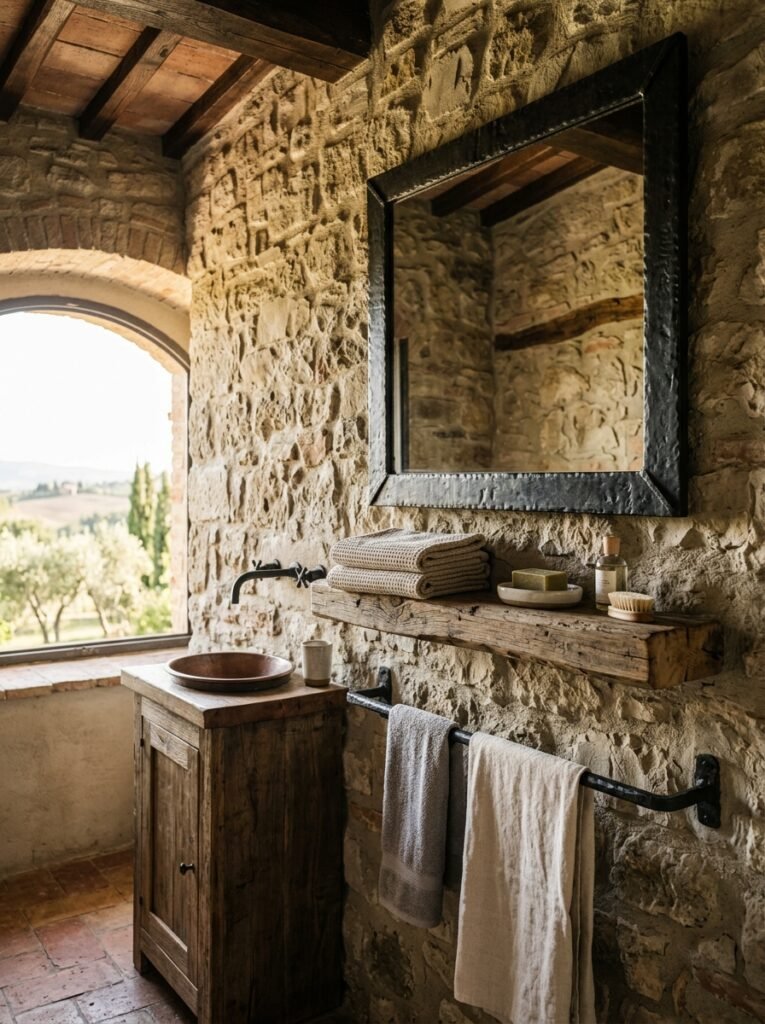
Rough limestone walls and chunky timber details need something dark to read against, and hand-forged black iron gives you that without the coldness of chrome.
Towel bars, hooks, and a mirror frame are enough. Three pieces are usually plenty:
- A hand-forged towel bar
- A pair of hooks by the shower
- A mirror in a matching black frame
Choose pieces with visible hammer marks, because machine-smooth iron reads industrial instead of handmade.
Color and Wall Treatments
5. Pair Cypress Green With Burnt Clay
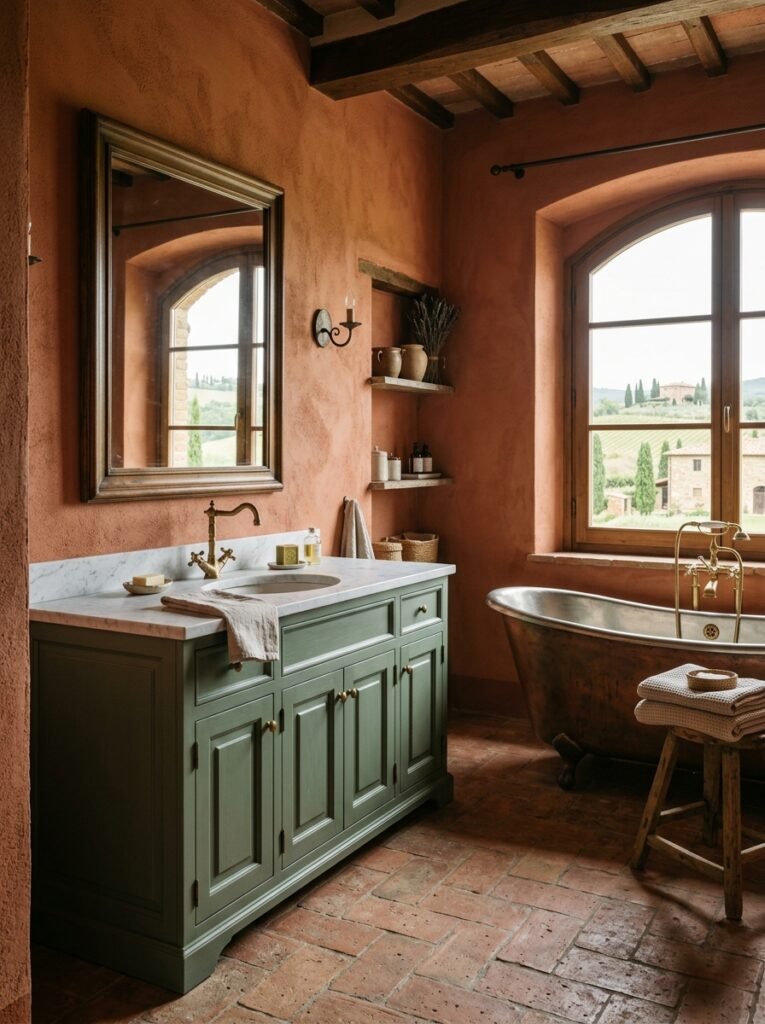
Muted olive cabinetry against terracotta walls and flooring is the Tuscan palette at its most confident, since the two colors sit opposite each other in warmth and settle the room instead of competing.
The green keeps the clay from feeling relentless. Keep both shades dusty, because saturated versions of either will tip the room toward a themed restaurant.
Also read: 24 Elegant Spa-Like Bathroom Ideas For The Ultimate Retreat
6. Paint a Fresco Panel on the Wall
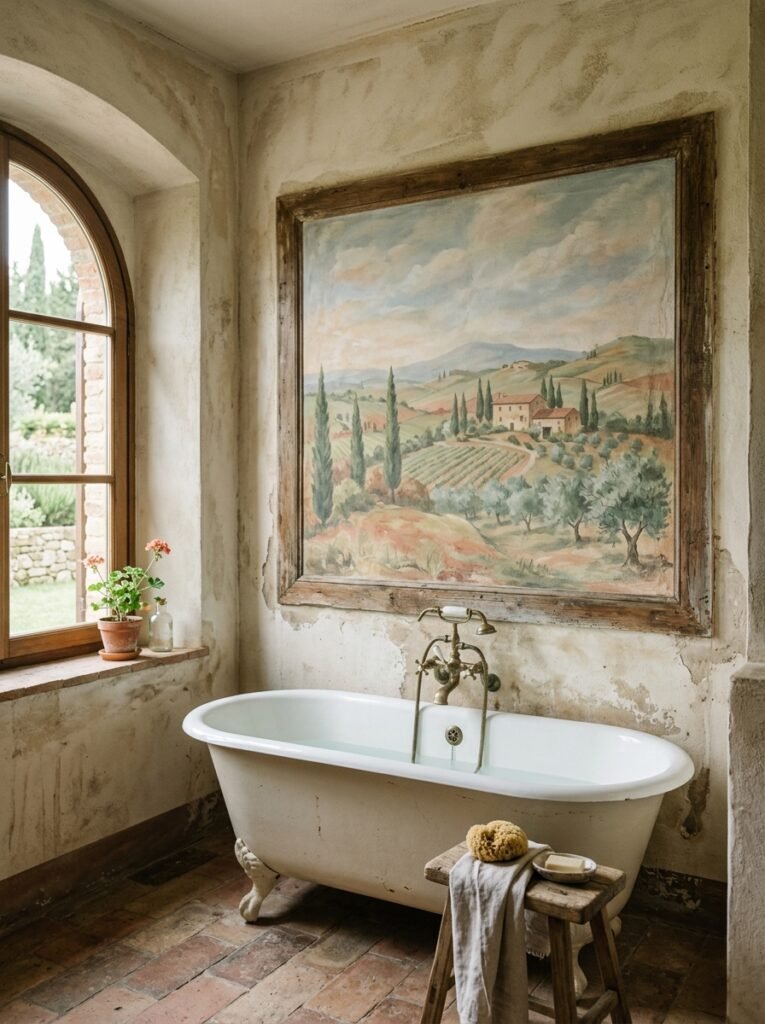
Hand-painted Tuscan landscape panels framed by aged plaster give a bathroom a focal point that no tile can match, and the faded quality is what makes it look inherited. A single panel above the tub is plenty.
Commission or paint it in muted tones only, since anything bright will read as a mural rather than a fresco.
7. Take the Fresco to the Ceiling
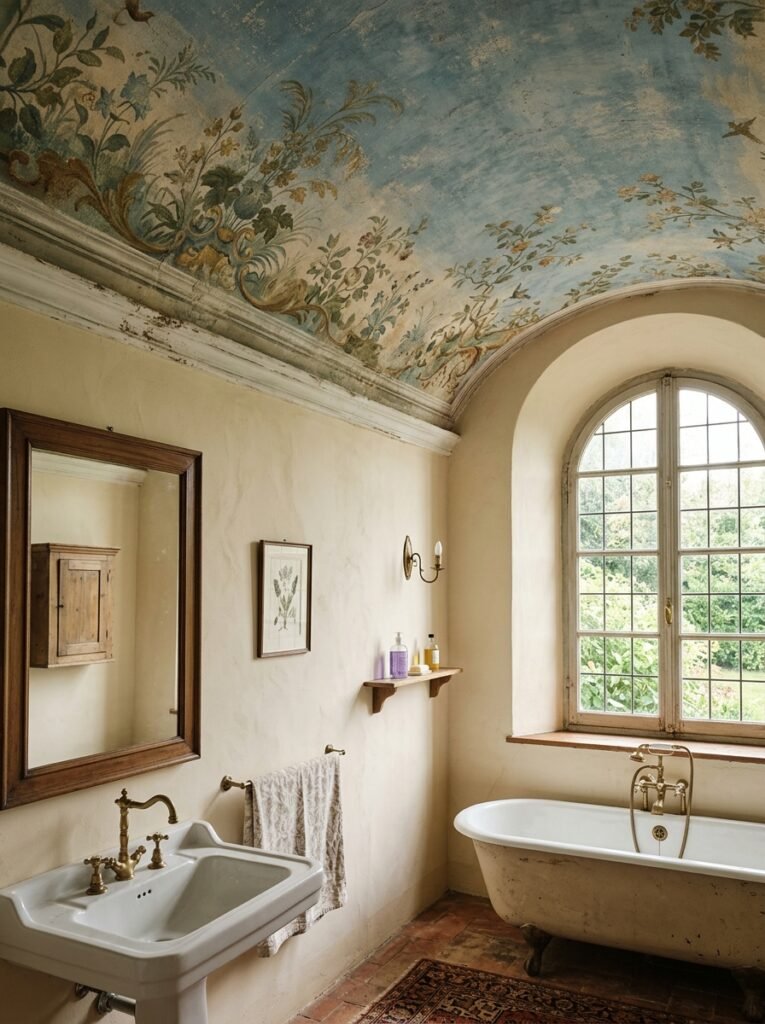
Warm cream walls paired with a faded botanical or sky fresco overhead is the villa move most bathrooms never attempt, and it works because nobody expects to look up in a small room.
The ceiling becomes the surprise. This suits rooms with decent height, so in a low bathroom keep the design sparse and the color close to the wall tone.
8. Go Dark for a Powder Room
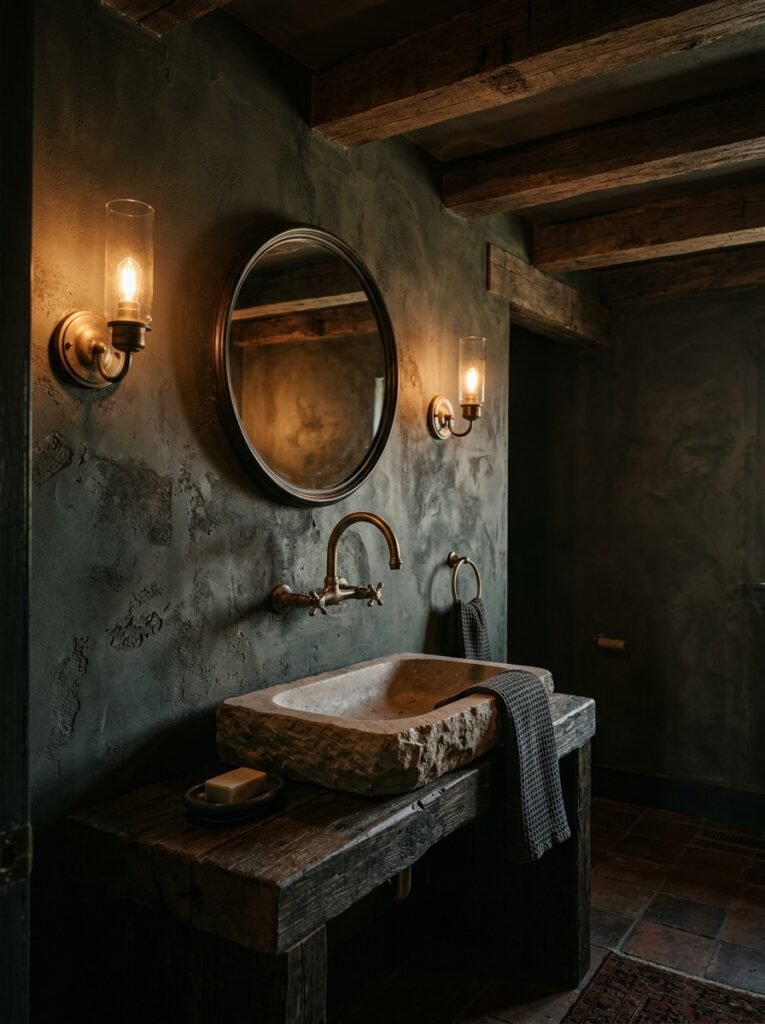
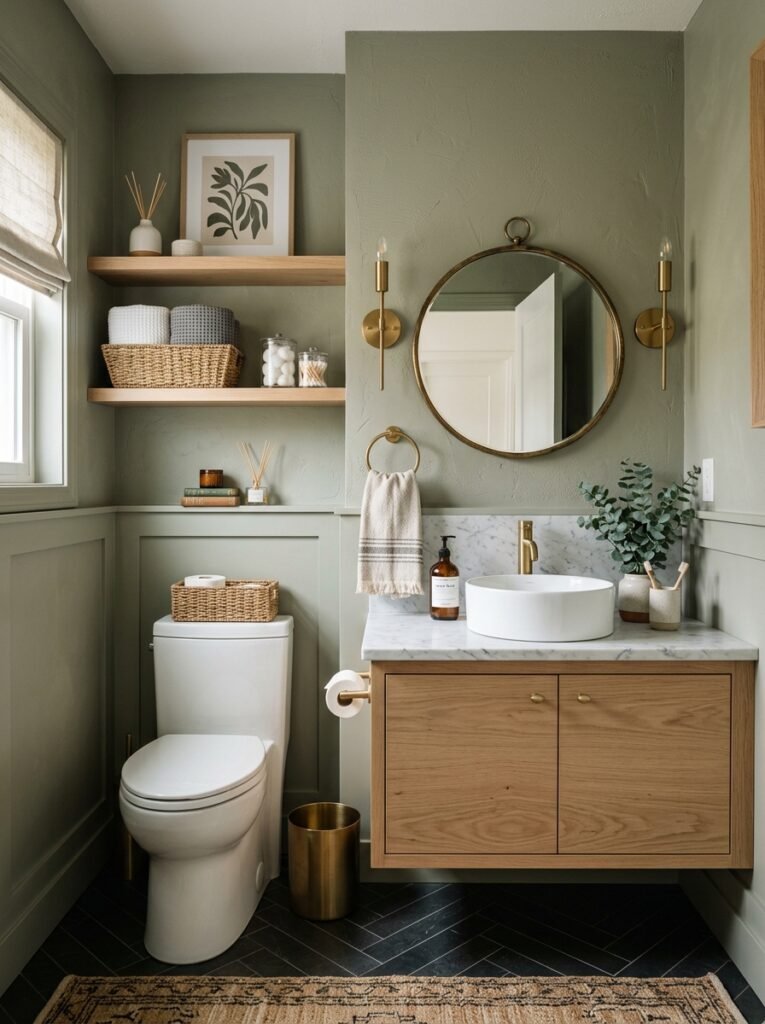
Aged plaster in deep tones, reclaimed beams overhead, a stone basin, and antique brass turns a small powder room into something closer to a wine cellar.
Because there’s no natural light to protect, a windowless room is the perfect candidate.
Light it entirely with warm bulbs at low level, since overhead light flattens dark plaster completely.
Tile and Flooring
9. Lay a Sunburst Floor in Terracotta and Stone
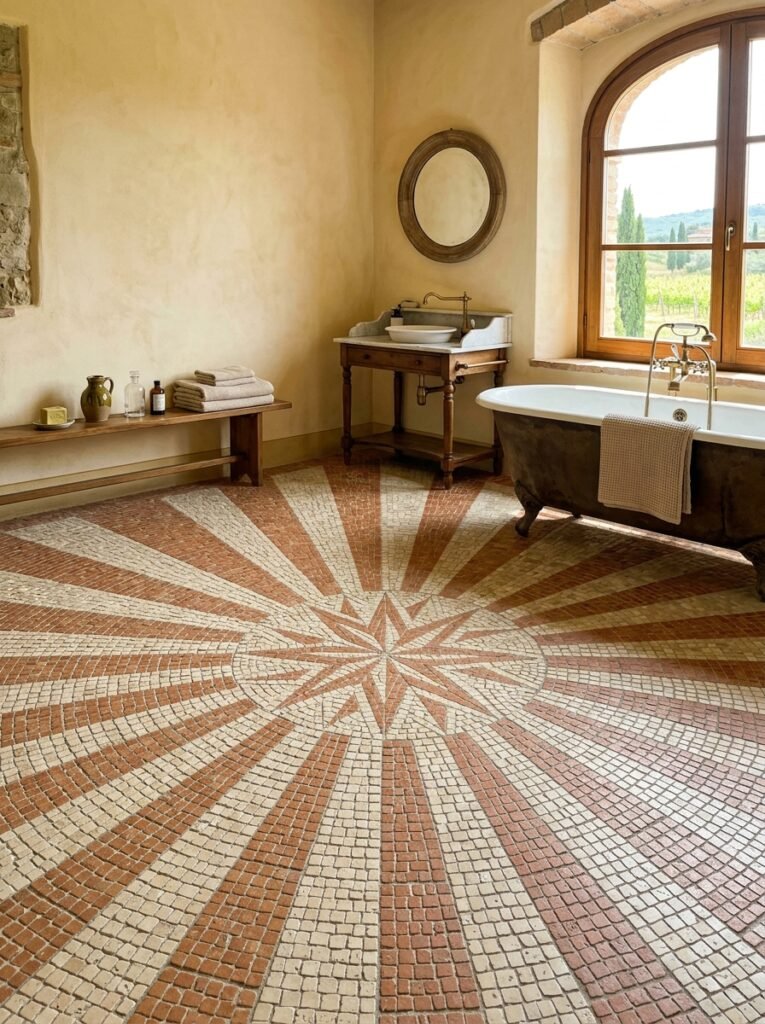
A custom floor radiating outward from the center of the room gives a plain bathroom a genuine centerpiece, and the mix of terracotta and pale stone means the pattern reads through color instead of grout lines.
It suits square rooms best.
Have the pattern drawn to your exact dimensions, because a radiating design cut off awkwardly at a wall loses its whole effect.
10. Run Olive-Toned Zellige Across the Walls
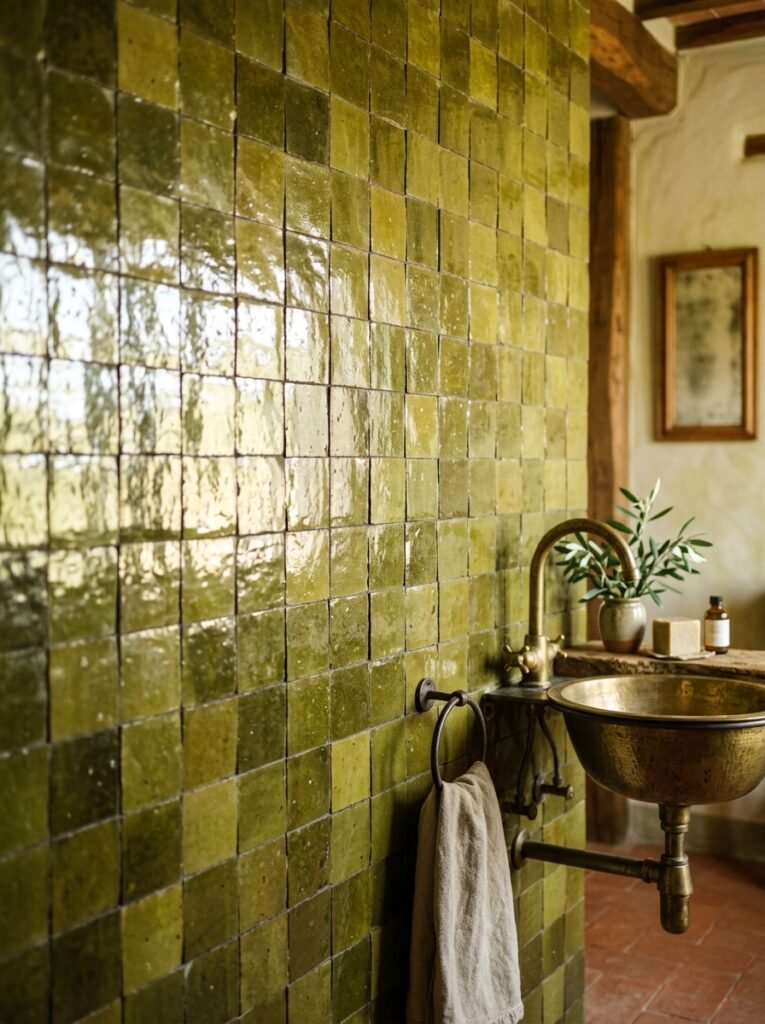
Handmade zellige tiles in olive tones bring the uneven glaze and irregular edges that machine tile can’t replicate, so the wall catches light differently across its whole surface.
Against earthy plaster, the variation looks more deliberate.
Accept the inconsistency instead of fighting it, since asking a tiler to make zellige look uniform defeats the point of buying it.
Fixtures and Finishing Details
11. Fit Apothecary-Style Cabinetry
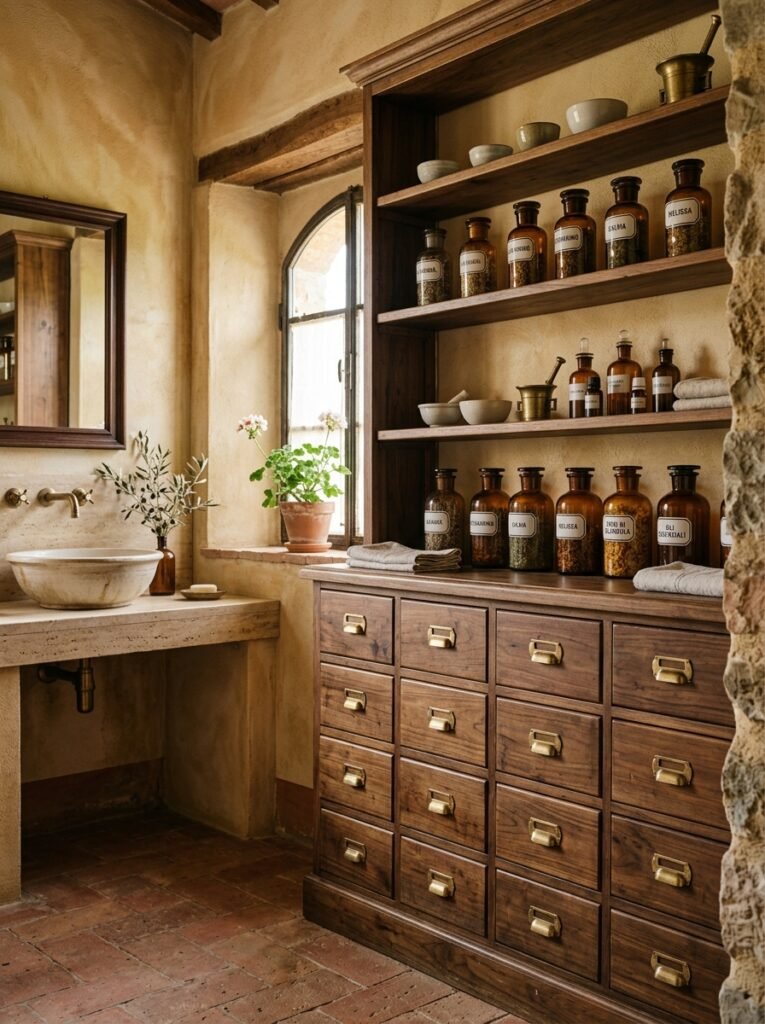
Wooden pharmacy cabinets with narrow drawers and glass fronts give a bathroom storage that looks collected instead of installed, especially with unlacquered brass pulls and amber glass jars on the shelves.
The dark wood grounds all that pale stone.
Unlacquered brass will darken and patina within months, which is exactly what you want here.
12. Put a Freestanding Tub Under an Arched Window
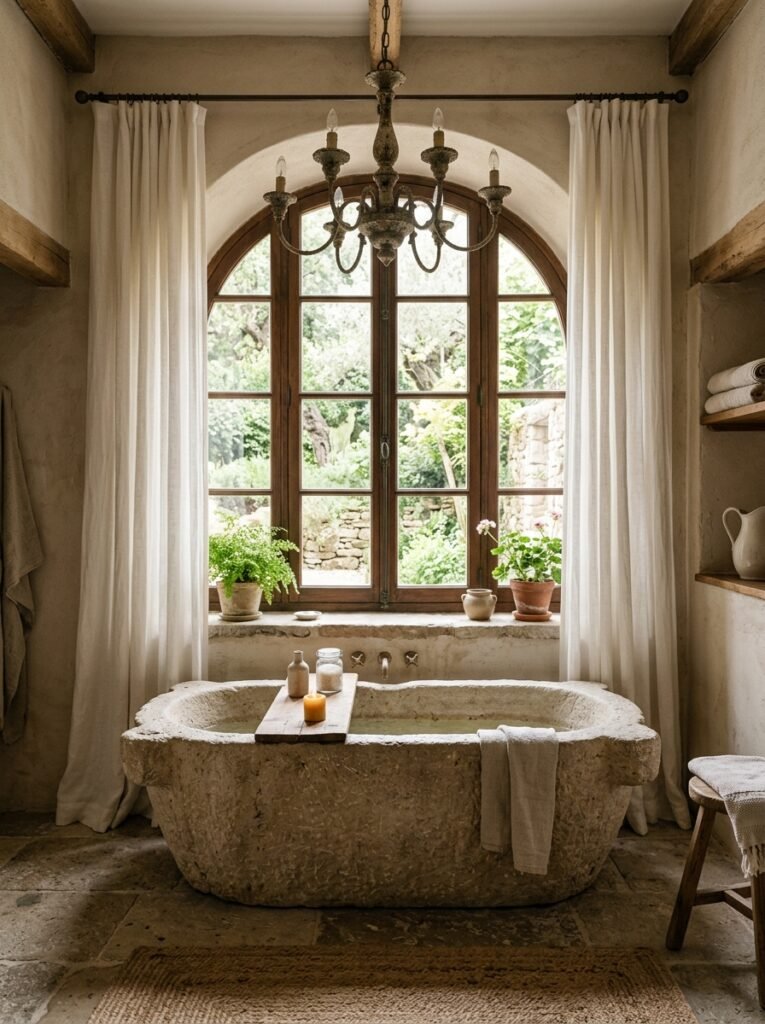
A stone tub set beneath a tall arched window with linen curtains and a weathered chandelier overhead is the most theatrical version of this style, and it works because the window provides the drama while the tub stays simple.
Natural light does most of the styling. Choose a chandelier rated for damp locations, and hang it high enough that nobody stands up into it.
Arches, Niches, and Old Stone Walls
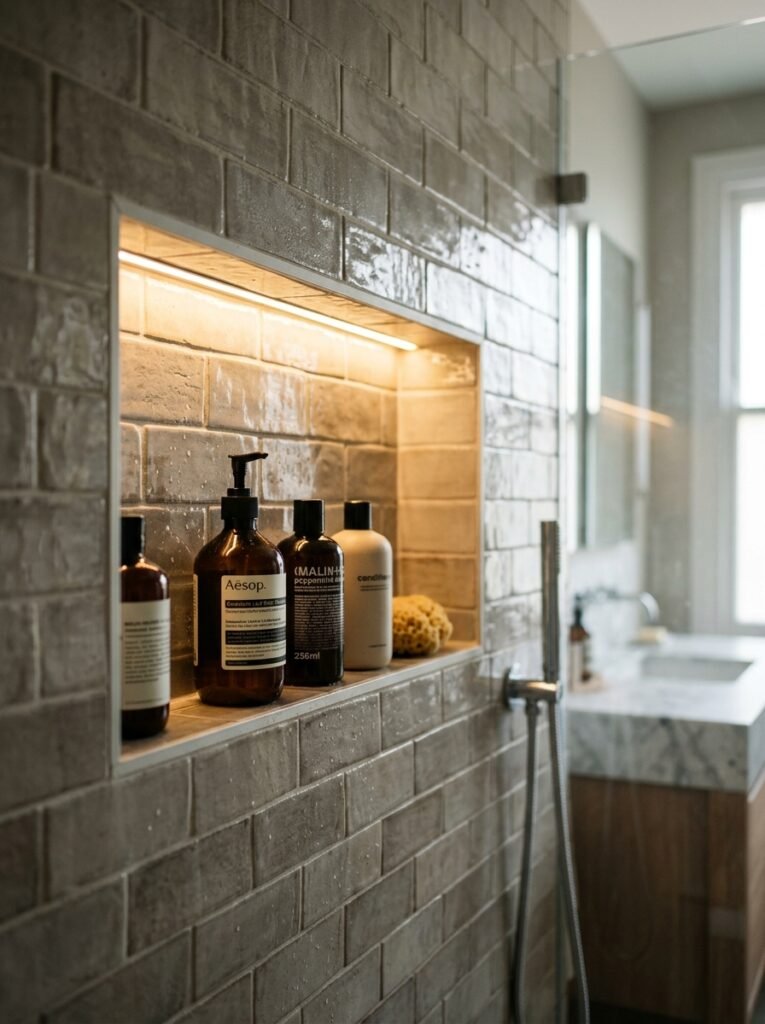
13. Tile the Inside of an Arched Niche
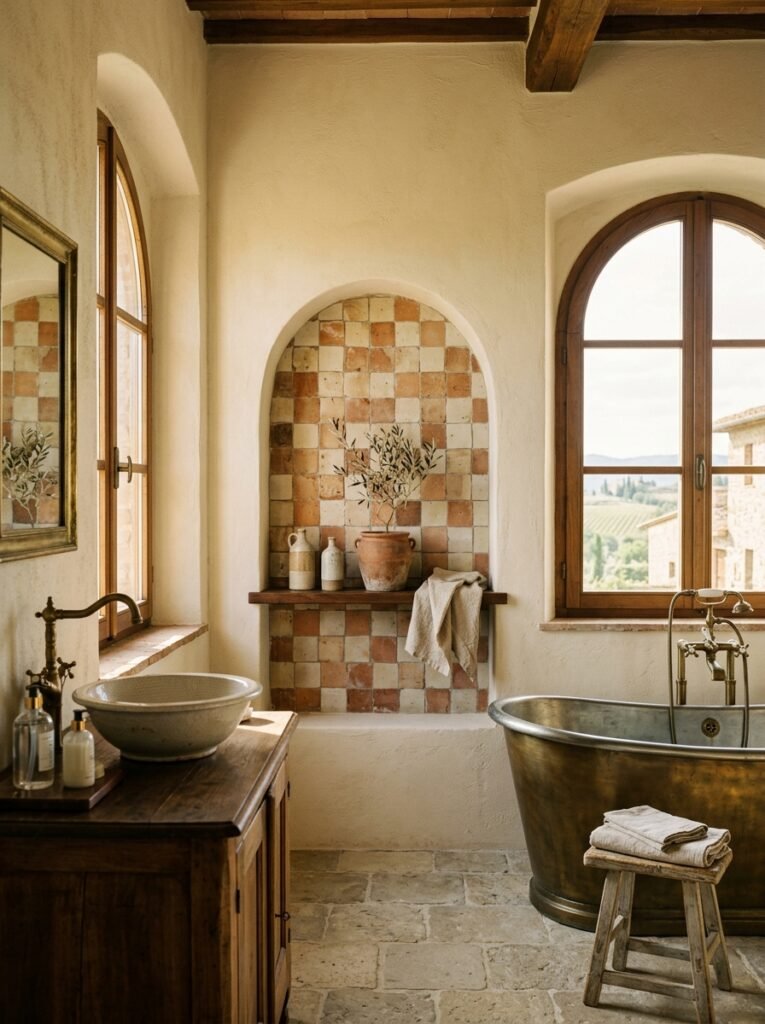
A shallow arched recess cut straight into the plaster gives you somewhere to put the handmade tile that would overwhelm a full wall, and the curve holds the pattern in place instead of letting it spread.
Small doses of pattern read as craft, while entire walls of it read as a showroom. Keep the niche deep enough to actually hold bottles.
14. Set a Travertine Vanity Against Old Stone
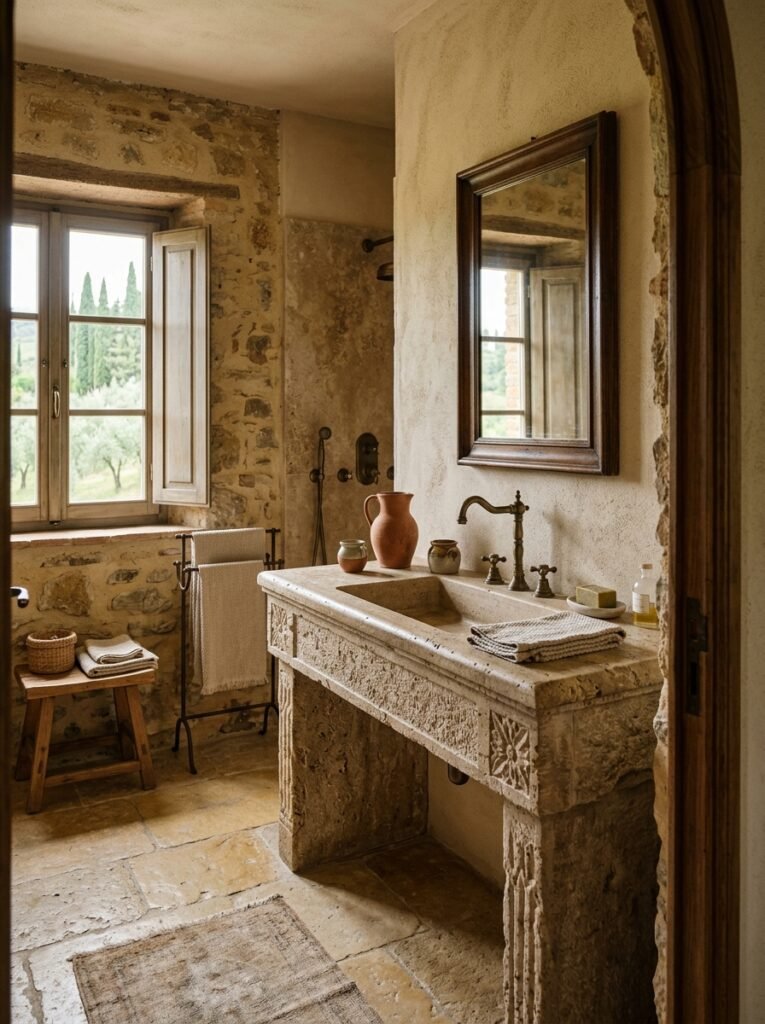
Exposed stone walls already carry enough texture, so the vanity works best when it stays quiet and lets the wall do the talking. Travertine in a pale honey tone is the right weight for that.
Three things keep the pairing from feeling heavy:
- A slab with minimal veining, so the wall stays the busiest surface
- A wall-mounted faucet, which keeps the counter clear
- One mirror instead of a pair, even on a wide vanity
The rougher the wall, the simpler everything in front of it needs to be.
15. Raise Limestone Columns Around the Tub
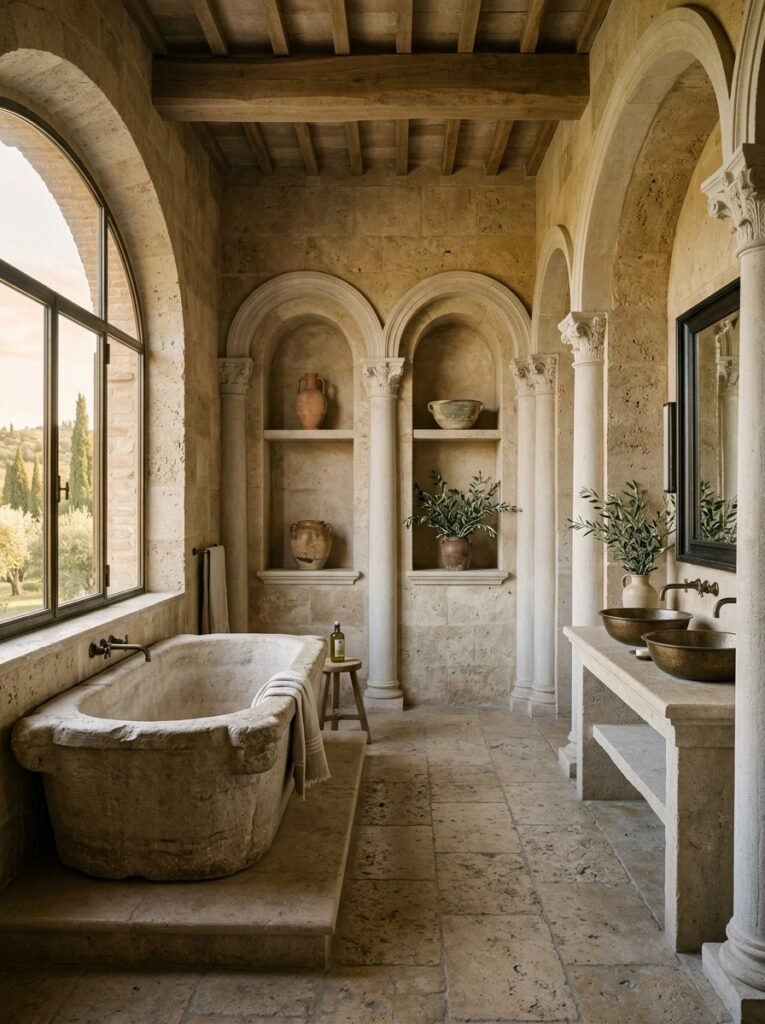
Half-columns flanking a sunken or freestanding tub pull the room toward Roman bathhouse territory, and pale limestone keeps the gesture warm instead of civic, since the stone softens under bathroom light.
Two columns are architecture, and four are a theme park. Run them floor to ceiling so they read as structure, and leave the capitals plain instead of carved.
16. Expose the Beams for a Farmhouse Version
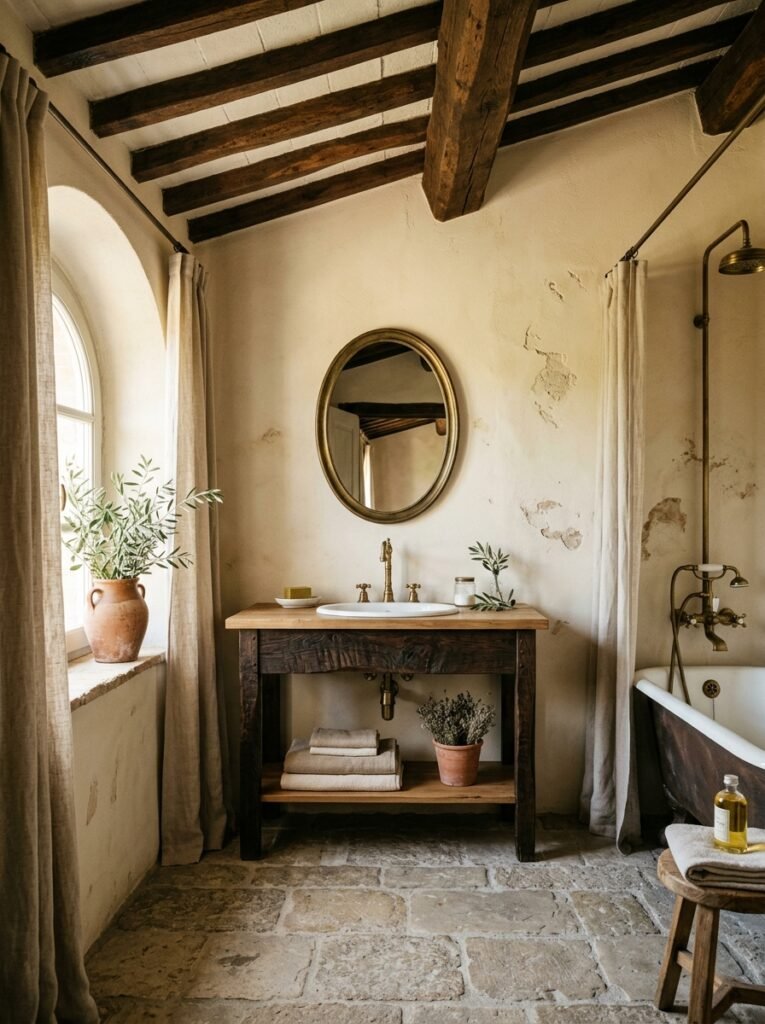
Dark timber beams across the ceiling drop the formality of a Tuscan bathroom and move it toward the working farmhouse end of the style, where the stone is rougher and the fittings are plainer.
Beams give a flat ceiling the one thing paint cannot buy, which is shadow. Go faux only if the depth is convincing, because shallow boards look glued on.
Tubs, Basins, and Vanities
17. Drop In a Freestanding Copper Tub
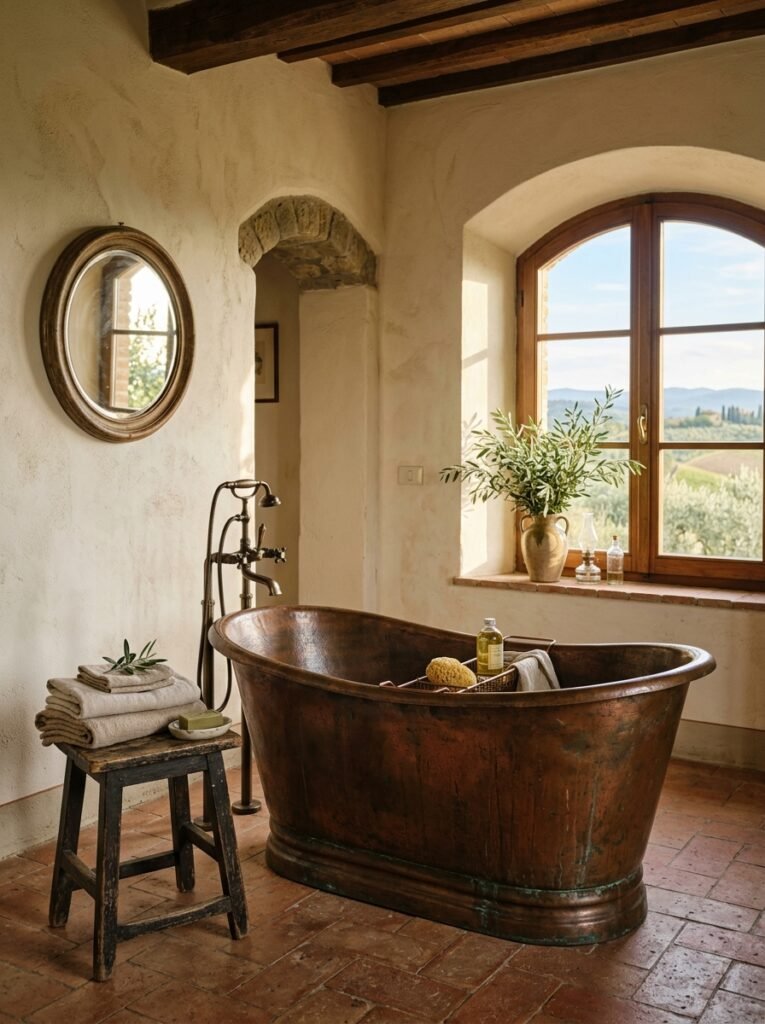
Copper brings a color no other tub material offers, and it shifts from bright penny to deep russet over a few years of use. Against cream plaster, that change is the whole appeal.
Copper does need a little management though:
- Wipe it dry after every use if you want to keep the shine
- Leave it completely alone if you want the patina
- Skip abrasive cleaners, which strip the surface unevenly
Decide early which version you want, since going back is far harder than letting it age.
18. Build the Vanity From Olive Wood
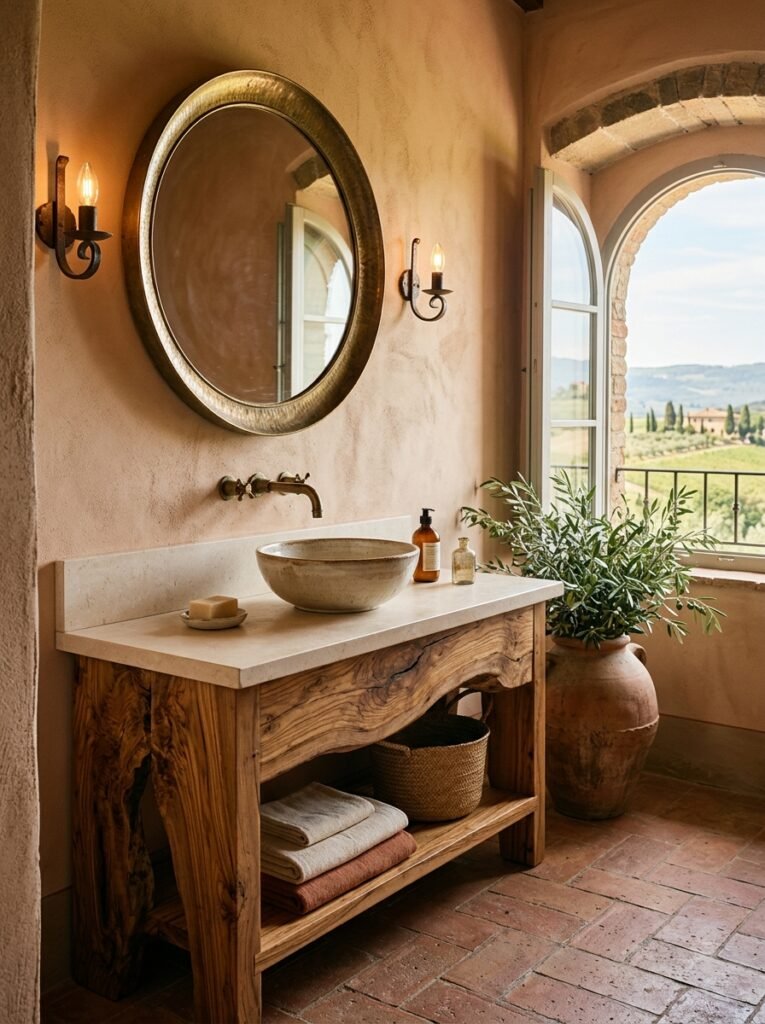
Olive wood has a wild, swirling grain that reads as one-of-a-kind even in a small piece, so a vanity built from it becomes furniture instead of cabinetry.
The grain does what a decorative finish keeps trying and failing to do. Seal it properly for a wet room, and keep the hardware simple so the wood stays the focus.
Also read: 24 Half Bathroom Ideas That Make a Small Space Feel Finished
19. Carve the Basin and Flank It With Iron Sconces
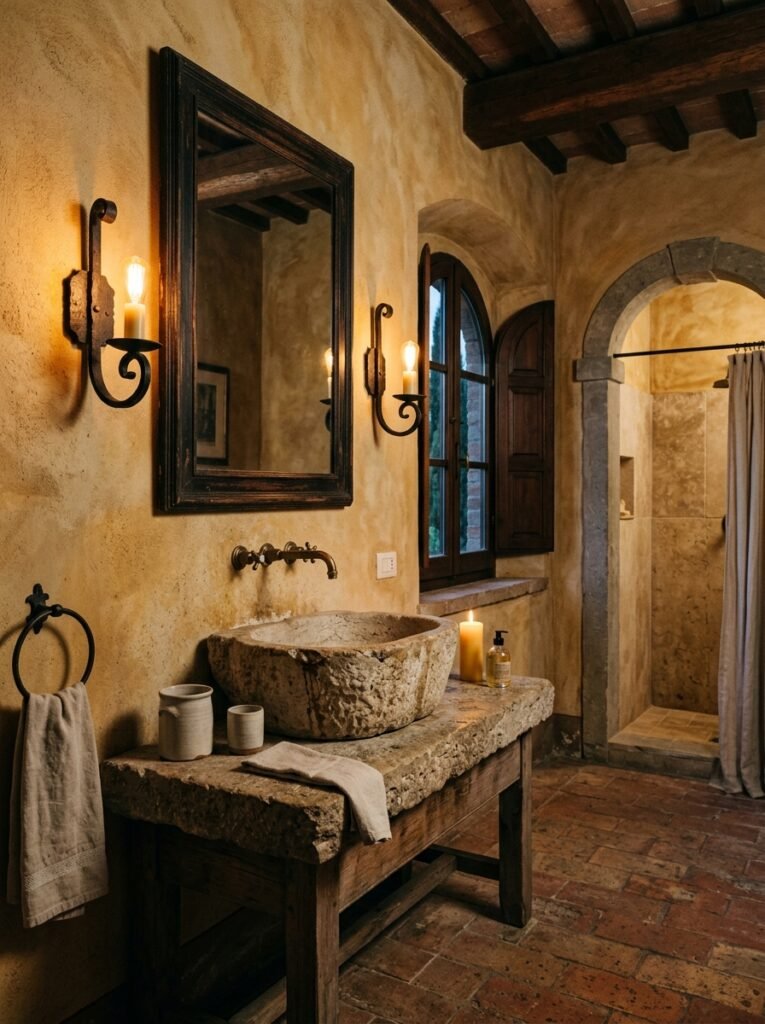
A basin cut from solid stone sitting on a plain counter needs light from the sides, and wrought-iron sconces at face height do that far better than anything mounted overhead.
Side lighting is what makes a stone basin look carved instead of molded. Choose warm bulbs, and mount the sconces roughly at eye level so the shadows stay soft.
20. Skirt the Vanity in Heavy Linen
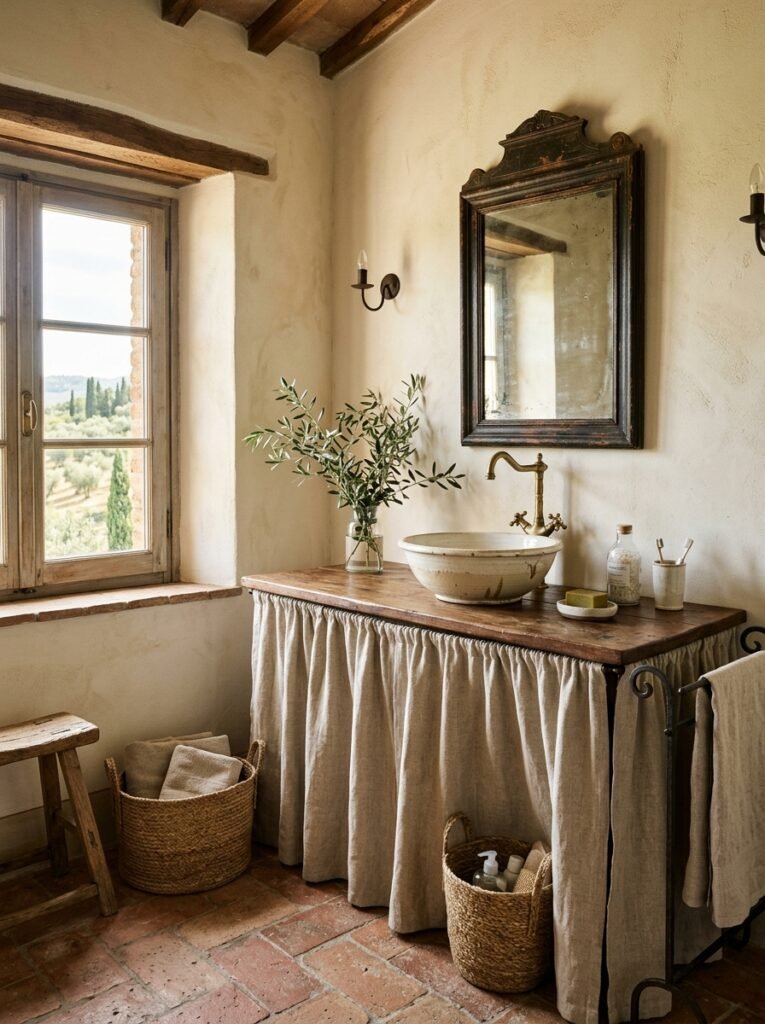
A linen skirt instead of cabinet doors is an old villa habit that hides plumbing and storage behind something soft, which most bathrooms are short on. It also costs a fraction of what joinery does.
It earns its place when the details are right:
- Heavy unbleached linen that hangs with some weight
- A simple rod or tape header, never a ruffle
- A length that clears the floor by half an inch
Thin fabric is the only thing that makes this idea look cheap.
Color, Tile, and Floors
21. Run Terracotta Zellige Through the Shower
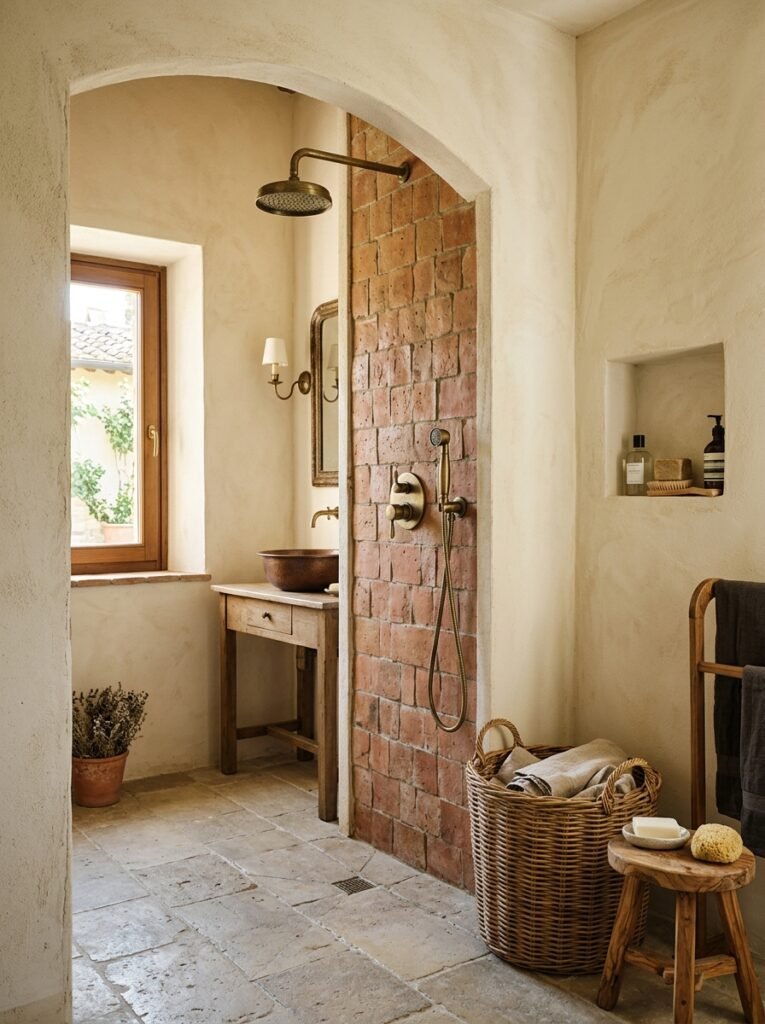
Terracotta-toned zellige inside the shower gives you glossy uneven color in the one place the room is already wet, and aged brass fittings against it look older than they actually are.
The uneven glaze turns shower light into something that moves. Take the tile all the way to the ceiling inside the enclosure, because stopping partway leaves an awkward line.
22. Lay a Patterned Cement Floor
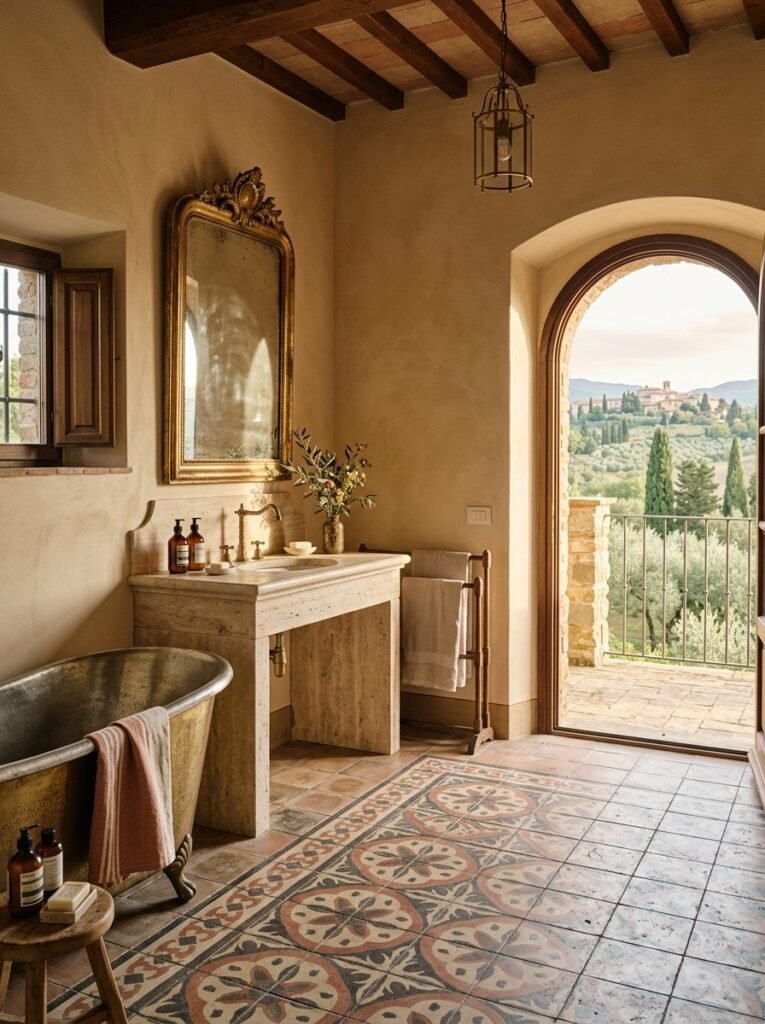
Encaustic cement tile in faded ochre and olive gives a bathroom floor real pattern without the cost of a cut stone mosaic, and the matte surface suits plaster walls better than gloss does.
A few rules keep it from taking over the room:
- Keep the pattern small in scale for a small bathroom
- Stay inside the wall palette instead of introducing new colors
- Seal it on installation, since cement tile absorbs everything
Pattern on the floor means the walls stay plain, and that trade is not optional.
23. Keep the Walls Cream and Let Terracotta Accent
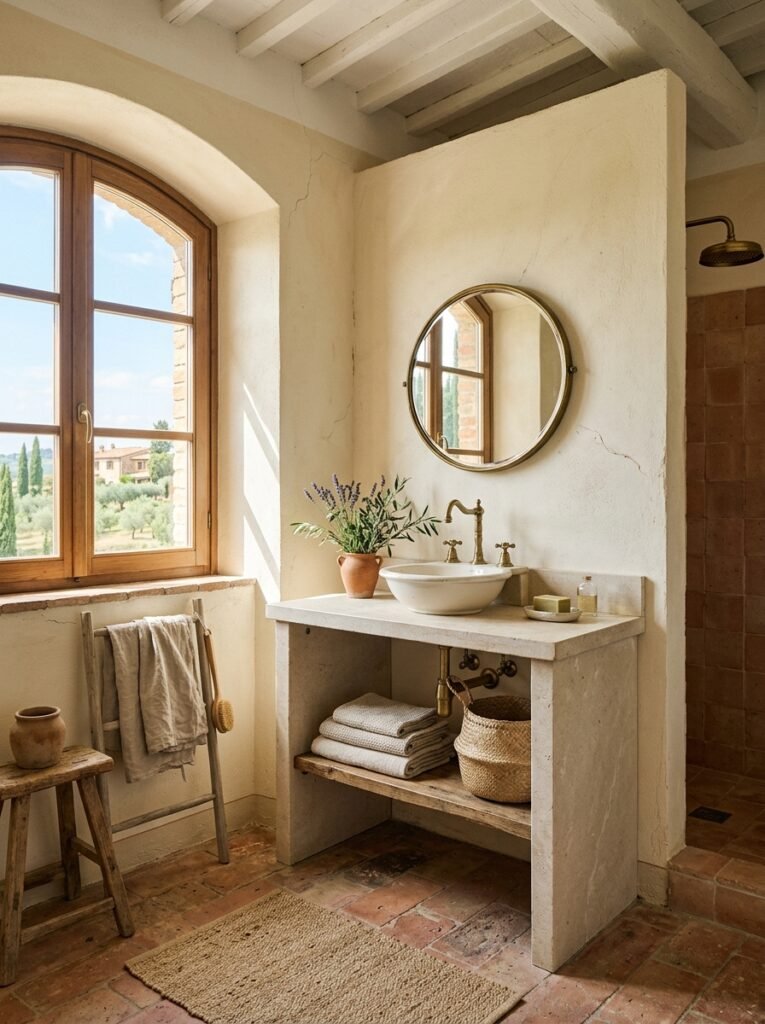
Sun-washed cream plaster across every wall gives you a bright bathroom that still feels warm, and terracotta then arrives in small amounts through a floor, a bowl, or a short run of tile.
This is the easiest version of the style to live with long term. Keep the cream slightly yellow, since a cream that leans gray drags the room back toward beige.
24. Back Dark Wood With Ochre Plaster
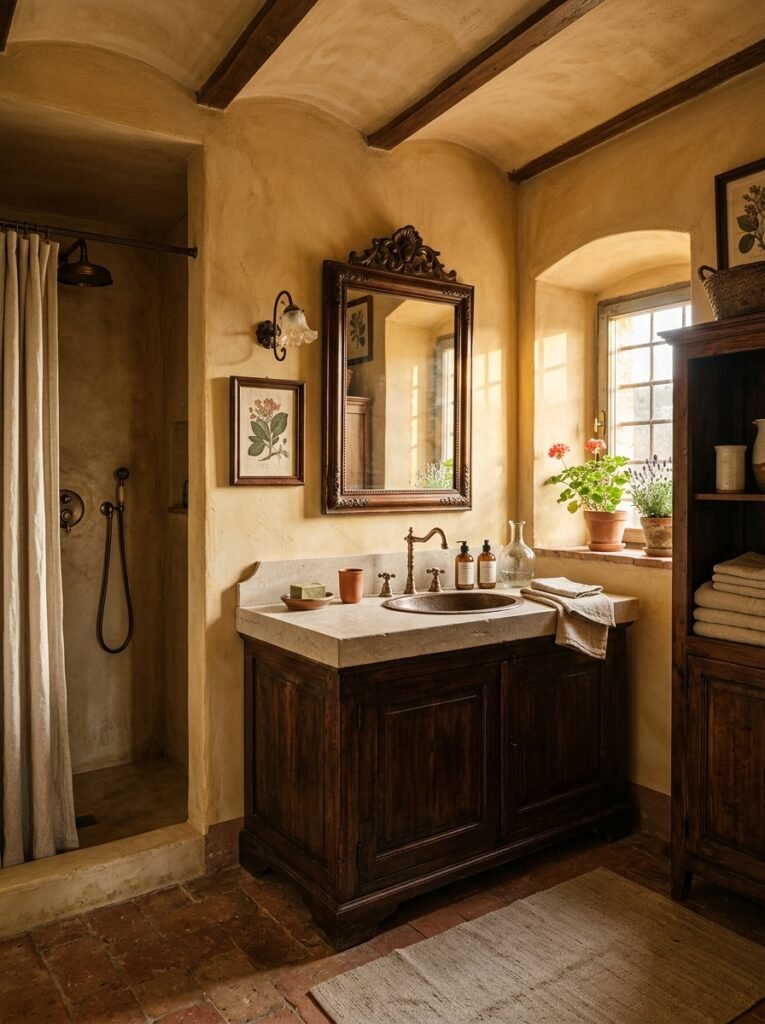
Warm ochre walls give dark wood furniture something to sit against, and that contrast is what stops a heavy vanity or cabinet from turning the corner it occupies into a dead zone.
Dark wood needs a warm background or it just reads as a shadow. Keep the ochre muted and chalky, since a bright version competes with the wood instead of supporting it.
Final Thoughts on a Tuscan Bathroom Ideas
The materials carry this style more than any single design choice does.
Plaster, limestone, terracotta, olive green, and unlacquered brass will read Tuscan together even in a plain rectangular room, because each one looks better slightly worn than it does brand new.
Start with the walls, since plaster or limewash changes how every other surface reads and costs far less than retiling.
Then add one stone element and one dark metal, and let the room age from there.
Tuscan Bathroom Ideas FAQ
Tuscan bathrooms rely on natural materials that age visibly: textured plaster or limewash walls, limestone and travertine surfaces, terracotta flooring, and unlacquered brass or hand-forged iron fixtures.
Arched openings and warm earth tones complete it. The overall effect should feel handmade and slightly worn instead of newly installed and uniform.
Warm earth tones lead, so terracotta, cream, sand, and honey limestone form the base.
Muted olive and cypress green work beautifully as the counterpoint, with deep aged tones suiting windowless powder rooms.
Keep every shade dusty and slightly faded, since saturated versions push the room toward theme decor.
Solid stone vanities and custom floors run into serious money, though the look doesn’t depend on them.
Limewash or plaster walls, terracotta floor tile, and swapping chrome fixtures for unlacquered brass deliver most of the character for a fraction of the cost.
Spend on the walls first, since they change the most.
It suits small rooms well, since the warm palette makes a tight space feel enveloping instead of cramped.
Powder rooms in particular take the dark aged plaster treatment beautifully.
Keep the stone elements to one or two pieces and let the wall finish carry the rest of the style.
Terracotta for floors, handmade zellige for walls, and natural limestone or travertine anywhere you want texture.
Patterned Mediterranean tile works well in a shower or as a floor centerpiece.
Avoid large-format polished porcelain, because the uniform surface works against everything else in the room.